Hollaback and Why Everyone Needs Better Research Methods

1-Izg_oJjZD8thdNFnBiuWMQ

Zeynep Tufekci in Medium:

I’ve taught “introduction to research methods” to undergraduate students for many years, and they would sometimes ask me why they should care about all this “method stuff”, besides having a required class for a sociology major out of the way. I would always tell them, without understanding research methods, you cannot understand how to judge what you see.

The Hollaback video shows us exactly why.

The Hollaback video also shows why “data” without theory can be so misleading—and how the same data can fit multiple theories. Since all data collection involves some form of data selection (even the biggest dataset has selection going into what gets included, from what source), and since data selection is always a research method, there is always a need for understanding methods.

First, let’s list all the hypothesis compatible with the “data”, this video:

Hypothesis 1- Men of color are disproportionately more likely to catcall, especially to a white, conventionally attractive female.

Hypothesis 2- All men are equally likely to catcall but the makers of the video were biased, consciously or unconsciously, against black men (and edited out men of other races on purpose.)

2.a Consciously: they are racists and are playing to the “white women endangered by black men” trope — which has a long and ugly history, hence the concern raised by many over the past week.

2.b Unconsciously: There is a methodological twist to the research which creates this outcome.

2.c. Both 2.a. and 2.b are true.

Hypothesis 3- It’s a spurious correlation: there is some other reason that caused these two events to go together

The important methodological point is that the video, without further reflection, can support all three wildly incompatible propositions. In other words, if you just look at the video, you can believe any three, and you will likely choose whichever fits your existing conclusions and prejudices.

Let’s start with 3, the easiest to dismiss.

A spurious correlation occurs when a third, unrelated variable, causes a change in other variables, which then seem like they are causally connected even though they are not. And since the human brain is a narrative writing machine, seeing A and B together makes people write stories that tie A and B. A silly, but correct, example is the correlation between ice cream and murder: during months when more people eat ice cream, there are more murders. This is not because popsicles are good murder devices. This spurious correlation caused by a confounding variable: the season.

More here.

Infinity and Beyond: The Ultimate Test

-nas-wp-www-cluster-1275-quanta-wp-content-files_mf-cache-915f3d84ec89f011f4c64ec05e66d59a_BubbleUniverses_OS

Natalie Wolchover and Peter Byrne in Quanta (image Olena Shmahalo/Quanta Magazine):

If modern physics is to be believed, we shouldn’t be here. The meager dose of energy infusing empty space, which at higher levels would rip the cosmos apart, is a trillion trillion trillion trillion trillion trillion trillion trillion trillion trillion times tinier than theory predicts. And the minuscule mass of the Higgs boson, whose relative smallness allows big structures such as galaxies and humans to form, falls roughly 100 quadrillion times short of expectations. Dialing up either of these constants even a little would render the universe unlivable.

To account for our incredible luck, leading cosmologists like Alan Guth and Stephen Hawking envision our universe as one of countless bubbles in an eternally frothing sea. This infinite “multiverse” would contain universes with constants tuned to any and all possible values, including some outliers, like ours, that have just the right properties to support life. In this scenario, our good luck is inevitable: A peculiar, life-friendly bubble is all we could expect to observe.

Many physicists loathe the multivere hypothesis, deeming it a cop-out of infinite proportions. But as attempts to paint our universe as an inevitable, self-contained structure falter, the multiverse camp is growing.

The problem remains how to test the hypothesis. Proponents of the multiverse idea must show that, among the rare universes that support life, ours is statistically typical. The exact dose of vacuum energy, the precise mass of our underweight Higgs boson, and other anomalies must have high odds within the subset of habitable universes. If the properties of this universe still seem atypical even in the habitable subset, then the multiverse explanation fails.

But infinity sabotages statistical analysis. In an eternally inflating multiverse, where any bubble that can form does so infinitely many times, how do you measure “typical”?

More here.

A Fight for the Young Creationist Mind

Jeffery DelViscio in The New York Times:

NyeIn February, William Sanford Nye, better known as Bill Nye the science guy, stepped onto a stage in Kentucky and faced down a hostile crowd in a debate that pitted evolution against creationism. It wasn’t his first time in the ring in science’s corner. In recent years, Mr. Nye has transitioned from the zany, on-screen face of an educational show on PBS, which ran from 1993 to 1998, to a hardened warrior for science on cable news programs and speaking tours of colleges and universities around the United States. In the news media, the final scorecard at the end of the science versus creationism debate was itself debated. Some said Mr. Nye won. Some suggested the in just showing up, he lost. One certainty did come from it: Mr. Nye said that it compelled him to drop everything he was doing to write a book. That book, “Undeniable: Evolution and the Science of Creation” has just been released. I talked to Mr. Nye, 58, last month about bumblebees, the debate and why it made him think of death and the need to write the book. Here is an edited and condensed version of our conversation.

Q: Talk about the title, “The Science of Creation.” It seems like clever wordplay with creation science. Is that what you meant?

A: Well, creation for me is all that we can see. It’s the universe, all the stars, and I guess now the dark matter and dark energy and you and me. And I would claim that it’s an older, more traditional use of the word creation. It’s nature.

You bring up nature early in your book and you talk about the flight of bumblebees and how that fascinated you at a young age.

It still does. If you ever look at a bumblebee, it’s a pretty big rig. It’s a pretty big abdomen, thorax head situation with these tiny wings. And yet they’re able to flop and fly like crazy, hover backwards and forwards, up and down, find their way to flowers, fill up the pollen basket. If you really take time and watch a bee with a pollen basket, it’s full. I mean, it’s carrying a load like a couple buckets of water slung over your shoulder. To me, it’s remarkable.

More here.

Tuesday poem

Just There

We have not given up hope
though we know
in the end
we will live in the place
we do not wish to.

At the beginning
we will be unhappy
even restless,
we will not like –
the peepul tree opposite,
the ever-coughing neighbour,
children yelling out film songs
tunelessly,
hordes of pariah dogs barking
throughout the night,
the unseasonal weather too.

Then we will reassure ourselves
what have we to do with all this –
a few days more
and we move on.

As time passes
in the evenings
we too will sit on the platform
under the peepul tree,
greet, with folded hands,
the old man passing by,
scatter grains in the courtyard
for birds to peck at.

Read more »

Monday, November 3, 2014

Speech by Dr. Azra Raza: Our Collective Spiritual Suicide

On May 24 of this year, the Dow Medical College (Karachi) Graduate Association of North America (DOGANA) held a function in Philadelphia honoring the “Women of Dow”. My sister Azra is a Dow alumna and was presented with an award for “Distinguished Services in the Field of Research and Clinical Medicine” and was also invited to be the Keynote Speaker at the ceremony. She has kindly allowed me to publish some of her powerful remarks from that occasion here today. —S. Abbas Raza

by Azra Raza

BloodyLabCoatA moment comes, which comes seldom in one’s life, when staying silent and uncritical is tantamount to suicide. That moment for us is here, now. Today, instead of telling a few light hearted stories of our innocent days at Dow, with jokes and poetry, I want to take the road less traveled by, and speak about the painful truth piercing at the heart of every one of us. Today, you have bestowed upon me a fantastic award and I am humbled by this, but frankly, at the same time, I feel greatly saddened to be lauded for my achievements while inside I feel like an imposter, a phony, a fraud. How can we be celebrating knowing full well that while we are congratulating each other and carrying home awards, our fellow doctors in Pakistan are being forced to carry guns with their stethoscopes? With these very achievements, if I was to be in Karachi today, I would be in danger of receiving a barrage of bullets from a Ghazi’s AK47 who could gun me down in broad daylight in a public function and walk off without being apprehended. Why? Because I am not just a doctor. I am a Shia doctor.

There. Now I have said it and committed the crime of voicing the unspeakable. I know, I know. We are not supposed to criticize anything while we are standing on foreign soil because this will further weaken the Umma and play right into the hands of the foreigners with vested interests. How long are we going to hide behind such cowardly, delusional shields? How long are we going to continue to bury our heads in the sand and distract ourselves through award ceremonies while our beloved country is being slashed and burned? Where is the outrage? What are we afraid of?

Yay kis azaab say khaif mera qabeela hay
Kay khoon mal kay bhi chahroun ka rang peela hay
Yay kaisay zehr ki baarish hui hay abkay baras
Kay meray saaray gulaboun ka rang Neela hay

(What calamity is my tribe so afraid of
That despite the blood splattered on their faces, they remain pale
What poison has rained from the sky this year
That even my roses have turned blue?)

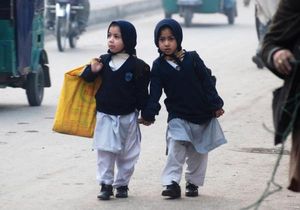
My friends, genocides do not start with guns and gas chambers. They start with words. Words of hate directed at groups which dehumanize them to such an extent that any and all cruelties are justified. My friends, today, there is a similar poisonous atmosphere being created in Pakistan. It is not just the Shia doctors being slaughtered mercilessly. There is a country-wide invasion by the lethal disease of intolerance and religious persecution. The terrorists are killing minorities and targeting outspoken members of the community. Need I name Malala Yusufzai, Raza Rumi, Hamid Mir? Therefore, it is inaccurate and dishonest to present this as some sort of a sectarian issue. This is the systematic murder of targeted individuals by a small murderous group. But the state whose job it is to protect the people is complicit through its inaction. How many more doctors and lawyers, women and children have to be gunned down without a single individual being apprehended for these barbaric crimes? There is no controversy about who is responsible for these killings. The perpetrators proclaim it proudly from the rooftops. What level of genocide is needed for us to wake up to reality, six million? When are we going to realize that we are ALL guilty of being Neros playing the fiddle while Pakistan burns?

Read more »

Perceptions: A Tribute to Imran Mir

Breathing sculpture

Imran Mir. Untitled. 2014.

Photo sent to me by the artist in March 2014.

Imran Mir, pre-eminent Pakistani graphic designer; serious, inspired, thoughtful, whimsical, prolific artist; a man of great heart, and an immensely generous soul; died on October 28, 2014.

At Bentota

Photo taken by Sughra Raza in Bentota, Sri Lanka, Jan 2010.

When I joined the Central Institute of the Arts Council in Karachi as a first year student, Imran, a senior student, immediately became a friend and an inspiration. For the next forty plus years while I moved to the US and took a different path, Imran never for a moment faltered in his encouragement and insistence that I continue to be an artist. Because of Imran, my Karachi identity was forever as an artist rather than a doctor and I loved that respite!

The thought of Karachi without Imran feels painfully hollow. His incredible loyalty, generosity, thoughtfulness, creativity, sense of humor, and passionate joie de vivre is etched in his wife and sons, and will continue to be deeply cherished by family and countless friends.

With deepest appreciation for the very fine human being you were, and for your love of music, Imran, I offer this most sublime lament, Beethoven's Opus 131, string quartet #14: https://www.youtube.com/watch?v=kW8wdpfkpM0

The following is from Imran's forthcoming memoir (printed here with permission from Nighat Mir and Noorjehan Bilgrami). Imran had planned the book launch for November 22nd, 2014.

Read more »

Sunday, November 2, 2014

Breaking 43 Years of Silence, the Last FBI Burglar Tells the Story of Her Years in the Underground

The following is excerpted and adapted from the epilogue to the paperback version of Betty Medsger’s The Burglary: The Discovery of J. Edgar Hoover’s Secret FBI, out this month from Vintage Books.

Betty Medsger in TruthOut:

ScreenHunter_866 Nov. 02 20.51It was clear to Judi Feingold what she should do after she and seven other people broke into an FBI office near Philadelphia in 1971, removed every file and then anonymously distributed them to two members of Congress and three journalists:

Get out of town.

She took drastic steps. Remaining in Philadelphia seemed dangerous, so she left town and headed west, moved into the underground and lived under an assumed name, moving from place to place west of the Rockies for years, owning only a sleeping bag and what she could carry in her knapsack. As she was about to detach herself from her past geography and her personal connections, she called her parents and told them she had committed a nonviolent direct action “and was possibly being pursued by the federal government. I told them I could not be in touch by phone, and I would do my best to let them know how I was, but not where I was.”

During the forty-three years since the burglary, none of the other burglars knew anything about Feingold’s whereabouts. Efforts to find her in recent years had failed. Some even thought she might have died.

More here.

Burkina Faso’s Uprising Part of an Ongoing Wave of African Protests

Imrs

Zachariah Mampilly in The Monkey Cage (Issouf Sanogo/Agence France-Presse via Getty Images):

As events in Burkina Faso move ahead at breakneck pace, I’m struck by how much they encapsulate different political struggles that have defined African protest since the anti-colonial period. Political transformations across Africa have rarely come piecemeal. Instead, they tend to come in waves, sweeping across the region and leaving massive social transformations in their wake.

I am currently finishing a book on African protest with Adam Branch. In it, we examine the two prior waves of African protests and offer evidence that we are currently in the midst of a third. The first wave includes the nationalist protests of the 1950s, a set of uprisings that culminated in the formal independence of almost all African states. The second wave encompasses protests centered in West Africa that occurred between the mid-1980s to early 1990s. These protests, a response to brutal austerity measures imposed upon African states by the World Bank and the International Monetary Fund, sparked a major era of formal democratization across the continent. With only three democracies prior to the protests, by the mid-1990s Africa could boast 20 democracies, with numerous more states holding elections.

Yet, despite these earlier waves and the political transformations they initiated, African protests are often ignored. We document more than 90 popular uprisings in more than 40 African states since 2005. By our measure, the heralded North African protests of 2011 represented not the first ripple of a wave, but rather its crest, with 26 African countries (including Burkina Faso) experiencing popular protests that year. Since then, protests have continued but have rarely generated the sort of attention devoted to the uprisings in Egypt and Tunisia. Why? Political change in the rest of Africa is often thought to result from violent conflict or external intervention. Africans themselves are presumed to be too rural, too ethnic or too poor for popular politics to lead to political transformation. Even today, as protests increasingly shake up ossified regimes and de facto one-party states, little attention is paid to the broader wave of protests unfolding across Africa and what it portends for the future of the continent.

More here.

The man with the golden blood

ScreenHunter_865 Nov. 02 20.33Meet the donors, patients, doctors and scientists involved in the complex global network of rare – and very rare – blood.

Penny Bailey in Mosaic:

His doctor drove him over the border. It was quicker that way: if the man donated in Switzerland, his blood would be delayed while paperwork was filled out and authorisations sought.

The nurse in Annemasse, France, could tell from the label on the blood bag destined for Paris that this blood was pretty unusual. But when she read the details closely, her eyes widened. Surely it was impossible for this man seated beside her to be alive, let alone apparently healthy?

Thomas smiled to himself. Very few people in the world knew his blood type did – could – exist. And even fewer shared it. In 50 years, researchers have turned up only 40 or so other people on the planet with the same precious, life-saving blood in their veins.

More here.

Home and History in the Fiction of Los Angeles

Bradbury-243x366

Sarah-Jane Stratford in the LA Review of Books:

LOS ANGELES does not, perhaps, get enough credit for feeding the imaginations of science fiction writers. Our original cinematic visions of imagined futures — often dystopian wastelands — were shaped by their film locations on what was then undeveloped land outside Los Angeles. Even the futuristic worlds on soundstages called back to Los Angeles, a city whose rapid growth was multi-pronged and haphazard. But despite the sprawl and isolating car culture that fueled dystopian fancies, the city has certainly not been a dystopia. When we talk about the pace and occasionally impractical results of LA’s development, often conducted without long-term considerations, we tend to overlook the beauty, inventiveness, and quirky charm of so much of LA’s architecture. It’s no wonder Los Angeles has long been a home to writers who found comfort, space, and privacy to let their minds wander through the thicket of human experience.

Some of LA’s most inventive residents, like Ray Bradbury, attempted to use the conduit of literature to prevent LA from actually becoming the dystopian world it had helped people envision. But while LA’s isolation and tension, and excessive concrete, may themselves not have been a problem, they are being met with a new difficulty: mansionization. And as this trend gains apace, the city is in danger of inadvertently creating exactly the sort of desolate society it has excelled in rendering as entertainment.

Plenty of people knew that for over 50 years, Bradbury lived in the peaceful enclave of Cheviot Hills, nestled in West LA, but it was only when photos of his home were published prior to its sale this past June that admirers were able to revel in the writing sanctuary he’d carved for himself in the basement of the comparatively modest 1937 home. The story and photos were seen and discussed in newspapers around the world, and for a moment, people felt connected to the mechanics of story-making. Literature touches us, offers guidance as we wend our way through life’s daily labyrinth, and when a door is opened onto the business of its creation, we can’t help but feel awed and grateful, both for the work and the privilege of understanding its physical origin, even if we can’t — and shouldn’t — access the emotional nucleus. Bradbury’s house offered a glimpse not only of his own writing process, but also of the magical space that LA can make available to writers.

More here.

Keeping Sex Workers Quiet

Rethinkingsexwork3-1024x625

Alana Massey in Jacobin:

Just as opponents of reproductive self-determination rely heavily on the images of babies murdered by their mothers in an attempt to shame women seeking abortions, those that oppose sex work use the specter of trafficked young women to condemn any movement seeking to decriminalize sexual labor.

And because sex work activists are primarily female, they’re expected to have a sympathetic and thoughtful response to trafficking, to be a kind of caregiver for trafficking victims. As a result, arguments are reduced to caveats and apologies; discourses about labor rights take a backseat to those about trafficking.

To understand how labor conversations are so easily co-opted, a brief look at the current state of sex work discourse is instructive. In September, the International Human Trafficking, Prostitution, and Sex Work Conference was held in Toledo. It was hosted exclusively by anti-trafficking groups and prominently featured material framing all commercial sex as a form of slavery.

The Huffington Post recently aggregated a series of posts from Ravishlyentitled, “Is Sex Work Empowering or Enslaving?” and even in the absence of more nuanced or relevant options, it was considered progress by some that anyone thought to ask rather than preemptively conclude.

And earlier this year, Katha Pollitt wrote a review of Melissa Gira Grant’s Playing the Whore: The Work of Sex Work in which she hoped for another book entirely instead of critiquing the substance of Grant’s work: “Grant says barely a word about the women at the heart of this debate: those who are enslaved and coerced — illegal immigrants, young girls, runaways and throwaways, many of them survivors of sexual trauma, as well as transwomen and others cast out of mainstream society.”

With her highly visible status, Pollitt is free to determine the real heart of the debate around sexual labor — and overlook evidence showing most women in the sex industry do not feel more exploited than other workers.

The notable absence from most of these conversations is sex workers themselves, as Lindsay Roth, a sex worker activist with Project SAFE in Philadelphia, told me via email: “Anti-trafficking advocates usually are not asking the questions, they are setting the agenda. They do not engage with us. They have created a discourse that continues to engage with the women we work with as invisible.”

More here.

The Growing Pains of the Ancient Hajj

Dan Stone in National Geographic:

Mecca-from-above-990x610For centuries, beyond its role as a religious epicenter, Mecca was little more than a trading town. But as Mecca has grown and developed, the hajj—as the pilgrimage is called—has become more complicated. Since 2005, the leaders of Saudi Arabia, which consider Mecca one of the country’s greatest spiritual and economic assets, have launched an ambitious renewal project. For a decade, Mecca has slowly reinvented itself, starting with new hotels and shopping centers. The 120-floor Makkah Royal Clock Tower was completed in 2012, becoming the largest building in the historically one-story town. Longer term, the plan includes a $60 billion expansion to the grand mosque to accommodate pilgrims who, at the peak of the hajj, are forced by overcrowding to pray outside in the street. The country’s leaders, including King Abdullah ibn Abdulaziz, say that the renewal is necessary to handle the modern hajj. The number of pilgrims has risen from 200,000 in the 1960s to 3 million today, more than doubling the city’s population for a week. Accommodating all of them and ensuring their safety and public health, officials say, requires new buildings and better roads. In 2006, a stampede that killed 346 showed the hazards of large crowds on small streets. That same year, a concrete hotel collapsed killing more than 70 people. By 2040, the hajj is expected to double again to seven million pilgrims. Such large visitor populations represent an economic as well as a religious force. The pilgrims who come to pray also need a place to eat and sleep, especially as the ancient custom of Mecca’s Muslim residents hosting visiting pilgrims reaches its capacity. Each year, the 10-day hajj brings $10 billion into the Saudi economy, and analysts project it may become far more. Hotels near the grand mosque have been known to charge $700 per night. Souvenirs such as prayer beads and mats are as ubiquitous as they are expensive. A BBC report in 2012 found that to maximize profits, most religious souvenirs in Mecca were no longer made locally, but in China.

…Eyesores can be ignored; designer stores can be shunned. But a changing Mecca brings questions of how the centuries-old tradition of the pilgrimage itself could change. The word hajj in Arabic means “a great effort.” That effort—of walking through the holy sites and interacting with fellow Muslims to learn how Islam is practiced all over the world—is intended to deepen the pilgrim’s spirituality. Sardar, the author and Mecca scholar, argues that if that experience is diluted, the great virtue of traveling thousands of miles for a one-time experience may lose meaning. More people may show up, but with diminishing returns. Those who come will leave with less and less.

More here.

Sunday Poem

The Story of the Arjun and the Krishnachura

The Arjun tree stood alone in that field
An Aryan male – a pillar of aristocracy
All the other trees bowed to it
This was merely the beginning of the story

From somewhere came the Krishnachura seed
A few years later she was a young woman
A Santhal girl, with crimson in her hair
At once Arjun wanted her as his own

She was not a girl who would submit
In spring she dressed up without help, alone
She wasn't drawn to the Aryan male
She was busy making the buds bloom

Last night's flowers had fallen from her hair
Rippling leaves had woven clothes for her
Arjun – he was an Aryan male, who thought
Only he could claim beauty so fair

From the distance the Arjun tree could see
The Krishnachura's cascading heart
Bewitched by beauty, his perplexed eyes
Wondered when he'd find his way to it

I'd better finish this story quickly
The Krishnachura is far too obstinate
Her pride won't let her sell herself
She'd rather be a neighbour or a friend

The story isn't quite so simple
Arjun shed his bark, sheds it still
But the Santhal girl can shed blood
The Aryan male accepts he cannot win

Be reborn as an Arjun tree
Consider the Krishnachura a friend
Don't confuse me with others, upright one
When I bleed, shed your bark and call me then

by Mandakranta Sen
from: Hridhay Abadhya Meye
publisher: Ananda Publishers, Kolkata, 1999
translation: Arunava Sinha
from: After the Last Kiss
publisher: HarperCollins India

Saturday, November 1, 2014

Peter ­Schneider’s ‘Berlin Now’ and Rory MacLean’s ‘Berlin’

1102-bks-KULISH-master675Nicholas Kulish at The New York Times:

For centuries Berlin has had something of a chip on its shoulder. It lacks the ancient ruins of Rome or the sophisticated beauty of Paris. It is landlocked and flat, with a climate that can be frigid, gray and unpleasant up to eight months out of the year. “Imagine Geneva, lost in a desert,” Balzac wrote in 1843, “and you have an idea of Berlin.”

That quotation surfaces in another book timed to the 25th anniversary of the fall of the wall by the Canadian travel writer Rory MacLean. With a few exceptions, “Berlin: Portrait of a City Through the Centuries” is a series of loose biographical sketches of both famous and everyday Berliners, past and present. The very first concerns a 15th-century poet and singer, Konrad von Cölln, who was prone to debauchery. He had his tongue cut out for defying Prince-Elector Irontooth, and was then executed.

MacLean sees the dualities of sex and violence, freedom and fascism as central to the city’s character and its appeal. A worker in a factory kitchen inadvertently kills herself trying to induce a miscarriage by eating the tips of 160 phosphorous matches.

more here.

When the Wall fell 25 years ago…

A53c7ad8-3134-46eb-90d8-b5f5a9b68b54Tony Barber at the Financial Times:

From its construction in 1961 to its destruction in 1989, the Berlin Wall was the world’s most compelling symbol of the moral and material bankruptcy of communism. Other dictatorships, from Albania to North Korea, laid mines and put up barbed wire to stop their oppressed peoples from fleeing to freedom. But no monument to incarceration was more visible and damning of its creators than the Wall, a hideous 156km-long complex of watchtowers, searchlights, anti-tank obstacles, dog patrols and ditches that cut through the once bustling centre of the historic German capital.

East German border guards, with the support of their Soviet-backed masters, fired upon scores of people who tried to escape over the Wall. They were responsible, during its 28-year life, for 136 Wall-related shootings and other deaths. Hundreds more were killed on the inner German border that divided West Germany from East Germany (the German Democratic Republic, or GDR). Right to the end, the East German communist party stuck to the brazen lies that there was no official policy of shooting would-be escapees, and that the Wall’s sole purpose was to repulse an attack from the “imperialist” west.

more here.