
Enjoying the content on 3QD? Help keep us going by donating now.
Category: Recommended Reading
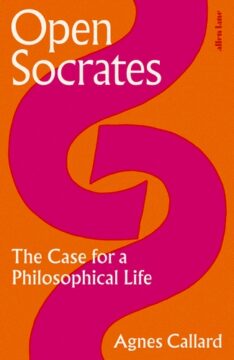
“Open Socrates” by Agnes Callard, Reviewed
Tim Clare in The Guardian:
 I beseech you,” wrote Oliver Cromwell, in his letter to the general assembly of the Church of Scotland, “in the bowels of Christ, think it possible you may be mistaken.” Cromwell’s pungent entreaty is often cited in conversations about the importance of self‑enquiry and the perils of overconfidence. It’s an odd but telling choice, given that he was asking others to question their assumptions, while leaving his own unexamined. He had just purged parliament, overseen the execution of Charles I, and was in Scotland leading an army in a pre-emptive strike. Naturally, he wanted the Scottish forces massing for battle to think again. The obvious retort is: “No. You.”
This is one of several thorny problems philosopher Agnes Callard tackles in Open Socrates, an exploration of Socrates’ “substantive ethics of enquiry”; an approach to knowledge that, she argues, can’t merely be tossed into our usual repertoire of rhetorical flourishes, but rather detonates the bedrock on which we claim to stand: “People will announce, ‘Question everything!’ without noticing they have just uttered not a question, but a command.” The Socratic method is an approach with “colossal ambitions” and not just some antiquated curio we might repurpose to get an edge in business meetings. In fact, its power is so great that we must wield it with great care.
More here.
Enjoying the content on 3QD? Help keep us going by donating now.
Reincarnations Of A Rebel Muse
David Hudson at The Current:
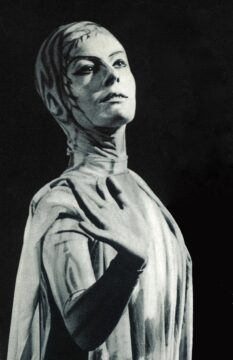 The title of a series currently running at New York’s Metrograph through February 1, Delphine Seyrig: Rebel Muse, neatly encapsulates a notion that Beatrice Loayza seeks to reevaluate in a series she’s programmed for the Harvard Film Archive. Loayza notes that Seyrig’s “career tends to be defined along the same narrative: she was a muse to European auteurs like Alain Resnais, François Truffaut, Joseph Losey, and Luis Buñuel before repudiating her goddesslike image and pursuing collaborations that challenged and complicated the feminine persona that made her a star.” The Reincarnations of Delphine Seyrig, opening Friday and running through March 2, “reframes the French-Lebanese actress’s body of work and breaks it out of this before-and-after template.”
The daughter of a French father and Swiss mother, Seyrig spent the first ten years of her life in Beirut and eventually studied acting, first in France and then at the Actors Studio in New York. There, she fell in with a bohemian crowd and landed her first small film role as the long-suffering wife of a conductor played by artist Larry Rivers in Pull My Daisy (1959), the thirty-minute Beat milestone written by Jack Kerouac and directed by Robert Frank and Alfred Leslie.
more here.
Enjoying the content on 3QD? Help keep us going by donating now.
The Science of Racism – evidence that speaks for itself
Farrah Jarral in The Guardian:
 It was over schnitzel and mash that my friend’s Bavarian grandparents decided to call me a “black devil”, chuckling all the while. Breaded chicken has since been my madeleine, taking me back to racially charged moments I’ve not known quite how to interpret. Is it really racist if they didn’t mean to be rude? What if they have dementia? And if racism = prejudice + power, was being called a black devil while I choked down some potatoes even that big a deal, given that I felt in no way disempowered in the company of my tiny, elderly hosts?
In his succinct and bingeable book The Science of Racism, professor of social psychology Keon West begins by acknowledging that society doesn’t agree on even the most basic aspects of racism, let alone its finer points. Indeed, roughly half of Britons don’t believe minorities face more discrimination than white people in various areas of life. Yet far from being a set of hazy, unanswerable philosophical questions, many of the unknowns about racism are empirically testable, especially if researchers design clever studies.
More here.
Enjoying the content on 3QD? Help keep us going by donating now.
How to trick the immune system into attacking tumours
Saima Sidik in Nature:
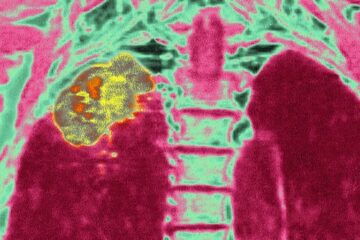 Scientists have disguised tumours to ‘look’ similar to pig organs ― tricking the immune system into attacking the cancerous cells. This ruse can halt a tumour’s growth and even eliminate it altogether, data from monkeys and humans suggest. But scientists say that further testing is needed before the technique’s true efficacy becomes clear. It’s “early days” for this novel approach, says immuno-oncologist Brian Lichty at McMaster University in Hamilton, Canada. “I hope it stands up to further clinical testing,” he adds. The work is described today in Cell1.
Viral trickery
To devise a strategy against cancer, the authors took a cue from a challenge facing people who receive organ transplants: the human immune system recognizes transplanted organs as foreign objects and tries to eliminate them. This challenge is especially acute for transplanted pig organs, which could supplement the supply of donated human livers, kidneys and more. But human antibodies immediately attach to sugars that stud the surfaces of pig cells, leading to rapid rejection of the transplanted tissue. (Pig organs transplanted into humans are bioengineered to forestall the antibody response.) Immunologist and surgeon Yongxiang Zhao at Guangxi Medical University in Nanning, China, wondered whether he could harness this runaway immune response and direct it against tumours.
More here.
Enjoying the content on 3QD? Help keep us going by donating now.
Who Was Delphine Seyrig?
Enjoying the content on 3QD? Help keep us going by donating now.
The Inscrutable David Lynch
Simran Hans at The New Statesman:
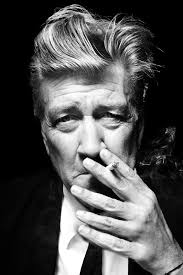 Twin Peaks first aired in 1991. A tragic and often frightening mystery, it centred on the violent murder of a beautiful teenage girl in a strange, small town nestled in the mountains of the Pacific Northwest. The protagonist was a handsome FBI agent who drank black coffee and spoke in riddles. There was a lot of spontaneous dancing fuelled by a bizarre, forbidding undercurrent of danger. I didn’t understand it at all. I was gripped. I became obsessed with its images of Americana: desolate diners and roadside dive bars, clanking industrial machinery (the fictional town of Twin Peaks has a sawmill), flanked by jaw-dropping natural beauty.
It was a great introduction to many of the director’s long-standing preoccupations: the rot of evil, the mysteries of desire, parallel worlds and the portals to them. The show featured a curdled nostalgia for the 1950s, the music of Julee Cruise, and contained much discussion of the weather (in 2020, Lynch started publishing charming daily weather reports on YouTube), and music from the 1950s. Like his most beloved and best-known film, the Blue Velvet (1986), it deals with the utter devastation of losing one’s innocence.
more here.
Enjoying the content on 3QD? Help keep us going by donating now.
Sunday, January 19, 2025
We should take AI welfare seriously
Robert Long at Experience Machines:
We’re likely to get confused about AI welfare, and this is a dangerous thing to get confused about.
And even though some people still opine that AI welfare is obviously a non-issue, that’s far from obvious to many scientists working on this the topic who take it quite seriously. As a recent open letter from consciousness scientists and AI researchers states, “It is no longer in the realm of science fiction to imagine AI systems having feelings.” AI companies and AI researchers are increasingly taking note as well.
This post is a short summary of a long paper about potential AI welfare called “Taking AI Welfare Seriously“. We argue that there’s a realistic possibility that some AI systems will be conscious and/or robustly agentic—and thus morally significant—in the near future.
More here.
Enjoying the content on 3QD? Help keep us going by donating now.
Reflecting on the Risks of ‘Mirror Life’
Michael Kay at Undark:
 In December, 37 colleagues and I published a paper in Science arguing that mirror bacteria — self-replicating, synthetic cells whose every component exists in its mirror-image form — could indeed pose incredibly grave dangers if successfully created. First, they would likely evade most human, animal, and plant immune system responses because these have evolved to tackle natural bacterial threats, not mirrored ones. That intrinsic resistance could lead to widespread, lethal infections in many species (independent of any other factors that make pathogens dangerous, like toxins they can produce). Second, our world is not overrun with natural bacteria partly because they are kept in check by other organisms, such as viruses and amoebae, that prey on them. To the best of our current knowledge, reversed molecular structures would likely give mirror bacteria significant resistance to these predators, potentially enabling them to grow largely unchecked in a wide range of ecosystems.
We shouldn’t lose sleep, though. Nobody is currently close to creating a full mirror bacterium. No one has even achieved the much simpler feat of creating a natural bacterium from its individual components; doing so in mirror form would be an extraordinarily complex undertaking that could take decades. Our intention in publishing our paper was to kickstart the conversation about the potential risks long before they materialize.
More here.
Enjoying the content on 3QD? Help keep us going by donating now.
Bob Coecke: A new way to understand the quantum world
Enjoying the content on 3QD? Help keep us going by donating now.
What makes some of us crave self-insight more than others?
Christoph Heine at Psyche:
 We found that people varied meaningfully in the strength of their self-insight motive. While it seems to matter a great deal to some people, others do not care about it that much at all. Perhaps you have noticed this among your friends and colleagues, with some of them being far more self-curious than others.
This led us to wonder what kind of a person has a greater self-insight motive. Is it the spiritual seeker who dresses in linen and practises yoga half of the day, or is it the manager who drives an expensive car and lives in a big house, suddenly experiencing a midlife crisis, asking if there is more to life than this? Of course, these are comical stereotypes so we couldn’t answer those exact questions. However, we did give our participants some established personality questionnaires and looked to see how other aspects of personality correlated with their scores on the self-insight motive questionnaire. Rather than throwing a bunch of statistics and correlations at you, I will tell you what we found out about the typical self-insight motivated ‘persona’. Think of it as the kind of profile that marketing folks often create to imagine their typical customer. Just remember, this is a major oversimplification of what were more complex relationships in our data.
We found that the typical persona with strong self-insight motive is a relatively young and educated individual who’s curious, open to new experiences, and concerned about maintaining their close relationships. Picture someone who constantly seeks ways to improve themselves. Finally, we also found that part of the persona is wanting to be admired by others.
More here.
Enjoying the content on 3QD? Help keep us going by donating now.
Top financial watchdog warns climate change set to trigger market panics
Martin Arnold and Lee Harris in the FT:
The world’s financial stability watchdog has warned that disasters caused by climate change are increasingly likely to trigger broader panic in financial markets.
The world breached 1.5C of warming above preindustrial levels for the first time last year, raising the prospect of more environmental disasters.
The Financial Stability Board said the financial damage of climate shocks such as floods, droughts, fires or storms could cause a broader pullback in lending and downturn in investor confidence.
“Banks could reduce lending, including for recovery to already vulnerable households and corporates,” the body, which brings together the world’s central bankers, ministers and regulators, said. “There could also be an abrupt, broad-based repricing of climate-physical risk, as the expectation of larger future losses are incorporated into current prices and impact sectors and jurisdictions not currently directly affected by disasters.”
The report comes amid broader concerns about the capacity of the insurance sector to cover losses associated with climate change following devastating fires in Los Angeles that are estimated to have caused tens of billions of dollars’ worth of damages.
More here.
Enjoying the content on 3QD? Help keep us going by donating now.
The impact of artificial intelligence on macroeconomic productivity
Masayuki Morikawa in Vox EU:
With the rapid diffusion of artificial intelligence (AI), its impacts on productivity and the labour market have attracted attention. Many studies have been conducted on the impacts of industrial robots on productivity (e.g. Graetz and Michaels 2018, Kromann et al. 2020, Cette et al. 2021, Dauth et al. 2021) due to the availability of International Federation of Robotics (IFR) data on robot utilisation by country and industry. However, the quantitative impact of AI on productivity is not yet well understood, mainly due to a lack of statistical data on the use of AI.
Recently, several studies have reported findings from randomised experiments on specific tasks in which AI has a large positive effect on productivity (e.g. Brynjolfsson et al. 2023, Kanazawa et al. 2022, Noy and Zhang 2023, Peng et al. 2023). These studies are valuable contributions that reveal the causal effect of AI on productivity, but it is impossible to infer macroeconomic impacts from these results because the studies only cover the very narrowly defined tasks of customer support, taxi driving, writing tasks, and software programming.
Acemoglu (2024) estimates the medium-term effect of AI on productivity in the US as the percentage of tasks affected by AI multiplied by task-level cost savings based on these existing task-level studies. According to his study, the macroeconomic impact of AI is non-negligible but small, with a cumulative total factor productivity (TFP) increase of less than 0.7%. However, he noted that there is huge uncertainty about which tasks will be automated, and what the cost savings will be.
More here.
Enjoying the content on 3QD? Help keep us going by donating now.
Perry Anderson on Where Does the West Go?
Enjoying the content on 3QD? Help keep us going by donating now.
Creating Christ: How Rome Invented Christianity
Enjoying the content on 3QD? Help keep us going by donating now.
Sunday Poem
““Art is the proper task of life,”
………………………. —Nietzsche
Inner Life
Art is an essential part of life. Without its depth
and enrichment, our lives would dry like desert dew
at the break of dawn.
Art enhances human experience by offering beauty,
inspiration, and a means to navigate and interpret the
complexities of being, the magic, the mayhem,
and the throbbing mysteries surrounding us.
In the words of Jean-Luc Godard:
Art attracts us only by what it reveals
of our most secret self.
The creative act is an activity of our inner life,
the dominion of spirit over the material world
serving as a metaphysical lens enabling us
to perceive life with greater depth and nuance.
by Erik Rittenberry
Enjoying the content on 3QD? Help keep us going by donating now.
The Women Refusing to Participate in Trump’s Economy
Simmone Shah in Time Magazine:
 Sara Belhouari, a financial advisor based in Brooklyn, is implementing what she calls “financial activism,” a process that involves spending her money with more intentionality. She’s been rethinking her support of large corporations. With companies—including Amazon and Uber—pledging donations to Trump’s inauguration fund, Belhouari plans to stop supporting businesses that don’t align with her values. “These corporations have so much money, influence, and power.” she says. “A lot of the companies that I’ve chosen not to support are donating to politicians that are going to push forward really harmful practices.”
Nabihah Ahmad, a student at Columbia University, has long made it a point to support businesses that prioritize things like sustainability or fair labor practices. Last year, she built an online search engine to help people find alternatives to products from companies profiting off the Israel-Hamas war. In the wake of the presidential election, she expanded it to champion black-owned and women-owned businesses in the United States. She says that millions of people have visited the site each month, and that it’s a sign that people are becoming more cognizant of their purchasing power and its impact. “There’s just been this societal shift towards being conscious consumers and using our purchasing power correctly when it comes to climate change or political issues,” she says. “Our money very much controls the outcomes of all of these things.”
More here.
Enjoying the content on 3QD? Help keep us going by donating now.
Friday, January 17, 2025
Why AI Progress Is Increasingly Invisible
Garrison Lovely in Time:
 On Dec. 20, OpenAI announced o3, its latest model, and reported new state-of-the-art performance on a number of the most challenging technical benchmarks out there, in many cases improving on the previous high score by double-digit percentage points. I believe that o3 signals that we are in a new paradigm of AI progress. And François Chollet a co-creator of the prominent ARC-AGI benchmark, who some consider to be an AI scaling skeptic, writes that the model represents a “genuine breakthrough.”
However, in the weeks after OpenAI announced o3, many mainstream news sites made no mention of the new model. Around the time of the announcement, readers would find headlines at the Wall Street Journal, WIRED, and the New York Times suggesting AI was actually slowing down. The muted media response suggests that there is a growing gulf between what AI insiders are seeing and what the public is told.
Indeed, AI progress hasn’t stalled—it’s just become invisible to most people.
More here.
Enjoying the content on 3QD? Help keep us going by donating now.
In Our Hands
Text by Joshua Craze, photography by Wolf Böwig, in Mouse Magazine:
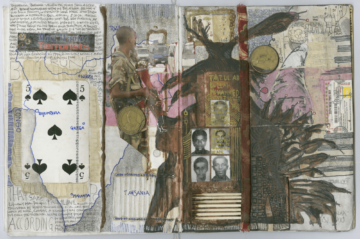 Dear Wolf,
You sent me four images for my trip, and I thought of them like charms, meant to keep me safe. I was to go to Juba and then head to the South Sudanese border with Darfur, before plunging into the war that raged to the north. On the plane from Nairobi to South Sudan’s capital, I kept staring at your images on my laptop screen, as if I were a detective investigating a crime scene. There were two collages and two photographic polyptychs. What hidden logic led you to send me these pictures, and not others? I closed my laptop before the plane banked down over the Nile with the internal relationship between the images still mysterious to me.
I arrived in Juba on Valentine’s Day, to be greeted by a public letter from a leading South Sudanese politician, accusing me of being in the pay of a rebel leader. As a precaution, I spent the night at my hotel, and looked, once again, at your images, which transported me through time. I suddenly remembered the sadness of a demobilized Mende militia fighter sitting disconsolately in his carpentry workshop, surrounded by garbage. Soon, other memories emerged. Of scholars trapped in the binary brutality of the war on terror. Of sorcery and spells, proven and alleged. Of violence, abstract, and all too concrete.
More here.
Enjoying the content on 3QD? Help keep us going by donating now.
The Future with Hannah Fry: Quantum Computing
Enjoying the content on 3QD? Help keep us going by donating now.