Why Volatility Signals Stability, and 
Vice Versa

Nassim Nicholas Taleb and Gregory F. Treverton in Foreign Affairs:
ScreenHunter_915 Dec. 19 12.01Even as protests spread across the Middle East in early 2011, the regime of Bashar al-Assad in Syria appeared immune from the upheaval. Assad had ruled comfortably for over a decade, having replaced his father, Hafez, who himself had held power for the previous three decades. Many pundits argued that Syria’s sturdy police state, which exercised tight control over the country’s people and economy, would survive the Arab Spring undisturbed. Compared with its neighbor Lebanon, Syria looked positively stable. Civil war had torn through Lebanon throughout much of the 1970s and 1980s, and the assassination of former Prime Minister Rafiq Hariri in 2005 had plunged the country into yet more chaos.

But appearances were deceiving: today, Syria is in a shambles, with the regime fighting for its very survival, whereas Lebanon has withstood the influx of Syrian refugees and the other considerable pressures of the civil war next door. Surprising as it may seem, the per capita death rate from violence in Lebanon in 2013 was lower than that in Washington, D.C. That same year, the body count of the Syrian conflict surpassed 100,000. 


Why has seemingly stable Syria turned out to be the fragile regime, whereas always-in-turmoil Lebanon has so far proved robust? The answer is that prior to its civil war, Syria was exhibiting only pseudo-stability, its calm façade concealing deep structural vulnerabilities. Lebanon’s chaos, paradoxically, signaled strength. Fifteen years of civil war had served to decentralize the state and bring about a more balanced sectarian power-sharing structure. Along with Lebanon’s small size as an administrative unit, these factors added to its durability. So did the country’s free-market economy. In Syria, the ruling Baath Party sought to control economic variability, replacing the lively chaos of the ancestral souk with the top-down, Soviet-style structure of the office building. This rigidity made Syria (and the other Baathist state, Iraq) much more vulnerable to disruption than Lebanon.

More here.

Thursday, December 18, 2014

Mansplanation Nation

Heather Havrilesky in Bookforum:

Article00THERE'S SOMETHING endearing about people who loudly proclaim their love of books. Forget the suspicions kicked up by trumpeting something as universal as “books” as one’s true love (also loves: baby animals, pizza, oxygen); forget the anachronism of loving physical objects in space and not some “long read” floating in the ether; forget the self-congratulatory tone that hints at a closetful of book-festival tote bags emblazoned with Shakespeare’s face. Proudly championing books still counts as a true act of courage, a way of raging against the dying of the page. In embracing the book as an object, a concept, a signifier, and a religion, though, one often forgets the texts that answer to the name of “book” these days. A perusal of the best-seller lists of the past two decades indicates that the most popular books might more accurately be described as billionaire-themed smut, extended blast of own-horn tooting, Sociology 101 textbook with sexy one-word title, unfocused partisan rant, 250-page-long stand-up routine, text version of Muppets Most Wanted with self-serious humans where the Muppets should be, folksy Christian sci-fi/fantasy, pseudohistorical rambling by non-historian, and simpleton wisdom trussed up in overpriced yoga pants.

And if we narrow our focus to the No. 1 spot on the New York Times’ hardcover-nonfiction best-seller list in the twenty years since Bookforumwas first published,we discover an increasingly shrill, two-decade-long cry for help from the American people. As I Want to Tell You by O. J. Simpson (1995) and The Royals by Kitty Kelley (1997) yield to Dude, Where’s My Country? by Michael Moore (2003) and Plan of Attack by Bob Woodward (2004), you can almost see the support beams of the American dream tumbling sideways, the illusions of endless peace and rapidly compounding prosperity crumbling along with it. The leisurely service-economy daydreams of the late ’90s left us plenty of time to spend Tuesdays with Morrie and muse about The Millionaire Next Door or get worked up about The Day Diana Died. But such luxe distractions gave way to The Age of Turbulence, as our smug belief in the good life was crushed under the weight of 9/11, the Great Recession, and several murky and seemingly endless wars. Suddenly the world looked Hot, Flat, and Crowded, with the aggressively nostalgic waging an all-out Assault on Reason. In such a Culture of Corruption, if you weren’t Going Rogue you inevitably found yourself Arguing with Idiots.

More here.

Host in the Shell

Sara Black McCulloch in The New Inquiry:

ImmuneWe “contract” disease, as if it were something we could sign for, sign up for. We “fight” disease, as if we were drafted in service of our country. We “fall sick,” as if in battle. Cancer patients who do not fall permanently are “survivors.” The sick can be ostracized, and the sick can be glorified, but in almost all cases, the sick cease to be civilians and become fighters either for or against us. In a climate of perpetual war, Eula Biss resists the metaphors, giving us instead a different way of looking at illness and disease. She speaks of “herd immunity,” i.e. the idea that if whoever can get vaccinated does get vaccinated, we can protect those most prone to disease (and those who can’t get vaccinated), like cancer patients and pregnant. She rephrases, saying it’s a “banking of immunity,” a trust fund: We know that immune individuals won’t carry infectious diseases, won’t diminish our value.

Language is said to be a virus, but anxiety is the virus that language only carries. “Only,” and yet a virus is nothing without a carrier. Old misconceptions thrive on and on in our words. “We are not being invaded,” Susan Sontag wrote inIllness as Metaphor, decades ago. “The body is not a battlefield. The ill are neither unavoidable casualties nor the enemy… About that metaphor, the military one, I would say, if I may paraphrase Lucretius: Give it back to the war-makers.” Yet in our words we are still more often war-makers than nurses, far from immune or safe, terrified often that our bodies won’t heal without a fight.

Sometimes our immune systems lie to us. Autoimmune disorders attack the nonthreatening self, destroying vital body tissue, as with rheumatoid arthritis, multiple sclerosis, and Graves’ disease. Like even the best intelligence agencies, our immune systems sometimes fail to recognize when the self becomes a threat, the body a double agent: the cancer is coming from inside the house, at least where the house is flesh, and the immune system doesn’t see its cells as foreign. Some of us get chicken pox again, and shingles. Many of us still have allergies. A simple answer is that the immune system isn’t a perfect system. Another answer is that the immune system is perfect, and we just don’t know it well enough yet.

Read the full article here.

Why not Cynicism?

Steve Snyder in Scientia Salon:

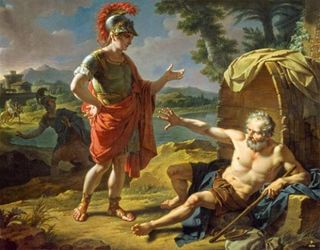
362538_f520If there’s one thing that a lot of people are sure they know about Cynicism, it’s that it’s nothing other than a usually unwarranted, almost totally negative attitude about life in general, and most of its individual elements.

And, if they think they’re talking about Cynicism the philosophy, with a capital C, they’re dead wrong. With a lowercase spelling, cynicism as a psychological attitude may be just that. As one of the great philosophies of classical Greece, with roots in the pre-Alexandrine Hellenic era, older than Stoicism and perhaps with pre-Socratic connections, they’re dead wrong.

Even people with some interest in philosophy usually know little that is true about Cynicism: that its founder, Diogenes, told Alexander to get out of his light, and that he (Diogenes) was known for masturbating in public.

Those are (likely) true, but they are mere tidbits, and the second was trotted out more than 2,000 years ago, and from that time on, as a transparent attempt to denigrate Cynicism. A denigration which was helped, to be fair, by the fact that later Cynicism did at times — perhaps in part facing the stark nature of Roman might — become a bit more like its own caricature.

More here.

Pakistan Must Discard its ‘Good Taliban, Bad Taliban’ Narrative

Beena Sarwar in the Huffington Post:

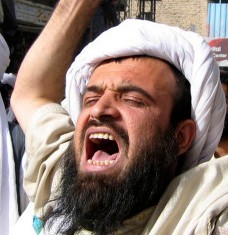
ScreenHunter_915 Dec. 18 15.19Although Prime Minister Nawaz Sharif has termed the Peshawar attack a national tragedy, announced three days of national mourning and promised to eradicate the terrorists, real change won't occur unless Pakistan discards the “good Taliban, bad Taliban” narrative and moves to decisively uphold the rule of law.

The innocent lives lost in Peshawar are among a staggering 50,000 civilians killed by the Taliban and their aligned groups in Pakistan since 9/11. Such civilian attacks have intensified in the last five years.

The Tehrik-i-Taliban Pakistan (TTP) said it carried out the Peshawar school attack in retaliation for the Pakistani army's ongoing military offensive against the Taliban. “This is a reaction to the killing of our children and dumping of bodies of our mujahideen [jihadis],” said a spokesman.

The attack on the Peshawar school is actually a measure of the success of the operation that was belatedly launched in June this year as it indicates the desperation of the Taliban, who had already been badly affected by America's drone strikes.

Many Pakistanis and allies in other countries like the U.S. have been demanding a decisive move against the Taliban and their aligned groups for years, but the army and government kept putting it off due to “lack of political consensus.” Leaders like former cricket hero Imran Khan have added to the confusion. Khan will condemn the Taliban but then also justify their actions by saying that they are acting in response to drone strikes or American imperialism.

More here.

On Genetic Privacy

Nathaniel Comfort in The Point:

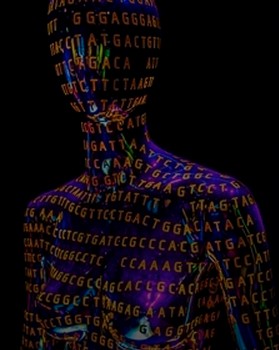
ScreenHunter_914 Dec. 18 14.55The notion that your genes are your essential self—genetic essentialism—is fairly recent. Although the idea that heredity contributes to our health and identity is ancient, the idea that for practical purposes it is all that matters dates only to the nineteenth century. The English statistician Francis Galton conceived of heredity as a subterranean stream of “germ plasm,” flowing down the generations, isolated and insulated from the environment’s buffeting of any individual body. In determining who we are, Galton wrote, nature was “far more important than nurture.”

That stream was increasingly polluted, Galton was convinced. Vexed by the fact that people paid more attention to breeding their cattle than themselves, in 1883 he proposed a scheme of hereditary improvement he called “eugenics,” meaning “well-born.” The stream of British germ plasm could be socially filtered, and even enriched, by persuading the “fittest” people (borrowing loosely from Darwin) to have more children; the “unfit,” fewer. A techno-optimist to the core, Galton believed that, given proper instruction, people would see the logic of this scheme and participate voluntarily. In this he was naïve—at least about the abstinence part. After 1900, eugenics became coercive, while the state’s trust in the population shriveled. Marriage restriction and sexual sterilization laws were keystones of state-run programs of hereditary improvement. When most people think of eugenics, they think of a scientifically rationalized program of racial purification, which it was. But eugenics always had a medical and public health dimension as well. The vast majority of forced sterilizations were carried out in a medical milieu—particularly in psychiatric hospitals. Eugenic sterilization was considered preventive medicine for incurable mental or other hereditary disease. This is the origin of medical genetics. Mainstream genetic medicine today isn’t eugenics, but it has a deep taproot in ideas of hereditary social control.

More here.

Reconsidering the legacy of Elia Kazan

Loc_james_kavallines-e1418244210544Wendy Smith at The American Scholar:

The uncomfortable fact about Kazan’s HUAC testimony is that it liberated him to be himself—at least in film. His relationship to the theater echoed his marriage with Thacher: genuine devotion curdled by the furious sense that making it work required denying his instincts. Kazan did have to compromise when dealing with movie executives, but that was business, and he didn’t compromise much. His four films following the back-to-back successes of On the Waterfront and East of Edenput him squarely in the forefront of the struggle to make American cinema more honest and adult.

They were very different in tone and content: Baby Doll was a gothic comedy, A Face in the Crowd a prescient portrait of media-fueled political demagoguery, Wild River a provocative reconsideration of New Deal social engineering, Splendor in the Grass a romantic melodrama. But all four had a forthright sexuality that alarmed the industry’s censorship board. In his correspondence with his studio bosses, Kazan drew a firm line: he would negotiate over trims to get the required Production Code Administration’s seal of approval, but he would not cut material he deemed essential to the story or crucial to understanding the characters, nor would he make concessions to appease pressure groups such as the National Legion of Decency.

more here.

Nietzsche Transformed: from Philologist to Philosopher

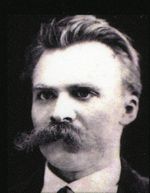
Nietzschecontrawagner.cov2Chad Wellmon at The Hedgehog Review:

In his Basel lectures, we can begin to see how Nietzsche the philologist became Nietzsche the philosopher, the moral psychologist who would go on to diagnose the ills of modernity. He would have his readers believe that his observations were untimely, indeed timeless, but they were only partly so. Even as a young, increasingly disaffected professor of classics, Nietzsche assumed a prophetic voice, but his prophecies were woven out of the particularities of late nineteenth-century German culture in transition.

Nietzsche arrived in Basel in 1869, just two years before the Prussian victory over Napoleon III in the Franco-Prussian War and the declaration of the German Kaiserreich. He was a keen observer of Otto von Bismarck’s Kulturkampf—the decades-long conflict between the Catholic Church and a Protestant-dominated German state. Bismarck’s battle to secularize the German state was waged through bureaucratic chicanery, but Nietzsche saw it as a mere skirmish in the larger battle to define Germany’s religious and cultural future. Writing to a friend in 1870, shortly before Prussia’s military triumph, Nietzsche cautioned that “we must be philosophers enough to remain sober in the universal ecstasy so that the thief does not come and steal or diminish something to which—for me—all the greatest military deeds, even all national uprisings, cannot compare. For the coming period of culture, fighters will be needed. We must save ourselves for this.”1 For Nietzsche, the confessional conflict of the new German empire portended a larger and more significant struggle for culture. And like many of his contemporaries, he doubted that political unity would easily translate into cultural and spiritual unity.

more here.

Letter from Österlen

0314ILCU15_MILKarl Ove Knausgaard at Paris Review:

NOVEMBER 26, 8:55 P.M. I woke to the wail of a siren last night, got to my feet, and hurried downstairs to find out what it was. My first thought was the fire alarm, even though the sound was too loud and powerful for that. Still confused from sleep, heart pounding, I ruled out the fire alarm. I hurried to the window at the far end of the house, thinking it might be the car alarm, even though I knew the sound was wrong, but the car stood unmoved and untouched in the driving snow. The siren continued to wail and now I knew it was coming from outside. Someplace close by. It had the power of an air-raid siren but was different, it went off and on.

Then it stopped. I went around and looked out all the windows. Nothing out of the ordinary. Just snow drifting along the empty road, beneath the yellow glow of the streetlights.

The clock in the kitchen showed twenty to four. I went back up to bed and fell fast asleep. When I woke, it was daytime. The sky was covered in clouds, the wind gusting, ground snow joining the flurries that filled the air. I’ll probably never find out what kind of siren it was.

more here.

Thursday Poem

Liberation
.

Captives
Arise
rise and chisel the mountains
mountains of dead traditions
mountains of blind beliefs
mountains of cruel hatreds.

In the prisons of our bodies
countless restless bodies
and grieving souls sob
they wander ’round from stairway to stairway
asking when we shall free them.

Our existence is for the future generations
we owe them,
those who will come into being
through us come into existence.

The severed head which gives birth to thousands of heads

is no longer just a story.
That which throbs in the blood,
is whining,
thousands of eyes from the veins of the body,
peering restless eyes
are saying this:
Captives
These, who sleep in a house,
of yellow stone
wrapped in sheets of insensitivity
tell them
to rise
and chisel the mountains.
We have to think of liberation.

by Rukhsana Ahmad
from We Sinful Women: Contemporary Urdu Poetry
The Women's Press, London, 1991

Wednesday, December 17, 2014

Today, for us young citizens, Pakistan feels like a country empty of dreams

0ceaf640-868d-49e2-b13c-99c593969723

Fatima Bhutto in Scroll (Photo Credit: Rizwan Tabassum/AFP):

There is no word for a parent who buries a child. No equivalent of widow or orphan in any language that I know, we do not have the language to describe a parent who lays his child into the earth before his time. So with what tongue do we speak of the dead now? It is a sorrow too large to bear.

But with sorrow, there is anger in Pakistan today. There is anger at those who turned their eyes away from terror and let the cost be paid in human lives. There is anger at those who offered the killers silence, refusing to condemn them by name. There is anger at those who saw some expediency in the deaths of innocents. There is anger, there is anger and then there is shame.

There is shame to read of the three first aid instructors who had come to teach the children of Peshawar’s Army Public School about emergency aid when they were killed.

There is shame to know that most of the dead, most of the children killed, were shot in the head.

There is shame towards those whom we cannot apologise to, to the countrymen we did not, could not, protect. Shahrukh Khan, 16 years old and asked to recount the horrors of the day told the press that the men who came to kill him and his classmates looked under the school benches, making sure they had left no one alive. Shahrukh, who was shot in both legs, stuffed his tie in his mouth to stop himself from screaming. What language do we have to reassure Shahrukh? When it comes to words, I have none.

Taliban, it bears noting, means students in Arabic.

What kind of student brings blood into a place of learning?

In the aftermath of the carnage in Peshawar, India announced a two-minute silence across their schools, a two-minute silence of grief and solidarity. Turkey called for a day of mourning. And in Pakistan today, we grapple with language. How do you eulogise a woman burned to death in front of her students? Who is a Taliban when so many public figures – anchor-men, politicians, and disaffected, alienated youth – trade in nothing but hate? How have we spoken this long of the terror we all face – the attack on the Istiqlal school in Kabul that killed six Afghans and injured many others, the women raped as they rode night buses in Delhi, and the children of Peshawar – without compassion for each other?

More here.

The Endlessly Examined Life: A most chronic depression

HollandƒPhrenology-1024x1024

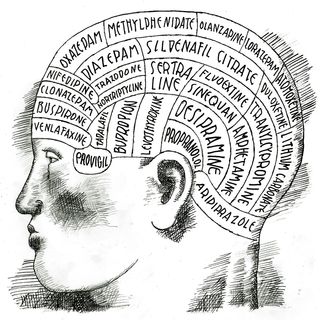
George Scialabba in The Baffler (illustration by Brad Holland):

My mental health file whirs to life in 1969 in Cambridge, Massachusetts. I’d recently left Opus Dei, the Catholic religious order to which I’d committed my young soul, and a major depression had followed. The records printed below are out of the mouths of my many caretakers; they chronicle my treatment at various medical offices and psychiatric clinics in the Boston area, from then until 2012.

How did I come by them? As I headed into a depression two years ago, a friend who was helping out thought it would be useful to see my records, so I asked for them. Why publish them now? Certainly not because I think these extracts from my treatment notes display any special literary facility or reveal an exceptionally interesting psyche, nor because I intend the slightest scandal to be visited on my therapists, employers, or insurance company. All proper names have been altered.

Our distractible human intelligence needs as many ways of talking about depression as can be provided—that’s all. Plus, given the longevity of this particular demon, it seems important to try to squeeze some insight from the mass of words and array of prescription drugs applied against its havoc. Even the most comprehensively bureaucratized medical knowledge can be made to speak, if only we are willing to listen closely to the blank spaces, the paraphrases. Even acronyms have feelings.

A note on medications: Fifty-plus years into the Antidepressant Age, it’s still not clear that drugs are better than placebos. There aren’t many long-term studies of efficacy or side effects, and the FDA requires surprisingly few trials before approval. Each of the drugs comes with a more or less plausible scientific explanation for why it should work. But all we know is that some people get better after taking them, some people don’t, and some people get better without taking them.

Of course, from a patient’s point of view, this is all moot. If you’re jumping out of your skin and the doctor says to take some pills, you take them. In my case, none of them worked spectacularly well. But only a couple had intolerable side effects or made the depression worse.

More here.

The Rise of ‘Welfare Chauvinism’

Edsall-circular-thumbLarge-v3

Thomas B. Edsall in the NYT:

The United States and Europe reveal the contrasting ways in which political systems in advanced democracies cope with factors as diverse as globalization, depressed wages, cultural tension, welfare policy, immigration and nontraditional family structures, along with racial, ethnic and religious division.

In the United States, the besieged two-party system has remained intact, protected by a 200-year-old tradition and an electoral system that cuts short any bid to create a viable third party.

There are two major costs to this stability: recurrent gridlock, which constricts legislative action, and a failure to provide full representation to the most aggrieved constituencies.

European democracies have taken a different path.

Parliamentary elections, often in conjunction with proportional representation, have allowed multiple parties — at both ends of the political spectrum — to flourish. In many cases, the European system has empowered anti-immigrant populist parties on the right. These parties have adopted a strategy that might seem strange on its face but actually makes sense, according to the logic of their grievances: exclusionary nationalism combined with generous support for safety-net programs available only to legal residents.

Here and abroad, there are striking similarities in the dynamic that is forcing major adjustments in the political system.

The working class on both sides of the Atlantic is struggling to adapt. “The separation, if not alienation, of the ‘working class’ from the traditional center-left parties” is a “global phenomenon shared by all post-industrial democracies,” Herbert Kitschelt, a professor of international relations at Duke, wrote in an email to me.

More here.

biopolitics, the Anthropocene and neoliberalism

Mat Coleman and Kathryn Yusoff interview Elizabeth Povinelli in Society and Space:

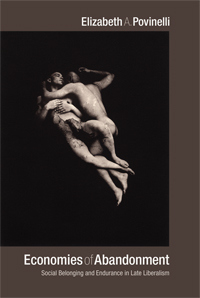
BookMat Coleman: In your recent work, and specifically in Economies of Abandonment, you pose a challenge to many theorists of neoliberalism in the sense that you identify the ‘cultural’ problem of late liberalism, i.e. a violent politics of cultural recognition in the wake of anti- and post- colonial social movements, as diagonal to the economic project(s) of neoliberalism as such. Your suggestion is that it is inadequate to see a cultural politics of late modernity as a sort of superstructural ephemera to late modern regimes of accumulation. But what exactly does your disaggregation of late liberalism and neoliberalism allow you to do which other theorizations of neoliberalism, which treat accumulation and regulation together, cannot do?

Elizabeth Povinelli: I must admit I have changed my use of the phrase late liberalism since publishing Economies of Abandonment. Whereas, you’re right, there I distinguished late liberalism from neoliberalism, I now use the phrase “late liberalism” to indicate a period, or development, in “liberalism” that stretches loosely between the late 1950s and the 00s. So late liberalism is meant as a way of periodizing and spatializing liberal formations. The argument is that from the 50s through the 70s, liberal governments—liberal governmentality—were shaken by two severe legitimacy crises. On the one hand, anticolonial, Native, and radical social movements shook the legitimacy of paternalistic liberalism and, on the other hand, Keynesian stagflation shook the legitimacy of the capitalist management of markets. From the perspective of these two slow moving events the politics of recognition and economics of neoliberalism should be seen as strategic containments of potentially more radical futures. It’s unclear whether in the wake of 9/11 multiculturalism remains the key mode of containing the radical otherwise and in the wake of the financial crisis of 2008 neoliberal market forms will mutate into something else.

More here.

Why there would have been no CIA torture without the psychologists

Steven Reisner in Slate:

141212_POL_APACIA.jpg.CROP.promo-mediumlargeThanks to revelations in the newly released report from the Senate Select Committee on Intelligence, it is now widely known that the CIA’s torture program was created, supervised, and implemented by two licensed clinical psychologists—James Mitchell and Bruce Jessen—who were paid millions of dollars for their efforts. Less widely known is that the Bush administration’s torture operation, at both the CIA and the Pentagon—at “black sites” and at Guantanamo—was devised and supervised largely by clinical psychologists. These psychologists used their knowledge of the workings of the human mind and psychological “mind-control” research to induce “learned helplessness” and “debility, dependency, and dread,” aiming to destroy the minds of detainees in the hope that “actionable intelligence” and “critical threat information” could be sifted from the wreckage.

The psychologists were vital to the torture program for one additional reason: The Justice Department’s Office of Legal Counsel had determined that the presence of psychologists and physicians, monitoring the state and condition of the prisoner being tortured, afforded protection for the CIA leadership and the Bush administration from liability and potential prosecution for the torture. Later, the OLC applied the same rules to the Defense Department’s “enhanced interrogation program,” which, according to an investigation by the Senate Armed Services Committee, was created and overseen by a team led by a clinical psychologist, and eventually overseen exclusively by clinical psychologists.

More here.

How horizontal gene transfer changes evolutionary theory

Ferris Jabr in Aeon:

ScreenHunter_913 Dec. 17 16.11Between 300 and 130 million years ago, as trees and flowering plants grew to dominate the globe, the sun-loving ferns of yore found themselves trapped beneath forest canopies. Most fern species perished under this umbrage, but the ones that survived learned to live on lean light. These persistent plants evolved a molecule called neochrome that could detect both red and blue light, helping them stretch towards any beams that managed to filter through the dense awning of leaves.

Neochrome’s origins have long eluded scientists. As far as anyone knew, the gene that codes for neochrome existed in only two types of plants separated by hundreds of millions of years of evolution: ferns and algae. It was extremely unlikely that the gene had been passed down from a common ancestor, yet somehow skipped over every plant lineage between algae and ferns. About two years ago, while searching through a new massive database of sequenced plant genomes, Li found a near-exact match for the neochrome gene in a group of plants not previously known to possess the light-sensitive protein: hornworts. Through subsequent DNA analysis of living specimens – like those he collected in Florida – Li confirmed his suspicion: ferns did not evolve neochrome on their own; rather, they took the gene from hornworts.

More here.

In search of the ‘New Turkey’

Genc_newturk_468wKaya Genç at Eurozine:

If a time traveller had come to visit me in the early 1990s and foretold a future where Turkey's conservatives would install an 81km-long underground railway network, with 65 stations, in Istanbul – a city of overcrowded buses and chronic traffic – I would have laughed at him. But, once in government, the AKP did indeed modernise the city to a great degree. In the preceding decades, defenders of Turkey's old political elite had adapted an isolationist, Eurosceptic and statist tone, and the economy they had created favoured only the privileged bureaucratic classes. This meant the closing of doors to “strivers” from the poor, rural communities. Yet the shifts that have taken place in the last decade, where Turkey's economic growth has brought migrants from those rural communities into the heart of its cities, have led to an uneasy reconciliation between religion and modernity. Conflicts between these two spheres became increasingly pronounced. Pious politicians asked for alcohol-free neighbourhoods and there were tighter regulations on events like rock concerts, which rang alarm bells for the secular youth; in response, members of the upper middle classes became more vocal in their complaints about Arab tourists and Syrian refugees, whom they accused of being backward.

In the first half of the noughties, a democratic, Islamic and pluralistic Turkey was an attractive proposition for Western observers who had been searching for ways of reconciling Islam and democracy in their own countries, especially after 9/11. In the West, Turkey was increasingly presented as a model for its Arab neighbours, while in the wake of Egypt's revolution in 2011 Erdogan surprised many Islamists in other countries by praising Turkey's secular model at a Muslim Brotherhood rally in Cairo.

more here.

The eloquent silences of Albert York and Judith Scott

Schwabsky_yesnomaybe_ba_img_0Barry Schwabsky at The Nation:

Generations of readers have puzzled over the opening lines of William Carlos Williams’s best-known poem: “so much depends / upon // a red wheel / barrow.” What exactly does depend on it? The poet, content to keep a secret, stays mum. There happens to be a red wheelbarrow in a 1974 painting by Albert York, whose work is now the subject of a beautiful retrospective in Manhattan at the Matthew Marks Gallery, through December 20. The wheelbarrow could be called pink, but I imagine that it’s a red that has faded from long exposure to the elements. And besides, York’s palette never included bright colors; pale, shadowy hues stood in for the whole spectrum. Whatever he painted he painted with uncanny concentration, as if nothing else existed for him except his perception or imagination of his subject in that moment. So much depended on it, though what he could never say. As the very first review of York’s work, in Art News in 1963, put it: “He is a specialist in very tiny, important differences.”

York, who died five years ago at age 80, was notoriously reclusive, so he might have been mortified by the show at Matthew Marks. But then, his viewpoint was singular: he would not attend exhibitions of his own work, and when he finally did—in 1989, at the Parrish Museum in Southampton, New York, just a few miles from his home—the result was devastating. What he’d done was “pretty bad. It has no relation to good painting,” he later told Calvin Tomkins, in the only interview he ever gave, for a New Yorker profile reprinted in the Matthew Marks catalog.

more here.