
Enjoying the content on 3QD? Help keep us going by donating now.
Category: Recommended Reading
Psychology studies cast doubt on old assumptions about legal objectivity
Samu Czabán at Psyche:
 Among the many consequential decisions judges have to make, they weigh in on parole requests: determining whether an individual will regain freedom or remain confined to a prison cell. Several factors normally play a role in these rulings, such as the risk of recidivism, the severity of the crime and the inmate’s behaviour. However, when a group of researchers analysed the decision-making patterns of Israeli judges, more than a decade ago, they noticed something peculiar. The judges released many people at the beginning of the day. But as the hours passed, they became stricter. As lunchtime approached – and the judges presumably grew hungrier – they barely granted anyone parole. Then, after a meal, they became more lenient again. While the conclusions of this ‘hungry judge’ study have since been critiqued, it prompted further consideration of the extent to which justice might depend on extraneous factors such as food breaks.
More here.
Enjoying the content on 3QD? Help keep us going by donating now.
Edmund White In Conversation With Bill Goldstein
Enjoying the content on 3QD? Help keep us going by donating now.
‘The Loves of My Life’ by Edmund White
Peter Conrad at The Guardian:
 Don’t expect to read Edmund White’s The Loves of My Life with one hand. True, it is subtitled A Sex Memoir, and it hotly reminisces about a few dozen of the 3,000 partners White, who is 85 and still counting, has so far totted up. It does contain some glances at the more esoteric specialities of gay sex, including a scene in which White kneels in an abandoned Manhattan warehouse to imbibe six cans’ worth of warmly recycled beer “from the tap of my date’s microbrewery”. There is also a fortunately terse reference to what in medical shorthand is called a BM. But this coital anthology turns out to be about love and its dreamy spirituality, despite the risque and often risky rutting it describes.
Above all, White’s preoccupation is language, since for him sex initially ignites in the head and is consummated on the page, with bodily pleasure or pain as a merely intermediary stage. The itch of lust, in most of these encounters, soon turns into swooning poetic ardour. “Older queens”, as White says, tutor him in the technical skills that sex requires; to learn about the accompanying emotions, he returns to the Renaissance troubadours, who invented the idea of love in the songs and sonnets they addressed to an inaccessible mistress, “a remote, rather ball-shrinking stand-in for the Virgin Mary”.
more here.
Enjoying the content on 3QD? Help keep us going by donating now.
The Women Philosophers Of 19th-century Massachusetts
Francesca Wade at the New York Times:
 From 1840, Peabody’s became the meeting place for a motley group of women, aged between 13 and 60, who came together simply to talk. These “conversations” were the brainchild of Margaret Fuller, a free-spirited critic and editor widely considered the best-read woman in New England, who believed, writes the author (a very distant relation), that “the individual came into radiant being” through interaction. These women were hungry for knowledge; excluded from formal education, they had pursued their own courses — plying ministers with questions, devising reading programs, initiating correspondences — and the conversations provided them with much-desired structure, motivation and solidarity.
If sessions began with discussions of literature, Greek mythology and philosophy, it was Fuller who tended to bring the debates around to the topics of girls’ education, marriage and motherhood, and the unrealized potential she saw among her female peers. “What were we born to do?” she urgently asked the group. “How shall we do it?”
more here.
Enjoying the content on 3QD? Help keep us going by donating now.
A Start-Up Claimed Its Device Could Cure Cancer. Then Patients Began Dying
John Carreyou in The New York Times:
 The private jet took off from the Caribbean island of Antigua in April carrying three highly combustible tanks of compressed oxygen and a terminally ill cancer patient.
Kim Hudlow had chartered the plane for her husband, David. She crouched by his side on the five-hour journey to Florida, frantically adjusting the valve on one of the oxygen tanks as he struggled to breathe. A doctor had just told her he was dying. She was terrified he wouldn’t survive the flight. It was an abrupt turnaround. Six days earlier, Ms. Hudlow and her husband, who had late-stage esophageal cancer, had arrived on the tropical island full of hope that a novel blood-filtering treatment offered there would save Mr. Hudlow’s life — or at least prolong it. They were among about two dozen families lured to Antigua by a California start-up called ExThera Medical and its secretive billionaire partner, Alan Quasha.
More here.
Enjoying the content on 3QD? Help keep us going by donating now.
Harper’s Art Desk

Friday Poem
Small Poems
1.
Silent morning garden,
sudden crash.
No explanation
in the quiet leaves.
One flower nods:
I heard it too.
2.
morning walk
another X
shining in my path
beautiful slime
of slug’s passing
3.
Summer dawn again
twenty years and more are gone
all of a sudden
4.
caught on roof edge
raindrops catch light
each a perfect world
before it falls
5.
me and the begonia
lit from within, lit without
caught in a net of light
6.
White shines high in a tree—
sudden flowers of a climbing vine,
their fragrance not meant for me
by Johanna Jordan
from Small Poems
Enjoying the content on 3QD? Help keep us going by donating now.
Thursday, January 23, 2025
Years ago, writer Pico Iyer lost everything in a wildfire and this is what he learned
Terry Gross at NPR:
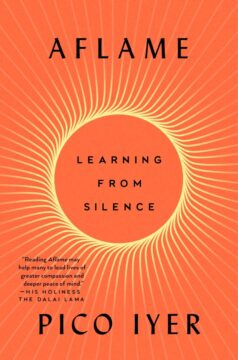 Southern California families who have lost everything the in recent wildfires are reckoning with what it means to start over. Writer Pico Iyer’s eerily timed memoir, Aflame: Learning from Silence, speaks to that experience.
In 1990, Iyer was alone in his mother’s house in Santa Barbara when a wildfire swept through the region. Suddenly, it seemed, he was surrounded by flames.
“I literally didn’t have time to pick up the passport that was two feet away,” Iyer says. “I just grabbed my mother’s cat, raced into a car and drove down the driveway, not thinking that the car was probably the worst place to be.”
Trapped in the car with a panting cat on his lap, Iyer says he tried to focus on keeping the cat alive — and not on how vulnerable felt as as he watched the house he had just escaped from burn to the ground.
More here.
Enjoying the content on 3QD? Help keep us going by donating now.
Can AI Models Show Us How People Learn? Impossible Languages Point a Way
Ben Brubaker at Quanta:
 If language models really are learning language, researchers may need new theories to explain how they do it. But if the models are doing something more superficial, then perhaps machine learning has no insights to offer linguistics.
Noam Chomsky(opens a new tab), a titan of the field of linguistics, has publicly argued for the latter view. In a scathing 2023 New York Times opinion piece(opens a new tab), he and two co-authors laid out many arguments against language models, including one that at first sounds contradictory: Language models are irrelevant to linguistics because they learn too well. Specifically, the authors claimed that models can master “impossible” languages — ones governed by rules unlike those of any known human language — just as easily as possible ones.
Recently, five computational linguists put Chomsky’s claim to the test. They modified an English text database to generate a dozen impossible languages and found that language models had more difficulty learning these languages than ordinary English. Their paper, titled “Mission: Impossible Language Models(opens a new tab),” was awarded a best paper prize at the 2024 Association of Computational Linguistics conference.
More here.
Enjoying the content on 3QD? Help keep us going by donating now.
How Tyranny Begins
Enjoying the content on 3QD? Help keep us going by donating now.
“The Science of Racism” by Keon West, a review
Farrah Jarral in The Guardian:
 It was over schnitzel and mash that my friend’s Bavarian grandparents decided to call me a “black devil”, chuckling all the while. Breaded chicken has since been my madeleine, taking me back to racially charged moments I’ve not known quite how to interpret. Is it really racist if they didn’t mean to be rude? What if they have dementia? And if racism = prejudice + power, was being called a black devil while I choked down some potatoes even that big a deal, given that I felt in no way disempowered in the company of my tiny, elderly hosts?
In his succinct and bingeable book The Science of Racism, professor of social psychology Keon West begins by acknowledging that society doesn’t agree on even the most basic aspects of racism, let alone its finer points. Indeed, roughly half of Britons don’t believe minorities face more discrimination than white people in various areas of life. Yet far from being a set of hazy, unanswerable philosophical questions, many of the unknowns about racism are empirically testable, especially if researchers design clever studies.
More here.
Enjoying the content on 3QD? Help keep us going by donating now.
Nick Mount on Mavis Gallant
Enjoying the content on 3QD? Help keep us going by donating now.
That Shape Am I
Patricia Lockwood in London Revie of Books:
 Tell me your mystic and I will tell you who you are. The Little Flower, she of the astonishing self-love? Hildegard of Bingen, glowing like rock crystal, or Simone Weil, picking herself like a scab? Teresa of Avila, a chilly forehead and a warm thigh, or St Simeon, being written by the tip of his stylus? You may prefer Marguerite Porete, burning alive with her book, or the rich black intersection of St John of the Cross or the pyroclastic whisper of Anonymous, Unknown Author. Or something a little closer to home – Jeannie, for instance, the family friend whom my father (a Catholic priest in full cassock) calls simply a Eucharistic mystic, so guilelessly, and with such evident trust, that he does not even realise it rhymes.
I picked up Simon Critchley’s On Mysticism because I wanted to read it. A survey of historical mystics, examined through the lenses of writers such as Anne Carson and Annie Dillard and T.S. Eliot? Sketches of Dionysius, Bernard of Clairvaux, Christina of Markyate, Christina the Astonishing, Hadewijch of Antwerp, Mechthild of Magdeburg, Angela of Foligno, Marguerite Porete, Meister Eckhart, Henry Suso, Richard Rolle, Julian of Norwich, Margery Kempe, Teresa of Avila, Marie of the Incarnation and Madame Guyon – what could overlap more completely with my interests? Also, Critchley has written more than twenty books on subjects as various as suicide and David Bowie; this must mean something. But when I began to read, I knew I was in danger, for this was Philosophy.
More here.
Enjoying the content on 3QD? Help keep us going by donating now.
Meta’s New AI Translates Speech in Real Time Across More Than 100 Languages
Shelly Fan in Singularity Hub:
 The dream of a universal AI interpreter just got a bit closer. This week, tech giant Meta released a new AI that can almost instantaneously translate speech in 101 languages as soon as the words tumble out of your mouth.
AI translators are nothing new. But they generally work best with text and struggle to transform spoken words from one language to another. The process is usually multistep. The AI first turns speech into text, translates the text, and then converts it back to speech. Though already useful in everyday life, these systems are inefficient and laggy. Errors can also sneak in at each step. Meta’s new AI, dubbed SEAMLESSM4T, can directly convert speech into speech. Using a voice synthesizer, the system translates words spoken in 101 languages into 36 others—not just into English, which tends to dominate current AI interpreters. In a head-to-head evaluation, the algorithm is 23 percent more accurate than today’s top models—and nearly as fast as expert human interpreters. It can also translate text into text, text into speech, and vice versa.
More here.
Enjoying the content on 3QD? Help keep us going by donating now.
The Uncollected Stories of Mavis Gallant
Nadia Ghent at the LARB:
 “THE MONTE DE PIEDAD [a pawnshop] is run like a bank, big, efficient, and clean,” Mavis Gallant writes in her diary in 1952 soon after arriving in Madrid from Montréal. “I part with my typewriter for fifteen hundred pesetas. It turns out that in this country it is the most valuable thing I own.” Gallant, ex-journalist, expatriate Canadian, is forced to choose between writing and starvation. She has left the familiarity of her North American hometown for the uncertainty of a postwar Europe struggling to return to the 20th century, the place where she intends to write fiction unfettered by assumptions about her ability to support herself as a writer. She is expected to fail, a woman alone without husband, family, or money. Still, she is intent on bowing to no one, least of all to the chorus of literary gatekeepers who believe women only want to write about cooking. She is so hungry that she faints in the street.
And yet, she has the confidence to hock the means of her livelihood, her typewriter, knowing that a market exists in the United States for her sharply drawn, realist short stories.
more here.
Enjoying the content on 3QD? Help keep us going by donating now.
Thursday Poem
Part of Eve’s Discussion
It was like the moment when a bird decides not to eat from your hand,
and flies, just before it flies, the moment the rivers seem to still
and stop because a storm is coming, but there is no storm, as when
a hundred starlings lift and bank together before they wheel and drop,
very much like the moment, driving on bad ice when it occurs to you
your car could spin, just before it slowly begins to spin, like
the moment just before you forgot what it was you were about to say,
it was like that, it was still like that, only
all the time
by Marie Howe
from New American Poets
David R. Godine Publisher, Boston, 1991
Enjoying the content on 3QD? Help keep us going by donating now.
A New Biography Of A Caribbean Revolutionary
Madison Smartt Bell at The American Scholar:
 Forty years ago, most white Americans had no idea that, hard on the heels of the American and French revolutions, an enslaved population on a Caribbean island had claimed its freedom by force of arms and founded a new Black nation called Haiti. Today, Haitian revolutionary studies is an overcrowded field. Researchers have combed through acres of hard-to-find and often drastically disorganized archives, not only in Haiti and France but also in other European and Caribbean countries, and made their contents a lot more orderly and accessible than they used to be. Still, reconstructing the profile of even a fairly well-known individual from the revolutionary period can be something like deducing a whole dinosaur from a couple of toenails and teeth—a problem that confronts Marlene Daut in the writing of her exhaustive and sometime exhausting biography of Henry Christophe, the onetime king of Haiti.
more here.
Enjoying the content on 3QD? Help keep us going by donating now.
Wednesday, January 22, 2025
What Would Gabriel García Márquez Have Thought of the Netflix Version of His Novel?
Ariel Dorfman at Literary Hub:
 It was in a trattoria on the Piazza Navona in early April of 1974 that for the first but not the last time I heard Gabriel García Márquez refuse to even contemplate turning his masterpiece, Cien Aňos de Soledad, into a film.
Gabo—as his friends called him—was in Rome as one of the vice-presidents of the Second Russell Tribunal convened to denounce human rights violations in Latin America, so the conversation that evening was basically political. But towards the end, a question was broached by the illustrious Brazilian director, Glauber Rocha. Everyone else at the table went quiet—it was a star-studded gathering, the Argentine author Julio Cortázar, the legendary Chilean artist Roberto Matta, the exiled Spanish poet Rafael Alberti and his white haired wife, María Teresa León, who had sworn at some point during the evening that she would enter Madrid on a white horse, totally naked, as soon as Franco died.
None of us expected the vehement reaction of the Colombian novelist, usually so softspoken. “Never!” Gabo exclaimed. “To synthesize that story of seven generations of Buendías, the whole history of my country and all of Latin America, really of humanity, impossible. Only the gringos have the resources for that sort of film. I’ve already received offers: they propose an epic, two hours, three hours long. And in English! Imagine Charlton Heston pretending he’s an unknown, mythical Colombian in a fake jungle.” And added a definitive, “Ni muerto!”
Which could be translated as “Over my dead body” but better rendered as “Not even after I’m dead!”
More here.
Enjoying the content on 3QD? Help keep us going by donating now.
Why Agentic AI Will Soon Make ChatGPT Look Like A Simple Calculator
Bernard Marr in Forbes:
 What makes agentic AI truly revolutionary is its architecture. While generative AI excels at processing and producing content based on patterns in its training data, agentic systems incorporate sophisticated planning modules, memory systems, and decision-making frameworks that allow them to maintain context and pursue objectives over time. They can break down complex tasks into manageable steps, prioritize actions, and even recognize when their current approach isn’t working and needs adjustment.
We’re beginning to see the first signs of convergence between generative and agentic capabilities in mainstream AI tools. OpenAI’s recent introduction of scheduled tasks in ChatGPT represents an early step in this direction. This feature allows the AI to operate semi-autonomously, performing scheduled actions and maintaining ongoing responsibilities without constant user prompting. While still in its early stages, it points to a future where AI systems combine the creative and analytical capabilities of generative AI with the autonomous decision-making of agentic AI.
More here.
Enjoying the content on 3QD? Help keep us going by donating now.