
Anne Enright in The Guardian:
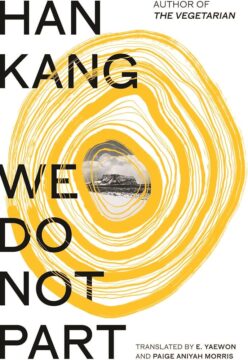 There are books in a writer’s life that gather all their previous themes and explorations in a great act of creative culmination, which both surpasses what had gone before and makes it more clear. We Do Not Part is one of those books. Published last year in Swedish translation, it helped to secure Korean writer Han Kang the 2024 Nobel prize in literature.
Those who know Han’s work will recognise previous themes and methods here. Like the eponymous character in The Vegetarian, the narrator of We Do Not Part, Kyungha, is fragile and resilient. She finds it hard to sleep or eat, suffers from summer heat and winter cold, and endures terrible physical suffering for reasons that can be hard to understand. Both stories feature video artists, sisterly bonds, and nightmares of murder and bloodshed set in Korean woodlands.
There are structural similarities, too. The Vegetarian (whose three distinct sections were originally published separately) moves from one to another point of view around the central, finally starving, figure of Yeong-hye. In We Do Not Part, each section gives way to something that feels stylistically very different, though there is only one narrator and the action takes place over the course of a few days.
More here.
Enjoying the content on 3QD? Help keep us going by donating now.
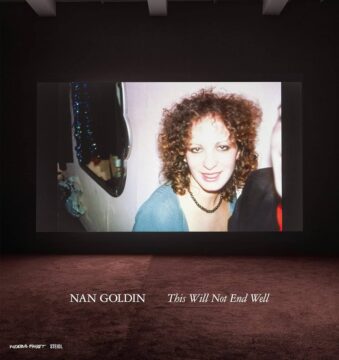 Goldin’s sharp eye makes her stories simple, but it doesn’t make them easy. Sisters, Saints and Sibyls (2004-22) is a tribute to her elder sister, Barbara, who was institutionalised when she hit puberty and killed herself aged eighteen. A few years later, Nancy – as she was then – ran away from home. She was fostered and in 1968 landed in a ‘hippy free school’ called Satya, in Massachusetts. She spent as much time as she could at the Brattle Theatre and the Orson Welles cinema in Cambridge. The school had a grant from Polaroid, which was based nearby, and Goldin was one of the students given a camera. ‘Photography,’ she said recently, ‘was a way to walk through fear.’ As a teenager she was reticent and barely spoke, but became friends with a fellow student (and fellow photographer), David Armstrong. The camera became a solution to the problems of childhood, of growing up, of what was happening to her now – a way of proving her experiences were real.
 High in the skies of Earth, a new space race is underway. Here, just above the boundary where space begins, companies are trying to create a new class of daring satellites. Not quite high-altitude planes and not quite low-orbiting satellites, these sky skimmers are designed to race around our planet in an untapped region, with potentially huge benefits on offer.
 Google’s parent company lifting a longstanding ban on artificial intelligence (AI) being used for developing weapons and surveillance tools is “incredibly concerning”, a leading human rights group has said.
 For Kristian Cook, every pizza box he opened was another door closed on the path to overcoming obesity. “I had massive cravings for pizza,” he says. “That was my biggest downfall.” At 114 kilograms and juggling a daily regimen of medications for high cholesterol, hypertension and gout, the New Zealander resolved to take action. In late 2022, at the age of 46, Cook joined a clinical trial that set out to test a combination of the
 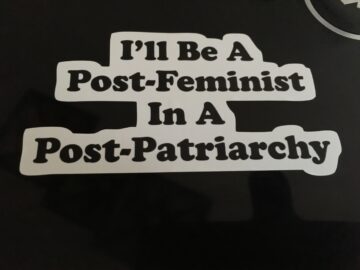 Women have always had a special relationship with lies; often, we have relied on them for survival. But it was the aspirational feminism of the 2010s—individualistic, empowering, breathless, especially after SoulCycle—which first introduced many of us to the art of lying to ourselves.
 QUIETLY, ALMOST ELUSIVELY, video has become the dominant medium of human communication. There are hundreds of billions of cameras out in the world filming as you’re reading this article. Two-thirds of global internet traffic is video; that number continues to climb. If we date print back to 1455 and
 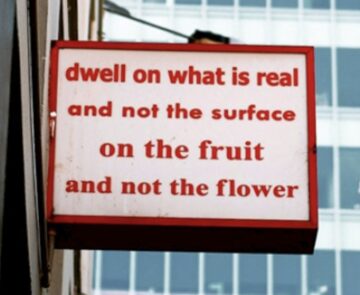 In a column for The Point magazine, Agnes Callard, a philosopher and professor at the University of Chicago, comes out against advice. She makes her case using an anecdote involving the novelist Margaret Atwood. Asked about her advice for a group of aspiring writers, Atwood is stumped and ends up offering little more than bromides encouraging them to write every day and try not to be inhibited. Callard excuses Atwood’s banality, blaming it on the fundamental incoherence of the thing she was asked to produce.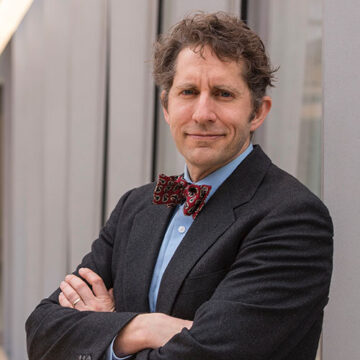
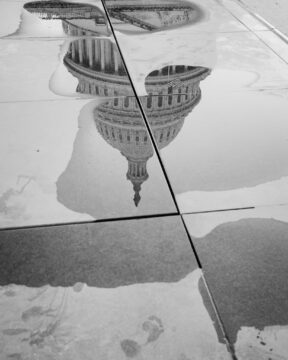 We were fortunate that during our tenures in office no effort was made to unlawfully undermine the nation’s financial commitments. Regrettably,
 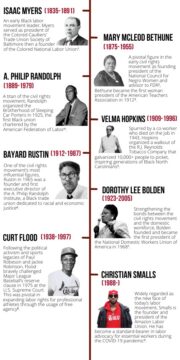 Black History Month is a time to reflect on the central role of Black people in shaping this nation. Nowhere is that more evident than the labor movement. A founding tenet of American capitalism and our economy is that Black bodies are worth more than Black minds. This belief is continually demonstrated by the value placed on Black workers and their work. During the COVID-19 pandemic, Black workers risked their lives in essential jobs to keep the country operating. And in doing so faced an
 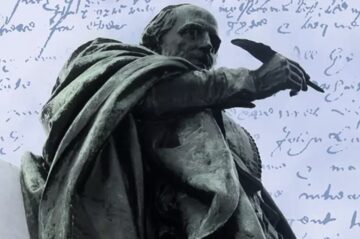 The most striking assertion in Wittgenstein’s critique of Shakespeare may be this, written in 1946: “Shakespeare’s similes are, in the ordinary sense, bad. So if they are nevertheless good – & I don’t know whether they are or not – they must be a law to themselves.” What makes Wittgenstein think he can lay claim to such a judgment? Part of the answer may lie in Wittgenstein’s own remarkable talent for similes and figures of comparison. Given their importance to his way of doing philosophy, it shouldn’t surprise that he was good at making them, and knew he was good.