Friday Poem

Fire
.

the Lord your God is a consuming fire

The stories of the gods outshine the moon

your story is darkness outshining the sun

we hide our eyes because of your fire

at the moment of the mountain

let not God speak to us lest we die

no wonder history gives us

cities like widows

sitting in their menstrual blood

no wonder book of revelation surges up

four horsemen orgy of vengeance

after nonviolent gospels

no wonder swarms of Christian soldiers

burning libraries

burning heretics

no wonder chapel in Cuzco

sculpted conquistador striding upon

the prone body of an Indian

no wonder imams cut hands off sinners

no wonder the Jewish lunatic murders worshipers

in a place of reconciliation

everybody trying to look goes blind
.
.
by Alicia Ostriker
from The Book of Life: Selected Jewish Poems 1979-2011
University of Pittsburgh Press, 2012

Thursday, September 3, 2015

Israel’s funniest Palestinian writer decamps to the Midwest

150907_r26921-690Ruth Margalit at The New Yorker:

Political debate in Israel is vigorous, if not always elegant, often summoning the old Hebrew phrase that describes “a dialogue between deaf people.” But it has been dampened in recent years by a series of government-sponsored bills: one demanding that non-Jewish Israelis take loyalty oaths; another authorizing the finance ministry to withhold funds from organizations deemed—however vaguely—to be violating Israel’s foundational tenet of a “Jewish and democratic” state. Kashua, like other Arab Israelis in the public eye, was used to having his words scrutinized. But the summer’s events felt different. As the conflict in Gaza escalated into war, the première of a movie based on his memoir “Dancing Arabs” was hastily scrapped. Flag-draped extremists in Tel Aviv brandished metal rods at antiwar demonstrators. The atmosphere of intimidation became so intense that Ayman Odeh, the youthful leader of the Joint List, an alliance of Arab-backed parties that represent Palestinian aspirations in Israel, announced that an “age of ostracism” had taken hold.

Within the Green Line that separates Israel proper from Gaza and the West Bank, Arab Israelis make up twenty per cent of the population. For liberal Israelis, and for Arabs who hope to be accepted as equals, Kashua embodied the country’s stated ideal of coexistence—of Arab Israelis’ full legal and civil integration. For a decade, he had lived with his wife, Najat, in Ramat Denya, a Jewish neighborhood in Jerusalem, and their children attended the city’s only bilingual school.

more here.

interpreting hamlet

9ec42146-509e-11e5_1173927hMichael Caines at the Times Literary Supplement:

No gravediggers. No funeral for Ophelia. No voyage to England. At the Theatre Royal, Drury Lane, on December 18, 1772, David Garrick did “the most imprudent thing I ever did in all my life”, and staged a new and much-altered version of Hamlet. At the age of fifty-five, he was to rejuvenate the prince he had first essayed in Dublin some thirty years earlier, at the outset of his career. Garrick’s was a lifelong experiment with the role: this latest alteration of Shakespeare was at least his third improvement on the decades-old acting text of Robert Wilks and John Hughes. It included almost 630 lines previously unheard in the eighteenth-century theatre. Yet it also ditched what Garrick was pleased to call the “rubbish of the fifth act”, in favour of some rubbish of Garrick’s own devising. “And now shall you feel my wrath – Guards!”, he has Claudius exclaim – to which Hamlet gamely retorts with a fatal stab and a cry of “First feel mine!” Gertrude exits, pursued by a fear (of her own son); imprudently, he impales himself on Laertes’s sword. Horatio and Laertes (not Fortinbras) are left to bury the dead.

Garrick’s Hamlet was a popular triumph. The Westminster Magazine’s reviewer was not alone in believing that “The tedious interruptions of this beautiful tale no longer disgrace it”. Most critics, however, then and now, have tended to howl about what he did to the play – tended, that is, to see only the squashed fifth act rather than the largely restored other four.

more here.

oliver sacks’ last article for the NYRB

Sacks_1-092415_jpg_250x1365_q85Oliver Sacks at The New York Review of Books:

Walter B., an affable, outgoing man of forty-nine, came to see me in 2006. As a teenager, following a head injury, he had developed epileptic seizures—these first took the form of attacks of déjà vu that might occur dozens of times a day. Sometimes he would hear music that no one else could hear. He had no idea what was happening to him and, fearing ridicule or worse, kept his strange experiences to himself.

Finally he consulted a physician who made a diagnosis of temporal lobe epilepsy and started him on a succession of antiepileptic drugs. But his seizures—both grand mal and temporal lobe seizures—became more frequent. After a decade of trying different antiepileptic drugs, Walter consulted another neurologist, an expert in the treatment of “intractable” epilepsy, who suggested a more radical approach—surgery to remove the seizure focus in his right temporal lobe. This helped a little, but a few years later, a second, more extensive operation was needed. The second surgery, along with medication, controlled his seizures more effectively but almost immediately led to some singular problems.

more here.

Why political science can’t — and shouldn’t — be too much like economics

Imrs

Daniel W. Drezner in The Washington Post:

In Tuesday’s post, I argued that it was quite possible for political scientists to be both rigorous and relevant. But I closed by observing that economists generally don’t worry about the whole rigor vs. relevance debate. Their scholarly papers are impermeable black masses to lay readers, and yet policymakers and politicians defer to their expertise on a regular basis. Political scientists — particularly international relations scholars — look at that and think, “Why can’t we get us some of that?”

The response by much of political science to this state of affairs has been to try to mimic economic methodology as much as humanly possible. Now the more sophisticated modelling and statistical techniques might have some intrinsic value to studying political phenomena. But I think the belief that aping economists will lead political scientists to be treated with more respect fundamentally misinterprets why economists get more respect.

It’s worth stepping back here for a second to point out that what is particularly impressive about the prominence of economists in the marketplace of ideas is just how badly the profession has screwed up the past decade. With some important exceptions, few economists accurately warned about the severe dangers of the housing bubble before the 2008 financial crisis. Indeed, as John Quiggin and others have noted, ideas like the efficient markets hypothesis helped to spur the conditions that created the bubble in the first place.

Nor have economists shined during the post-2008 era. Forecasters of all stripes have failed badly. The Federal Reserve has persistently overestimated projected economic growth since the collapse of Lehman Brothers. Since the start of the Great Recession, the International Monetary Fund’s economic forecasters have had to continually revise downward their short-term projections for global economic growth. The failure rate has been so bad that the IMF has started to devote research to why so many revisions have been necessary.

More here.

Rewrite, Reboot, Remix

Hamlet-2

J.M. Tyree in The Rumpus:

I suspect that everyone is always rewriting something or other, whether they are self-conscious about it or operating intuitively. It’s probably endemic to the literary impulse to wish to transform the works that gave us pleasure into something that brings someone else a similar sense of frisson. From Ulysses to Helen Oyeyemi’s latest book, Boy, Snow, Bird—a transplantation of the Snow White fairy tale to postwar New England—literature has always featured a share of deliberative rewriting projects.

In popular fiction, rewriting has become de rigueur: Patricia Park’s Re Jane features a contemporary Jane Eyre living in Flushing, Queens, while Jonathan Franzen’s forthcoming novel Purity, we’re told, will riff intriguingly on Dickens’s Great Expectations. Faced with this flood-tide of bestselling rewrites—Stephen King’s Finders Keepers, a sort of redo of Misery, and E. L. James’s Grey, her 50 Shades Take Two, the list goes on—it is tempting to rewrite the famous opening line of James Wood’s essay “Hysterical Realism”: “A genre is hardening.”

But maybe originality is not where it’s at. Perhaps the question isn’t whether authors should be rewriting but what they are rewriting, why, and how. If it is obvious by now that rewriting the classics has become a risk-averse niche-marketing strategy for an industry that is stale, flat, and unprofitable, that shouldn’t spoil the fun of our larger culture of remixing. TV and movies provide a useful analogy—just because Gotham feels like a listless prequel to the Batman saga doesn’t in any way nullify the sheer exuberance of filmmaking on display in the rebooted Mad Max Fury Road.

I take another cue from the documentary filmmaker Adam Curtis’s comments on pop music. He is right to be perturbed that we’re living in what he describes as a “static culture” or “zombie culture” in which art not only “feeds off the past” but also merely “replicates” the effects of other works of art, and in which artists begin to see themselves like “archeologists” or tomb robbers. The larger problem, according to Curtis, is a cultural world of “stuck on beards” where “so many things just go back and dig up the bloody grave.” Curtis calls for more musicians to emulate Rihanna and fewer to copy the copies produced by Mumford and Sons. He’s hoping to encourage artists to create the new from the old and discouraging them from simply reproducing the effects of previous works or inhabiting a dead style.

More here.

I am not a story

42-26584909-960x601

Galen Strawson in Aeon:

‘Each of us constructs and lives a “narrative”,’ wrote the British neurologist Oliver Sacks, ‘this narrative is us’. Likewise the American cognitive psychologist Jerome Bruner: ‘Self is a perpetually rewritten story.’ And: ‘In the end, we become the autobiographical narratives by which we “tell about” our lives.’ Or a fellow American psychologist, Dan P McAdams: ‘We are all storytellers, and we are the stories we tell.’ And here’s the American moral philosopher J David Velleman: ‘We invent ourselves… but we really are the characters we invent.’ And, for good measure, another American philosopher, Daniel Dennett: ‘we are all virtuoso novelists, who find ourselves engaged in all sorts of behaviour… and we always put the best “faces” on it we can. We try to make all of our material cohere into a single good story. And that story is our autobiography. The chief fictional character at the centre of that autobiography is one’s self.’

So say the narrativists. We story ourselves and we are our stories. There’s a remarkably robust consensus about this claim, not only in the humanities but also in psychotherapy. It’s standardly linked with the idea that self-narration is a good thing, necessary for a full human life.

I think it’s false – false that everyone stories themselves, and false that it’s always a good thing. These are not universal human truths – even when we confine our attention to human beings who count as psychologically normal, as I will here. They’re not universal human truths even if they’re true of some people, or even many, or most. The narrativists are, at best, generalising from their own case, in an all-too-human way. At best: I doubt that what they say is an accurate description even of themselves.

What exactly do they mean? It’s extremely unclear. Nevertheless, it does seem that there are some deeply Narrative types among us, where to be Narrative with a capital ‘N’ is (here I offer a definition) to be naturally disposed to experience or conceive of one’s life, one’s existence in time, oneself, in a narrative way, as having the form of a story, or perhaps a collection of stories, and in some manner to live in and through this conception.

More here.

An American Nobel economist’s pressing advice for Europe

Alvin E. Roth in Politico:

GettyImages-486292786-714x475The Mediterranean isn’t an effective barrier between Europe and refugee crises in Africa, Asia and the Middle East. Europe could turn this challenge into a manageable opportunity to protect refugee lives as well as its own economy. But European countries must first agree on a strategy recognizing that refugees are not widgets to be distributed or warehoused. They are people trying to make choices in their best interest. Those decisions are often a matter of life and death.

August began with news of Abdul Rahman Haroun, the Sudanese man who, after having already risked his life to reach Europe by boat, put his life in peril again, coming within yards of successfully crossing the “Chunnel” on foot to reach England and claim asylum before being arrested. Then, on August 27, 71 men, women and children, at least some of whom were Syrian, were found dead in a truck near Vienna. These refugees also had already somehow safely reached Europe, but boarded a smuggler’s truck to make it to another European destination. Instead, they suffocated and perished.

These stories are shocking but not surprising. The developing world hosts over 80 percent of asylum seekers, but a growing number are making their way to industrialized countries. These refugees are trying to get to specific countries within Europe. Sweden, for example, received 81,325 asylum seekers in 2014, or 8,365 refugees per one million Swedes. In contrast, while Greece had 34,422 boat arrivals in 2014, only 9,435 applied for asylum in Greece. That’s only 859 per one million Greeks.

More here.

Courage in the Face of Terror: The Untold Stories of Anti-Abortion Terrorism

Vanessa C. Adriance in Ms Magazine:

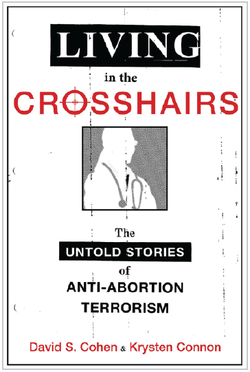
Crosshairs_fullLIVING IN THE CROSSHAIRS exposes the harrowing reality facing abortion providers in the U.S. To the uninitiated, that reality is shocking: a life of constant harassment and stalking, of hate mail and cyber-bullying and criminal trespass at their homes, of needing to don a disguise and bulletproof vest and do evasive maneuvers on the drive to work. Providing legal, safe abortions—or even working as a security guard or volunteer in a clinic that does so—means being the target of relentless and terrifying criminal acts.

Since 1993, eight doctors and clinic workers have been murdered; many others have been assaulted and maimed. Clinics have been burned down, providers’ children have been intimidated at school and doctors’ photos and names have appeared on WANTED posters distributed in their neighborhoods. It’s impossible to read this book without marveling at the courage and stamina these people exhibit in continuing to offer abortion care. Law professor David Cohen and attorney Krysten Connon vividly illustrate the impact of this nationwide campaign of terror on its victims. A physician who helps women needing abortions in the mid-Atlantic and one South Atlantic state remembers hearing of the 1998 murder of abortion provider Dr. Barnett Slepian, shot by a sniper through the window of his kitchen in Buffalo, New York: “I’m on the phone, and I’m probably starting to shake a little bit. Because we all have windows in our home…at that point I got on my belly and crawled around my home…Someone was out there, and we didn’t know who it was.” Kitchen, workplace—to extremists, no place is sacred. Providers’ elderly parents have been tormented in their nursing homes. In 2009, Dr. George Tiller, a prominent provider who had long been a target of the extremists, was shot in the head on a Sunday morning inside his Wichita church’s foyer, where he had just finished his duties as an usher. Even children trick-or-treating at a provider’s home on Halloween have been harassed.

More here.

Computer science: Enchantress of abstraction

Richard Holmes in Nature:

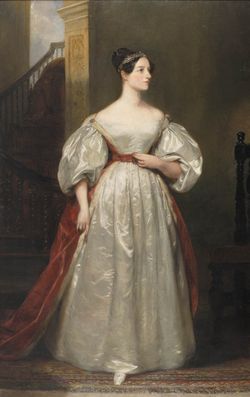
EnchantThe bicentenary of Augusta Ada King, Countess of Lovelace, heralds the critical reassessment of a remarkable figure in the history of Victorian science. Ada Lovelace (as she is now known) was 27 years old and married with 3 children when she published the first account of a prototype computer and its possible applications in 1843. Her 20,000-word paper was appended as seven Notes to a translation of a descriptive article, Sketch of the Analytical Engine Invented by Charles Babbage, Esq. Lovelace's account was the fruit of one of the most intriguing collaborations in the annals of science: her friendship with Charles Babbage, Lucasian Professor of Mathematics at the University of Cambridge, UK, and inventor of the landmark analytical engine. The Notes eventually brought Lovelace both acclaim and notoriety. Babbage himself described her unforgettably to the physicist Michael Faraday as “that Enchantress who has thrown her magical spell around the most abstract of Sciences and has grasped it with a force that few masculine intellects (in our own country at least) could have exerted over it”. The exact nature of that force and enchantment continues to puzzle historians of science, not least because Lovelace's correspondence, largely archived at the Bodleian Library in Oxford, has not been fully published (see selections by Dorothy Stein in Ada (MIT Press, 1985) and Betty A. Toole in Ada, Enchantress of Numbers; Strawberry, 1992). What has emerged is the hitherto unsuspected range of Lovelace's interests and contacts, which linked the worlds of Victorian science and literature.

Lovelace was the only legitimate child of the poet Lord Byron. She never met her father, self-exiled in Italy and Greece, but inherited much of his rebellious spirit and something of his unstable genius. She directed it towards science, declaring: “I do not believe that my father was (or ever could have been) such a Poet as I shall be an Analyst (& Metaphysician); for with me the two go together indissolubly”.She was brought up with pathological severity by her mother, the brilliant Lady Annabella Byron — dubbed “the Princess of Parallelograms” for her own fascination with mathematics — and a squadron of female advisers whom Lovelace christened the Furies. Forbidden to read her father's poetry, young Ada was encouraged to study mathematics, astronomy and music, and allowed to design flying machines, play the harp and commune with her cat, Puff. In her early twenties she began to study the new calculus under Augustus De Morgan, a proponent of Boolean algebra, who described her as potentially more promising than any 'senior wrangler', or first-class Cambridge maths student.

More here.

Wednesday, September 2, 2015

Brazilian wasp venom kills cancer cells by opening them up

From Phys.org:

ScreenHunter_1348 Sep. 02 18.26The social wasp Polybia paulista protects itself against predators by producing venom known to contain a powerful cancer-fighting ingredient. A Biophysical Journal study published September 1 reveals exactly how the venom's toxin—called MP1 (Polybia-MP1)—selectively kills cancer cells without harming normal cells. MP1 interacts with lipids that are abnormally distributed on the surface of cancer cells, creating gaping holes that allow molecules crucial for cell function to leak out.

“Cancer therapies that attack the lipid composition of the cell membrane would be an entirely new class of anticancer drugs,” says co-senior study author Paul Beales, of the University of Leeds in the UK. “This could be useful in developing new combination therapies, where multiple drugs are used simultaneously to treat a cancer by attacking different parts of the cancer cells at the same time.”

MP1 acts against microbial pathogens by disrupting the bacterial cell membrane. Serendipitously, the antimicrobial peptide shows promise for protecting humans from cancer; it can inhibit the growth of prostate and bladder cancer cells, as well as multi-drug resistant leukemic cells. However, until now, it was not clear how MP1 selectively destroys cancer cells without harming normal cells.

More here.

Colin Winnette’s Haints Stay and the weird mythic roots of Westerns

1440512071.71Lincoln Michel at The Oyster Review:

The Wild West has always been surreal. Even when it existed, it was being transformed into myth, often by the very figures associated with it. In 1883, Buffalo Bill retired from bison hunting and “Indian fighting” to dazzle crowds with a Wild West vaudeville show that featured the likes of Wild Bill Hickok and Annie Oakley. These performances helped define the frontier in the public’s mind. The real Wild West might have been a mostly dull place where banks were safe places for money and cowboys had to actually, you know, deal with cattle. But in the Wild West of our imagination, a bank is robbed every day at high noon and the lone gunslinger forever stalks his enemies through the wasteland with inhuman vengeance.

It is a small step from the mythic to the bizarre, and the Western has always been a ripe genre for artists with an eye for the uncanny. From films like Alejandro Jodorowsky’s El Topo and Jim Jarmusch’s Dead Man to novels like Robert Coover’s Ghost Town and Cormac McCarthy’s Blood Meridian, the American West has been frequently depicted as a strange land. Add to that weird Western tradition Colin Winnette’s Haints Stay.

more here.

The Bourne Identity, randolph bourne

Baflr28-Johnson-Bourne-Bacevich-838x1152Andrew J. Bacevich at The Baffler:

A hundred years ago, Randolph Bourne was a hot property—an intellectual wunderkind who was taking the American intellectual scene by storm. Bourne was the complete package: brilliant, charismatic, filled with social energy, and exquisitely attuned to the moment. Bourne’s essays appeared in leading periodicals like The Atlantic, The Dial, and The New Republic back when magazines set the American political and cultural agenda. Admirers considered him a visionary, an exponent of a humane new cosmopolitanism. True freedom and real democracy, he believed and exemplified, implied a spirit of tolerance, generosity, and creativity consummated in what he called “the beloved community.”

Barely two years after writing these words, Bourne became persona non grata. His offense involved not personal scandal—no violence, fraud, embezzlement, or sexual shenanigans—but something much, much worse: when the climate of opinion abruptly shifted, he refused to follow. They zigged, he zagged. While other members of the New York intelligentsia were swooning at the prospect of waging a war to end all wars that would make the world safe for democracy, Bourne dared to dissent. For this, they shut him out of virtually all the journals in which he had been publishing, and all respectable outlets generally.

more here.

oliver sacks on Mendeleev’s Garden

Periodic-tableOliver Sacks at The American Scholar:

The periodic table was incredibly beautiful, the most beautiful thing I had ever seen. I could never adequately analyze what I meant here by beauty—simplicity? coherence? rhythm? inevitability? Or perhaps it was the symmetry, the comprehensiveness of every element firmly locked into its place, with no gaps, no exceptions, everything implying everything else.

I was disturbed when one enormously erudite chemist, J. W. Mellor, whose vast treatise on inorganic chemistry I had started dipping into, spoke of the periodic table as “superficial” and “illusory,” no truer, no more fundamental than any other ad hoc classification. This threw me into a brief panic, made it imperative for me to see if the idea of periodicity was supported in any ways beyond chemical character and valency.

Exploring this took me away from my lab, took me to a new book that immediately became my bible, the CRC Handbook of Physics and Chemistry, a thick, almost cubical book of nearly three thousand pages, containing tables of every imaginable physical and chemical property, many of which, obsessively, I learned by heart.

I learned the densities, melting points, boiling points, refractive indices, solubilities, and crystalline forms of all the elements and hundreds of their compounds. I became consumed with graphing these, plotting atomic weights against every physical property I could think of.

more here.

Here’s What Actually Gets Terrorists To Tell The Truth — And It’s Not Torture

Peter Aldhous in BuzzFeed:

Enhanced-buzz-wide-13846-1439655140-14Rather than focusing on stress, the new interrogation research program has concentrated on interviewing techniques that help people remember details about events — and make it harder for liars to keep their story together.

Central to this approach is the “cognitive interview,” developed by Ronald Fisher, a psychologist at Florida International University in Miami. Rather than being asked a series of questions, suspects may be told to close their eyes and recall what happened at a key meeting, or draw a sketch of the room in which it took place. They are encouraged to go over events repeatedly and offer details whether or not they seem important.

In one test, Fisher’s team asked seasoned instructors at the Federal Law Enforcement Training Center in Glynco, Georgia, to get their colleagues to recall the details of meetings held to plan field exercises. Those who used a cognitive interview, rather than the standard approach of asking direct questions,extracted 80% more information.

This approach can also separate liars from truth-tellers. When recalling their experiences in a cognitive interview, people who are telling the truth give longer and more detailed answers.

More here.

NAOMI KLEIN’S CALL TO ARMS

Cornelia Parker in More Intelligent Life:

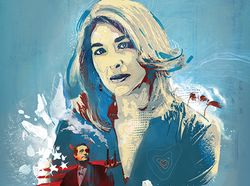
KLEINI’ve never met Klein, though I would very much like to—but I went to see her speak about her latest book in London. I was shocked by how young she still is, and obviously she’s beautiful, but mostly she is brave: she speaks her mind, articulately and powerfully. There are lots of people that wouldn’t like her to say the things she says, but she says them anyway, and that’s what I admire. The first book I read of hers was “No Logo”, and then “The Shock Doctrine”, which was amazing, and now “This Changes Everything”, which I think is much, much needed. Somebody needed to write an intelligent book about climate change and its politics, because politics is the main reason we are all so blindly riding the boat over the waterfall.

Klein takes the position that custodianship of the planet is at odds with capitalism. The so-called free world is actually run by corporations, and it’s not in their financial interest for us all to get alarmed about our future. (And this though they’ve got children.) What Klein has done is to flag up the huge amount of disinformation that stops us taking the action we need to take. Every politician should be duty-bound to act on climate change, but they don’t because there are too many corporate hands in their jar, as it were. Klein says that China may be able to act because it isn’t a democracy yet; its government can say “you can have only one child”, and everybody has to jump. China could lead a new economic world order because it will be able to make big changes fast. We can’t, because capitalism keeps interrupting. So somehow we’ve got to have a huge paradigm shift, and that’s what Klein is trying to tell us. It’s a call to arms.

More here.

Lack of sleep puts you at higher risk for colds

Hanae Armitage in Science:

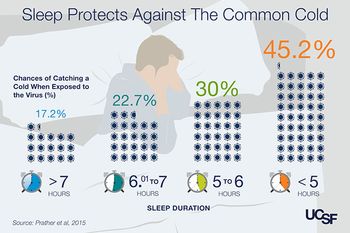
SleepEMBEDMoms and sleep researchers alike have stressed the importance of solid shuteye for years, especially when it comes to fighting off the common cold. Their stance is a sensible one—skimping on sleep weakens the body’s natural defense system, leaving it more vulnerable to viruses. But the connection relied largely on self-reported, subjective surveys—until now. For the first time, a team of scientists reports that they have locked down the link experimentally, showing that sleep-deprived individuals are more than four times more likely to catch a cold than those who are well-rested. “It’s very nice to see an experiment looking at sleep as an important regulator for specific antiviral immune responses,” says Michael Irwin, a psychoneuroimmunologist at University of California (UC), Los Angeles, who is not involved with the study. “In this particular case, there’s a hard clinical outcome showing [sleep deprivation] and susceptibility to the common cold.”

In a carefully controlled two-part experiment, scientists began by collecting nightly sleep data on 164 healthy individuals for 1 week. Participants were asked to record the times at which they went to bed and woke up. They also wore small watchlike devices that use a technique called wrist actigraphy to monitor movement (much like a Fitbit tracks activity) while they slept. Aric Prather, lead author of the study and a sleep researcher at UC San Francisco, says that he and his colleagues associate the wrist actigraphy data with being awake—if during a reported sleep period, the wrist band records movement, they take that as an indication of wakefulness, and subtract the time spent moving from the hours asleep. Then came part two: the cold infections. Scientists quarantined participants in a hotel and gave them nose drops containing rhinovirus—the virus responsible for the common cold. They then closed off the hotel floor for 5 days, letting the hosts’ immune system do the rest. To ensure the most accurate results, researchers drew participants’ blood before the viral exposure to test for levels of rhinovirus antibody, a defensive agent in the immune system that recognizes and attacks rhinovirus. If they found high, preexisting levels of the protective protein, they removed the participant from the study so that prior immunity would not bias the infection rates of the group.

More here.

Wednesday Poem

Poem
by Rachel Zucker
The other day Matt Rohrer said, the next time you feel yourself going dark in a poem, just don’t, and see what happens.  That was when Matt, Deborah Landau, Catherine Barnett, and I were chatting, on our way to somewhere and something else.  In her office, a few minutes earlier, Deborah had asked, are you happy? And I said, um, yes, actually, and Deborah: well, I’m not—  all I do is work and work. And the phone rang every thirty seconds and between calls Deborah said, I asked Catherine  if she was happy and Catherine said, life isn’t about happiness it’s about helping other people. I shrugged, not knowing how  to respond to such a fine idea. So, what makes you happy? Deborah asked, in an accusatory way,  and I said, I guess, the baby, really, because he makes me stop working? And Deborah looked sad  and just then her husband called and Deborah said, Mark, I’ve got rachel Zucker here, she’s happy,  I’ll have to call you back. And then we left her office and went downstairs to the salon where a few weeks before  we’d read poems for the Not for Mothers Only anthology and I especially liked Julie Carr’s poem about crying while driving while listening to  the radio report news of the war while her kids fought in the back seat while she remembered her mother crying while driving, listening to  news about the war. There were a lot of poems that night about crying, about the war, about fighting, about rage, anger, and work. Afterward  Katy Lederer came up to me and said, “I don’t believe in happiness”—you’re such a bitch for using that line, now no one else can.  Deborah and I walked through that now-sedated space which felt smaller and shabby without Anne Waldman and all those women and poems and suddenly  there was Catherine in a splash of sunlight at the foot of a flight of stairs talking to Matt Rohrer on his way to a room or rooms I’ve never seen.  And that’s when Deborah told Matt that I was happy and that Catherine thought life wasn’t about happiness and Deborah laughed a little and flipped  her hair (she is quite glamorous) and said, but Matt, are you happy? Well, Matt said he had a bit of a cold but otherwise was and that’s when he said,  next time you feel yourself going dark in a poem, just don’t, and see what happens. And then, because it was Julian’s sixth birthday, Deborah went  to bring him cupcakes at school and Catherine and I went to talk to graduate students who teach poetry to children in hospitals and shelters and other  unhappy places and Matt went up the stairs to the room or rooms I’ve never seen. That was last week and now I’m here, in bed, turning toward something I haven’t felt  for a long while. A few minutes ago I held our baby up to the bright window and sang the song I always sing before he takes his nap. He whined and struggled  the way toddlers do, wanting to move on to something else, something next, and his infancy is almost over. He is crying himself to sleep now and I will not say  how full of sorrow I feel, but will turn instead to that day, only a week ago, when I was the happiest poet in the room, including Matt Rohrer.

.