
Alexander Stern at The Hedgehog Review:
 In a column for The Point magazine, Agnes Callard, a philosopher and professor at the University of Chicago, comes out against advice. She makes her case using an anecdote involving the novelist Margaret Atwood. Asked about her advice for a group of aspiring writers, Atwood is stumped and ends up offering little more than bromides encouraging them to write every day and try not to be inhibited. Callard excuses Atwood’s banality, blaming it on the fundamental incoherence of the thing she was asked to produce.
Advice, for Callard, occupies nebulous terrain between what she terms “instructions” and “coaching.” “You give someone instructions,” she writes, “as to how to achieve a goal that is itself instrumental to some…further goal,” whereas “coaching…effects in someone a transformative orientation towards something of intrinsic value: an athletic or intellectual or even social triumph.” The problem with advice, according to Callard, is that it tries to reduce and condense the time-intensive, personal work of coaching into instructions:
The young person is not approaching Atwood for instructions on how to operate Microsoft Word, nor is she making the unreasonable demand that Atwood become her writing coach. She wants the kind of value she would get from the second, but she wants it given to her in the manner of the first. But there is no there there.
Atwood, Callard writes, might tell a story about her own development as an author, but those particulars would not amount to anything like universal wisdom a young writer could integrate into her own life.
More here.
Enjoying the content on 3QD? Help keep us going by donating now.

 We were fortunate that during our tenures in office no effort was made to unlawfully undermine the nation’s financial commitments. Regrettably,
 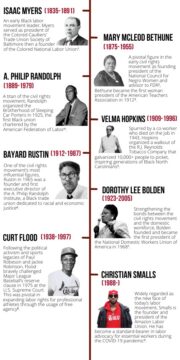 Black History Month is a time to reflect on the central role of Black people in shaping this nation. Nowhere is that more evident than the labor movement. A founding tenet of American capitalism and our economy is that Black bodies are worth more than Black minds. This belief is continually demonstrated by the value placed on Black workers and their work. During the COVID-19 pandemic, Black workers risked their lives in essential jobs to keep the country operating. And in doing so faced an
  The most striking assertion in Wittgenstein’s critique of Shakespeare may be this, written in 1946: “Shakespeare’s similes are, in the ordinary sense, bad. So if they are nevertheless good – & I don’t know whether they are or not – they must be a law to themselves.” What makes Wittgenstein think he can lay claim to such a judgment? Part of the answer may lie in Wittgenstein’s own remarkable talent for similes and figures of comparison. Given their importance to his way of doing philosophy, it shouldn’t surprise that he was good at making them, and knew he was good.
 I’m like a mechanic scrambling last-minute checks before Apollo 13 takes off. If you ask for my take on the situation, I won’t comment on the quality of the in-flight entertainment, or describe how beautiful the stars will appear from space.
 MIZDARKHAN, Uzbekistan — On a hill at the edge of the desert stands a wooden edifice above a simple tomb. It consists of four slanting poles that come together in a frame, inside of which are bundled sticks that resemble kindling. It seems a puzzling marker for a grave until you learn the legend of whose body lies inside: Gayōmart, the first human, neither woman nor man, who was created from mud by the Zoroastrian god Ahura Mazda. Zoroastrians venerate fire, so the structure makes sense. It is a symbolic beacon waiting for its flame.
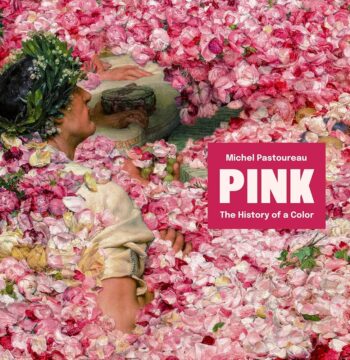 Michel Pastoureau began his wonderful and widely translated series on the history of colours with Blue a quarter of a century ago. Black, Green, Red, Yellow and White followed and now here is a history of pink, which may not be ‘a color in its own right’ and for which neither Latin nor ancient Greek has a standard word (it was long regarded as a shade of red). Nevertheless, Pink is as sumptuous as its predecessors, printed on gorgeous glossy paper and written with impassioned scholarship.
 For the family, withdrawing or withholding life-sustaining treatments from a dying loved one, even if doctors advise that the treatment is unlikely to succeed or benefit the patient, can be overwhelming and painful. Studies show that their stress can be at the
  D
D The non-modest mission of her sprightly
  During the last year of his life, Malcolm organized and spoke with increasing clarity on questions that remain central for working people today.