Nobel Prize Laureate Svetlana Alexievich’s Oral Histories

Nobel_Prize_Literature_Alexievich_ap_img1Andrew Meier at The Nation:

A prominent Belarussian writer and journalist, Alexievich is doubtless well aware of what her title has lost in translation. She sees herself not as prophet (in the old Soviet writer’s extracurricular tradition) but as a guide intent on repairing her country’s fractured sense of community. What she longs for issobornost, that sense of belonging and shared ideals sacrificed long ago to Bolshevik unanimity. Throughout her work, she has sought to bring to light the hidden stories of the Soviet era. One of her first books, U voiny—ne zhenskoe litso(“War’s Unwomanly Face”), an oral history of Soviet soldiers in World War II, which broke with the heroic narratives of official history, was suppressed for two years before Gorbachev allowed it to be published in 1985. That book and its follow-up, Poslednie svideteli (1985), a collection of 100 “children’s stories” of war, sold millions of copies in the former Soviet Union and made Alexievich aglasnost celebrity. Her career hit its peak with Zinky Boys (1992), an unflinching look at the Soviet war in Afghanistan (“zinky” alludes to the zinc coffins in which more than 15,000 Soviet soldiers returned home).

As voiceless narrator and hidden editor, Alexievich is aware—too much so, her critics contend—of her singular pursuit. “For me people are like the black boxes found in the debris of airplane crashes,” she told me a few years ago in her small apartment in Minsk, Belarus’s capital. “Someone has to open them.”

more here.

Battle fatigue in Kashmir

HarpersWeb-Postcard-Kashmir-622Maddy Crowell at Harper's Magazine:

For centuries, writers have romanticized the Jammu and Kashmir region, an eighty-five-mile basin that today encompasses the disputed border between India and Pakistan. From the window of my plane, I could see why: the Pir Panjal Range met the Greater Himalayas like a wrinkled white curtain, exposing a fertile hotbed of saffron fields, forested hills, almond and walnut groves, apple trees, apricot orchards, and rice paddies. At the airport, I was greeted with signs that read “Paradise on Earth”—a strange slogan for a valley that has seen three full-blown wars and hundreds of thousands of deaths since the Partition of India and Pakistan in 1947.

I hailed a cab to Dal Lake—a destination for tourists and the hub of Kashmir’s flailing economy. On the way, we drove through Srinagar, the capital that lies at the heart of many conflicts in India-controlled Kashmir. It was early May, and there were no traces of the protests that had broken out a week prior; only long-collapsed houses and red-dust-stained windowsills. The roads were flanked with ten-foot walls bearing water stains from last September’s severe flooding, which left around 300 dead.

more here.

the modernist mural buried in a Scottish mountain

Ben-Cruachan-2Philip Oltermann at The Guardian:

If you want to get up close to the most remote work of art in Britain, you’ll need to make a 2 ½-hour train journey from Glasgow to the Highlands, drive 1km into the heart of a mountain and climb a flight of slippery steps on to a viewing platform before you can catch a glimpse: a 48ft x 12ft mural made of wood, plastic and gold leaf, sparkling away at the centre of a vast cave like some fairytale treasure. In terms of accessibility, it’s not the fourth plinth in Trafalgar Square: even the artist behind the work has never made the trek to see it in situ.

What may sound like some postmodern joke on modern art’s elitism is, in fact, the opposite: a period piece that tells a story of a very different Britain, a country in which artists enjoyed a more intimate relationship with the world of industry than that of entertainment. For years, the work and its creator, Elizabeth Falconer, were forgotten. A new radio play by the art writer Maria Fusco, co-commissioned by Radio 4 and Artangel, now rediscovers its significance.

Fifty years ago, Ben Cruachan in Argyll and Bute was the equivalent of London’s Silicon roundabout – a place of technological innovation on which an entire nation was pinning its hopes for the future.

more here.

Rushdie Backs Authors, Seven More Return Sahitya Akademi Awards

From Outlook India:

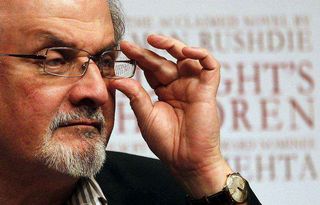
Salman20130129_1_2_3_4_5_6Booker Prize winning author Salman Rushdie today joined the growing chorus of protests by leading writers against spread of “communal poison” and “rising intolerance” in the country even as seven more authors decided to return their Sahitya Akademi awards.

“I support Nayantara Sahgal and the many other writers protesting to the Sahitya Akademi. Alarming times for free expression in India,” he tweeted.

88-year-old Sahgal, niece of Jawaharlal Nehru, was among the first to lodge her protest against the Akademi's silence over repeated attacks on writers and rationalists who were raising their voice of dissent.

Kashmiri writer Ghulam Nabi Khayal, Urdu novelist Rahman Abbas and Kannada writer- translator Srinath D N said they were handing back their Sahitya awards.

Khayal and Srinath were joined by Hindi writers Mangalesh Dabral and Rajesh Joshi who backed the spiralling protest by litterateurs against “communal” atmosphere following rationalist M M Kalburgi's killing.

Punjabi author Waryam Sandhu and Kannada translator G N Ranganatha Rao said they have intimated to the Akademi their decision to give back their awards.

With this, at least 16 authors have announced their decision to return their awards with some warning that minorities in the country today feel “unsafe and threatened”.

More here.

COLUMBUS DAY IS THE MOST IMPORTANT DAY OF EVERY YEAR

John Schwarz in The Intercept:

ScreenHunter_1420 Oct. 13 15.43Today, October 12, is Columbus Day. Every year it’s officially the second Monday in October; this year it falls on the exact anniversary of the Niña, Pinta and Santa María’s arrival in the Bahamas 523 years ago.

So to mark today, I’ve made a list. I’m sure to almost all Americans it would seem like a meaningless jumble of things with no connection to each other. But in fact it tells one story, the story of why October 12, 1492, is the most important date in human history — and demonstrates that you have to understand that in order for anything happening on Earth now to make sense:

    • $ (i.e., the dollar sign) — and Cerro Rico, Bolivia’s “Mountain That Eats Men”
    • the movies War of the Worlds and Avatar — and the movies Apocalypse Nowand Day of the Jackal
    • the original seal of the Massachusetts Bay Colony— and the “generous offer” made by Israel to the Palestinian Authority in 2000
    • Cinco de Mayo — and the investor-state dispute settlement section of the Trans-Pacific Partnership
    • an abortive 2003 attempt to bring Nelson Mandela to the United Nations to oppose the invasion of Iraq — and South Koreans protesting the 2010 Israeli attack on the first Gaza flotilla
    • Hitler’s October 17, 1941, discussion of the invasion of the Soviet Union — and the Washington Redskins

Confused? Here’s the explanation…

More here.

On Gloria’s New Book and the Value of Life on the Road

Robin Morgan in Women's Media Center:

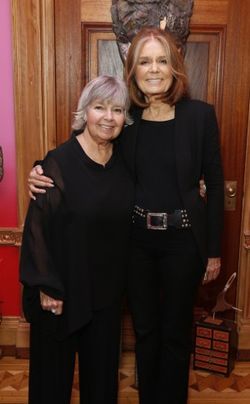
GloriaRobin: It’s a time for great celebration because My Life on the Road, by Gloria Steinem, is finally out. Tell us about it.

Gloria: About twenty years ago I realized that I was writing least about what I was doing most, which was traveling and organizing on the road. So I began this book—I would work on it one month in the summer and then not for the other eleven months. My hope for it is that it conveys some of the seduction of the road. I noticed that when I say I’m going to another country, people say, “Oh, how interesting,” and when I say I’m traveling here, they say, “Oh, it must be so tiring.”

So I think there is a great lack that should be filled by, I don’t know, rules that every elected politician needs to spend at least two years [on the road] before they run, and have booster shots of a few weeks every few years …

Robin: What different politicians that would make!

Gloria: I think the road is my form of meditation. It forces you to live in the present—you really have no choice. And it is so unexpected; the country is so much more diverse and interesting and exciting and full of energy than the generalizations on television or on the Web about “the American People,” as if we were one lump. And especially now, because it is profoundly shifting in many ways—we are about to become a majority country of people of color, not European Americans.

More here.

Elephants: Large, Long-Living and Less Prone to Cancer

Carl Zimmer in The New York Times:

ElephantsIn 1977, a University of Oxford statistician named Richard Peto pointed out a simple yet puzzling biological fact: We humans should have a lot more cancer than mice, but we don’t. Dr. Peto’s argument was beguilingly simple. Every time a cell divides, there’s a small chance it will gain a mutation that speeds its growth. Cells that accumulate several of these mutations may become cancerous. The bigger an animal is, the more cells it has, and the longer an animal lives, the more times its cells divide. We humans undergo about 10,000 times as many cell divisions as mice — and thus should be far more likely to get cancer. Yet humans and mice have roughly the same lifetime risk of cancer, a circumstance that has come to be known as Peto’s paradox.

…“Every baby elephant should be dropping dead of colon cancer at age 3,” said Dr. Joshua D. Schiffman, a pediatric oncologist at the Huntsman Cancer Institute at the University of Utah.

…Dr. Schiffman and his colleagues found that elephants had evolved new copies of the p53 gene. While humans have only one pair of p53 genes, the scientists identified 20 pairs in elephants. Dr. Lynch and his colleagues also found these extra genes. To trace their evolution, the researchers made a large-scale comparison of elephants to other mammal species — including extinct relatives like woolly mammoths and mastodons whose DNA remains in their fossils. The small ancestors of elephants, Dr. Lynch and his colleagues found, had only one pair of functional p53, like other mammals. But as they evolved to bigger sizes, they steadily evolved extra copies of p53. “Whatever’s going on is special to the elephant lineage,” Dr. Lynch said. To see whether these extra copies of p53 made a difference in fighting cancer, both teams ran experiments on elephant cells. Dr. Schiffman and his colleagues bombarded elephant cells with radiation and DNA-damaging chemicals, while Dr. Lynch’s team used chemicals and ultraviolet rays. In all these cases, the elephant cells responded in the same way: Instead of trying to repair the damage, they simply committed suicide.

More here. (Note: Ga, between elephants and p53, we have a chance to collaborate)

Monday, October 12, 2015

Sunday, October 11, 2015

An Antidote to Injustice

Philosophy

Jennifer M. Morton over at The Philosophers' Magazine Online:

Picture yourself as a young mother with two children. You enrol in university to obtain a bachelor’s degree, hoping to give yourself a better chance at a job that pays a living wage. Maybe you receive government loans to pay for tuition, and rely on your family’s help, but you still don’t have enough to pay for living expenses and childcare. So, you continue working at a job that pays slightly above minimum wage while taking a full load of courses. Every day you wake up early to get the children ready for school and commute an hour or more to university. After class, you pick up your children from school. If you’re lucky, you can drop them off with a relative while you go to work. By the time you return home in the evening, you are tired, but still have many pages to read and assignments to complete. This is your gruelling daily routine. Now, ask yourself: what could philosophy do for you?

I teach philosophy at the City College of New York, an institution which, since its founding in 1847, has attracted a student body as diverse as the city it serves. Many of my students come from minority, low-income, or immigrant communities; some all three. They are strivers – seeking an education in order to become health professionals, teachers, engineers, or lawyers while holding onto jobs and taking care of families. Most of them are more fortunate than our imagined protagonist, but for many of them going to university involves great personal and financial sacrifices. Given that few of my students will ultimately find their way into the academy and that, within that already small cohort, only a fraction will choose to do so in the field of philosophy, the question of why study philosophy has a particular resonance for them, and for me as their teacher.

One answer to this question is pragmatic – philosophy teaches you to think and write logically and clearly. This, we tell our students, will be of use to them no matter what path they pursue. We advertise philosophy, then, as a broadly useful means to a variety of ends. There is a lot of truth to this dispassionate answer, but it is also rather disappointing. It sells philosophy short. A different sort of answer dives into profundity – philosophy aims to discover fundamental truths. Many disciplines aim at knowledge but philosophers, we solemnly tell our students, go deeper – we seek Knowledge with a capital K. This is undeniably the goal of many philosophers, but it can alienate some students (in particular, those who are not interested in pursuing an academic career). Why, these students might ask, is the knowledge that philosophy aims at any deeper than that of more practical fields such as medicine, science, or the law? And why should they care about this kind of knowledge? Even if most professional philosophers aim at the deepest kind of knowledge, this does not show that it is a valuable enterprise for all students, especially for those who are already overcoming significant hurdles to attend university.

More here.

The Zoroastrian priestesses of Iran

8433946f-f5bf-49c2-a50e-d0a51a65c5f0

Giulia Bertoluzzi over at Scroll.in:

Founded by the Prophet Zoroaster around 3,500 years ago, the religion claims around 190,000 followers. The official religion in Iran for 1,000 years, its adherents are now a dwindling minority within the Islamic Republic.

Middle East Eye paid a visit to their fire temple (or Agiary), the site of daily services led by Zorastrian priests. The visit coincided with the third Gambahar, one of the six annual festivals designed to celebrate the creation of the Earth.

Mobediar Sarvar Talapolevara enters the temple dressed in a long white dress on top of which a white veil is pinned, and sits close to the small but vigorous fire that crackles in the middle of the temple.

Talapolevara’s immaculate threads are transcendentally laundered, flawless white throughout. Her one accessory is the traditional koshti, a long belt which represents the Zoroastrian basic principles of “good thoughts, good words and good actions”.

“My father was a Parsi, that is a Zoroastrian from India,” she says. “I recall him fastening his belt every day before breakfast and telling us about his childhood in India, where Zoroastrians cling to conservative traditions and kids must wear the koshti from the age of eight.”

“It was my father who encouraged me the most. At first Indian Parsis opposed the idea of the female priests,” Mobed Talapolevara said. “That’s why I was pleasantly surprised upon my initiation as a priest four years ago to receive messages of support from those same Indian Parsis. They even published articles in Indian newspapers and at the International Congress of Zoroastrians.”

More here.

Bryan Caplan on “Does parenting matter?”

Over at Rationally Speaking:

Parents in the United States are spending more time and energy than ever to ensure that their children turn out happy, healthy, and successful. But what does the evidence suggest about the impact of their efforts? Economist Bryan Caplan (and the author of “Selfish Reasons to Have More Kids”) argues that, despite our intuition that parenting choices affect children's life outcomes, there's strong evidence to the contrary. Bryan and Julia discuss his case, and explore what that means for how people should parent and how many kids they should have.

Hail to the Pencil Pusher

Konczal---LoC1-web

Mike Konczal in Boston Review:

Nineteenth-century America was a place full of hazards. Disease, political oppression, imperialist warfare, poor living conditions, and hard manual labor took their toll, as they still do. But some dangers were peculiar to the era—among them, exploding steamboats.

Between 1825 and 1830, 273 people died in such accidents. DeBow’s Review (1848) noted 233 cases of “bursting boilers,” “collapsing flues,” and other breakdowns, which could cause massive damage. In his 1833 State of the Union address, President Andrew Jackson noted the “many distressing accidents which have of late occurred . . . . by the use of steam power.” But he didn’t simply mourn, instead arguing that the problem demanded “the immediate and unremitting attention of the constituted authorities of the country.” He sought criminal penalties to prevent what he saw as the negligence of carriers.

But the problem was so severe that Congress eventually decided tackle it administratively. Criminalizing bad behavior wasn’t enough; for the good of individual lives and the larger economy, the government would take positive steps to prevent explosions. Under the Steamboat Act of 1852, Congress mandated standards for boiler pressure and testing. Pilots and engineers would be federally licensed. And government inspectors could enforce these rules.

This “steamboat agency” seems like something straight out of the twentieth century. It relied on the Constitution’s commerce clause to regulate a specific industry for personal safety. It developed these regulations based on scientific understanding. And it combined licensing, rule making, and adjudication, as the New Deal and Great Society agencies did and continue to do. It was, in sum, an early manifestation of an administrative state that contemporary conservatives insist did not exist until Progressive Era reformers built it upon the ashes of a former libertarian utopia.

More here.

Neoliberalism: a sick obsession

Christopher Snowdon in Spiked:

Evil_bankerDoes free-market capitalism foster an environment in which death and disease flourish? That is the question asked by academics Ted Schrecker and Clare Bambra in How Politics Makes Us Sick: Neoliberal Epidemics. In this strident little tome, they argue that the infectious diseases of the Victorian age – which they claim, in a characteristically ahistorical aside, were stamped out thanks to ‘organised resistance by labour, via trade unions’ – are being replaced by an epidemic of non-communicable diseases, such as cancer and heart disease, as a result of ‘neoliberal’ policies. They argue that things are worst in Britain and the US where neoliberalism supposedly burns most brightly, whereas life is better, though far from perfect, in the Nordic countries because they all have a ‘strongly interventionist state’.

Schrecker and Bambra focus on four ‘neoliberal epidemics’ – obesity, insecurity, austerity and inequality – which they portray as the latter-day equivalents of cholera and tuberculosis. Strikingly, none of these ‘epidemics’ are diseases in a medical sense. Obesity and stress are risk factors for disease; inequality is an economic variable; and ‘austerity’ is a hyperbolic term for balancing the budget through fiscal restraint. It is also notable that all of these issues predate ‘neoliberalism’ by many years and can be found in countries that have a considerably more dirigiste economy than the UK. There is a simple explanation for why cancer and heart disease have become the leading causes of death in rich countries. When there are only two classes of disease, communicable and non-communicable, eradication of the communicable leaves only the non-communicable. Since the concept of a natural death has been defined out of existence, it is inevitable that more people die from non-communicable diseases, albeit usually at an advanced age. It is a trend that should be welcomed.

More here.

The U.S. cannot afford to forget Afghanistan and Pakistan

David Ignatius in the Washington Post:

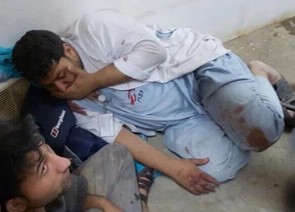
ScreenHunter_1417 Oct. 11 14.36Last weekend’s deadly attack on an international hospital in Afghanistan was a reminder of the terrible war that grinds on there, with Afghan civilians caught in the crossfire.

Doctors Without Borders, a globally respected group, has charged that the deaths of 22 patients and staff members at its hospital in Kunduz was a “war crime.” The United States has promised to investigate what Gen. John Campbell, the NATO commander in Kabul, says was a mistake.

The hospital bombing comes as the United States is quietly exploring some diplomatic options that could reduce the violence in Afghanistan — and perhaps even curb the danger of a nuclear Pakistan next door. As with most diplomacy in South Asia, these prospects are “iffy,” at best. But they open a window on what’s happening in a part of the world that, except for disasters such as the Kunduz incident, gets little attention these days.

The United States recognized more than four years ago that the best way out of the Afghanistan conflict would be a diplomatic settlement that involved the Taliban and its sometime sponsors in Pakistan. State Department officials have been conducting secret peace talks, on and off, since 2011. That effort hasn’t borne fruit yet, as the Taliban’s recent offensive in Kunduz shows.

But the pace of negotiations has quickened this year, thanks to an unlikely U.S. diplomatic partnership with China.

More here.

Sunday Poem

Darling Coffee

The periodic pleasure
of small happenings
is upon us—
behind the stalls
at the farmer’s market
snow glinting in heaps,
a cardinal its chest
puffed out, bloodshod
above the piles of awnings,
passion’s proclivities;
you picking up a sweet potato
turning to me ‘This too?’—
query of tenderness
under the blown red wing.
Remember the brazen world?
Let’s find a room
with a window onto elms
strung with sunlight,
a cafe with polished cups,
darling coffee they call it,
may our bed be stoked
with fresh cut rosemary
and glinting thyme,
all herbs in due season
tucked under wild sheets:
fit for the conjugation of joy.

by Meena Alexander
from Poem-a-Day
Academy of American Poets