by Matt McKenna
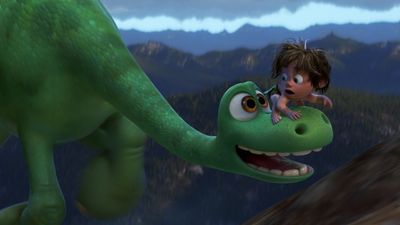
The Good Dinosaur is a classic Disney tale in that it is beautiful, has talking animals, and incites children’s fears about their parents’ mortality. The story follows Arlo, an undersized adolescent apatosaurus who is separated from his family and must find his way back home. Over the course of his journey, Arlo reluctantly befriends an eager caveboy who is both a source of survival wisdom for Arlo and comedic relief for the children in the audience who are likely horrified by the scarier aspects of the film. One interesting note about The Good Dinosaur is that although dinosaurs can communicate with each other via language, the caveboy cannot. This is a humorous reversal from many other animated films in which the humans have adorable mute animal sidekicks. This switcheroo is narratively coherent due to the alternate history timeline in which the dinosaur-killing meteor never collided with Earth thus giving dinosaurs an evolutionary head start compared to their late-blooming human counterparts. I realize that’s not how evolution works, but it’s a fun idea for a children’s film anyway.