
Scott Alexander at Astral Codex Ten:
 Conflict theory is the belief that political disagreements come from material conflict. So for example, if rich people support capitalism, and poor people support socialism, this isn’t because one side doesn’t understand economics. It’s because rich people correctly believe capitalism is good for the rich, and poor people correctly believe socialism is good for the poor. Or if white people are racist, it’s not because they have some kind of mistaken stereotypes that need to be corrected – it’s because they correctly believe racism is good for white people.
Some people comment on my more political posts claiming that they’re useless. You can’t (they say) produce change by teaching people Economics 101 or the equivalent. Conflict theorists understand that nobody ever disagreed about Economics 101. Instead you should try to organize and galvanize your side, so they can win the conflict.
I think simple versions of conflict theory are clearly wrong. This doesn’t mean that simple versions of mistake theory (the idea that people disagree because of reasoning errors, like not understanding Economics 101) are automatically right. But it gives some leeway for thinking harder about how reasoning errors and other kinds of error interact.
More here.
Enjoying the content on 3QD? Help keep us going by donating now.
 If the number of on-camera screams is any indication, Kim Kardashian’s first encounter with
  Before 2014, the call to “stay woke” was, for many people, unheard of. The idea behind it was common within Black communities at that point — the notion that staying “woke” and alert to the deceptions of other people was a basic survival tactic. But in 2014, following
  I left private equity to work on shrimp welfare. When I tell anyone this, they usually think I’ve lost my mind. I know the feeling — I’ve been there. When I first read Charity Entrepreneurship’s proposal for a shrimp welfare charity, I thought: “Effective altruists have gone mad — who cares about shrimp?”
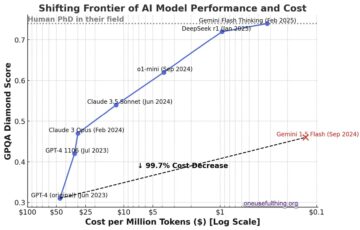 I have been experimenting with the first of a new generation AI models, Claude 3.7 and Grok 3, for the last few days. Grok 3 is the first model that we know trained with an order of magnitude more computing power of GPT-4, and Claude includes new coding and reasoning capabilities, so they are not just interesting in their own right but also tell us something important about where AI is going.
 Donald Trump’s first election to the presidency in 2016 triggered an energetic defense of democracy from the American establishment. But his return to office has been met with striking indifference. Many of the politicians, pundits, media figures, and business leaders who viewed Trump as a threat to democracy eight years ago now treat those concerns as overblown—after all, democracy survived his first stint in office. In 2025, worrying about the fate of American democracy has become almost passé.
 Do you think women are more invested in romance than men? Rom-coms and women’s magazines may push this stereotype, but psychological research is increasingly telling a different story: multiple studies have suggested that men may actually place a greater importance on
  Valéry said we see only through effort after we see for the first time. This is its own sort of trauma. We repeat the seashore of our youth until we die. Yeats did too, with his Irish myths and hopeless love for Maud, his Symbolist trappings and occult obsessions, and all the insecurities of the accomplished autodidact (he once failed to get a teaching job at Trinity College because he couldn’t spell “professor”), but there is a point when we realize art can take us further: It can let us see everything. It is the effort that changes utterly. Owen grasped this as well as Yeats.
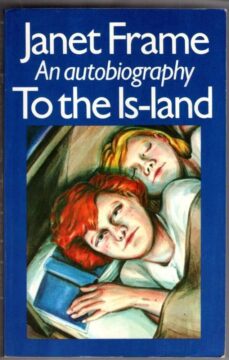 “The Edge of the Alphabet” is the third in a sequence of novels published after Frame left the hospital, following “
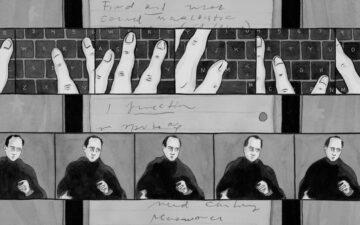 In 2020, the musician and artist Laurie Anderson used a corpus of writing and lyrics from her late husband, Velvet Underground’s co-founder Lou Reed, to create a generative program she interacted with as a creative collaborator. And in 2021, the journalist James Vlahos launched HereAfter AI, an app anyone can use to create interactive chatbots, called ‘life story avatars’, that are based on loved ones’ memories. Today, enterprises in the business of ‘reinventing remembrance’ abound: Life Story AI, Project Infinite Life, Project December – the list
  The women’s and gay liberation movements of the 1960s and 70s inspired the first professional historians of sexuality. Many of them specialized in the modern histories of Europe and the United States, and they theorized mainly from the modern Western experience. This is beginning to change: the field has expanded to incorporate premodern histories and histories in all regions of the world, becoming increasingly transhistorical and global.
 With his unprecedented effort to push the limits of executive power,
  Data on retractions show that they are rare events. Out of 50 million or more articles published over the past decade, for instance, a mere 40,000 or so (fewer than 0.1%) have been retracted, according to the firms’ data sets. But the rise in retraction notices (by which journals announce that a paper is being retracted) is outstripping the growth of published papers — partly because of the rise of paper mills and the growing number of sleuths who spot problems with published articles.