In Palliative Care, Comfort Is the Top Priority

Paula Span in The New York Times:
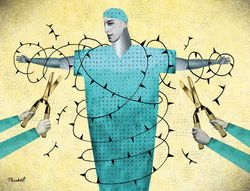
ComfyLast year, when an oncologist advised that Betty Chin might benefit frompalliative care, her son Kevin balked. Mrs. Chin, a retired nurse’s aide who lives in Manhattan’s Chinatown, was undergoing treatment for a recurrence of colorectal cancer. Her family understood that radiation and chemotherapy wouldn’t cure her, but they hoped doctors could keep the cancer at bay, perhaps shrinking her tumor enough to allow surgery or simply buying her more time. Mrs. Chin, 84, was in pain, fatigued and depressed. The radiation had led to diarrhea, and she needed a urinary catheter; her chemotherapy drugs caused nausea, vomiting and appetite loss. Palliative care, which focuses on relieving the discomfort and distress of serious illness, might have helped. But Mr. Chin, 50, his mother’s primary caregiver, initially resisted the suggestion.

“The word ‘palliative,’ I thought of it as synonymous with hospice,” he said, echoing a common misperception. “I didn’t want to face that possibility. I didn’t think it was time yet.” In the ensuing months, however, two more physicians recommended palliative care, so the Chins agreed to see the team at Mount Sinai Hospital. They have become converts. “It was quite a relief,” Mr. Chin said. “Our doctor listened to everything: the pain, the catheter, the vomiting, the tiredness. You can’t bring up issues like this with an oncologist.” Multiple prescriptions have made his mother more comfortable. A social worker helps the family grapple with home care schedules and insurance. Mr. Chin, who frequently translates for his Cantonese-speaking mother, can call nurses with questions at any hour. Challenges remain — Mrs. Chin still isn’t eating much — but her son now wishes the family had agreed to palliative care earlier.

More here.

on Whit Stillman’s ‘The Last Days of Disco’

4204ec52f6034e3648165b54beb5132ee652d28c-620x463Sameer Rahim at Prospect Magazine:

Of all the places to set a social comedy in the style of Jane Austen, perhaps the last would be a disco in early 1980s New York. But 18 years ago, the American writer-director Whit Stillman did exactly that with his wonderfully funny and acute The Last Days of Disco. Stillman’s first film Metropolitan (1990) followed the tangled love lives of a group of intelligent and idealistic New Yorkers. Filmed on a shoe-string, it was nominated for an Oscar. His next film Barcelona (1994) transplanted similar members of the self-described UHBs (Urban Haute Bourgeoisie) to Europe. The Last Days of Disco is the third in his trilogy of these “comedies of mannerlessness,” as Stillman has called them. On Saturday there was a showing at the Barbican, followed by a Q&A with Stillman and actor/director Richard Ayoyade.

Stillman has been characterised as a Wasp Woody Allen. There are some similarities between the directors. Stillman’s films are talkative and witty, like Allen’s, and are usually set in a closed milieux the director knows well—in Stillman’s case the Harvard-educated upper classes. But the moral texture of his films are quite different. Allen embraces a liberal, humanistic worldview in which the sexual revolution is a joyful—though complex—achievement. By contrast, Stillman is sceptical of the sexual revolution, is impatient with liberal pieties, and retains a faith in the power of grace. One critic has even called him a “Great Conservative Filmmaker.” That’s going too far: he is too subtle a filmmaker to advocate a political ideology. Yet it is undeniable that for his characters concepts such as “moral virtue,” “character,” “gentlemanliness” and “self-restraint” are far from outdated ideals.

more here.

ONE OF THE GREAT HOLOCAUST NOVELS OF YUGOSLAVIA

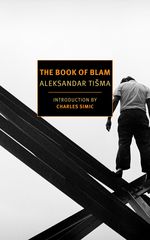
Tisma.blam_.final2_1024x1024Charles Simic at Literary Hub:

The Book of Blam is the first of three novels about the Holocaust in Yugoslavia written by the Serbian writer Aleksandar Tišma, the other two being The Use of Man and Kapo. It was published in 1972 in Belgrade and was well received, as were the two books that followed. Tišma’s work was translated into 17 languages and he became internationally known. Although a child of a Serbian father and Jewish mother, who lost relatives on his mother’s side in the Holocaust, Tišma came to the subject of the camps late: He attributed this new interest of his to a trip he took to Poland in the 1960s and a visit he made to Auschwitz that reminded him of the horrors he registered as a boy but had learned not to think about in order to keep his sanity. The trip to Poland made him realize that he had a history he could not run away from. As Tišma’s compatriot Danilo Kiš noted, “One doesn’t become a writer accidentally, one’s biography is the first and the greatest cause.” Tišma would have agreed. In one of his journals he describes himself as a bug who had survived the bug spray and whose role now is to convey to the descendants of the killers the atrocities their fathers and grandfathers perpetrated on their millions of victims.

Tišma was born in 1928 in Horgoš, a town on the border of Serbia and Hungary, where thousands of Syrian war refugees lately have massed while waiting to be allowed passage to Western Europe. His father came from Lika, an impoverished region in western Croatia inhabited by many Serbs.

more here.

The Bitter Fight Over the Benefits of Bilingualism

Lead_960Ed Yong at The Atlantic:

In one of his sketches, comedian Eddie Izzard talks about how English speakers see bilingualism: “Two languages in one head? No one can live at that speed! Good lord, man. You’re asking the impossible,” he says. This satirical view used to be a serious one. People believed that if children grew up with two languages rattling around their heads, they would become so confused that their “intellectual and spiritual growth would not thereby be doubled, but halved,” wrote one professor in 1890. “The use of a foreign language in the home is one of the chief factors in producing mental retardation,” said another in 1926.

A century on, things are very different. Since the 1960s, several studies have shown that bilingualism leads to many advantages, beyond the obvious social benefits of being able to speak to more people. It also supposedly improvesexecutive function—a catch-all term for advanced mental abilities that allow us to control our thoughts and behavior, such as focusing on a goal, ignoring distractions, switching attention, and planning for the future.

Bilinguals have lots of experience with these skills. “The bilingual mind is in constant conflict,” explains Ellen Bialystok from York University, one of the leading researchers in this field. “For every utterance, a choice is made to focus on the target language, so there is a constant need to select.” She says that this constant experience leaves its mark on the brain, strengthening the regions involved in executive function.

more here.

Paragraph

Record breaking Thriller
dance attempt.

*

Wolfman Jack style
dj in the video game says,
“This is Wasteland Radio

and we’re here for you”

*

You are here

maintaining détente
between the voices
in your head.

Immediacy is retro,
says Lytle.

*

Nostalgic/futuristic
scene in which

we can read the code—

green
flowing algorithms.

We can almost
slip right in.

by Rae Armantrout
from: Poetry, Vol. 196, No. 1, April
publisher: Poetry, Chicago, 2010
.
.

Monday, February 15, 2016

Sunday, February 14, 2016

A Country Breaking Down

Elizabeth Drew in the New York Review of Books:

ScreenHunter_1686 Feb. 14 18.42It would be helpful if there were another word for “infrastructure”: it’s such an earnest and passive word for the blood vessels of this country, the crucial conveyors and connections that get us from here to there (or not) and the ports that facilitate our trade (or don’t), as well as the carriers of information, in particular broadband (if one is connected to it), and other unreliable structures. The word “crisis” is also overused, applied to the unimportant as well as the crucial. But this country has an infrastructure crisis.

The near-total failure of our political institutions to invest for the future, eschewing what doesn’t yield the quick payoff, political and physical, has left us with hopelessly clogged traffic, at risk of being on a bridge that collapses, or on a train that flies off defective rails, or with rusted pipes carrying our drinking water. Broadband is our new interstate highway system, but not everyone has access to it—a division largely based on class. Depending on the measurement used, the United States ranks from fourteenth to thirtieth among all nations in its investments in infrastructure. The wealthiest nation on earth is nowhere near the top.

Congress’s approval last December of a five-year bill to spend $305 billion to improve the nation’s highway system occasioned much self-congratulation that the lawmakers actually got something done. But with an increase in the gasoline tax politically off-limits, the means for paying for it are dubious and uncertain.

More here.

A Parasite, Leopards, and a Primate’s Fear and Survival

Carl Zimmer in the New York Times:

ScreenHunter_1685 Feb. 14 18.24Many of our primate ancestors probably ended up in the bellies of big cats. How else to explain bite marks on the bones of ancient hominins, the apparent gnawing of leopards or other African felines?

Big cats still pose a threat to primates. In one study of chimpanzees in the Ivory Coast, for example, scientists estimated that each chimp ran a 30 percent risk of being attacked by a leopard every year.

A new study suggests that the big cats may be getting some tiny help on the hunt. A parasite infecting the brains of some primates, including perhaps our forebears, may make them less wary.

What does the parasite get out of it? A ride into its feline host.

The parasite is Toxoplasma gondii, a remarkably successful single-celled organism. An estimated 11 percent of Americans have dormant Toxoplasma cysts in their brains; in some countries, the rate is as high as 90 percent.

Infection with the parasite poses a serious threat to fetuses and to people with compromised immune systems. But the vast majority of those infected appear to suffer no serious symptoms. Their healthy immune systems keep the parasite in check.

More here.

Researcher illegally shares millions of science papers free online to spread knowledge

Fiona MacDonald in Science Alert:

ScreenHunter_1684 Feb. 14 18.20A researcher in Russia has made more than 48 million journal articles – almost every single peer-reviewed paper every published – freely available online. And she's now refusing to shut the site down, despite a court injunction and a lawsuit from Elsevier, one of the world's biggest publishers.

For those of you who aren't already using it, the site in question is Sci-Hub, and it's sort of like a Pirate Bay of the science world. It was established in 2011 by neuroscientist Alexandra Elbakyan, who was frustrated that she couldn't afford to access the articles needed for her research, and it's since gone viral, with hundreds of thousands of papers being downloaded daily. But at the end of last year, the site was ordered to be taken down by a New York district court – a ruling that Elbakyan has decided to fight, triggering a debate over who really owns science.

“Payment of $32 is just insane when you need to skim or read tens or hundreds of these papers to do research. I obtained these papers by pirating them,”Elbakyan told Torrent Freak last year. “Everyone should have access to knowledge regardless of their income or affiliation. And that’s absolutely legal.”

If it sounds like a modern day Robin Hood struggle, that's because it kinda is. But in this story, it's not just the poor who don't have access to scientific papers – journal subscriptions have become so expensive that leading universities such as Harvard and Cornell have admitted they can no longer afford them. Researchers have also taken a stand – with 15,000 scientists vowing to boycott publisher Elsevier in part for its excessive paywall fees.

More here.

How Scalia’s Death Will Change the Supreme Court, America, and the Planet

Jonathan Chait in New York Magazine:

ScreenHunter_1683 Feb. 14 18.15The death of Supreme Court Justice Antonin Scalia is a sad and tragic event for his loved ones, including 28 grandchildren and a large network of admirers. The political stakes for the country, its governing institutions, and, yes, the planet dwarf them in scale. The mortality of Supreme Court Justices is an element of wild randomness in the American political system. Enormous stakes rest upon the frail vulnerabilities of human flesh. Thurgood Marshall’s retirement 13 months before the 1992 presidential election, and two years before his death, paved the way for his replacement by Clarence Thomas. In today’s polarized era, no justice who had the physical ability to stay on would depart a Supreme Court seat under an opposing-party president. Whether and how the current system can handle these jolts of random chance is an open question.

The immediate and easily foreseeable impact is staggering. Last week, the Supreme Court issued a stay delaying the implementation of Obama’s Clean Power Plan. The stay indicated that a majority of the justices foresee a reasonably high likelihood that they would ultimately strike down Obama’s plan, which could jeopardize the Paris climate agreement and leave greenhouse gasses unchecked. Without Scalia on the Court, the odds of this drop to virtually zero. The challenge is set to be decided by a D.C. Circuit panel composed of a majority of Democratic appointees, which will almost certainly uphold the regulations. If the plan is upheld, it would require a majority of the Court to strike it down. With the Court now tied 4-4, such a ruling now seems nearly impossible.

Even if the Senate does not confirm any successor, then, Scalia’s absence alone reshapes the Court.

More here.

Sunday Poem

You say I cannot have it if you find my heart.
It was once mine: now I know who has it.

Love is by far the best thing in life. It took
All my sorrows: but has me hooked to it.

She is coy & cunning, sweet, exacting too.
She is playing you when you do not know it.

The heart can tell its story: what I know is this,
Every time I look for it, you say you have it.

My mentor likes to rub salt in my wounds.
Sir Tormentor, I ask, what do you take from it?
.

by Ghalib
from Kenyon Review, Winter 2013

translation: M. Shahid Alam

________________________________________________

Editor's Note, Kenyon Review:

Ghalib is the pen name of Mirza Asadullah Khan, a poet of
nineteenth-century India, wrote in Urdu and Persian.
He is widely regarded as the greatest poet of the Urdu language.

________________________________________________

Article by M. Shahid Alam:
Urdu Ghazals of Ghalib
.
.

Michael Jackson Revolutionizes the Super Bowl Halftime Show | NFL

One of the best performaces of the “King of Pop – Michael Jackson”.
Super Bowl Half Time Show performed in California at January 31, 1993, it includes Jam, Billie Jean, Black or White, We are the World and Heal the World.

More here. (Note: At least one post will be dedicated to honor Black History Month throughout February)

Saturday, February 13, 2016

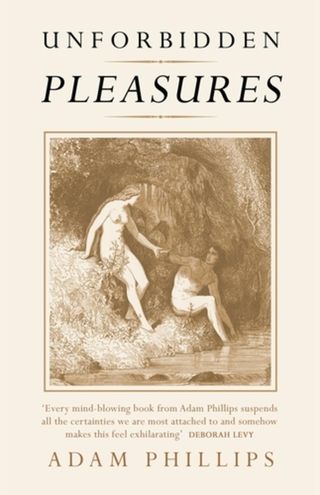
Why are we sometimes so reluctant to enjoy ourselves – even when we’re allowed?

Salley Vickers in the New Statesman:

1000x2000In the sage words of the novelist William Maxwell, “It is impossible to say why people put so little value on complete happiness.” The psychoanalyst and essayist Adam Phillips has, for some time, been engaged in investigating this enigma. A recent collection of essays, Missing Out, explored our propensity to attach a greater value to what we have not, rather than what we have. His latest book, Unforbidden Pleasures, is a profound meditation on our reluctance to enjoy ourselves as we might and, more crucially, as we are apparently granted the freedom to do.

A good deal of complex thinking and ­reference is compressed into two hundred or so pages. Phillips’s first witness is Oscar Wilde, whose provocatively intelligent statement on political engagement – “The problem with socialism is that it takes up too many evenings” – sets the book’s terms. “It is, of course, Wilde’s point that socialism interferes with sociability,” Phillips comments. Our ideologies – whether extraneous, as political or moral systems, or internalised – estrange us from our more creative and enjoyable instincts.

If Phillips sees in Wilde an ally, it is because the latter’s epicureanism made him suspicious of all enemies of pleasure, most especially self-inflicted punishment. A mistaken respect for a forbidding authority is, in Phillips’s view, the basis of conscience.

More here.

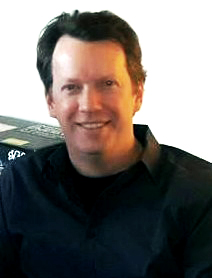
Gravitational Waves at Last

Sean Carroll in Preposterous Universe:

ScreenHunter_1682-Feb.-13-21Chances are that everyone reading this blog post has heard that LIGO, the Laser Interferometric Gravitational-Wave Observatory, officially announced the first direct detection of gravitational waves. Two black holes, caught in a close orbit, gradually lost energy and spiraled toward each other as they emitted gravitational waves, which zipped through space at the speed of light before eventually being detected by our observatories here on Earth. Plenty of other places will give you details on this specific discovery, or tutorials on the nature of gravitational waves, including in user-friendly comic/video form.

What I want to do here is to make sure, in case there was any danger, that nobody loses sight of the extraordinary magnitude of what has been accomplished here. We’ve become a bit blasé about such things: physics makes a prediction, it comes true, yay. But we shouldn’t take it for granted; successes like this reveal something profound about the core nature of reality.

Some guy scribbles down some symbols in an esoteric mixture of Latin, Greek, and mathematical notation. Scribbles originating in his tiny, squishy human brain. (Here are what some of those those scribbles look like, in my own incredibly sloppy handwriting.) Other people (notably Rainer Weiss, Ronald Drever, and Kip Thorne), on the basis of taking those scribbles extremely seriously, launch a plan to spend hundreds of millions of dollars over the course of decades. They concoct an audacious scheme to shootlaser beams at mirrors to look for modulated displacements of less than a millionth of a billionth of a centimeter — smaller than the diameter of an atomic nucleus.

More here.

Madeleine Albright: My Undiplomatic Moment

Madeleine Albright in the New York Times:

ScreenHunter_1681 Feb. 13 21.17I have spent much of my career as a diplomat. It is an occupation in which words and context matter a great deal. So one might assume I know better than to tell a large number of women to go to hell.

But last Saturday, in the excitement of a campaign event for Hillary Clinton in New Hampshire, that is essentially what I did, when I delivered a line I have uttered a thousand times to applause, nodding heads and laughter: “There’s a special place in hell for women who don’t help each other.” It is a phrase I first used almost 25 years ago, when I was the United States ambassador to the United Nations and worked closely with the six other female U.N. ambassadors. But this time, to my surprise, it went viral.

I absolutely believe what I said, that women should help one another, but this was the wrong context and the wrong time to use that line. I did not mean to argue that women should support a particular candidate based solely on gender. But I understand that I came across as condemning those who disagree with my political preferences. If heaven were open only to those who agreed on politics, I imagine it would be largely unoccupied.

More here.