Rajiv Sethi over at his blog:
Category: Recommended Reading
Between Experts and Citizens
Jo Guldi in Boston Review:
It is safe to say that the Brexit vote—only the third nation-wide referendum in the history of the United Kingdom—disrupted ordinary political norms and expectations. There was the surprise of the vote itself, and David Cameron’s quick abdication; the baffling disappearance of Boris Johnson, followed by his appointment in Theresa May’s new government; and then the failed coup in the Labour Party, leaving Jeremy Corbyn at the helm. Britain’s systems of representational democracy have traditionally functioned to block popular disruptions of this kind. What historical forces are behind Brexit’s spectacular exception to this rule?
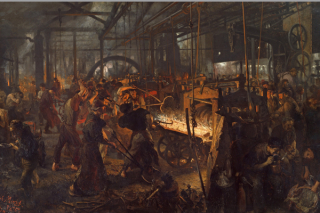
One answer begins in the second half of the twentieth century. Several commentators have read the vote as the result of a 1970s turn toward neoliberalism that left the working class behind in a program of coal pit closures and denationalization. Historian Harold James has underscored that the European Monetary System (EMS) grew out of proposals for an international money market that promised escape from national cycles of monetary expansion and inflation. From 1977 onward, the EMS made cheap credit, backed by European nations, available to private banks. In James’s account, this stability-focused monetary policy created a twenty-first century economy that was unaccountable to the working class, diminishing national and local control.
The identity of the European Union is wrapped up in hopes for peace after decades of war. But the neoliberalization narrative also sees in the EU a symbol of the rise of rule by financial experts and the discounting of class-based, representational politics. The financial management once beholden to local and national politics was placed in the hands of an international body, and national governments lost control—or simply divested themselves—of the levers they once had claimed for raising wages. Among the casualties of this transformation were the nationalized industries disassembled under Margaret Thatcher, which had leveraged the power of the state in bargaining between workers and employers. In short order, CEO pay ratcheted up and wages stagnated, and a landscape of ruins was left behind.
More here.
Rise of the robots: I feedback, therefore I am
Will Self in Prospect Magazine:
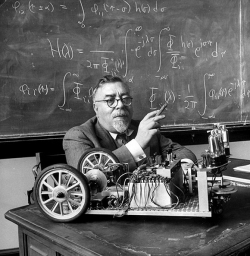
Written by Norbert Wiener, an MIT mathematician, and published in 1948, Cybernetics: or Control and Communication in the Animal and the Machine is the book which first brought the term “cybernetics” to public attention. Synthesised from the Ancient Greek kubernan (meaning to steer, navigate or govern) the coinage has resonated ever since, giving rise to all sorts of odd, cyber-prefixed neologisms—my personal favourite being the chain of American-style confectioners dubbed Cybercandy. Wiener, a famously eccentric character, had been driven to develop an overarching theory of the machine by two vital problems that had arisen during the Second World War. The first was the need for an automated system that would allow British anti-aircraft gunners to hit German bombers—and by extension make it possible for any gunner to hit a fast and erratically moving target; and the second was the dropping of the nuclear bomb Little Boy on Hiroshima in 1945. Wiener, like many scientists of his generation, responded to the split-second incineration of 125,000 Japanese civilians with horror: he had an epiphany in which he saw a future of deadly conflict dominated—and perhaps even initiated—by sophisticated machines. But again, in common with so many scientists of the era, Wiener had already tried to bring about just such a future, by creating a machine that would massively enhance our ability to locate, aim and unerringly deliver military ordanance.
This Janus-faced—or perhaps, more properly, Manichean—inspiration was thereby encrypted into the cybernetics blueprint from the outset: on the one hand this was intended to be a general theory of how all possible—not just actual—machines might work, with a view to assisting those intent on building them. On the other hand, it was a minatory account of how interaction between humans and human-like machines might lead to the latter becoming firmly ensconced in the driving seat. Given 2016 has already seen the first fatal accident involving a self-driving car, now might seem like the ideal time to take stock and calmly examine the last 70 years of human-machine interaction—possibly with the ulterior motive of discovering whether it’s a “who” or a “what” in control.
More here.
Sodom, LLC: The Marquis de Sade and the office novel
Lucy Ives in Lapham's Quarterly:
In the mid-eighteenth century, the term bureaucracy entered the world by way of French literature. The neologism was originally forged as a nonsense term to describe what its creator, political economist Vincent de Gournay, considered the ridiculous possibility of “rule by office,” or, more literally, “rule by a desk.” Gournay’s model followed the form of more serious governmental terms indicating “rule by the best” (aristocracy) and “rule by the people” (democracy). Yet bureaucracy quickly developed a nonsatirical life of its own once the French Revolution got under way. The Terror was, of course, infamously bureaucratic, with dossiers the way to denunciation, condemnation, and execution. On July 2, 1789, as legend has it, a voice rang out from the interior of the Bastille into the street below: “They are killing prisoners in here!” Two weeks later, citizens stormed the Bastille, inaugurating the long and complex series of events that would constitute the French Revolution. The alleged yeller, one Donatien-Alphonse-François de Sade, had been removed to the insane asylum at Charenton ten days before the siege, thus having miraculously galvanized his potential liberators or murderers and evaded them. It is a singular piece of luck that Sade was not present for the storming, for it is likely that, descending upon the marquis’ luxuriously appointed cell, the sansculottes would have had some difficulty differentiating Sade from his oppressors, much less from their own.
As this series of apocryphal events intimates, the Marquis de Sade occupies an unusual place in French letters. He is at once the paradigmatic aesthete to end all aesthetes, a supreme materialist and spendthrift, an aristocrat determined to organize his life around complexly choreographed orgies (and the eccentrically appointed locations necessary for these performances), and an iconoclast, if not a revolutionary. Though the paper trail that emerges from his early life includes at least three accusations of flaying, stabbing, poisoning, and other unusual forms of physical and emotional abuse—leveled by prostitutes and other women poorly protected by the law—Sade has been held up as a beacon of sexual liberation during an era benighted by Christian repression and hypocrisy. Susan Sontag and Julia Kristeva have praised the freedom of his writing and thought. As the myth of his cry to action from within the Bastille indicates, Sade’s readers are willing, in spite of his title, to receive him as an anarchist hell-bent on upending the feudal order of his day. But for all Sade’s aristocratic indulgence of peculiar whims and profligate spending on whips and whores, he is also one of the first major authors of what we might term modern bureaucratic literature. His writings are extraordinarily, pruriently concerned with acts that can be accomplished only by people working in groups who follow, in an orderly fashion, arbitrary rules and regulations. These secular constraints not only defy common sense but fly in the face of what we usually think of as basic respect for the sensations and lives of others. Thus another neologism: sadism. The writings of the Marquis de Sade describe dispassionate intimacy in the plural. In this sense, they foreshadow the social world of the contemporary office.
More here.
Sunday Poem
Trust
It’s like so many other things in life
to which you must say no or yes.
So you take your car to the new mechanic.
Sometimes the best thing to do is trust.
The package left with the disreputable-looking
clerk, the check gulped by the night deposit,
the envelope passed by dozens of strangers—
all show up at their intended destinations.
The theft that could have happened doesn’t.
Wind finally gets where it was going
through the snowy trees, and the river, even
when frozen, arrives at the right place.
And sometimes you sense how faithfully your life
is delivered, even though you can’t read the address.
.
by Thomas R. Smith
From Waking Before Dawn
Red Dragonfly Press, 2007
.
Saturday, September 24, 2016
Snap among the Witherlings
Michael Hofmann in the LRB:
The Soft Machine drummer, Robert Wyatt, his Cockney tenor cracking with fervour, once sang:
I’m nearly five foot seven tall
I like to smoke and drink and ball
I’ve got a yellow suit that’s made by Pam
and every day I like an egg and some tea
but most of all I like to talk about me.
The American poet Wallace Stevens liked his tea – he took to it in connoisseurship and prudence, ‘imported tea’ every afternoon, ‘with some little tea wafers’, partly in order to ease himself off martinis (Elsie, his ‘Pam’, disapproved of his drinking) – but otherwise everything is different. He was six feet two, 18 stone, got his identical elephant grey suits from a fellow in New Jersey and then from his son, hated talking about himself, didn’t smoke much after the cigars of middle age, and I don’t know about the balling, or the eggs, which Auden says are the test of bad biography.
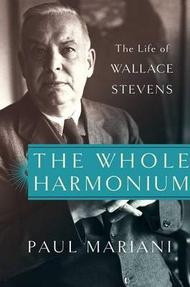
But there are bad biographies that tell you nothing about their subject’s breakfast preferences, and The Whole Harmonium is one such. Stevens is one of those apparently fortunate, self-standing poets who are not greatly involved with the styles or personalities of their time, whose work sets no puzzles and makes a sufficiently vivid impression all by itself. It’s hard to disagree with Elsie, who after her husband’s death sold his books and artefacts, destroyed letters and wrote to an earlier would-be biographer: ‘I must say that a critical biography is not needed for the understanding of Mr Stevens’ poetry. Mr Stevens’ poetry was a distraction that he found delight in, and which he kept entirely separate from his home life, and his business life – neither of them suitable or relevant to an understanding of his poetry.’ In particular, Harmonium(1923), Stevens’s scintillating first volume, seems to leap fully formed like Athena from the brow of Zeus. What is there at the back of it, apart from the French dix-neuvièmeand Shakespeare (and all of Stevens is like a greatly expanded version of the drama and relations of The Tempest: the magic, the tropics, the search for a different earthly orientation or accommodation)? Maybe Browning or Henry James – the Master and onlie begetter, I am increasingly coming to think, of all the great modernist poets, of Pound and Eliot and Moore and Stevens?
More here.
The Camus Investigation
Ryu Spaeth in TNR:
The English-language publication of the Algerian writer Kamel Daoud’s The Meursault Investigation in the summer of 2015 occasioned a wholesale reassessment of Camus’s reputation in the mainstream press. Daoud’s novel, which is told from the perspective of the brother of the nameless Arab that Meursault kills in The Stranger, became an instant classic of post-colonial literature, rendering vividly Camus’s blind spots and latent biases. The Moroccan-American novelistLaila Lalami suggested that whereas The Stranger had erased Algerians, Daoud made the country “more than just a setting for existential questions posed by a French novelist.” The Guardian reported that Daoud’s novel had revived criticisms of Camus’s “inability to see violence through a non-white, non-colonial prism.”
Camus’s complex relationship with Algeria is one of the central themes of Alice Kaplan’s new book, Looking for “The Stranger,” which attempts to reconcile Camus’s dueling legacies. It is a historical account of how Camus’s novel came into being, starting with the famous opening sentence—“Today, Maman died”—scrawled in a notebook marked “22” in the fall of 1938 in Algiers. But, like the characters in Daoud’s book, Kaplan is also conducting an investigation. She searches for the creative origins ofThe Stranger in the strained relationship between Arabs and Europeans in Algiers’s lower-class neighborhoods of Belcourt, where Camus grew up, and Bab-el-Oued. And as her investigation deepens, she is drawn into the real-life story behind the unnamed Arab who, like Camus’s shadow, lives on as a silent rebuke to his creator.
More here.
The Importance of Art Education
The Schooldays of Jesus
Alex Preston in The Guardian:
JM Coetzee is my favourite living author. I need to say this at the outset to offer some context to the battle I fought with The Schooldays of Jesus, his 13th novel. I spent three happy years writing my PhD on Coetzee, and my love for his early work survived meeting the man in person (like a wet weekend in Grimsby) and a run of several baffling “novels” (since his Man Booker-winning Disgrace in 1999) which seemed bent on stripping away all of the satisfactions we look for in fiction. The Schooldays of Jesus follows on the heels of its predecessor, The Childhood of Jesus. In that novel, we met Davíd and Simón, arriving memory-less in a Spanish-speaking city named Novilla. Novilla was a vast refugee camp operated on the most enlightened and benevolent lines – people were fed, housed and found employment; children were educated (although Davíd fought all attempts to make him conform). With a subtle touch, Coetzee conveyed how sinister the passionless world of Novilla was, where humans were treated as objects to be measured, ordered and controlled. As Simón put it: “You know how the system works. The names we use are the names we were given there, but we might just as well have been given numbers. Numbers, names – they are equally arbitrary, equally unimportant.”
Eventually, Simón, Davíd and Davíd’s mother, Inés, fled Novilla, heading for a town called Estrella. It is here that we pick up the story in the second novel in the series, with Simón and Inés arguing over how best to educate the six-year-old Davíd. Finally, after the intercession of three wealthy sisters, Davíd is sent to the local Academy of Dance, run by a Juan Sebastián Arroyo and his elegant wife, Ana Magdalena (many of the names in the book are obscurely significant). The education at the Academy is unusual – students learn maths by “dancing down” numbers – and yet Davíd, who’s a precocious and exasperating child, appears to flourish, forming a particularly close bond with Ana Magdalena.
More here.
Restoring Black History
Henry Louis Gates Jr. in The New York Times:
For years, the issue was whether black people were fit to be more than slaves. “Never yet could I find that a black had uttered a thought above the level of plain narration; never see even an elementary trait of painting or sculpture,” Thomas Jefferson wrote. “I advance it, therefore, as a suspicion only, that the blacks, whether originally a distinct race, or made distinct by time and circumstances, are inferior to the whites in the endowments both of body and mind.” The connection between humanity and history was central to this debate, and in the estimation of some Enlightenment thinkers, blacks were without history and thus lacked humanity. The German philosopher Hegel argued that human beings are “human” in part because they have memory. History is written or collective memory. Written history is reliable, repeatable memory, and confers value. Without such texts, civilization cannot exist. “At this point we leave Africa,” he pontificated, “not to mention it again. For it is no historical part of the world; it has no movement or development to exhibit.” Black people, of course, would fight back against these aspersions by writing histories about the African-American experience. In the 1880s, George Washington Williams, whom the historian John Hope Franklin called “the first serious historian of his race,” published the “History of the Negro Race in America from 1619 to 1880”; he confessed that part of his motivation was “to call the attention to the absurd charge that the Negro does not belong to the human family.”
About a decade later, W.E.B. Du Bois became the first black person to earn a Ph.D. (in history) at Harvard, followed by Carter G. Woodson, a founder of Negro History Week, who wanted to make history by writing it. “If a race has no history,” he wrote, “it stands in danger of being exterminated.” Arthur A. Schomburg, the famous bibliophile, posited a solution: “The American Negro must remake his past in order to make his future.” History “must restore what slavery took away.”
More here. (Note: At least one post throughout February will be in honor of Black History Month)
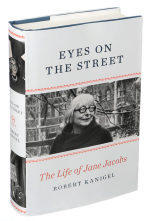
It’s Jane Jacobs’s World We Live In
Dwight Garner at The New York Times:
Jane Jacobs (1916-2006) was a heroic figure of intellectual life in the second half of the 20th century, and she is nearly always instructive and cheering to read about.
On the page, she gave us “The Death and Life of Great American Cities” (1961), a pioneering book that was a flaming arrow — it travels still, across the decades — through the heart of soulless and arrogant urban renewal projects.
Off the page, she fought against the worst of these schemes, including Robert Moses’s plan to run a 10-lane elevated superhighway through much of what is now SoHo, Little Italy, Chinatown and the Lower East Side. Without her, New York City might resemble Los Angeles.
Her Greenwich Village house, on Hudson Street, was her war room. So many people came in and out that Jacobs and her husband disconnected the ringer and left the door open at night. She offered guests what she called a West Village martini — gin and vermouth and ice and an olive in any mismatched glass that was handy. “You put your finger in it,” she wrote, “and go swish, swish, swish.”
more here.
the fiction of David Constantine
Rohan Maitzen at The Quarterly Conversation:
David Constantine’s fiction is full of ghosts. Not the supernatural kind that lurk in gothic mansions or scare unwary visitors in graveyards; rather, his novels are haunted by people whose presence persists though they are absent, who are undead because they live on in memories or stories. Theirs is a quietly human, not divine or heroic, immortality: they have no fame, no public memorials, no grand accomplishments, only their own singular experience. In Constantine’s hands the poignancy of their passing is mitigated by their intangible persistence, which creates uncanny but often comforting continuities between past and present.
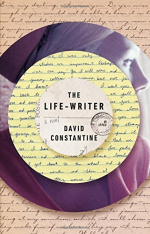
These continuities are at the heart of Constantine’s novel The Life-Writer, published in the U.K. in 2015 and just released in North America by Biblioasis. It begins abruptly, as Eric is dying—his identity and circumstances only gradually come into focus. Eric’s is a good death, as far as that is possible; he and his wife Katrin are able to spend the necessary time focusing “on where and who they were and what they were doing in the present tense.”
more here.
amos oz on judas
Jonathan Freedland at The Guardian:
The man who for decades has been Israel’s best known literary voice is proclaiming his “deep love” for “one of the greatest Jews who ever lived”. Amos Oz recalls falling for “this Jew” many years ago, when, as a teenage kibbutznik, he became enchanted by “his poetry, his humour, his compassion, his warmth, his simplicity”. Oz’s sweet hymn of praise is addressed to Jesus Christ.
If that comes as a surprise, it’s not only because Oz is an Israeli Jew. It’s also because he’s written often – and fiercely – of the role centuries of Christian persecution played in nurturing the Jewish longing for a homeland. But whatever anger he harbours toward Christian Europe, for Jesus, Oz expresses only fond admiration. Even if, the writer adds with a smile, “he and I disagree on many things – like any two Israelis”.
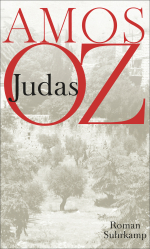
Now aged 77, his spectacles attached to a cord around his neck, he is still blessed with the rugged good looks and spellbinding English that have made international literary audiences swoon since the 1970s. This autumn cinemagoers might join them, thanks to the release of Natalie Portman’s film adaptation of A Tale of Love and Darkness, Oz’s bestselling memoir-cum-novel. But for now he is in London to promote his latest novel, the first for more than a decade: Judas in English, it was published in Hebrew as The Gospel According to Judas.
more here.
Saturday Poem
The Power of Maples
If you want to live in the country you have to understand the power of maples.
You have to see them sink their teeth into the roots of the old locusts.
You have to see them force the sycamore to grasp for air.
You have to see them move their thick hair into the cellar.
And when you cut your great green shad pole
you have to be ready for it to start sprouting in your hands;
you have to stick it in the ground like a piece of willow;
you have to plant your table under its leaves and begin eating.
.
by Gerald Stern
from News of the Universe
Sierra Club Books, 1995
.
Friday, September 23, 2016
TWENTY-FIRST-CENTURY ALCHEMISTS
Sam Kean in The New Yorker:
The drawers at the Making and Knowing Lab, at Columbia University, have labels rarely seen outside a Harry Potter novel: “Ox Gall,” “Spiderwebs,” “Powder for Hourglasses,” “Dragon’s Blood.” The denizens of the lab re-create old recipes from alchemy-era texts—primarily of the sixteenth century—and this brings them into contact with some unusual ingredients. On a recent Monday morning, Joel Klein, a redheaded history-of-science postdoc who studies Isaac Newton’s alchemical work, sniffed a bag of flakes labelled “Rabbit-Skin Glue.” “It smells like skin,” he said. Another sniff. “Although I’m not sure what a sommelier would say.”
The Making and Knowing Lab is run by Columbia’s Center for Science and Society. Its recipe re-creations take place in an old chemistry lab and are supported by $436,000 from the National Science Foundation. The goal is to help science historians understand the materials that craftsmen used centuries ago, as well as the technologies and techniques that were available at the dawn of the scientific revolution. Elsewhere in the lab, a dozen students in white coats bustled about. Siddhartha Shah, an art-history graduate student, was making counterfeit emeralds. The recipe involved mixing red lead, copper, and other ingredients in a ceramic crucible, then melting everything with a blowtorch in a small furnace, which he’d constructed from bricks and wire.
Although his first attempts had flopped—the “emerald” looked like a nub of coal—Shah wasn’t discouraged. “It was fascinating to watch the color change from red to green to black,” he said. “Then our crucible exploded.”
More here.
Akira Kurosawa’s great advice to aspiring filmmakers
the life of one of the most curious historical figures: John Aubrey
Michael Dirda at The Washington Post:
If one were to make a list of English literature’s great comfort books, those that generations of readers have returned to again and again for intelligent amusement, it would almost certainly include Boswell’s “Life of Samuel Johnson,” Jane Austen’s novels and the adventures of Sherlock Holmes. These are the old reliables that we discover in youth and are still happily rereading at 70.
To this select company I would not only add John Aubrey’s“Brief Lives,” but also now include Ruth Scurr’s innovative biography of its author, perhaps the most endearing figure of 17th century England. As a committed antiquary, collector and preservationist, as well as an inveterate scribbler, Aubrey (1626-1697) left a huge mass of papers about everything that interested him, from the natural history of his home county of Wiltshire to the stone circles at Avebury to tales of ghosts and fairies. Not just studious, he was moreover always eager for “ingenious conversation,” so that his learned friends soon included philosopher Thomas Hobbes, architect Christopher Wren, scientists Robert Boyle, Robert Hooke and William Harvey, diarist and gardener John Evelyn, mapmaker Wenceslaus Hollar, collector Elias Ashmole (after whom the Ashmolean Museum is named) and even William Penn, who would emigrate to America. Eventually Aubrey drafted fact-filled and anecdote-rich pen portraits of all his friends and many other eminences of the era, though the “Brief Lives” were never quite completed and were only published long after his death. Even now, a fair amount of this curious polymath’s more specialized writing remains in manuscript.
more here.
on murder-suicide in ireland
Colin Barrett at Granta:
On Sunday evening, 28 August 2016, in their home near the small rural town of in County Cavan, Alan Hawe put a knife through the throat of his wife Clodagh before going upstairs to strangle and stab to death his three sons, Liam, Niall and Ryan. The three boys’ beds were distributed between two upstairs rooms, which means two of the boys were sharing: the children were discovered in their bedclothes and early reports, more in hope than with any kind of verifiable accuracy, insisted they would have been sleeping when the attacks took place. The implication, in an attempt to soothe our gut-level instincts otherwise, is that the boys did not suffer, or did not suffer much, or extensively. Certainly Clodagh did – she tried to fight him off – but Hawe was armed and intent. ‘Alan was meticulous in everything he did,’ says an unnamed neighbour interviewed in the Daily Mirror the following Wednesday, ‘what he started, he finished.’ And it must indeed take a gruelling physical and mental conviction, a blazing adherence to your own ferocity, to overpower and kill four human beings – even if they were only a woman, even if they were only children – in such quick and unceasing succession. Hawe then went back downstairs and, permitting himself the one relatively lenient fate amid this paroxysm of physical atrocity, put a rope around his neck and let gravity do the rest.
The first newspaper reports referred to the event as a ‘family tragedy’, a euphemism that concealed as much as it revealed, and one that prefigured the national media’s subsequent selectivity when it came to what aspects of the story it would deem fit to speculate upon and what perspectives it would pass over in silence.
more here.
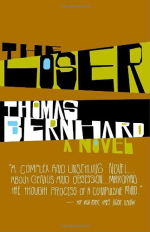
On Adapting Thomas Bernhard’s ‘The Loser’ for the Opera
David Lang at The Millions:
In 1998, I wrote music for a production of Friedrich Schiller’s play Mary Stuart at the American Conservatory Theater in San Francisco. The director was my friend Carey Perloff, the music was sung by the spectacular men’s vocal ensemble Chanticleer, and the translation of the text was by the writer and Village Voice theater critic Michael Feingold. There can be a lot of down time for a composer and a translator during theater rehearsals so Michael and I passed the time telling each other stories about books we should be reading, and Michael suggested I read Thomas Bernhard’s The Loser. So I did. As soon as I got back to New York I picked up a copy and I was immediately hooked by the power of the novel, especially the psycho energy of the narrator. Written in the first person as a continuous stream of jumbled information — one giant paragraph — and changing its focus and time and location and perspective and subject matter with almost every other sentence, it really felt like a rant to me — a condescending, angry, smart, rich, witty, not very nice man ranting about his life. I couldn’t read it silently. I ended up yelling the entire book to my reflection in the mirror in my bathroom, from start to finish, which was very exciting. And that day I started imagining what it would be like to add music to it.
I was drawn to the tightness of the language, the intensity of the character and to the self consciously indirect way the story is told, but most of all I was drawn by the subject matter. The novel tells the story of a man, never named in the book, who wanted to be a concert pianist when he was young.
more here.
Friday Poem
RIP Philando Castile, Alton Sterling, Dallas police
officers Lorne Ahrens, Michael Krol, Michael J. Smith,
Brent Thompson, and Patrick Zamarripa—and all
their families. And to all those injured.
@ the Crossroad —a Sudden American Poem
.
Let us celebrate the lives of all
As we reflect & pray & meditate on their brutal deaths
Let us celebrate those who marched at night who spoke of peace
& chanted Black Lives Matter
Let us celebrate the officers dressed in Blues ready to protect
Let us know the departed as we did not know them before—their faces,
Bodies, names—what they loved, their words, the stories they often spoke
Before we return to the usual business of our days, let us know their lives intimately
Let us take this moment & impossible as this may sound—let us find
The beauty in their lives in the midst of their sudden & never imagined vanishing
Let us consider the Dallas shooter—what made him
what happened in Afghanistan
what
flames burned inside
(Who was that man in Baton Rouge with a red shirt selling CDs in the parking lot
Who was that man in Minnesota toppled on the car seat with a perforated arm
& a continent-shaped flood of blood on his white T who was
That man prone & gone by the night pillar of El Centro College in Dallas)
This could be the first step
in the new evaluation of our society This could be
the first step of all of our lives
.
by Juan Felipe Herrera.
Originally published in Poem-a-Day
by the Academy of American Poets
.