The crisis of neoliberalism in Europe

Rustin_solidarity_468wMichael Rustin at Eurozine:

Globalization, promoted by establishments of the centre-left and -right as a necessity that must be embraced, and from which it was alleged new opportunities could be created, has been found to have severe costs. There has been a polarization of response to this situation. Those whose positions in the labour market have been undermined by de-industrialization (in fact, by the transfer of capital to more competitive, lower-wage locations) have turned against the system; while those whose level of education and skills have enabled them to find niches in buoyant sections of the economy have remained at least tolerant of it. These differences coincide to a degree with age, with tolerance of multicultural populations and commingling, and with a more favourable attitude to the cosmopolitanism associated with the European Union. Voting in the UK referendum seems to have been roughly proportional to educational levels – the higher the average level of education in a region, the higher the support for the UK remaining an EU member state, with university graduates being the most likely to vote Remain.

Those disillusioned by this painful experience have turned not to the Left but to the Right for the expression of their discontents. Thus the Single European Market and its rules requiring the free movement both of capital and labour has been rejected by the British electorate – this is what the vote to leave the EU means. Comparable nationalist movements of the Right are in the ascendancy in many countries of Europe. What has happened is that the protests against globalization, capital and free markets by the disadvantaged have been captured by the Right, in the absence of effective resistance from the Left.

more here.

Georgia O’Keeffe: ‘I don’t mind it being pretty’

From-the-faraway-nearby-1937-by-georgia-okeeffeCraig Raine at the Times Literary Supplement:

O’Keeffe the academic painter is also a vestigial commercial artist. Just as she never completely left behind her early training, drawing from casts, so she suffered adéformation professionnelle from her relatively short period as a commercial artist in Chicago in 1908 – where she worked freelance for various agencies, drawing lace and embroidery for newspapers and magazines. Andy Warhol also began as a commercial artist, but his understanding of the relationship of commercial art to fine art is more subtle, more knowing, than hers. He realized that the difference was in the finish – that fine art had a rougher finish, that it disclosed the hand of the painter, whereas in commercial art the individual touch was smoothed away. Commercial art as vanishing cream. (It is telling that O’Keeffe in reproduction differs not at all from the originals. Unusually, when you encounter the pictures in person, what you have seen already is what you get.)

Accordingly, Warhol invented a drawing technique, a deliberately jagged line. This was achieved by inking over a pencil drawing, blotting it and discarding the original image. In this way, Warhol created the effect of the artist’s hand at work – the opposite of slick, machine-made art.

When Warhol was still a commercial artist, he drew a snake as a shoe for Arthur and Teddy Edelman who ran Fleming Joffe Leather. It is ingenious and witty. The snake outline is a continuous knot – to advertise a snakeskin shoe – but the marks representing texture go over the outline in places, lending it the look of something hand-crafted. O’Keeffe’s paintings are commercial in their care.

more here.

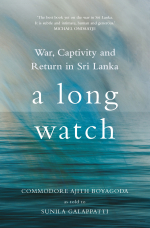
War, Captivity and Return in Sri Lanka

A-Long-Watch-Hurst-HBK-for-press-Front-webSunila Galappatti at The Wire:

It takes a long time to tell this story to friends: to say that I have a book just out; that I worked on it for five years without speaking openly about it; that it is a memoir written in the voice of a naval officer who was held captive for eight years during the Sri Lankan civil war and that he speaks of that experience in an understated and accepting way.­

This acceptance is the most surprising thing about the story and, almost immediately, people ask, “Did he go Stockholm?” I tell them it is a joke the commodore makes. “Maybe I have Stockholm syndrome,” he will say, and laugh. How is he to know, or I? We are not able to make a diagnosis, any more than the people who ask the question.

But over time I have wondered why this particular question recurs, of so many possible questions. There is inside it an urge to know – to be able to identify as something we recognise, a story that doesn’t fit the format we expect. There is a suggestion that we might know better than the man who is telling us his story. We are quick to make an illness of his survival strategies. Above all, we are schooled to resist the story being told.

more here.

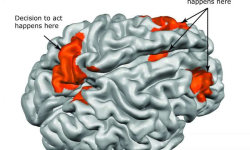
What free will looks like in the brain

Jill Rosen in PhysOrg:

WhatfreewillJohns Hopkins University researchers are the first to glimpse the human brain making a purely voluntary decision to act. Unlike most brain studies where scientists watch as people respond to cues or commands, Johns Hopkins researchers found a way to observe people's brain activity as they made choices entirely on their own. The findings, which pinpoint the parts of the brain involved in decision-making and action, are now online, and due to appear in a special October issue of the journal Attention, Perception, & Psychophysics. “How do we peek into people's brains and find out how we make choices entirely on our own?” asked Susan Courtney, a professor of psychological and brain sciences. “What parts of the brain are involved in free choice?”

The team devised a novel experiment to track a person's focus of attention without using intrusive cues or commands. Participants, positioned in MRI scanners, were left alone to watch a split screen as rapid streams of colorful numbers and letters scrolled past on each side. They were asked simply to pay attention to one side for a while, then to the other side—when to switch sides was entirely up to them. Over an hour, the participants switched their attention from one side to the other dozens of times. Researchers monitored the participants' brains as they watched the media stream, both before and after they switched their focus. For the first time, researchers were able to see both what happens in a human brain the moment a free choice is made, and what happens during the lead-up to that decision—how the brain behaves during the deliberation over whether to act.

More here.

Thursday Poem

When I heard the Learn’d Astronomer

When I heard the learn’d astronomer,
When the proofs, the figures, were ranged in columns before me,
When I was shown the charts and diagrams, to add, divide,
and measure them,
When I sitting heard the astronomer where he lectured with
much applause in the lecture-room,
How soon unaccountable I became tired and sick,
Till rising and gliding out I wander’d off by myself,
In the mystical moist night-air, and from time to time,
Look’d up in perfect silence at the stars.
.

by Walt Whitman
.

Wednesday, July 13, 2016

Solmaz Sharif and the poetics of a new American generation

John Freeman in the Los Angeles Times:

ScreenHunter_2090 Jul. 13 22.49Step gently on words such as “home” or “citizen” or even “body” with a foot bornelsewhere and they combust. Place names are even more incendiary. What happens when we read BEIRUT or TEHRAN or SAIGON while sitting at a cafe in Santa Monica?

This is war’s lexicon. It incorporates and redefines, especially by naming. In the U.S., recent Pulitzer Prize winner Viet Nguyen reminds us, we know the conflict as the Vietnam War; in Saigon, they call it the American War.

If writers must return history to human scale, the last decade of American life has proved just how necessary their linguistic re-engineering will be, even within our borders. In “Citizen,” Claudia Rankine showed it was possible to rescue the suffering of black bodies from spectacle if we questioned how we watched and from where.

Meanwhile, a new generation of poets — all descendants of the American Empire — have undertaken a project similar to Rankine’s on two fronts: retelling the myth of their being, and reclaiming language which has attempted to claim them.

More here.

Cosmology, God And Why ‘The Big Picture’ Needs To Be Bigger

John Farrell in Forbes:

ScreenHunter_2089 Jul. 13 22.44I’ll apologize in advance for a long review. And it’s a long review because Sean Carroll’s The Big Picture is an important book that needs to be read by a much wider audience than popular science aficionados. But let me start with a short historical prologue:

Back in the 12th century, a trickle of monks flowed from Europe into the Iberian Peninsula, at the time still heavily dominated by Muslim rule, though Christian princes were beginning to retake the territories city by city. The pilgrims needed access to better lunar and planetary charts. They had heard from travelers, that Arab star watchers had a wealth of superior data.

So, the heads of the new cathedral schools on the continent sent these clerics down to Spain to get translations: First, and foremost, of the astronomical tables, so that the popes could make more accurate assessments of when Easter should be determined in the Gregorian calendar.

They could not imagine what they were getting themselves into. In Toledo they gained access to Latin translations of far more than astronomical tables. Medical books. Philosophy. Zoology. What became known as The Translation Movement, over the next two centuries, opened to Europe access to all the best sources of Ancient Science and Philosophy that existed and had been lost to the West since the fall of the Roman Empire, from Aristotle and the Greeks onward to the greatest physicians and philosophers of Islam.

More here.

Daddies, “Dates,” and the Girlfriend Experience: Welcome to the New Prostitution Economy

Nancy Jo Sales in Vanity Fair:

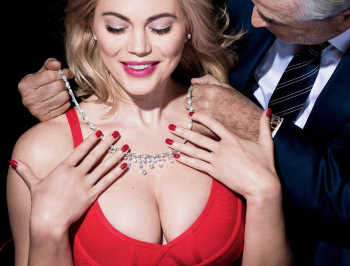
The-young-and-the-rentless-08-2016-01The waiter with the handlebar mustache encourages us to “participate in the small-plate culture.” Geraldine’s, the swank spot in Austin’s Hotel Van Zandt, is brimming with tech guys, some loudly talking about money. The college student at our table recommends the ribs—she’s been here before, on “dates” with her “daddies.” “There are a lot of tech guys,” she says. “They want the girlfriend experience, without having to deal with an actual girlfriend.”

“The girlfriend experience” is the term women in the sex trade use for a service involving more than just sex. “They want the perfect girlfriend—in their eyes,” says Miranda, the young woman at our table.* “She’s well groomed, cultured, classy, able to converse about anything—but not bringing into it any of her real-world problems or feelings.”

Miranda is 22 and has the wavy bobbed hair and clipped mid-Atlantic accent of a 1930s movie star; she grew up in a Texas suburb. “I’ve learned how to look like this, talk like this,” she says. “I work hard at being this,” meaning someone who can charge $700 an hour for sex.

More here.

Georgia O’Keeffe: a new kind of painting for Modern America

Georgia-okeeffeBen Luke at The Evening Standard:

The view of O’Keeffe mainly as a purveyor of floral erotica has a complex history. Psychoanalytical readings were first promoted by Stieglitz’s writings on O’Keeffe but also on women’s art in general. He wrote that: “The Woman sees the World through her Womb. That is her deepest feeling. Mind comes second.” O’Keeffe’s response to this Freudian take was spirited. She rejected the idea that she was a “strange unearthly creature floating in the air” and said: “I like beef steak — and I like it rare at that.”

She also rejected readings from another viewpoint entirely, generations later, when she was adopted by feminist artists such as Judy Chicago and Miriam Schapiro. They saw her work as a crucial influence in representing the female body from a woman’s perspective rather than through the male gaze. O’Keeffe was dismissive: any sexual or gendered symbolism was in the eye of the beholder.

But the sexual readings aren’t entirely located in the imagery; O’Keeffe’s painted language is a big factor in prompting them. I was struck throughout the show by the way she describes form in a bodily way. Progressing gradually from light to dark, she models shapes so that they evoke the fall of light and shade on a limb as it meets a torso or, as Chicago and Schapiro propose in their reading of Grey Lines with Black, Blue and Yellow (c1923), the labia and the vagina.

more here.

Brexit and the Facts

0b36f34dd9925bbd2f009c950ba68339William Davies at The Point:

It became clear early on in the night that Leave had extraordinary levels of support in the North East, taking 70 percent of the votes in Hartlepool and 61 percent in Sunderland. It subsequently emerged that Wales had voted for Leave overall, especially strongly in the South around areas such as Newport. It is easy to focus on the recent history of Tory-led austerity when analyzing this, as if anger towards elites and immigrants was simply an effect of public spending cuts of the past 6 years or (more structurally) the collapse of Britain’s pre-2007 debt-driven model of growth.

But consider the longer history of these regions as well. They are well-recognized as Labour’s historic heartlands, sitting on coalfields and/or around ship-building cities. Indeed, outside of London and Scotland, they were amongst the only blobs of Labour red on the 2015 electoral map. There is no reason to think that they would not stay red if an election were held in the autumn. But in the language of Marxist geographers, they have had no successful “spatial fix” since the stagflation crisis of the 1970s. Thatcherism gutted them with pit-closures and monetarism, but generated no private sector jobs to fill the space. The entrepreneurial investment that neoliberals always believe is just around the corner never materialized.

more here.

On Michael Herr, mentors, and writing about war

BootsNeil Shea at The American Scholar:

Few soldiers or Marines I met in Iraq had read the book. Many of them knewDispatches, but they insisted that Iraq was not Vietnam. Their protests revealed how Herr’s wisdom, and that of his generation, had been lost. This became apparent to me one day at a press conference. I attended out of boredom and despair—being there meant I was not somewhere else. The war was slipping past in the distance, and Herr had given me to know that nothing could ever be learned at a media show. The room was large and beige in the way of any official nowhere, with rows of chairs flanking a long aisle. A flock of reporters had taken seats to the right, near the podium at the front of the room. I hung back to the left and sat beside a solitary figure, an older man with a high forehead and long, thinning hair. He was Peter Arnett, a legendary war correspondent who had covered Vietnam. We chatted for a while, and then he noticed I was carryingDispatches. He told me he and Herr had been friends.

“It’s a wonderful book,” he said. “But you know he made a lot of it up.”

I did not, and was crushed again. “How do you know?” I blurted.

He laughed. A certain patience in it.

“Because I was there.”

more here.

How China is rewriting the book on human origins

Jane Qiu in Nature:

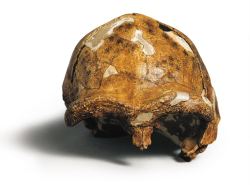
GettyImages-102076619-2On the outskirts of Beijing, a small limestone mountain named Dragon Bone Hill rises above the surrounding sprawl. Along the northern side, a path leads up to some fenced-off caves that draw 150,000 visitors each year, from schoolchildren to grey-haired pensioners. It was here, in 1929, that researchers discovered a nearly complete ancient skull that they determined was roughly half a million years old. Dubbed Peking Man, it was among the earliest human remains ever uncovered, and it helped to convince many researchers that humanity first evolved in Asia.

Since then, the central importance of Peking Man has faded. Although modern dating methods put the fossil even earlier — at up to 780,000 years old — the specimen has been eclipsed by discoveries in Africa that have yielded much older remains of ancient human relatives. Such finds have cemented Africa's status as the cradle of humanity — the place from which modern humans and their predecessors spread around the globe — and relegated Asia to a kind of evolutionary cul-de-sac. But the tale of Peking Man has haunted generations of Chinese researchers, who have struggled to understand its relationship to modern humans. “It's a story without an ending,” says Wu Xinzhi, a palaeontologist at the Chinese Academy of Sciences' Institute of Vertebrate Paleontology and Paleoanthropology (IVPP) in Beijing. They wonder whether the descendants of Peking Man and fellow members of the species Homo erectus died out or evolved into a more modern species, and whether they contributed to the gene pool of China today. Keen to get to the bottom of its people's ancestry, China has in the past decade stepped up its efforts to uncover evidence of early humans across the country. It is reanalysing old fossil finds and pouring tens of millions of dollars a year into excavations. And the government is setting up a US$1.1-million laboratory at the IVPP to extract and sequence ancient DNA. The investment comes at a time when palaeoanthropologists across the globe are starting to pay more attention to Asian fossils and how they relate to other early hominins — creatures that are more closely related to humans than to chimps. Finds in China and other parts of Asia have made it clear that a dazzling variety of Homo species once roamed the continent. And they are challenging conventional ideas about the evolutionary history of humanity.

More here.

Tuesday, July 12, 2016

Evolution, bioethics and human nature

9780415346382-1

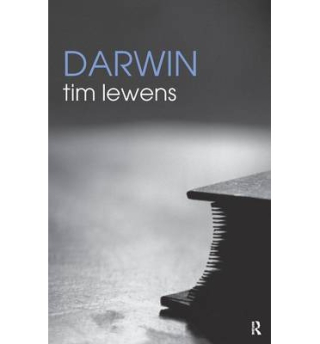
Richard Marshall interviews Tim Lewens in 3:AM Magazine:

3:AM: You’re interested in philosophy of science, bioethics and the science of human nature among other things. In trying to work out what science is you look at some borderline cases: you vividly describe economics as being less science more ‘Lord of the Rings with equations’, Intelligent design as hopeless and homeopathy’s effects as being no more than placebo effects. So how do you draw a line between science and non-science? Do Popper, Kuhn, Lakatos and Feyerabend et al still offer helpful insights or have they been supplanted by better approaches?

TL: As you’ve indicated, I think that philosophers are well placed to expose significant flaws in diverse pseudo-intellectual endeavours. Intelligent design theory, for example, really is laughable, and it’s not too hard to show why. Even so, these evaluative tasks don’t require that we have a single criterion that allows us to sort the scientific wheat from the chaff, and there are good reasons to think these is no single criterion. First, the sciences are exceptionally varied in their methods: even some forms of economics are valuable! The sciences need to be varied because the universe itself contains many different types of phenomena, which need to be probed with different tools. Second, debates over the propriety of fields of learning have many dimensions. The case of homeopathy illustrates this. Even if it turns out that homeopathic remedies draw solely on placebo effects, we need to remember that placebo itself is a fascinating and little understood phenomenon. Placebos differ in their intensity: placebo capsules are more efficacious than placebo pills, and four placebo capsules are more efficacious than two. The process of medical consultation with a professional also has a strong positive placebo effect. And placebo has a maleficent twin: the nocebo effect means that if you expect a drug to do you harm, it can end up damaging your health even if it’s just a sugar pill in disguise. We also need to remember that mainstream drugs aren’t always as beneficial as is thought: the best research suggests that standard drugs used for moderate depression do no better than placebo. The upshot of all this is that we shouldn’t write off homeopathy too quickly: if you have moderate depression, and if you are suspicious of mainstream medicine, you might be best off visiting a homeopathic practitioner. You will avoid the nocebo effect you would get from standard treatment, and instead you will get a big placebo boost from the elaborate, bespoke consultation the homeopathic practitioner is likely to offer.

So does this mean that we still have something to learn from Popper, Kuhn and the other big beasts of mid-century philosophy of science? Yes! Feyerabend is right, I think, to cast doubt on the existence of any recipe that will tell scientists how to go about investigating the world: the interesting question for us is whether this really means that in science anything goes. Evidently these are issues with hefty ramifications for decisions over funding, and the politics of what gets taught in schools. And we need to understand Popper’s appeal better. It’s still the case that scientists point to Popper when asked how they do their business. I suspect that they endorse an eviscerated, but very sensible, version of Popper’s falsificationism. They think that Popper tells us that scientists test their theories against the world, and that scientists never invest their views with certainty. But Popper’s views are far more radical than that: Popper gives us no grounds for thinking that any scientific tests can ever have significance, because he ultimately denies any epistemic authority to scientific data. And he doesn’t merely say that scientists aren’t certain, he says they have no reason whatsoever to think their theories are close to the truth.

More here.

When Dickens met Dostoevsky

Naiman_Commentary

Eric Naiman in the TLS:

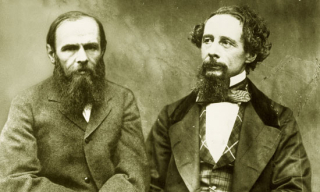
Late in 2011, Michiko Kakutani opened her New York Times review of Claire Tomalin’s biography of Charles Dickens with “a remarkable account” she had found in its pages. In London for a few days in 1862, Fyodor Dostoevsky had dropped in on Dickens’s editorial offices and found the writer in an expansive mood. In a letter written by Dostoevsky to an old friend sixteen years later, the writer of so many great confession scenes depicted Dickens baring his creative soul:

“All the good simple people in his novels, Little Nell, even the holy simpletons like Barnaby Rudge, are what he wanted to have been, and his villains were what he was (or rather, what he found in himself), his cruelty, his attacks of causeless enmity toward those who were helpless and looked to him for comfort, his shrinking from those whom he ought to love, being used up in what he wrote. There were two people in him, he told me: one who feels as he ought to feel and one who feels the opposite. From the one who feels the opposite I make my evil characters, from the one who feels as a man ought to feel I try to live my life. ‘Only two people?’ I asked.”

I have been teaching courses on Dostoevsky for over two decades, but I had never come across any mention of this encounter. Although Dostoevsky is known to have visited London for a week in 1862, neither his published letters nor any of the numerous biographies contain any hint of such a meeting. Dostoevsky would have been a virtual unknown to Dickens. It isn’t clear why Dickens would have opened up to his Russian colleague in this manner, and even if he had wanted to, in what language would the two men have conversed? (It could only have been French, which should lead one to wonder about the eloquence of a remembered remark filtered through two foreign tongues.) Moreover, Dostoevsky was a prickly, often rude interlocutor. He and Turgenev hated each other. He never even met Tolstoy. Would he have sought Dickens out? Would he then have been silent about the encounter for so many years, when it would have provided such wonderful fodder for his polemical journalism?

More here.

Leopold Weiss, the Jew Who Helped Invent the Modern Islamic State

Asad_256097

Shalom Goldman in Tablet:

In 1961 the eminent Muslim scholar Muhammad Asad, then living in Europe, published The Principles of State and Government in Islam. The central question posed in that book is whether Islam is opposed to the mixing of religion and politics—as is the modern West. Though Asad’s answers to this question are subtle and non-categorical, his overall conclusion is that in majority-Muslim states a mixture of politics and religion is necessary. Society must bind itself to the will of God, Asad stated, and “the organization of an Islamic state or states is an indispensable condition of Islamic life in the true sense of the word.”

This was not the first time that Asad, who had been publishing books and articles since the mid-1930s, called for the infusion of religion into politics. In his highly influential 1934 essay “Islam at the Crossroads,” Asad articulated a set of principles about the relationship between the Muslim world and the West that served as the basis of his later conversations with Muhammad Iqbal and other Islamist activists. He envisioned, in Pakistan and elsewhere, the emergence of Muslim states thoroughly modern but inspired and informed by religious principles.

Asad’s vision of an Islamic state bears little resemblance to the militant, anti-Western version propagated by ISIS today; he conceived of an Islamic state based on modern interpretations of the Quran and the Islamic legal traditions, a state grounded in democratic principles, where women would be treated as equals and the civil rights of non-Muslims respected.

Perhaps that’s not surprising, given Asad’s roots. He was born at the turn of the 20th century in Austria-Hungary—in what is now Ukraine—as Leopold (Aryeh) Weiss.

More here.

9 LGBTQ Writers Reflect after Orlando

Daniel Evans Pritchard in The Critical Flame:

We at The Critical Flame shared the heartbreak, anger, and confusion at the recent mass shooting of members of the gay, lesbian, bisexual, transgender, and queer community inOrlando, where a lone gunman killed more than fifty LGBTQ-identified and Latinx people at Pulse nightclub.

The shooter likely intended to silence and marginalize the LGBTQ/Latinx community. It has been heartening to see many writers responding with such expansive humanity. Justin Torres writes about the particular joy found in Latinx spaces in a full-throated piece in The Washington Post, for instance, and Rigoberto González writes about finding a home in similar spaces for BuzzFeed. These are only a few examples, but their reflections seeded the idea for our feature.

It has been a year too full of tragedy, mourning, and anger. Over just the past week, we’ve witnessed the deaths of Philando Castile and Alton Sterling at the hands of law enforcement officers, as well as the nation’s 228th mass shooting since the beginning of the year—this time of police officers and Black Lives Matter protesters in Dallas. Creating a more peaceful, more just society will require all our righteous anger, activism, ballots, and safe spaces. It will also require an articulation of what that society will look like. Every person should be able to make a home in this life, to be at home in their own identity. To remake the world so that’s not only possible but presumed and universal, we’ll need to articulate that future in policy, in practice, and in word.

This is literary journal. Language is our medium. So, in an effort to create more space for healing and solidarity, to help articulate a more peaceful and just world, CF has invited a number of LGBTQ-identified writers to respond to this question:

Can you tell us about a time that you felt at home in your identity?

Home is a complicated notion, as several of our contributors note, and it’s ultimately inadequate to the task of realizing justice—but it is a powerful idea. A person can find home in a community, in a relationship, at a nightclub, in writing, etc.

I’m so grateful to our contributors for their generosity, careful reflection, and honesty. I am also deeply indebted to both Alison Lanier, CF Conversations Editor, and Ricco Siasoco, CF Contributing Editor, for their guidance in the formulation and curation of this feature.

In peace and solidarity,

Daniel Evans Pritchard
Editor

More here.

Ulysses, Order and Myth

Ulyssess-1967-filmAnthony Domestico at berfrois:

Published in The Dial in November of 1923, T.S. Eliot’s essay “‘Ulysses,’ Order, and Myth” is a rare opportunity to see one of modernism’s giants grappling with one of modernism’s greatest works. Having met Joyce for the first time while delivering a pair of old shoes on behalf of Ezra Pound on August 15, 1915, Eliot received each new episode from Joyce’s work as it became available[1]. Eliot previously had commented on the necessary “crudity and egoism” of Joyce’s writings in the Athenaeum of July 4, 1919 and had praised the “Oxen of the Sun” episode as an exposure of “the futility of all English styles” following the book’s publication in 1922.[2] His review in The Dial, however, was his most sustained and considered commentary on Joyce’s work, his method, and its broader implications for modern fiction and the novel form itself.

In his review, Eliot claims Ulysses to be “the most important expression which this present age has found,” a “book to which we are all indebted, and from which none of us can escape.”[3] From the very beginning, Eliot indicates the significance of the novel to its specific time, to the particular conditions and communities of the modern age. The most important innovation of Joyce’s technique, Eliot claims, and the one that makes it such a seminal work for the modern writer, is “the parallel [of the work] to the Odyssey, and the use of appropriate styles and symbols to each division.” Eliot praises this “method,” as he calls it, as not merely “an amusing dodge, or scaffolding erected by the author for the purpose of disposing his realistic tale,” but instead “a way of controlling, of ordering, of giving a shape and a significance to the immense panorama of futility and anarchy which is contemporary history”

more here.

With Coercive Control, the Abuse Is Psychological

Abby Ellin in The New York Times:

TraumaLisa Fontes’s ex-boyfriend never punched her, or pulled her hair. But he hacked into her computer, and installed a spy cam in her bedroom, and subtly distanced her from her friends and family. Still, she didn’t think she was a victim of domestic abuse. “I had no way to understand this relationship except it was a bad relationship,” said Dr. Fontes, 54, who teaches adult education at the University of Massachusetts, Amherst. It was only after doing research on emotional abuse that she discovered a name for what she experienced: Coercive control, a pattern of behavior that some people — usually but not always men — employ to dominate their partners. Coercive control describes an ongoing and multipronged strategy, with tactics that include manipulation, humiliation, isolation, financial abuse, stalking, gaslighting and sometimes physical or sexual abuse.

“The number of abusive behaviors don’t matter so much as the degree,” said Dr. Fontes, the author of “Invisible Chains: Overcoming Coercive Control in Your Intimate Relationship.” “One woman told me her husband didn’t want her to sleep on her back. She had to pack the shopping cart a certain way, wear her clothes a certain way, wash herself in the shower in a certain order.” While the term “coercive control” isn’t widely known in the United States, the concept of nonphysical forms of mistreatment as a kind of domestic abuse is gaining recognition.

More here.