Tuesday Poem

Round Them Up

Family With 2 US Citizen Children
Deported by ICE After Traffic Stop
Cheerios, dinner plates, wedding
Rings—teapots and targets. Eyes
On the circumference of your wrist.
On a round table in my classroom
With broken chairs: the globe.

Holes punched in the left margin, being
Left at the margins, not knowing:
Will knuckles rattle their doors,
Their shiny knobs bright, like that
Once-new promise of America?

Her torch blazes in the noonday sun
Before, during, after the election
From the island where she stands
With eyes hooded and low, ever
Watching over rough waters.

I tell this mother on the phone
From our classroom, cord curling ’round
My fingers, we will do our best. They can
Stand out there and press the doorbell,
Ring forever for all we care.

I am not worried, she assures me.
Yet there is no list it is safe to be on—
Everything being less sure. She is
Less assured now, the news rolling
On a twenty-four-hour cycle.

A knock at the door is a knock
In their hearts, thoughts spinning Round and round
Like the vultures’ turning—silent
Above the wide-open plain.

Carrie Jane Bond
from Rattle Magazine 


Enjoying the content on 3QD? Help keep us going by donating now.
Monday, May 12, 2025

The Most Beautiful Words in the English Language, According to Linguists

Bennett Kleinman at Word Smarts:

If you were to ask 100 different people to pick the most beautiful word in the English language, you’d probably get 100 different answers. There’s a seemingly endless list to choose from, as some words evoke pleasant memories, while others sound mellifluous to the ear. While there’s no way to reach a universal consensus, many esteemed linguists have favorites of their own. These are a few of them.

Ailurophile

Accomplished linguist Dr. Robert Beard compiled a list of what he personally considers to be the 100 most beautiful English words. Up first — at least alphabetically — is “ailurophile,” which appropriately sounds quite alluring. The word, which essentially means “cat lover,” is derived from the Greek ailuros, meaning “cat,” and phile, meaning “lover.” Its origins date back to the 1910s, though the word continues to make the hearts of linguists purr today. Not only does it sound pleasant, but it also evokes the beautiful connection that humans have with their beloved pets.

More here.

Enjoying the content on 3QD? Help keep us going by donating now.

Why Have Birds Never Gotten as Big as T. Rex?

Riley Black in Smithsonian Magazine:

The repeated evolution of huge birds is part of the dinosaurian legacy. Beaked birds were the only dinosaurs to have survived the asteroid-triggered mass extinction at the end of the Cretaceous. Avians like the six-foot-tall Palaeeudyptes that waddled across ancient Antarctica about 30 million years ago and Titanis, a towering carnivore that was the only terror bird to live in North America between 1.8 million and 5 million years ago, underscore that prodigious dinosaurs were not only relegated to the times of Stegosaurus and Triceratops. The conditions that allowed birds to evolve to large size over and over again have varied from case to case, however, and the process has left a lingering question. If birds possess the traits that opened the possibility of truly giant, multi-ton statures for non-avian dinosaurs, why have we not seen a bird the size of a T. rex?

More here.

Enjoying the content on 3QD? Help keep us going by donating now.

Robust, reliable uncertainties in AI development and applications make the pursuit of global dominance risky, creating pressures toward cooperative stability

Eric Drexler at AI Prospects:

Even experts disagree about current and near-term AI capabilities. Research proceeds along multiple lines, sometimes in secrecy. New algorithmic approaches are reducing or bypassing previously anticipated compute requirements, undermining predictions based on hardware constraints.1 Specialized models are pushing frontiers in unpredictable directions,2 the use of external tools by models is proliferating,3 inference-time reasoning4 is still in its infancy, extensions to latent-space reasoning5 may prove transformative, prospective latent-space knowledge models6 promise to break the link between model size and knowledge scope, and both large concept models7 and nonautoregressive reasoning models8 mark departures from sequential token generation architectures. In every application area, patterns of success and failure — even in applying established technologies — have been surprising.9 No degree of intelligence or investment can eliminate these uncertainties.

More here.

Enjoying the content on 3QD? Help keep us going by donating now.

Childhood Exposure to Bacterial Toxin Tied to Early-Onset Colorectal Cancer

Laura Tran in The Scientist:

Colorectal cancer (CRC) rates are rising in adults under 50, with incidence patterns varying significantly by global region.1 As researchers dig into the age- and geography-related shifts, they’re zeroing in on risk factors behind early-onset cases. Environmental exposures and certain lifestyle factors can leave their mark on a person’s health and imprint characteristic patterns of somatic mutations in the genome, known as mutational signatures.2

Ludmil Alexandrov, a cancer geneticist at the University of California, San Diego, combines traditional and mutational epidemiology to analyze genomes for genetic patterns that may be responsible for the varying CRC incidence rates. In a new study, Alexandrov and his team found that early-life exposure to colibactin, a DNA-damaging toxin produced by certain strains of Escherichia coli in the gut, is strongly linked to early-onset CRC.3

More here.

Enjoying the content on 3QD? Help keep us going by donating now.

Running Water Is A Miracle

Charles C. Mann at The New Atlantis:

Water systems and their problems are as old as the first cities, and possibly older. The urban complex of Mohenjo-Daro, on the banks of Pakistan’s Indus River, arose about 2600 b.c., around the time that Egyptians were erecting the pyramids. Mohenjo-Daro was the biggest city in what archaeologists call the Harappan or Indus Valley civilization. Most of the citizenry lived in the “lower town,” a Manhattan-like grid of streets and boulevards faced by low brick buildings. Atop a high platform of mud bricks to its west was the “upper town,” sometimes romantically called the Citadel, a civic center that held relatively few people. Remarkably, there is little evidence that people in the upper town were richer or more powerful than those in the lower — Mohenjo-Daro seems to have been a surprisingly egalitarian place.

Water control was at its heart. Some 700 public wells dotted the lower city, many of them sixty feet deep. Cylindrical and lined with bricks and plaster, these wells created an urban water supply with a capacity and safety level that would not be matched until the modern era.

more here.

Enjoying the content on 3QD? Help keep us going by donating now.

The Last Dreams

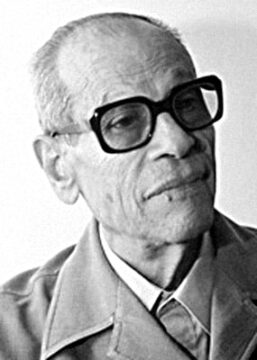
Naguib Mahfouz at the Paris Review:

Dream 209

I found myself sitting with President Gamal Abdel Nasser in a small garden, and he was saying: You may be asking why we don’t meet as often anymore.

I said: I did wonder about that.

He said: It’s because every time I consult you about an issue, I find that your opinion either partly or entirely contradicts mine, and so I feared for our friendship.

I replied: For me, our friendship—no matter our differences—can never end.

Dream 210

I found myself at Café El Fishawi. A short distance away was the famous artist and ballerina soon to announce her retirement. I couldn’t help looking at her with great curiosity. She gracefully turned around and her lips gave me a faint smile. My companion said: Be glad, you won’t embark on life’s final battle alone.

more here.

Enjoying the content on 3QD? Help keep us going by donating now.

Sunday, May 11, 2025

Elon Musk Thought He Could Break History. Instead It Broke Him

David Nasaw in The New York Times:

The partnership between the president and the richest man in the world is coming to an end. There is one clear loser in the breakup of this affair, and it is Elon Musk.
He fell from grace as effortlessly as he had risen. Like a dime-store Icarus, he took too many chances, never understood the risks and flew too close to the sun. Wrapped in the halo of his social-media superstardom, he was blinded to the reality of his circumstances until it was too late.

Mr. Musk has already inked several lucrative federal contracts and could get far more, but he leaves Washington with his reputation as a genius jack-of-all-trades — a reputation he relied on to boost his company’s stock prices and win investors for his ambitious adventures — severely damaged. Once likened to the Marvel superhero Tony Stark, he is becoming increasingly unpopular. Many formerly proud owners of his Tesla electric cars are trading them in or pasting apologies on their bumpers. Sales have plummeted.

More here.

Enjoying the content on 3QD? Help keep us going by donating now.

Sunday Poem

A Call

‘Hold on,’ she said, ‘I’ll just run out and get him.
The weather here’s so good, he took the chance
To do a bit of weeding.’
………………………………… So I saw him
Down on his hands and knees beside the leek rig,
Touching, inspecting, separating one
Stalk from another, gently pulling up
Everything not tapered, frail and leafless,
Pleased to feel each little weed-root break,
But rueful also . . .
…………………………… Then I found myself listening to
The amplified grave ticking of hall clocks
Where the phone lay unattended in a calm
Of mirror glass and sunstruck pendulums . . .

And found myself then thinking: if it were nowadays,
This is how Death would summon Everyman.

Next thing he spoke and I nearly said I loved him.

by Seamus Heaney
from The Spirit Level
Farrar Straus Giroux New York, 1996

Enjoying the content on 3QD? Help keep us going by donating now.

Stricken Leviathans

Tony Wood in Sidecar:

On 5 March, Mexican families searching for missing relatives made a grim discovery at a ranch in Teuchitlán, Jalisco: two hundred pairs of shoes, heaps of clothing and fragments of bone. The place had been raided by the National Guard last September and a handful of arrests made, but at the time the authorities had seemingly missed the horrors that lay just beneath the soil, which were quickly taken as evidence that the ranch had been used as a site for systematic slaughter.

The Teuchitlán case prompted renewed outrage in Mexico, both at the government’s handling of the investigation and at its inability to curb the rising toll of deaths and disappearances that has scarred Mexico since President Felipe Calderón launched his ‘war on drugs’ in 2006. Statistics can convey only a fraction of what this cataclysm has wrought, but they are staggering enough: over 400,000 homicides since 2006, the majority of them related to narco violence, and more than 127,000 people still missing, with many tens of thousands more internally displaced due to the violence. Two decades on, no end is in sight, and despite the dramatic political shifts occasioned by Andrés Manuel López Obrador’s victory in 2018 and that of his successor, Claudia Sheinbaum, in 2024, here at least there has been a monstrous continuity.

The consequences will be working their way through Mexican society for decades to come.

More here.

Enjoying the content on 3QD? Help keep us going by donating now.

Green Indicative Planning

Cornel Ban and Jacob Hasselbalch in Phenomenal World:

Energy transitions the world over are at an impasse. With the Trump administration’s scrapping of the Inflation Reduction Act and the mobilization of the European Far Right against existing climate legislation, the future of an effective market-based environmentalism that delivers real climate mitigation on time has been thrown into profound doubt. As the climate clock ticks, liberal democracies are being driven toward either a defensive and vague green liberalism or an aggressive and illiberal retrenchment of fossil capitalist growth.

Amid worrying climate forecasts, and unresolved political struggle for the future of the advanced economies, it is now more important than ever to envision a feasible course for the green transition. While some economists on the left have begun to invoke ideas such as “democratic economic planning” or “ecosocialist planning” to describe institutions that might achieve this transition,  the planning imperative—determining national and international goals on the size and composition of gross output of various economic sectors, and achieving the levels of public and private spending necessary to induce the desired supply responses—does not demand a revolutionary restructuring of national economies as a prerequisite for emissions reductions.1 Rather, as we have argued recently, existing states can plan the coming energy transition despite the power of private capital—multinational corporations, credit rating agencies, sovereign bond investors, and global institutional investors—constraining them. In fact, planning may be the most direct route to states reclaiming power over private capital for public purposes.

Our suggested approach is more indicative in nature. It is responsive and complementary to political institutions, rather than supplantive of them in the way so many twentieth-century programs for the transition to socialism attempted to be. It is a continuation of the longstanding tradition of indicative planning in post-war societies, largely forgotten during the era of neoliberalism.

More here.

Enjoying the content on 3QD? Help keep us going by donating now.

Go Short!

Dania Rajendra in Dilettante Army:

American football, like all politics, is war by other means. Quite literally, American college students (men) invented the game in 1869, stressed about having “missed out” on serving in the Civil War. It was part of a decades-long freakout about masculinity associated with, variously, the 1879 economic panic, the closing of the frontier and new adventures in off-shore colonialism, the industrial revolution, labor organizing, Reconstruction and the (re)installation of racist terror, waves of immigration, and women’s agitating for rights, including the right to vote, and, of course, ideas of gender and social equality threaded through left-wing organizing and practice gaining momentum through the end of the nineteenth century and the beginning of the twentieth.

Amidst all that, American football developed primarily on elite college campuses, causing the kind of player injuries—and deaths—the sport is again known for today. After news reports in 1905 detailed 19 casualties and 138 hospitalizations, Progressive Era reformers sought to ban the sport against the wishes of men who attended elite colleges. The next year, President Theodore Roosevelt struck a compromise between the reformers and the men that included changing the rules to allow players to toss— “pass”—the ball in addition to carrying it.

It took a hundred years—an entire century—for the better strategy to become the default. Why did it take so long to change the playbook?

More here.

Enjoying the content on 3QD? Help keep us going by donating now.

Friday, May 9, 2025

Bill Gates: 20 years to give away virtually all my wealth

Bill Gates at Gates Notes:

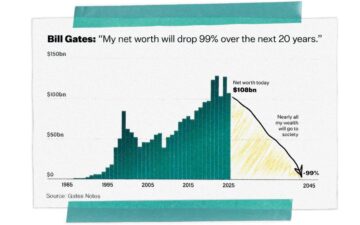
One of the best things I read was an 1889 essay by Andrew Carnegie called The Gospel of Wealth. It makes the case that the wealthy have a responsibility to return their resources to society, a radical idea at the time that laid the groundwork for philanthropy as we know it today.

In the essay’s most famous line, Carnegie argues that “the man who dies thus rich dies disgraced.” I have spent a lot of time thinking about that quote lately. People will say a lot of things about me when I die, but I am determined that “he died rich” will not be one of them. There are too many urgent problems to solve for me to hold onto resources that could be used to help people.

That is why I have decided to give my money back to society much faster than I had originally planned. I will give away virtually all my wealth through the Gates Foundation over the next 20 years to the cause of saving and improving lives around the world. And on December 31, 2045, the foundation will close its doors permanently.

More here.

Enjoying the content on 3QD? Help keep us going by donating now.