
Maggie Doherty in Harper’s Magazine:
 On the morning of February 2, 2023, I exited the subway at 57th Street to find the air growing colder. It had been a warm winter. But the first proper cold front was moving in, and I already felt underdressed. I propelled myself toward the warmth of the Midtown Hilton, where the American Psychoanalytic Association (APsA, as it’s styled) was gathering for its winter meeting.
APsA has long been the institutional center of psychoanalysis in the United States. Founded in Baltimore in 1911 by, among others, Ernest Jones, Freud’s first biographer, its goals were to consolidate the profession and to standardize both training and treatment. Since then, the organization has overseen virtually every aspect of mainstream psychoanalysis in this country—research, education, and practice—and has resisted changes to many of its standards, casting a suspicious eye on analysts who proposed new ideas. In Psychoanalysis: The Impossible Profession, Janet Malcolm described APsA as having an “iron hold” over psychoanalysis in the United States.
More here.
Enjoying the content on 3QD? Help keep us going by donating now.
 A
A On March 19, 2024, we emailed the psychologist and Nobel laureate Daniel Kahneman, inviting him to appear on our podcast, “Lives Well Lived,” and suggesting a date in May. He replied promptly, saying that he would not be available then because he was on his way to Switzerland, where, despite being relatively healthy at 90, he planned to die by assisted suicide on March 27.
 Today’s AI technologies are based on deep learning, yet “AI” is commonly equated with large language models, and the fundamental nature of deep learning and LLMs is obscured by talk of using “statistical patterns” to “predict tokens”. This token-focused framing has been a remarkably effective way to misunderstand AI.
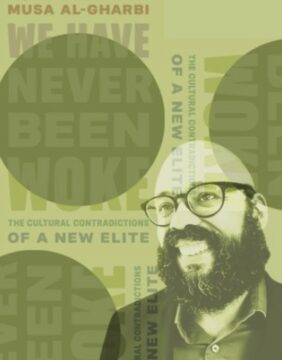 In recent decades, a paradox has haunted American political life. Given that political progressives wielded considerable political, economic, and cultural influence, how is it possible that our actual social order was so resistant to real change? Why did the black-white wealth gap remain unchanged, and why did economic inequality steadily increase? Why did basic access to affordable housing plummet? And why has higher education become a nightmarish debt sentence for poor and underprivileged people seeking a better life?
 Mishra is a relative latecomer to the Palestinian cause. It was Israeli heroes, not Arabs, with whom he was infatuated as a boy growing up in India: he even had a picture on his wall of Moshe Dayan, Israel’s defence minister during the Six Day War. Conversion came during a 2008 visit to Israel-Palestine, where Mishra was shocked to witness the humiliations heaped on the inhabitants of the West Bank. “Nothing prepared me for the brutality and squalor of Israel’s occupation,” he writes, “the snaking wall and numerous roadblocks … meant to torment Palestinians in their own land … the racially exclusive network of shiny asphalt roads, electricity grids and water systems linking the illegal Jewish settlements to Israel.”
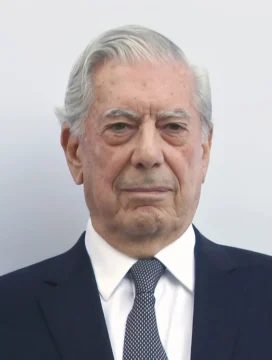 Once upon a time, during the last quarter of the 20th century, it was possible to argue that one person was America’s best novelist and best literary critic. I am talking about John Updike, whose long and elegant reviews in The New Yorker set reading agendas. Such was Updike’s influence that readers paid heed when, in the mid-1980s, he developed a sustained literary man-crush on the Peruvian writer Mario Vargas Llosa, who died on Sunday at 89.
 T
T THE world is angry — and in most places, women bear the brunt of this anger. This International Women’s Day, the