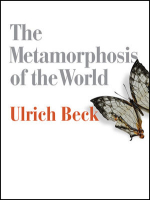
‘The Metamorphosis of the World’, by Ulrich Beck

0745690211John Fanning at The Dublin Review of Books:

The book also highlights two additional developments that are contributing to a sense of bewilderment and disorientation; advances in reproductive medicine which are changing the nature of motherhood and fatherhood and the extraordinary speed and implications of the digital revolution. Under the first heading Beck discusses the emerging concepts of fertility tourism, transnational motherhood and commodity children and suggests that if the act of procreation no longer requires the presence of two people at the same time in the same place but can be “displaced to a laboratory somewhere in the world in any random rented womb at any arbitrary time” then our fundamental understanding of humanity is in doubt. The effects of the digital revolution have received much more attention but Beck brings fresh insight to the subject, pointing out that we are only just becoming aware of “digital risk”, which interferes with something we have always taken for granted; our capacity to control personal information and protect our private lives. Echoing Hardt and Negri’s Empire (2000) thesis, he argues that we are all being lured into control by an anonymous digital central power; which doesn’t rely on violence but which “exercises extensive and intensive profound and far-reaching control that ultimately pushes any individual preference and deficit into the open—we are all becoming transparent”. He also notes the unsettling effects of the divide between the “Neanderthals”; the elderly, who were born human beings but who woke up as “digitally illiterate” and the young “Homo Cosmopoliticus” at ease in the new world but in danger of drowning in an ocean of “fragmented, unorganised, context-free knowledge”.

The political reaction to this unprecedented level of disorientation has been one of outrage rather than any coherent attempt to alleviate the problem. The immediate reaction on the right is to circle the wagons and build a wall; against Mexico, Europe, whatever; and on the left to “occupy” Wall Street, any street, whatever. Both reactions allow people to let off steam but are intellectually bankrupt in terms of a solution.

more here.
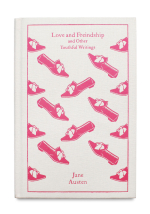
Juvenile Jane Austen

Randomhouse_loveandfreindship_1_7f2809a3-9869-438b-8a0b-059008ebaffeLouis B. Jones at Threepenny Review:

Let’s not pretend romance isn’t always the most important thing. Let’s not pretend romance is somehow beneath us, or trivial, or just for girls. The choice of a mate is maybe the most consequential decision anybody makes. And this is particularly true in a materialistic, capitalist society, where (this was one of Jane Austen’s constant concerns) marriage is—apart from the love thing, of course, and the religion thing—a civic institution, government-regulated, for the preservation of property, and property’s legal transmission. The most important skill a girl can acquire is insight—insight into men’s true character. And women’s real motives. The precocious experiments that are collected miscellaneously in Love and Freindship: and Other Youthful Writings(where the misspelling of “friendship,” Jane’s own, has been preserved by the editors throughout) reveal that even at the age of fourteen, the girl from rural Hampshire, seventh child in a family of eight, already had the peculiar attitude, mixing deep exasperation with fondness, that characterizes all her later writing. And this Penguin paperback—cheap at sixteen dollars, well bound for longevity, conveniently zuhandlich in its little mass-market trim size, legibly printed on the tender old “Penguin Classics” paper stock, wisely annotated—will make a rewarding addition to any Jane-lover’s library.

Miss Austen rose out of a vast (as she herself saw it) treacle swamp of eighteenth-century female writing and she reordered the genre, reordered it inimitably, so that readers forever after will, in her, treat courtship’s comedy with a little of the deadly seriousness it warrants.

more here.

what is putin up to?

ResetGreg Afinogenov at n+1:

Beyond the question of evidence lies the much more interesting question of what Putin was hoping to accomplish by interfering in US elections. The American public, even the foreign policy-savvy pundit class, has remarkably short memories. Putin can trace his enmity to the Clintons as far back as the 1990s, when the US intervention in Kosovo under the leadership of sometime centrist Democratic presidential hopeful General Wesley Clark nearly sparked a shooting war with Russia. (It was prevented at the last minute, bizarrely, by schlocky pop singer James Blunt, then a captain in the British army.) More proximate causes of enmity lie in Hillary Clinton’s policies as Secretary of State, which added insult to injury by kicking off with a purely cosmetic “reset.” These included US support—real or imagined—for a series of election protests in Russia in 2011, but especially the US intervention in Libya. Russia had abstained from a UN resolution ordering a no-fly zone there, but saw its trust, as Putin sees it, immediately betrayed when the no-fly zone turned into a full-fledged regime change operation.

So why choose this particular tactic to destroy, or at least damage, Hillary? Simply put, Putin (if his media is any guide) believes that the US has already tried to influence Russian elections through leaks. While most Americans have already forgotten about them, the Panama Papers were timed deliberately or accidentally to coincide with Russian parliamentary elections this year. In Russia they are widely seen as having been released by US intelligence to target Putin specifically, because of the $2 billion they revealed to be in the offshore account of a close friend. The hacking operation that targeted the DNC succeeded only two months after the Panama Papers were released. These dots are easy to connect.

more here.

An Invitation for Meaningful Dialogue

Caperton in Feministe:

Cats-and-dogs-together-600x338There’s been a lot of talk lately about dialogue and understanding. Liberals just need to try to understand conservatives, They say. People get defensive when you call them (or, more often, even just imply that they might be) bigots, They say. If we want to get anything accomplished, we need to meet conservatives halfway (in which “halfway” is usually defined as “on their side”), They say. (In this case, “They” for the most part refers to journalists who think that because Their piece is set on a college campus and not a failing coal town in West Virginia, it’s totally novel and not the exact same article journalists have been writing since November 9 and before.) Generally, the response from the liberal camp is, “Fuck that shit,” which is a position I myself have taken before. (I stand by it.) You can’t reason someone out of a position they didn’t reason themselves into. “Actually, no, Latinos aren’t rapists” and “Actually, no, BLM isn’t a terrorist organization” aren’t going to be compelling messages to people who only take those positions to rationalize their own latent (acknowledged or unacknowledged) prejudices. “Supporting a bigoted campaign involves signing off on bigotry” isn’t going to convince someone who is struggling to accept that that’s what they did. It’s hard and unsatisfying, and maybe the New York Times needs to do a Dialogue and Understanding piece about people who are being asked to take on that struggle.

That said, dialogue can happen. Here’s how.

Privileged liberals: Put your privilege to good use.

It’s completely understandable that you might not want to engage with people who either embody or enable bigotry. The ones who embody it are miserable to be around — try spending time with someone who thinks that they’re completely justified in wanting to put Muslims on registries or block LGBT people from services like housing and medical care. And the ones who insist that they aren’t bigoted, because they disagree with registries and religious discrimination, can be almost as bad. For them, having negative feelings about those things, but not to the point that they actually do anything about them, is a mark in the Win column, and asking for anything beyond that — which is what we’re asking them to do — is a direct attack on their character. Having to handle them with kid gloves so they don’t get defensive is a lesson in frustration.

More here.

Scientists Say the Clock of Aging May Be Reversible

Nicholas Wade in The New York Times:

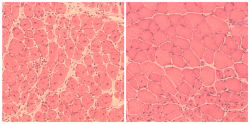
AgingAt the Salk Institute in La Jolla, Calif., scientists are trying to get time to run backward. Biological time, that is. In the first attempt to reverse aging by reprogramming the genome, they have rejuvenated the organs of mice and lengthened their life spans by 30 percent. The technique, which requires genetic engineering, cannot be applied directly to people, but the achievement points toward better understanding of human aging and the possibility of rejuvenating human tissues by other means. The Salk team’s discovery, reported in the Thursday issue of the journal Cell, is “novel and exciting,” said Jan Vijg, an expert on aging at the Albert Einstein College of Medicine in New York. Leonard Guarente, who studies the biology of aging at M.I.T., said, “This is huge,” citing the novelty of the finding and the opportunity it creates to slow down, if not reverse, aging. “It’s a pretty remarkable finding, and if it holds up it could be quite important in the history of aging research,” Dr. Guarente said. The finding is based on the heterodox idea that aging is not irreversible and that an animal’s biological clock can in principle be wound back to a more youthful state. The aging process is clocklike in the sense that a steady accumulation of changes eventually degrades the efficiency of the body’s cells. In one of the deepest mysteries of biology, the clock’s hands are always set back to zero at conception: However old the parents and their reproductive cells, a fertilized egg is free of all marks of age.

Ten years ago, the Japanese biologist Shinya Yamanaka amazed researchers by identifying four critical genes that reset the clock of the fertilized egg. The four genes are so powerful that they will reprogram even the genome of skin or intestinal cells back to the embryonic state. Dr. Yamanaka’s method is now routinely used to change adult tissue cells into cells very similar to the embryonic stem cells produced in the first few divisions of a fertilized egg.

More here.

‘Fake’ News and the Victorian Gentleman

UNDERSTANDING THE OTHER SIDE: Only a fraction of the articles we post are normally about politics but it is also true that the editors of 3QD are all (to a person) liberal progressives and none of us supported or voted for Donald Trump. In the interest of dialogue and trying to understand the conservative point of view better, I have decided to start occasionally posting relatively well-argued articles from the right side of the political spectrum. Some of these are sent to me by friends who did vote for Trump. (And, yes, I have such friends and hope you do too.) Trust me, it will not hurt you to read them. I hope that people will keep the comments civil and focused on the issues, and not engage in ad hominem attacks.

Matthew Continetti in Commentary:

ScreenHunter_2460 Dec. 20 10.26Donald Trump’s election as president sent the press scrambling for explanations. Few in the media expected Trump to win, an assumption reflected in coverage of the presidential campaign. In the weeks before Election Day, major papers and television networks were filled with stories touting Hillary Clinton’s “blue wall” of states, including Michigan, Pennsylvania, and Wisconsin (oops), and celebrating a “surge” of Hispanic voters that would put Clinton over the top. As it turned out, Trump won more Hispanic votes than Mitt Romney.

Because it is difficult for liberals to understand that people might oppose them on substantive as well as moral grounds, their analyses of the election results were as flawed as their takes on the horse race. Many liberal commentators simply ascribed Trump’s victory to the supposed racism, misogyny, and authoritarianism of his supporters, reducing varied and complex motivations to base, irrational, and impermissible drives. Other reporters, editors, and anchors quickly became enamored of the idea that misinformation on social- media networks and the Internet tricked voters into supporting Trump, that America fell for a con ginned up by liars with Facebook accounts eager to make a quick buck and assisted by cybernauts in league with the Kremlin. Such was the genesis of the controversy over “fake news.”

More here.

Monday, December 19, 2016

Sunday, December 18, 2016

The Private Heisenberg and the Absent Bomb

Thomas Powers in the New York Review of Books:

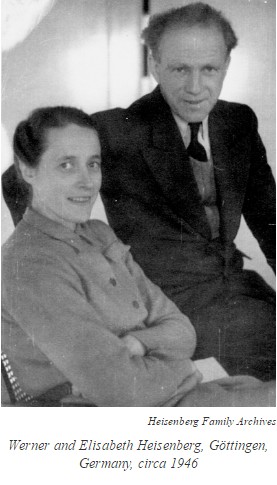
ScreenHunter_2458 Dec. 18 23.20Almost as soon as World War II ended in Europe, and with redoubled intensity after the bombing of Hiroshima, physicists all over the world began to ask how close the Germans had come to making an atomic bomb. But it was not clear whom to ask. Everything to do with development of the bomb was cloaked in secrecy and ten of the leading scientists involved in German atomic research had gone missing. One of them, Otto Hahn, the first to explain the fission process that made bombs possible, was on November 15, 1945, awarded the Nobel Prize in chemistry for his discovery, but the prize committee, it turned out, had no idea where Hahn was.

Among the few who did know were leading scientists who had developed the American bomb at Los Alamos in New Mexico. Many of them were Jews by Nazi standards who had fled Hitler’s Germany, including the physicists Hans Bethe and Victor Weisskopf, who had feared at the beginning of the war that the great German theoretical physicist Werner Heisenberg would build a bomb for Hitler. In 1942, learning that Heisenberg was going to give a scientific talk in Zurich, Bethe and Weisskopf had proposed an American operation to kidnap Heisenberg in Switzerland and even offered to take part themselves. This episode, improbable as it sounds, has been well documented elsewhere and after many twists and turns the original proposal led to Heisenberg’s detention in southern Germany in May 1945.

More here.

Facts about the past and present are either true or false. Can knowledge of the future offer the same degree of certainty?

Anthony Sudbery in Aeon:

ScreenHunter_2457 Dec. 18 23.09We see some things happening in the present, we remember some things in the past, but we don’t see or remember the future.

But perception can be deceptive, and memory can be unreliable; even this kind of direct knowledge is not certain. And there are kinds of indirect knowledge of the future that can be as certain as anything we know by direct perception or memory. I reckon I know that the sun will rise tomorrow; if I throw a stone hard at my kitchen window, I know that it will break the window. On the other hand, I did not know on Christmas Eve last year that my hometown of York was going to be hit by heavy rain on Christmas Day and nearly isolated by floods on Boxing Day.

In the ancient world and, I think, to our childhood selves, it is events such as the York floods that make us believe that we cannot know the future. I might know some things about the future, but I cannot know everything; I am sure that some things will happen tomorrow that I have no inkling of, and that I could not possibly have known about, today. In the past, such events might have been attributed to the unknowable will of the gods. York was flooded because the rain god was in a bad mood, or felt like playing with us. My insurance policy refers to such catastrophes as ‘acts of God’. When we feel that there is no knowing who will win an election, we say that the result is ‘in the lap of the gods’.

More here.

A Possible Break in One of Evolution’s Biggest Mysteries

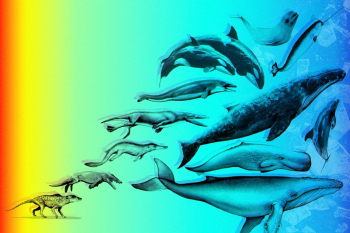
Whales have a history that is among the strangest and least-understood of any animal—and barnacles might be the key to unlocking their secrets.

Peter Brannen in The Atlantic:

Lead_960Once upon a time, before India knew Asia, when alligators sunned themselves on shores north of the Arctic Circle, a small, timid, dog-like creature tentatively waded into a river. Fifty million years passed. The continents wandered and crashed, and the ocean reconfigured itself.

Now, where there were once Arctic alligators, there was ice. As for the creature who once dipped its toes into the tepid river, it now swam the frigid seas. The intervening age had transformed it into the largest animal in the history of life on Earth.

“There’s a famous paleontologist who’s dead by now, George Gaylord Simpson, and he once described whales as, ‘On the whole, the most peculiar and aberrant of mammals,’” says Felix Marx, a whale paleontologist and Marie Skłodowska-Curie Fellow at Monash University in Melbourne, Australia. “And I think that’s really true, because, I mean, they’re mammals, so they have to face all of the challenges that a normal mammal does. They’re adapted to living on land: they’re [warm-blooded], they have fur, they breathe air, they give birth to live young and they have to suckle those live young. And then you try and do all of that in the sea, and of course, almost everything is stacked against you. Like, the milk is floating away, heat is draining from your body, your fur isn’t really that useful, there’s no air to breathe—like, everything is against you. And yet, within a relatively short period of time they’ve managed to tackle all of that, and they managed to achieve feats like diving down several kilometers and staying down for—I don’t know—an hour at a time, and doing some of the weirdest, biggest feeding events in all of the animal kingdom.”

More here.

Three minutes with Hans Rosling will change your mind about the world

Amy Maxmen in Nature:

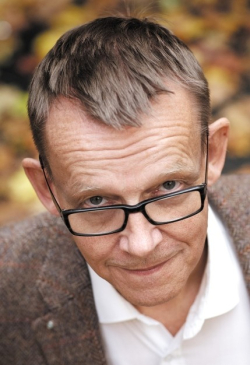
ScreenHunter_2456 Dec. 18 22.51Hans Rosling knew never to flee from men wielding machetes. “The risk is higher if you run than if you face them,” he says. So, in 1989, when an angry mob confronted him at the field laboratory he had set up in what is now the Democratic Republic of the Congo, Rosling tried to appear calm. “I thought, ‘I need to use the resources I have, and I am good at talking’.”

Rosling, a physician and epidemiologist, pulled from his knapsack a handful of photographs of people from different parts of Africa who had been crippled by konzo, an incurable disease that was affecting many in this community, too. Through an interpreter, he explained that he believed he knew the cause, and he wanted to test local people’s blood to be sure. A few minutes into his demonstration, an old woman stepped forward and addressed the crowd in support of the research. After the more aggressive members of the mob stopped waving their machetes, she rolled up her sleeve. Most followed her lead. “You can do anything as long as you talk with people and listen to people and talk with the intelligentsia of the community,” says Rosling.

He is still trying to arm influential people with facts. He has become a trusted counsellor and speaker of plain truth to United Nations leaders, billionaire executives such as Facebook’s Mark Zuckerberg and politicians including Al Gore. Even Fidel Castro called on the slim, bespectacled Swede for advice. Rosling’s video lectures on global health and economics have elevated him to viral celebrity status, and he has been listed among the 100 most influential people in the world by the magazines Time and Foreign Policy. Melinda Gates of the Bill & Melinda Gates Foundation says, “To have Hans Rosling as a teacher is one of the biggest honours in the world.”

More here.

Hunter S. Thompson Predicted the Rise of Trumpism

Susan McWilliams in The Nation:

ScreenHunter_2455 Dec. 18 22.46In late March, Donald Trump opened a rally in Wisconsin by mocking the state’s governor, Scott Walker, who had just endorsed his Republican opponent, Ted Cruz. “He came in on his Harley,” Trump said of Walker, “but he doesn’t look like a motorcycle guy.”

“The motorcycle guys,” he added, “like Trump.”

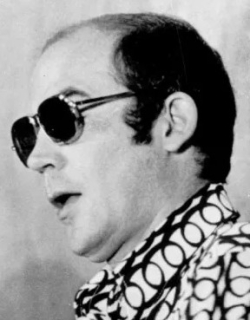
It has been 50 years since Hunter S. Thompson published the definitive book on motorcycle guys: Hell’s Angels: The Strange and Terrible Saga of the Outlaw Motorcycle Gangs. It grew out of a piece first published in The Nationone year earlier. My grandfather, Carey McWilliams, editor of the magazine from 1955 to 1975, commissioned the piece from Thompson—it was the gonzo journalist’s first big break, and the beginning of a friendship between the two men that would last until my grandfather died in 1980. Because of that family connection, I had long known that Hell’s Angels was a political book. Even so, I was surprised, when I finally picked it up a few years ago, by how prophetic Thompson is and how eerily he anticipates 21st-century American politics. This year, when people asked me what I thought of the election, I kept telling them to read Hell’s Angels.

Most people read Hell’s Angels for the lurid stories of sex and drugs. But that misses the point entirely. What’s truly shocking about reading the book today is how well Thompson foresaw the retaliatory, right-wing politics that now goes by the name of Trumpism.

More here.

Ditch the empathy — it’s morally corrosive and gets in the way of reason

Scott Russell Sanders in The Washington Post:

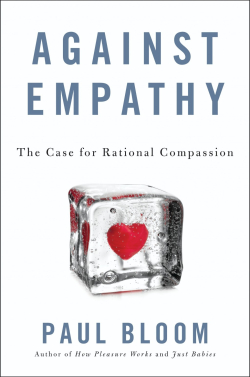
AgainstEmpathy%20hc%20cIn the aftermath of the most virulent U.S. presidential campaign since the Civil War, readers might approach with skepticism a book titled “Against Empathy.” Isn’t our rancorous, hate-riven society suffering from a shortage rather than a surplus of empathy? Don’t we need to feel one another’s pain? On the contrary, Paul Bloom argues, “if we want to be good and caring people, if we want to make the world a better place, then we are better off without empathy.” Bloom, a neuroscientist and professor of psychology at Yale, draws on evolutionary theory and studies of the brain to make the case that empathy — “the act of feeling what you believe other people feel” — is “morally corrosive.” He notes that Amazon.com lists some 1,500 books with the word “empathy” in the title or subtitle, virtually all of which celebrate the human capacity for mirroring the feelings of others. His goal is to challenge that consensus. “On balance, empathy is a negative in human affairs,” he insists. “It’s sugary soda, tempting and delicious and bad for us.”

So why is empathy bad for us? Why is it, in Bloom’s view, “a terrible guide to moral judgment”? Because it’s biased, favoring those who are close to us, our relations and friends, and those with whom we identify by race, religion or other markers. It’s narrow, focusing our care on a single person or a few people, ignoring everyone else. It may lead parents to avoid disciplining their children for fear of making them unhappy. It may cause burnout in therapists who take on the suffering of their patients. It blinds us to empirical evidence and to future costs of present actions. His gravest charge is that “our empathy for those close to us is a powerful force for war and atrocity toward others.”

More here.

The Unexpected Adaptability of Chimps to the Human World

Douglas Foster in The Atlantic:

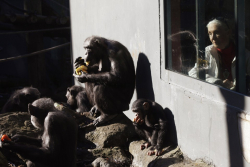
Lead_960Gatherings of great-ape specialists border on the funereal. Four of six great-ape species (including both species of orangutans in Indonesia) are critically endangered, just one step away from extinction. The non-captive cousins of the two great-ape species in the center, Western Lowland gorillas and chimpanzees, are endangered, two steps from extinction. In recent decades, chimpanzee populations in Africa, estimated at 150,000 to 200,000, have been decimated because of expansion of palm-oil plantations (an industrialized form of agriculture), logging, hunting, climate change, and disease. “We’re surrounded by doom and gloom,” Goodall said. But alongside these dominant trends were strands of a more hopeful counter-narrative, which she was eager to highlight.

…This progress was due, in part, to a program that placed Android mobile phones and Tablets in the hands of rangers and local residents. Now, they could capture evidence of incursions, snares, and illegal logging, upload it quickly, and allow local authorities to respond swiftly enough to make a difference. “Look at what happens when we work with people,” Goodall said. It wasn’t only fresh evidence of success in getting humans to respond more effectively to threats to the existence of chimpanzees that excited her. There were also accumulating reports at the conference about the adaptive social intelligence of chimpanzees.

In a meeting hall near the ape house, a young Japanese researcher named Shinya Yamamoto rolled a bit of video from an ongoing study. Like Matsuzawa, Yamamoto had worked with captive chimps in Japan, and also observed both bonobos and chimpanzees in Africa. The clip showed a pair of dominant males cross a narrow dirt road, scanning it in both directions. They station themselves on the opposite side of the road and stand guard as a mother with an infant on her back, and seven other members of their community, scoot by. In similar footage, available from an earlier study, adult chimpanzees behave much like school crossing guards. This is an example of group coordination, vigilance, waiting and escorting, Yamamoto explained. Since bonobos haven’t been observed escorting and guarding in this way, it could be distinctly chimpanzee behavior. Chimps are hunters and meat eaters, unlike other great apes and more like humans, so perhaps the quality of coordination needed in organizing a hunt prepares chimpanzees for escorting others in this way to avoid danger on the road.

More here.

Saturday, December 17, 2016

on the transcendent use of language by Beatrix Potter, Magritte and Shakespeare

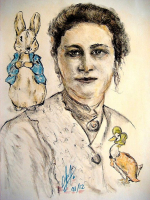
Beatrix Potter, 2012, Olivia WasteAS Byatt at The Guardian:

Storytelling is part of most people’s lives, almost from the moment we can understand language at all. Family tales, fairy stories, popular history, news and gossip are integral parts of human life. When I taught literature at University College London I was lucky enough to be invited to sit in the Senior Common Room bar with the artists from the Slade School of Art. I started to think about the fact that they worked with concrete materials – clay, stone, paint, film – whereas what I work with is the language we also use to conduct our daily lives.

In Amsterdam recently I had the great pleasure of talking with Edmund de Waal about how – and how early in his life – he understood that clay was what he would work with. Why do some of us need to make works of art? How do we choose what we work with? What effect does the shift from dailiness to art have on us as writers and readers?

I remember first noticing that the written word had a form that needed to be understood and thought about. Many of my generation of British children will have grown up with the series of school reading books,The Radiant Way, in which there is the unforgettable sequence of words: “Pat can sing. Pat sing to Mother. Sing to Mother Pat. Mother sing to Pat.” And so on. We discover the “th”, the “ng” which are not part of the sounded out phrases we are first taught. We discover the written word as opposed to the spoken word.

more here.

MARIO BELLATÍN: BETWEEN HERMETICISM AND COMMUNION

Mario-bellatin-mirrorMarcelo Ballvé at The Quarterly Conversation:

It’s difficult to find adjectives that will bear the full oddity of Mario Bellatín’s books. But it’s at least possible to say they are remarkably elastic—usually slim in size but containing a stretched-waistband world of absurd characters, uncanny scenarios, and endless transformations.

In Bellatín’s accounts of reality, nothing remains what it is for very long, nothing is cataloged properly or fixed in place. Soon enough it shifts shape, or inverts. Male to female, fanged to toothless, indecent to prim, alive to dead; Central Europe becomes California, a beauty salon an aquarium and a hospice, a roadhouse an underground railroad for Jewish refugees.

An impending transformation is at the center of Bellatín’s fictionalized autobiography, The Large Glass. In “My Skin, Luminous,” a young boy is brought to a claustrophobic convent-like bathhouse for the exhibition of his oddities, including his prodigious testicles and glowing skin. In exchange, he receives gifts. Near the end, he suffers, knowing one day he will lose his remarkable qualities. He will become less shapely, his skin more dull. He will change again. When the show ends, so will his rewards.

more here.