‘TIME TRAVEL: A History’ By James Gleick

1002-BKS-Doerr-COVERWEB-blog427Anthony Doerr at the New York Times:

“Time Travel” begins at what Gleick believes is the beginning, H.G. Wells’s 1895 “The Time Machine.” “When Wells in his lamp-lit room imagined a time machine,” Gleick argues, “he also invented a new mode of thought.” Western science was undergoing a sea change at the same time, of course: Lyell and Darwin had exploded older conceptions of the age of the Earth, locomotives and telegraphs were transforming space, and Einstein was about to punch a major hole in Newton’s theory of absolute time. Meanwhile, in literature, Marcel Proust was using memory to complicate more straightforward storytelling, and it wouldn’t be long before modernists like Woolf and Joyce were compressing, dilating, and folding time in half.

But according to Gleick, Wells was the first to marry the words “time” and “travel,” and in doing so, “The Time Machine” initiated a kind of butterfly effect, the novel fluttering with each passing decade through the souls of more and more storytellers, who in turn influenced more and more of their successors, forking from Robert Heinlein to Jorge Luis ­Borges to Isaac Asimov to William Gibson to Woody Allen to Kate Atkinson to Charles Yu, until, to use Bradbury’s metaphor, the gigantic dominoes fell. Nowadays, Gleick writes, “Time travel is in the pop songs, the TV commercials, the wallpaper. From morning to night, children’s cartoons and adult fantasies invent and reinvent time machines, gates, doorways and windows, not to mention time ships and special closets, DeLoreans and police boxes.”

more here.
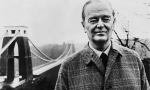
‘Kenneth Clark’ by James Stourton

Civilisation-kenneth-clar-014Mary Beard at The Guardian:

In February 1969, I watched the first episode of Kenneth Clark’s famous TV series, Civilisation. I can still picture him, standing on barbaric northern headlands, explaining that “our” civilisation had barely survived the collapse of the Roman empire. We had come through only “by the skin of our teeth”. It was an incongruous scene: Clark – Winchester and Oxford educated, connoisseur and collector, former director of the National Gallery – looked every inch the toff as he walked in his brogues and Burberry over the battered countryside, where wellington boots and a woolly would have been more appropriate. But I tingled slightly as he repeated that phrase, “by the skin of our teeth”. I was just 14, and it had never struck me that “civilisation” might be such a fragile thing, still less that it might be possible to trace a history of European culture, as Clark was to do, in 13 parts, from the early middle ages to the 20th century.

A few years later, now more a devotee of John Berger’s Ways of Seeing (a TV series and book devised in hostile reaction to Civilisation), I began to feel decidedly uncomfortable with Clark’s patrician self-confidence and the “great man” approach to art history – one damn genius after the next – that ran through the series. I was very doubtful, too, about the image of wild barbarians at the gates that Clark conjured up in that first episode: it was as crude an oversimplification of barbarism as his dreamy notion of ideal perfection was an oversimplification of classicism. Nonetheless,Civilisation had opened my eyes, and those of many others; not only visually stunning, it had shown us that there was something in art and architecture that was worth talking, and arguing, about.

more here.

Whose life is it anyway? Novelists have their say on cultural appropriation

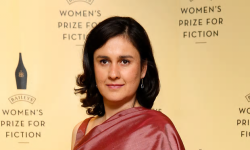
Kamila Shamsie in The Guardian:

KamilaOne of the novels I love is Peter Hobbs’s In the Orchard, the Swallows. It’s set entirely in the north of Pakistan – and is beautiful and true (a better word than “authentic”). If anyone tried to dispute Hobbs’s right to have written that book (and I should say, every Pakistani I know who has read it has expressed only admiration), I would be the first in line to defend him, and it. But the point about the book is that it’s wonderfully and sensitively written; it has no interest in peddling stereotypes, or making great claims about the place in which it’s located; there is no whiff of arrogance or entitlement. I don’t know what went on in Hobbs’s mind when he wrote it but I feel fairly confident it wasn’t: “How dare anyone dispute my right to write this?”

In fact, if you do start with an attitude that fails to understand that there are very powerful reasons for people to dispute your right to tell a story – reasons that stem from historical, political or social imbalances, you’ve already failed to understand the place and people who you purport to want to write about. That’s a pretty lousy beginning, and I wouldn’t want to read the fiction that comes out of it. Far better to understand the reasons, and perhaps even use those reasons as a way into character and story. So by all means, let’s have a broadening of the imagination. That doesn’t mean you have to leave the patch of ground on which you live – but it would be helpful if you looked at who else is on that patch of ground with you. To continually return to the same subset of humanity, and declare that there is no one else who imaginatively engages you or who you know how to imaginatively engage with, strikes me as one of the most dispiriting things a writer can say. In short: don’t set boundaries around your imagination. But don’t be lazy or presumptuous in your writing either. Not for reasons of “political correctness”, but for reasons of good fiction.

More here.

How Donald Trump Set Off a Civil War within the right-wing media

Robert Draper in The New York Times:

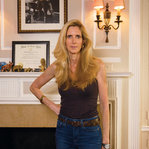
AnnWhen Trump declared his candidacy in June 2015, the part of his announcement speech that most clearly foreshadowed the campaign to come had to do with immigration. “When Mexico sends its people, they’re not sending their best,” he told the crowd at Trump Tower. “They’re sending people that have lots of problems, and they’re bringing those problems with us. They’re bringing drugs. They’re bringing crime. They’re rapists.” The line struck Sykes as awfully familiar when he heard it. A month before, he had run a segment with Ann Coulter, who had just published her 11th book, an anti-immigration screed titled “¡Adios, America!” Sykes was well aware of Coulter’s views, but he was taken aback when she began a riff on Mexican rapists surging into the United States (a subject that takes up an entire chapter of “¡Adios, America!”). “I remember looking at my producer and going, ‘Wow, this is rather extraordinary,’ ” he told me. “When Trump used that line, I instantly recognized it as Ann Coulter’s.”

In fact, Corey Lewandowski had reached out to Coulter for advice in the run-up to Trump’s announcement speech. The address Trump delivered on June 16 bore no resemblance to his prepared text, which contained a mere two sentences about immigration. Instead, he ad-libbed what Coulter today calls “the Mexican rapist speech that won my heart.” When Trump’s remarks provoked fury, Lewandowski called Coulter for backup. Three days later, she went on HBO’s “Real Time With Bill Maher” and, amid shrieks of laughter from the audience, predicted that Trump was the Republican candidate most likely to win the presidency. One evening this past March, Trump received Coulter at Mar-a-Lago, his estate-turned-club in Palm Beach. Though in recent years the two had developed a rapport on Twitter, she had met him face to face only once before he declared his candidacy, a lunch date at Trump Tower in 2011. Over lunch, Trump gave Coulter the impression that he had read her books. He also gave her a few items from his wife’s line of costume jewelry and told Coulter, who keeps a house in Palm Beach, that she was welcome to use the pool at Mar-a-Lago anytime.

…Still, she has become the Trump campaign’s most unrepentant brawler. When Khzir Khan, the Pakistani-American father of a U.S. Army captain who was killed in combat in Iraq, spoke critically of Trump at the Democratic National Convention, Coulter wrote on Twitter: “You know what this convention really needed: An angry Muslim with a thick accent like Fareed Zacaria[sic].” That tweet provoked disgust from fellow conservatives, among them Erick Erickson, who tweeted: “What a terrible thing to say about a man whose son died for this country.”

More here.

Saturday Poem

For My Sister Molly
Who In The Fifties

Once made a fairy rooster from
Mashed potatoes
Whose eyes I forget
But green onions were his tail
And his two legs were carrot sticks
A tomato slice his crown.
Who came home on vacation
When the sun was hot
and cooked
and cleaned
And minded least of all
The children’s questions
A million or more
Pouring in on her
Who had been to school
And knew (and told us too) that certain
Words were no longer good
And taught me not to say us for we
No matter what “Sonny said” up the
road.

For My Sister Molly Who In The Fifties

Knew Hamlet well and read into the night
And coached me in my songs of Africa
A continent I never knew
But learned to love
Because “they” she said could carry
A tune
And spoke in accents never heard
In Eatonton.
Who read from Prose and Poetry
And loved to read “Sam McGee from Tennessee”
On nights the fire was burning low
And Christmas wrapped in angel hair
And I for one prayed for snow.

Read more »

Friday, September 30, 2016

Nabokov’s ‘great gay comic novel’

Edmund White in the Times Literary Supplement:

ScreenHunter_2255 Sep. 30 21.03I never met Vladimir Nabokov face to face, though I exchanged phone calls and letters with him. My psychiatrist encouraged me to visit him in Switzerland, but I was too afraid that I would quickly sabotage close-up whatever good impression I might have managed to create long-distance. As an editor at the American Saturday Review, I had orchestrated a cover story dedicated to Nabokov on the publication of his novel Transparent Things (1972), and sent Antony Armstrong-Jones to take a portfolio of photographs, including one that showed the novelist dressed as Borges in a poncho. (My boss had wanted to send a great artistic photographer such as Henri Cartier-Bresson, but I believed Nabokov would be more amused by Armstrong-Jones, the Earl of Snowdon, who had been married to Princess Margaret since 1960 and was, I guessed, more polished than the austere French genius. The two men got along famously.) Nabokov wrote a short piece on “Inspiration” for us, which I illustrated with a reproduction of “Pygmalion and Galatea” by Jean-Léon Gérôme, a big bad nineteenth-century painting of the infatuated sculptor embracing his creation as she turns from marble to flesh, feet last.

A number of tiny errors, typographic and even grammatical, had crept into Nabokov’s text. I had the copy set twice in print, my version and his, and sent them both by overnight express. He wired back, “your version perfect”. In the Nabokov “number” I included rather grudging essays by Joyce Carol Oates, William Gass and Joseph McElroy – and of course my own ecstatic response.

More here.

Humans: Unusually Murderous Mammals, Typically Murderous Primates

A new study looks at rates of lethal violence across a thousand species to better understand the evolutionary origins of humanity’s own inhumanity.

Ed Yong in The Atlantic:

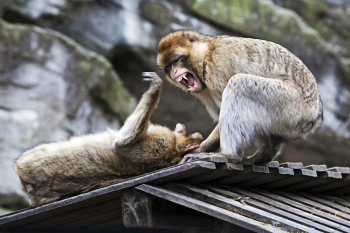
Lead_960Which mammal is most likely to be murdered by its own kind? It’s certainly not humans—not even close. Nor is it a top predator like the grey wolf or lion, although those at least are #11 and #9 in the league table of murdery mammals. No, according to a study led by José María Gómez from the University of Granada, the top spot goes to… the meerkat. These endearing black-masked creatures might be famous for their cooperative ways, but they kill each other at a rate that makes man’s inhumanity to man look meek. Almost one in five meerkats, mostly youngsters, lose their lives at the paws and jaws of their peers.

Gómez’s study is the first thorough survey of violence in the mammal world, collating data on more than a thousand species. It clearly shows that we humans are not alone in our capacity to kill each other. Our closest relatives, the chimpanzees, have been known to wage brutal war, but even apparently peaceful creatures take each other’s lives. When ranked according to their rates of lethal violence, ground squirrels, wild horses, gazelle, and deer all feature in the top 50. So do long-tailed chinchillas, which kill each other more frequently than tigers and bears do.

The point of this macabre census was to understand the origins of our own behavior.

More here.

Michael Chabon: My Son, the Prince of Fashion

Michael Chabon in GQ:

ScreenHunter_2254 Sep. 30 20.47Half an hour late, and just ahead of his minder—he was always a step ahead of his ponderous old minder—Abraham Chabon sauntered into the room where the designer Virgil Abloh was giving a private preview of Off-White's collection for spring-summer 2017 to a small group of reporters, editorial directors, and fashion buyers. Abe's manner was self-conscious, his cheeks flushed, but if his movements were a bit constrained they had an undeniable grace. Saunter was really the only word for it.

“Now, this dude here, that's what I'm talking about,” Abloh said, smiling at Abe from the center of the room, the attic of an old photo studio in the Latin Quarter: crisscrossing steel beams, wide pine floorboards, every surface radiant with whitewash except for the gridded slant of windows in the steep-pitched roof. From their folding chairs opposite the atelier windows, the buyers and editors turned to see what Abloh was talking about. So did the four male models lined up and slouching artfully in front of the people in the folding chairs. By the time his minder caught up with him, everyone in the room seemed to have their eyes on Abe. Prompt people never get to make grand entrances.

“Come over here,” Abloh said. Abloh was a big man, solidly built, an architect by training who had emerged in the early 2000s from the fizzy intellectual nimbus—one-third hip-hop, one-third hustle, one-third McLarenesque inside joke—surrounding fellow Chicagoan Kanye West. Abloh had made a name for himself in fashion along the avant-garde perimeter of streetwear, screen-printing diagonal crosswalk stripes and cryptic mottoes onto blank Champion tees and dead-stock Rugby Ralph Lauren flannel shirts that he re-sold for dizzying multiples of their original retail price. Abe thought Virgil Abloh was “lit,” the highest accolade he could award to anyone or anything. “Come right on over here. Hey, look at you!”

Abe went on over, sleeves rolled, hands thrust into his pockets, tails of his pale gray-green shirt freshly tucked into the waist of his gray twill trousers.

More here.

Is there an alternative to countries?

Debora MacKenzie in New Scientist:

ScreenHunter_2252 Sep. 30 17.56Try, for a moment, to envisage a world without countries. Imagine a map not divided into neat, coloured patches, each with clear borders, governments, laws. Try to describe anything our society does – trade, travel, science, sport, maintaining peace and security – without mentioning countries. Try to describe yourself: you have a right to at least one nationality, and the right to change it, but not the right to have none.

Those coloured patches on the map may be democracies, dictatorships or too chaotic to be either, but virtually all claim to be one thing: a nation state, the sovereign territory of a “people” or nation who are entitled to self-determination within a self-governing state. So says the United Nations, which now numbers 193 of them.

And more and more peoples want their own state, from Scots voting for independence to jihadis declaring a new state in the Middle East. Many of the big news stories of the day, from conflicts in Gaza and Ukraine to rows over immigration and membership of the European Union, are linked to nation states in some way.

Even as our economies globalise, nation states remain the planet’s premier political institution. Large votes for nationalist parties in this year’s EU elections prove nationalism remains alive – even as the EU tries to transcend it.

Yet there is a growing feeling among economists, political scientists and even national governments that the nation state is not necessarily the best scale on which to run our affairs. We must manage vital matters like food supply and climate on a global scale, yet national agendas repeatedly trump the global good. At a smaller scale, city and regional administrations often seem to serve people better than national governments.

How, then, should we organise ourselves? Is the nation state a natural, inevitable institution? Or is it a dangerous anachronism in a globalised world?

More here.

Friday Poem

A word is no-thing with immanent substance
and power and so should be treated with
great respect —Anonymous
.

Magic Words

In the very earliest time,
when both people and animals lived on earth,
a person could become an animal if he wanted to
and an animal could become a human being.
Sometimes they were people
and sometimes animals
and there was no difference.
All spoke the same language.
That was the time when words were like magic.
The human mind had mysterious powers.
A word spoken by chance
might have strange consequences.
It would suddenly come alive
and what people wanted to happen could happen—
all you had to do was say it.
Nobody can explain this:
That's the way it was.

Nalungiaq
.

‘That Makes Me Smart’ vs. ‘They Don’t Pay’

James Fallows in The Atlantic:

OliverAfter Donald Trump became the Republican nominee, he was asked on Fox News about his views on NATO and other American alliances. He gave his familiar “they’re freeloaders” answer:

The fact is we are protecting so many countries that are not paying for the protection. When a country isn’t paying us and these are countries in some cases in most cases that have the ability to pay, and they are not paying because nobody is asking…. We’re protecting all of these countries. They have an agreement to reimburse us and pay us and they are not doing it and if they are not going to do that. We have to seriously rethink at least those countries. It’s very unfair.

This has of course been a repeated theme in his speeches and interviews. Another example: after the Democratic convention, Trump told John Dickerson on Face the Nation, “I want these countries to pay for protection”—“these countries” being the usual range of U.S. allies. On Monday night, in his debate with Hillary Clinton, Trump essentially acknowledged that he might not be paying any federal tax himself. Here was the remarkable passage:

CLINTON: Maybe he doesn’t want the American people, all of you watching tonight, to know that he’s paid nothing in federal taxes, because the only years that anybody’s ever seen were a couple of years when he had to turn them over to state authorities when he was trying to get a casino license, and they showed he didn’t pay any federal income tax.

TRUMP: That makes me smart.

That makes me smart. Among the several hundred people watching the debate at the site where I saw it, there was an audible gasp at this line. Everyone tries to minimize taxes. But not many “normal” people manage to avoid them altogether, or even contemplate doing so. Most Americans, regardless of politics, resent the rigged nature of our public systems and look for ways to corner-cut annoying obligations (“Yeah, yeah, juries are really important, but I’d just as soon not get picked”). But most still recognize some basic obligations we all bear—school taxes even if we don’t have children, paying for highways or emergency relief even in places where we don’t live—to keep the system going as a whole. You might call this mutual burden-sharing part of Making America Great Again. You could call it “the price we pay for civilization,” if you were Oliver Wendell Holmes. Or “paying for protection,” if you were Donald Trump.

PICTURE: “Taxes are the price we pay for a civilized society,” Justice Oliver Wendell Holmes Jr. wrote in a famous dissent. Donald Trump begs to differ.

More here.

The dark universe: 4 big questions

Neil Savage in Nature:

DarkScientists have theories about dark matter and dark energy — and some observations — but both are poorly understood. Here are four of their biggest questions.

1. Is there a dark-matter particle?

Why it matters
Subatomic dark-matter particles, analogous to the particles that make up the visible Universe, would fit nicely into current physics models. But discovering that dark matter is something else would expand scientists' understanding of the Universe.

What we know
Weakly interacting massive particles (WIMPs) are the leading candidates. Other possibilities include a potentially very light particle called the axion and a more recent proposal — the very heavy Planckian interacting massive particle.

Next steps
The search for the particles is ongoing. Physicists at CERN's Large Hadron Collider are looking for WIMPs, the Axion Dark Matter Experiment is running at the University of Washington, Seattle, and China has launched the Dark Matter Particle Explorer.

More here.

Thursday, September 29, 2016

Not all things wise and good are philosophy

Nicholas Tampio in Aeon:

ScreenHunter_2251 Sep. 29 19.01I have published widely on Islamic political thought, including an encyclopedia entry on the topic. Reading the Quran, Islamic jurisprudence (fiqh), philosophy (falsafa) and Ibn Khaldun’s history of the premodern world, the Muqaddimah (1377), has enriched my life and thought. Yet I disagree with the call, made by Jay L Garfield and Bryan W Van Norden in The New York Times, for philosophy departments to diversify and immediately incorporate courses in African, Indian, Islamic, Jewish, Latin American and Native American ‘philosophy’ into their curriculums. It might seem broadminded to call for philosophy professors to teach ancient Asian scholars such as Confucius and Candrakīrti in addition to dead white men such as David Hume and Immanuel Kant. However, this approach undermines what is distinct about philosophy as an intellectual tradition, and pays other traditions the dubious compliment of saying that they are just like ours. Furthermore, this demand fuels the political campaign to defund academic philosophy departments.

Philosophy originates in Plato’s Republic. It is a restless pursuit for truth through contentious dialogue. It takes place among ordinary human beings in cities, not sages and disciples on mountaintops, and it requires the fearless use of reason even in the face of established traditions or religious commitments. Plato’s book is the first text of philosophy and a reference point for texts as diverse as Aristotle’s Politics, Augustine’s City of God, al-Fārābī’s The Political Regime, and the French philosopher Alain Badiou’s book Plato’s Republic (2013).

More here.

Why Neuroscientists Need to Study the Crow

Grigori Guitchounts in Nautilus:

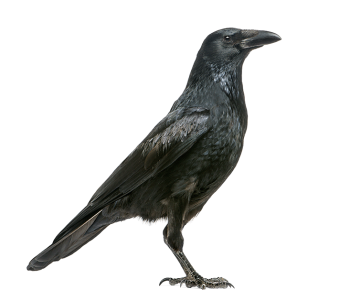
10426_8553adf92deaf5279bcc6f9813c8fdccThe animals of neuroscience research are an eclectic bunch, and for good reason. Different model organisms—like zebra fish larvae, C. elegans worms, fruit flies, and mice—give researchers the opportunity to answer specific questions. The first two, for example, have transparent bodies, which let scientists easily peer into their brains; the last two have eminently tweakable genomes, which allow scientists to isolate the effects of specific genes. For cognition studies, researchers have relied largely on primates and, more recently, rats, which I use in my own work. But the time is ripe for this exclusive club of research animals to accept a new, avian member: the corvid family.

Corvids, such as crows, ravens, and magpies, are among the most intelligent birds on the planet—the list of their cognitive achievements goes on and on—yet neuroscientists have not scrutinized their brains for one simple reason: They don’t have a neocortex. The obsession with the neocortex in neuroscience research is not unwarranted; what’s unwarranted is the notion that the neocortex alone is responsible for sophisticated cognition. Because birds lack this structure—the most recently evolved portion of the mammalian brain, crucial to human intelligence—neuroscientists have largely and unfortunately neglected the neural basis of corvid intelligence.

More here.

David Graeber: Why Capitalism Creates Pointless Jobs

David Graeber in Evonomics:

David-Graeber_avatar_1475021244-175x175Over the course of the last century, the number of workers employed as domestic servants, in industry, and in the farm sector has collapsed dramatically. At the same time, “professional, managerial, clerical, sales, and service workers” tripled, growing “from one-quarter to three-quarters of total employment.” In other words, productive jobs have, just as predicted, been largely automated away (even if you count industrial workers globally, including the toiling masses in India and China, such workers are still not nearly so large a percentage of the world population as they used to be).

But rather than allowing a massive reduction of working hours to free the world’s population to pursue their own projects, pleasures, visions, and ideas, we have seen the ballooning not even so much of the “service” sector as of the administrative sector, up to and including the creation of whole new industries like financial services or telemarketing, or the unprecedented expansion of sectors like corporate law, academic and health administration, human resources, and public relations. And these numbers do not even reflect on all those people whose job is to provide administrative, technical, or security support for these industries, or for that matter the whole host of ancillary industries (dog-washers, all-night pizza deliverymen) that only exist because everyone else is spending so much of their time working in all the other ones.

These are what I propose to call “bullshit jobs.”

More here.

the history of paper and print

3eafe096-857d-11e6-9270-cf26736cb244Dennis Duncan at The Times Literary Supplement:

It would be an exaggeration to suggest that the general public has always found paper fascinating – remember how the sitcom The Office used a paper merchant to epitomize deadening banality – but for the last few years it seems to have been having a moment in terms of popular history. We’ve had Ian Sansom’s Paper: An elegy (2012), Nicholas Basbanes’s On Paper: The everything of its two-thousand year history (2014), Lothar Müller’s White Magic: The age of paper(2014), and Alexander Monro’s The Paper Trail: An unexpected history of a revolutionary invention (2014). This summer another pair of books tell paper’s story, the processes by which it has been made, and the slow spread of this technology across the globe.

Credited as the invention of Cai Lun, an official of the Han dynasty, in 105 AD (though fragments have been found in China which predate Cai Lun by several centuries), paper made its way westwards, firstly through the Islamic world – the first paper mill in Baghdad opened at the end of the eighth century – before arriving, via Spain, in Christian Europe by the middle of the thirteenth. By 1495, Britain, a late adopter, was producing its own paper at John Tate’s mill at Sele in Hertfordshire. For the couple of decades before that, Caxton and the other early English printers had been relying on European imports.

THE PASSIONS OF MEDIEVAL JERUSALEM

161003_r28793rd-930x1200-1474672669Peter Schjeldahl at The New Yorker:

Jerusalem was among the first conquests of the Arab Caliphate, in 638. It was a polyglot city, in which Christians suffered oppression, when, in 1099, armies of the First Crusade took it and massacred nearly all the Muslim and Jewish inhabitants. The lavishly renovated Church of the Holy Sepulchre, on the supposed site of Christ’s Crucifixion and Resurrection, stood near the Al Aqsa Mosque and the Dome of the Rock, built on the ruins of the Hebrew Second Temple, which were temporarily converted to a palace and a church, respectively. (The rock enshrined is thought to be the one on which Abraham was to have sacrificed Isaac, and from which, in 621, Muhammad ascended to Heaven during his night journey.) Muslims led by Saladin, the first Sultan of Egypt and Syria, retook the city in 1187, and several subsequent Crusades failed to achieve more than fleeting footholds there. But a regime of general tolerance, instituted by Saladin and continued by Mamluk sultans, prevailed throughout most of the following two centuries, drawing visitors including the Spanish poet Judah al-Harizi, who characterized his days in Jerusalem, in the early thirteenth century, as “carved from rubies, cut from the trees of life, or stolen from the stars of heaven. And each day we would walk about on its graves and its monuments to weep over Sion.”

As a cultural center, the city was more a destination than a fount of creativity. Medieval invention from all points of the compass generated echoes in the area, with such hybrid effects as Christian symbolism engraved on a dagger-scabbard in a fabulously intricate Arab style. The effigy on the tomb of a Crusader knight—French, from the thirteenth century—finds him armed with a Chinese sword. (How he got it, by purchase or in combat, is among the time’s innumerable untold tales.)

more here.