Scientists Trace Society’s Myths to Primordial Origins

B69EC1C7-65A6-45A4-ADDCEC6063614483

Julien d'Huy in Scientific American [h/t: Simon During]:

The Greek version of a familiar myth starts with Artemis, goddess of the hunt and fierce protectress of innocent young women. Artemis demands that Callisto, “the most beautiful,” and her other handmaidens take a vow of chastity. Zeus tricks Callisto into giving up her virginity, and she gives birth to a son, Arcas. Zeus’ jealous wife, Hera, turns Callisto into a bear and banishes her to the mountains. Meanwhile Arcas grows up to become a hunter and one day happens on a bear that greets him with outstretched arms. Not recognizing his mother, he takes aim with his spear, but Zeus comes to the rescue. He transforms Callisto into the constellation Ursa Major, or “great bear,” and places Arcas nearby as Ursa Minor, the “little bear.”

As the Iroquois of the northeastern U.S. tell it, three hunters pursue a bear; the blood of the wounded animal colors the leaves of the autumnal forest. The bear then climbs a mountain and leaps into the sky. The hunters and the animal become the constellation Ursa Major. Among the Chukchi, a Siberian people, the constellation Orion is a hunter who pursues a reindeer, Cassiopeia. Among the Finno-Ugric tribes of Siberia, the pursued animal is an elk and takes the form of Ursa Major.

Although the animals and the constellations may differ, the basic structure of the story does not. These sagas all belong to a family of myths known as the Cosmic Hunt that spread far and wide in Africa, Europe, Asia and the Americas among people who lived more than 15,000 years ago. Every version of the Cosmic Hunt shares a core story line—a man or an animal pursues or kills one or more animals, and the creatures are changed into constellations.

Folklorists, anthropologists, ethnologists and linguists have long puzzled over why complex mythical stories that surface in cultures widely separated in space and time are strikingly similar. In recent years a promising scientific approach to comparative mythology has emerged in which researchers apply conceptual tools that biologists use to decipher the evolution of living species. In the hands of those who analyze myths, the method, known as phylogenetic analysis, consists of connecting successive versions of a mythical story and constructing a family tree that traces the evolution of the myth over time.

More here.
On the borders of solidarity: An ethical perspective on migration

Cole_solidarity_468w

Phillip Cole in Eurozine:

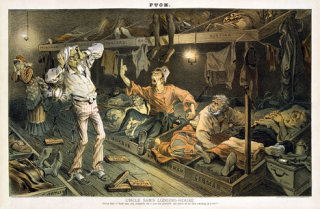
There are thus profound obstacles to introducing an ethical dimension to this debate, but my object here is simply to introduce that ethical dimension – so that it is at least visible – and to see what impact it has on the argument. And I want to begin with one more essential point of clarification: although there may well be economic and cultural concerns about the impacts of immigration, the ethical concerns are not so much about immigration but about immigration controls. In other words, even if some of the concerns about immigration are legitimate, immigration controls may be an illegitimate means of addressing them. This focus on immigration controls brings to the fore the question of power, because they involve an exercise of power, by certain agents over other agents. Who is exercising that power, over whom and for what purpose, and is that exercise ethical?

There are two key arguments that make the case that immigration controls are unethical. The first is based on the assertion that the exercise of coercive power by a democratic state is made legitimate by the opportunities of those subject to that power to participate in political decision-making – those subject to the law have had the opportunity to shape that law. Any other exercise of power is illegitimate. Immigration controls are coercive laws enacted against people who have had no such opportunity, and therefore immigration controls are illegitimate. Of course, in a legitimate democracy we may end up being subjected to laws which we object to, but would-be immigrants are not on the losing side of a democratic process – they are excluded from that process altogether. That men wielded political power over women in the United Kingdom before 1918 was a profound injustice, as was the fact that the white population of South Africa exercised political power over the black population until 1994. And the injustice here was not the exclusion of those parties from the franchise, but the enactment of law and therefore coercive power over the excluded, with no opportunity for them to participate as equals in the formation of that law. And the scale of that injustice is profoundly accentuated when we realise that the purpose of those laws was to determine the political status of the excluded, to deprive them of political membership as such.

The second argument is based on the principle of moral equality, and questions the right of exclusion itself. According to this principle, all people are to be treated as moral equals – no person is more morally significant than any other. It does not follow from this that everybody must be treated exactly the same, because some differences may be morally relevant and so justify different treatment. But what is ruled out is that a person's life chances should be determined by morally arbitrary features.

More here.

Habsburg Lessons for an Embattled EU

Habsburg

Caroline De Gruyter in Carnegie Europe:

The Habsburg Empire, formed in 1526 and later known as the Austro-Hungarian Empire, had much in common with the European Union. It was a complex international construction that aimed to bring security and prosperity to several nations by eliminating borders and pumping money around. The Habsburgers had a well-functioning internal market, set up as a tool to foster political cohesion. Each nation in the empire had its own distinct arrangement with Vienna, just as every EU member state nowadays carves out its own deals (and exceptions) with Brussels.

Habsburg was also an advanced bureaucracy, albeit on a much bigger scale than the EU. Even after Empress Maria Theresa’s reforms in the eighteenth century, the Habsburg Empire was known—and ridiculed—for its huge, centralized administration. Likewise, many perceive and despise the EU as a giant bureaucracy. In reality, the union has fewer civil servants than Paris’s town hall, but most of them are in the same business as Roth’s fictional weights and measures inspector: administering and monitoring the functioning of the internal market and other agreements between member states.

The similarities between the EU and the Habsburg Empire do not end there. Most Habsburg emperors loathed warfare, just like the Europeans who, traumatized by two world wars, set up the European Economic Community in the 1950s. The emperors preferred to acquire territories peacefully by marrying off family members all over Europe. And like in the EU, small nations felt relatively safe and protected in the empire: being part of it meant being protected from invasion by bigger neighbors. All nations were granted equal rights under the Crown.

More here.

The Green Universe: A Vision

Dyson_1-101316

Freeman Dyson in the NY Review of Books:

The three books under review describe space activities belonging to the Big Space and Little Space cultures that are now competing for money and public attention. Each book gives a partial view of a small piece of history. Each tells a story within the narrow setting of present-day economics and politics. None of them looks at space as a transforming force in the destiny of our species.

Julian Guthrie’s How to Make a Spaceship describes the life and work of Peter Diamandis, a brilliant Greek-American entrepreneur. Diamandis cofounded the International Space University, bringing together each year an international crowd of students and professors to its campus in Strasbourg, and providing a meeting place where academic thinkers and industrial doers exchange ideas. He founded the ISUwhen he was twenty-seven years old, less than half the age at which Thomas Jefferson founded the University of Virginia. The ISU has been growing smoothly for twenty-eight years. It is successful not only as an educational institution but as a job market where young people interested in space can find employers.

Diamandis also encourages competitive space projects by offering substantial prizes for clearly specified achievements. The latest and biggest of his prizes was $10 million for a privately funded spacecraft to reach an altitude of one hundred kilometers and land safely on the ground twice with a human pilot. The money came from Anousheh Ansari, a young Iranian-American computer engineer who had founded with her husband and brother-in-law the company Telecom Technologies. They sold the company for $440 million, of which they donated a small piece to Diamandis. The winner of the Ansari Prize was Burt Rutan, a legendary designer of weird-looking airplanes. He designed and built the SpaceShipOne vehicle that won the prize in 2004. Many other competitors made plans and built rocket ships. The total amount of money invested, by the winner and the losers, was many times the value of the prize.

More here.

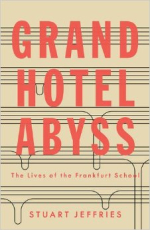
“Grand Hotel Abyss: The Lives of the Frankfurt School,” by Stuart Jeffries

51eP+iTtr8L._SY344_BO1,204,203,200_Michael Dirda at The Washington Post:

For the most part, we read a work of nonfiction for two intertwined reasons — to learn about a particular subject and to enjoy the intellectual company of the book’s author. I started “Grand Hotel Abyss: The Lives of the Frankfurt School” because I’d long wanted to know more about the careers and thought of social theorists Theodor Adorno, Max Horkheimer, Herbert Marcuse and their loosely affiliated fellow thinker, the literary critic Walter Benjamin. I steeled myself for a hard slog — these were, after all, German theorists — but almost immediately discovered that British journalist Stuart Jeffries could summarize complex arguments so clearly that even a bear of little brain could grasp them. He was, moreover, witty, skeptical and an active presence on the page, questioning and probing each of the Frankfurt School’s various hypotheses, assertions and insights. As a result, this seemingly daunting book turned out to be an exhilarating page-turner.

The Institute for Social Research, as the Frankfurt School was formally called, initially came into existence in 1923 to explore why Germany failed to produce a successful socialist revolution in the years immediately following World War I. Its members were virtually all Jewish, the sons of well-off bourgeois families, and they viewed themselves as analysts rather than activists or revolutionaries. Nonetheless, they relied on Marx’s ideas about class, alienation and capitalism for the tools they needed to interpret and understand contemporary society.

more here.

Poetry’s rich tradition of urban wandering

People-walking-nycKathleen Rooney at Poetry Magazine:

Many poets have recognized the connection between urban walking and poetry, but perhaps the first to do so in any kind of systematic way was Charles Baudelaire. He posited in both his nonfiction and his poems, particularly those in Paris Spleen(posthumously published in 1869), that such close observation and curiosity ought to be among the governing emotions of the urban walker and artist. In his 1863 essay “The Painter of Modern Life,” Baudelaire lays out much of his theory of flânerie, or aimless walking through a city; he writes of the titular painter and archetypal flâneur Constantin Guys that “to begin to understand M. G., the first thing to note is this: that curiosity may be considered the starting point of his genius.”

To be curious can mean to be eager to learn or know something, or it can mean strange or unusual, and Baudelaire’s literary output offers examples of both definitions. Etymologically, the word derives from the Latin curiosus, meaning “careful, diligent; inquiring eagerly”; it is also related to cura or “care.” In other words, paying attention to the city outside you and what it evokes within you can be a form of care.

more here.

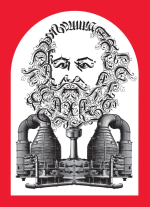
KARL MARX, YESTERDAY AND TODAY

161010_r28808-868x1200-1475090560Louis Menand at The New Yorker:

In 1980, the philosopher Peter Singer published a short book on Marx in which he listed some of Marx’s predictions: the income gap between workers and owners would increase, independent producers would be forced down into the ranks of the proletariat, wages would remain at subsistence levels, the rate of profit would fall, capitalism would collapse, and there would be revolutions in the advanced countries. Singer thought that most of these predictions were “so plainly mistaken” that it was difficult to understand how anyone sympathetic to Marx could defend them. In 2016, it is harder to be dismissive.

“Economists today would do well to take inspiration from his example,” Thomas Piketty says about Marx, in the best-seller he published in 2013, “Capital in the Twenty-first Century.” The book did for many twenty-first-century readers what Marx hoped “Capital” might do for nineteenth-century ones. It uses data to show us the real nature of social relations and, by doing that, forces us to rethink concepts that have come to seem natural and inevitable. One of these is the concept of the market, which is often imagined as a self-optimizing mechanism it is a mistake to interfere with, but which in fact, left to itself, continually increases inequality. Another concept, closely related, is meritocracy, which is often imagined as a guarantor of social mobility but which, Piketty argues, serves mainly to make economic winners feel virtuous.

more here.

This Week in Ferrante

From Avidly:

FerranteThis week in Ferrante, all men should stop talking forever. Or, at least for this week. Stop talking for a week, all men. This week, do not talk. Whatever you have to say, wait until next week. If it still seems important after being quiet about it for a week, next week we will listen to you. Perhaps you would like to talk this week about Ferrante. No! Especially, men, do not talk about Ferrante. Perhaps there are some other men who would like to hear what you have to say about Ferrante. Do not tell them, though. This week, men have said all they get to say about Ferrante. Men are done now. We cannot listen to any more men say anything else about Ferrante, forever. Or definitely not for this week. We see from your silent expression that you are concerned that, if you do not talk, about Ferrante, no one will understand how wrong it is for other people to talk about Ferrante, or her identity. Don’t worry. Everyone actually understands exactly how wrong it is, without you saying anything. You can look at each other mutely, but ask yourself: is my mute expression, the aggressive twitching of my eyebrows, in fact a form of talking? Men: bring your faces down like 30%. Eyebrows: shhh.

Isn’t it, you ask, okay to talk, or at least talk about Ferrante, if you are saying nice things about Ferrante? Aren’t men supposed to be allies, especially about Ferrante? Aren’t men supposed to amplify women, like Ferrante? These are reasonable questions and we would like to discuss them with you. Next week. Next week is also a good time to discuss any other reasonable questions about gender, anonymity, and the print public sphere. Not this week, though.

More here.

Physics Nobel Awarded for Breakthroughs in Exotic States of Matter

Lee Billings in Scientific American:

NobelThe Nobel Prize in Physics 2016 was split, with one half going to David J. Thouless at the University of Washington, and the other half going to F. Duncan M. Haldane at Princeton University and J. Michael Kosterlitz at Brown University. The Prize was awarded for the theorists’ research in condensed matter physics, particularly their work on topological phase transitions and topological phases of matter, phenomena underlying exotic states of matter such as superconductors, superfluids and thin magnetic films. Their work has given new insights into the behavior of matter at low temperatures, and has laid the foundations for the creation of new materials called topological insulators, which could allow the construction of more sophisticated quantum computers.

Topology is a branch of mathematics that studies properties that only change incrementally, in integer steps, rather than continuously. Thors Hans Hansson, a physicist at Stockholm University who served on this year’s Nobel Committee, explained the core concept of topology during the awards announcement by pulling a cinnamon bun, a bagel, and a Swedish pretzel from a bag. “I brought my lunch,” he joked, then explained that, to a topologist, the only difference between the three foods was the number of holes in them, rather than their taste. A cinnamon bun has no holes, while a bagel has one and a pretzel has two. To a topologist, then, the bun would fall in the same category as a saucer, while the bagel would be paired with a cup, and a pretzel with a pair of spectacles. Thouless, Kosterlitz and Haldane’s prize-winning insights revolve around the idea that these same sorts of “topological invariants” could also explain phase changes in matter, albeit not familiar ones such as a liquid freezing to a solid or sublimating to gas. Instead, the phase changes the theorists studied took place chiefly in thin two-dimensional films cooled to cryogenic temperatures.

More here.

Tuesday, October 4, 2016

Why many Germans think impractical idealism is immoral

From The Economist:

ScreenHunter_2267 Oct. 04 18.49The phrases “ethic of conviction” and “ethic of responsibility” mean little to most English-speakers. In Germany the equivalent terms—Gesinnungsethik and Verantwortungsethik—are household words. Pundits drop them casually during television talk shows. Hosts use them as conversation-starters at dinner parties. The concepts draw on the opposition between idealism and pragmatism that runs through politics everywhere. But they also capture a specific moral tension that is “very German”, says Manfred Güllner, a sociologist and pollster. Anyone interested in understanding German politics, on anything from the euro to refugees, would do well to get a handle on them.

The terms come from the sociologist Max Weber, who used them in a speech he gave in January 1919 to a group of leftist students at a Munich bookstore. Germany had just lost the first world war. The Kaiser had abdicated, the country was in the throes of revolution and Munich was about to become the capital of a short-lived “Bavarian Soviet Republic”. Armed with only eight index cards, Weber gave a talk that would become a classic of political science. (“Politics as a Vocation” was published in English only after the second world war.) The lecture ranged broadly through history, but its main purpose was to curb the Utopian romanticism then gripping the ideologues fighting over the direction of the new Germany, including those sitting in front of him.

Weber described an “abysmal opposition” between two types of ethics.

More here.

A Fitbit for Your Placenta

Researchers have developed a device that can track the mysterious organ in real time, and may help unlock the key to a healthy pregnancy.

Adrienne LaFrance in The Atlantic:

Lead_960Placentas get kind of a bum rap.

This is possibly because of all the hoopla about the mothers who blend their placentas into smoothies and eat them, which is not a thing most women do. Even beyond the organ’s ritualistic associations, the way people talk about the placenta is implicitly dismissive.

“It is described as the ‘afterbirth,’” said Catherine Spong, an obstetrician/gynecologist and the acting director of the National Institute of Child Health and Human Development (NICHD). “Like it’s just a thing that comes out afterward. It is an underappreciated organ, and has been understudied.”

To appreciate the placenta, you have to recognize that it’s responsible for sustaining a fetus as it grows into a baby, which is tethered by the umbilical cord to the placenta embedded in a pregnant woman’s uterine wall. Through this arrangement, the placenta provides nutrients and oxygen to the fetus, eliminates waste, regulates fetal temperature, produces hormones, and performs other crucial pregnancy tasks. For one organ to perform so many jobs—duties that would otherwise be handled by separate organs—is extraordinary.

Just as remarkable is the fact that doctors and scientists know so little about the placenta, relative to its importance.

More here.

Why the India-Pakistan War Over Water Is So Dangerous

As New Delhi and Islamabad trade nuclear threats and deadly attacks, a brewing war over shared water resources threatens to turn up the violence.

Michael Kugelman in Foreign Policy:

ScreenHunter_2266 Oct. 04 18.35Early on the morning of Sept. 29, according to India’s Defense Ministryand military, Indian forces staged a “surgical strike” in Pakistan-administered Kashmir that targeted seven terrorist camps and killed multiple militants. Pakistan angrily denied that the daring raid took place, though it did state that two of its soldiers were killed in clashes with Indian troops along their disputed border. New Delhi’s announcement of its strike plunged already tense India-Pakistan relations into deep crisis. It came 11 days after militants identified by India as members of the Pakistani terrorist group Jaish-e-Mohammed killed 18 soldiers on a military base in the town of Uri, in India-administered Kashmir.

Amid all the shrill rhetoric and saber rattling emanating from India and Pakistan in recent days — including India’s home minister branding Pakistan a “terrorist state” and Pakistan’s defense minister threatening to wage nuclear war on India — one subtle threat issued by India may have sounded relatively innocuous to the casual listener.

More here.

Death and Decay Lurks Within These Stunning Works of Art

Alex Palmer in Smithsonian:

Trask-tulipa_jpg__1072x0_q85_upscaleThose who encounter a piece by Jennifer Trask are likely first struck by its elegance: a baroque gold-coated necklace or an intricate floral broach. But a closer look reveals much more happening below the gilt surface: antlers woven into the necklace; snake vertebrae used as the “petals” of the broach’s flower, giraffe femurs, chicken ribs, cow and camel bones, even teeth. Despite her occasional morbid humor—such as calling one of her works of keys made of cast iron, pearls and bone, Skeleton Keys—Trask emphasizes that she does not see death in the remains that she employs, but rather a rich backstory.

Trask uses this dichotomy of nature and artifice, glamour and decay, to explore complex, seemingly contradictory ideas—and create some extraordinarily cool looking sculptures in the process. Her artworks are now on view as part of the exhibition Visions and Revisions: Renwick Invitational 2016 at the Renwick Gallery in Washington, D.C. The works span a 20-year career, and include the 1998 Poison Elixir Bracelet—a gold bracelet of 22-karat capsules containing poinsettia petals and dried blood—and the 2014 Caliper—a turkey wishbone fashioned into a gold-inflected compass. “Bones are not morbid to me, they represent a life lived,” she says. “There is a history in the remnants of a plant or animal.” Trask sees her role as drawing out that history buried in the materials, letting the “material itself dictate what it will become.” This is true in a physical sense—how far can she bend a particular horn or how careful must she be to carve antique frame fragments. It depends on the material’s density or grain. But it is true also in her pursuit of the more spiritual aspects of the material, allowing it to form its own shape and following its lead.

More here.

Nobel Prize for Study of ‘Self-Eating’ Cells

Gina Kolata and Seawell Chan in The New York Times:

NobelYoshinori Ohsumi, a Japanese cell biologist, was awarded the Nobel Prize in Physiology or Medicine on Monday for his discoveries on how cells recycle their content, a process known as autophagy, a Greek term for “self-eating.” It is a crucial process. During starvation, cells break down proteins and nonessential components and reuse them for energy. Cells also use autophagy to destroy invading viruses and bacteria, sending them off for recycling. And cells use autophagy to get rid of damaged structures. The process is thought to go awry in cancer, infectious diseases, immunological diseases and neurodegenerative disorders. Disruptions in autophagy are also thought to play a role in aging. But little was known about how autophagy happens, what genes were involved, or its role in disease and normal development until Dr. Ohsumi began studying the process in baker’s yeast.

Why Did He Win?

The process he studies is critical for cells to survive and to stay healthy. The autophagy genes and the metabolic pathways he discovered in yeast are used by higher organisms, including humans. And mutations in those genes can cause disease. His work led to a new field and inspired hundreds of researchers around the world to study the process and opened a new area of inquiry. “Without him, the whole field doesn’t exist,” said Seungmin Hwang, an assistant professor in the department of pathology at the University of Chicago. “He set up the field.”

More here.

Shimon Peres and the Zionist Nightmare

166Amos Kenan at The Nation (originally published in 1982):

The Russians once invented a translating machine. To test it they inserted the English phrase, “The spirit is willing, but the flesh is weak.” The result, in Russian, came out, “The vodka is good, but the meat is rotten.”

Shimon Peres is this kind of distorted reproduction, just as his Labor Party is a distorted reproduction.

Shimon Peres is an apparatchik—of an apparat that does not function anymore because its motor is dead. The motor was once fueled by the original spirit of Zionism, in its socialist version, a dream of two generations of humble prophets and naive visionaries: Zionism not just as another national liberation movement but as an experience in humanity, not only to create a new Jew in a new homeland but to create a new specimen of humankind. That dream has been turned into a nightmare by the experience of statehood and the needs of Realpolitik, and it is the Israeli Labor Party that is responsible. It is the Labor Party that is to blame for the face that Israel is now wearing, the face of Menachem Begin and Arid Sharon, of military oppression and moral decline.

more here.

america and slavery

Jasanoff_1-101316Maya Jasanoff at the New York Review of Books:

Americans learn about slavery as an “original sin” that tempted the better angels of our nation’s egalitarian nature. But “the thing about American slavery,” writes Greg Grandin in his 2014 book The Empire of Necessity, about an uprising on a slave ship off the coast of Chile and the successful effort to end it, is that “it never was just about slavery.” It was about an idea of freedom that depended on owning and protecting personal property. As more and more settlers arrived in the English colonies, the property they owned increasingly took the human form of African slaves. Edmund Morgan captured the paradox in the title of his classic American Slavery, American Freedom: “Freedom for some required the enslavement of others.” When the patriots protested British taxation as a form of “slavery,” they weren’t being hypocrites. They were defending what they believed to be the essence of freedom: the right to preserve their property.

The Empire of Necessity explores “the fullness of the paradox of freedom and slavery” in the America of the early 1800s. Yet to understand the chokehold of slavery on American ideas of freedom, it helps to go back to the beginning. At the time of the Revolution, slavery had been a fixture of the thirteen colonies for as long as the US today has been without it. “Slavery was in England’s American colonies, even its New England colonies, from the very beginning,” explains Princeton historian Wendy Warren in her deeply thoughtful, elegantly written New England Bound, an exploration of captivity in seventeenth-century New England.

more here.

Imagining a Mystery Novel as a Building

AxonometryMatteo Pericoli at The Paris Review:

Friedrich Dürrenmatt’s mystery novel The Judge and His Hangman revolves around a sudden nighttime encounter between chief detective Bärlach, an inspector with the Bern police, and his eternal rival, Gastmann.

During the encounter, we learn that the two men had met forty years earlier at a dive bar in the Bosporus where, inebriated, they made a bet that will bind them for the rest of their lives. Bärlach maintained that committing a crime is an “act of stupidity”: human imperfection, the unpredictable actions of others, and the inability of taking chance into account are the reasons why most crimes are inevitably solved. His rival, “more for the sake of argument than out of conviction,” instead maintained that it was exactly becauseof “the entanglement of human relationships” that he could commit unsolvable crimes, crimes that Bärlach would never be able to prove. From that day on, the detective vowed to spend his life trying to nail his rival.

more here.

Tuesday Poem

Joe Gillon Hypnotizes his Son

For my father

When you wake up, in your fourteenth year,
I’m forty, the attrition of muscle fiber
in me will (energy cannot be, etc.) appear
in you as a new flex. You’ll write vers libre,
none of this constraint, hold what molests
you in your palm, swill whole decanters.
You’ll understand the jokes about women’s breasts
had something reverential at their centers.
A distance, thin as silver foil, will hiss
once, hover, then drop in the space between us.
Now: how I dandle you, wipe the comma of piss
where it collects at your rim, promise you’re a genus
better than I was, my cribside pace, my kiss…
You won’t remember any of this.

Albert Goldbarth
from Strong Measures
Harper Collins, 1986
.

Monday, October 3, 2016