the Joseph Brodsky papers

Brodsky_news-1024x729Cynthia Haven at The Book Haven:

When the Soviet Union expelled the Russian poet Joseph Brodsky in 1972, he already had a few friends waiting for him in the West. One of them,Diana Myers, would remain a confidante until the Nobel laureate’s death in 1996. The London home she shared with her husband, the translator Alan Myers, became his English pied-à-terre.

The Hoover Institution Library & Archives at Stanford has recently acquired Diana Myers’ collection of Brodsky’s papers, including letters, photos, drafts, manuscripts, artwork and published and unpublished poems.

“We were keenly interested in adding the Joseph Brodsky papers collected by his friend Diana Myers to our vast archives on Russia and making them accessible right away,” said Eric Wakin, the Robert H. Malott Director of the Hoover Library & Archives.

“With Hoover’s significant holdings on the poet in its Irwin T. and Shirley Holtzman Collection, and the recently acquired Joseph Brodsky papers from the Katilius Family Archive at the Green Library, we’re honored that Stanford has become a notable center for Brodsky studies in the United States.”

The new acquisition documents Brodsky’s enormous capacity for friendship and his long love affair with the English language.

more here.

The Cognitive Benefits of Being a Man-Child: extending adolescence has the potential to make the brain more capable in adulthood

Jessa Gamble in The Atlantic:

Lead_960In a time when college graduates return to live under their parents’ roofs and top careers require years of internships and graduate degrees, the age of adulthood is receding, practically into the 30s. Adolescence, loosely defined as the period between puberty and financial independence, now lasts about 15 years, twice as long as it did in the 1950s. Part of this is due to the declining age of puberty in both males and females, but most of that extension appears in the 20s, when an increasing number of young people are still dependent on their parents. There is some concern that all of this dependence could lead to a lasting immaturity and failure to take on responsibility.

But according to developmental researchers, there is one lasting gift that extended adolescence can bestow, and it resides in the brain. “Neurobiological capital” is built through a protracted period of learning capacity in the brain, and it is a privilege that comes to those lucky enough to enjoy intellectually stimulating environments in late adolescence. Far from a contributor to emotional immaturity, the trend toward an adolescence that extends into the mid-20s is an opportunity to create a lifelong brain-based advantage. Choirmasters’ records show that whereas choristers’ voices broke around age 18 in the mid-1700s, that age declined to 13 in 1960, and voices now break on average at age 10-and-a-half. Meanwhile, the age of first menstruation in girls has been declining by more than three months per decade. Much of that change comes down to improved nutrition, but in recent years the age drop has become a health concern. Marriage and financial security, on the other side of adolescence, now arrive close to age 30, in contrast to the early-20s marriages of the 1950s. In combination, those changes make for a more dominant life stage between childhood and adulthood. Biologically, adolescence serves to prepare the brain for independence, and it represents the last surge of plasticity, when the brain is far more open to change than it was in middle childhood.

More here.

Thursday, November 3, 2016

ANTON CHEKHOV: A POST-POST-MODERNIST WAY AHEAD OF HIS TIME

Peter Constantine in Literary Hub:

ScreenHunter_2344 Nov. 03 18.36I have been translating Anton Chekhov for over 20 years, bringing into English more than a hundred stories that are lesser-known, unknown, or untranslated. I have been asking myself throughout these two decades: What is Chekhovian? We hear of Chekhovian situations, Chekhovian despair, Chekhovian resolutions. There is Nabokov’s famous take on “Chekhovian” in his novel Pnin:

Ten years before, she had had a handsome heel for a lover who had jilted her for a little tramp, and later she had had a dragging, hopelessly complicated—Chekhovian rather than Dostoevskian—affair with a cripple, who was now married to his nurse, a cheap cutie.

But is Chekhovian really something “dragging and hopelessly complicated?” There is the deep and elusive quality of his plays, which so many directors throughout the world try to fathom every year, and there is also the complexity of the stories he wrote in the last years of his brief life—he died at the age of 44, in 1904—but there is much more to Chekhov’s work than that.

More here.

One more thing we can learn from Linus Pauling

Ashutosh Jogalekar in The Curious Wavefunction:

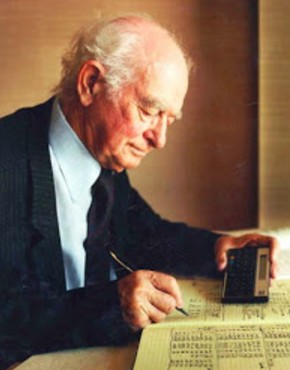
ScreenHunter_2343 Nov. 03 18.29What makes a successful scientist? The question is hard to answer, not because there is no general consensus but because the precise contribution of specific factors in individual cases cannot always be teased out. Intelligence is certainly an important feature but it can manifest itself in myriad ways. Apart from this, having a good nose for important problems is key. Perhaps most important is the ability to persevere in the face of constant frustration and discouragement. And then there is luck, that haphazard driving force whose blessings are unpredictable but can be discerned by Alexander Fleming's famous “prepared minds”.

But aside from these determinants, one factor stands out which may not always be obvious because of it's negative connotation; and that is the good sense to realize one's weaknesses and the willingness to give up and marshal one's resources into a more productive endeavor. Admitting one's weaknesses is understandably an unpleasant task; nobody wants to admit what they are not good at, especially if they have worked at it for years. That kind of attitude does not get you job offers or impress interviewers. Yet being able to admit what qualities you lack can make your life take a radically successful direction. And lest we think that only mere mortals have to go through this painful process of periodic self-evaluation and subsequent betterment, we can be rest assured. It was none other than Linus Pauling who went through this soul-searching. And we are all the wiser for his decision.

More here.

Empire shaped the world. There is an abyss at the heart of dishonest history textbooks

Moni Mohsin in The Guardian:

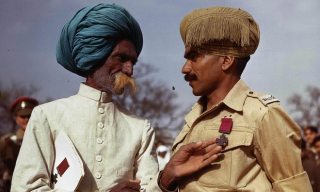
2418When I was a child in Lahore in Pakistan, my parents employed a driver called Sultan. Sultan, a retired soldier, was from a village near Jhelum. He was a cheerful man in his 60s who readily joined in our games of badminton. But to me the most interesting fact about Sultan was that he could speak Italian. A fragmentary, broken Italian, but Italian nonetheless, picked up as a prisoner of war in Italy. He called me signorina and taught me three Italian words: si, grazie and buongiorno. Decades later, when I told my children about Sultan, they were gobsmacked. What was a Pakistani villager doing fighting in Italy? He wasn’t Pakistani then, I explained, he was Indian. Sultan was one of more than two million Indian soldiers who fought for the allies in the second world war. “No! Really?” they breathed.

My children (daughter 17, son 15) were born and raised in London and have had the good fortune to attend fantastic schools where they have been offered, alongside the usual array of subjects, a rich diet of music, drama, art, sport and languages. Their extracurricular clubs include Arabic, feminism, astronomy, mindfulness and carpentry. In my convent school in Lahore, I had to listen in respectful silence. In London, they are encouraged to question and argue.

Yet, for all the range and candour of their education, they haven’t once encountered Britain’s colonial past in school.

More here.

Basil Bunting vs T. S. Eliot

A19f83be-a0f8-11e6-892c-b307b90cd9b1Mark Hutchinson at the Times Literary Supplement:

It was at this point that Bunting approached Eliot for the third, and possibly fourth, time (dates in Bunting’s life tend to be a bit slippery, and accounts differ as to whether he went to him once or twice). First, in late 1950, with a copy of Poems: 1950, a book compiled and published by one of Pound’s crankier American disciples that is basically a revised and updated version of the Redimiculum Matellarum typescript, with a few early poems stripped out and replaced by odes from the late 1930s and 40s (“Let them remember Samangan”, “The Orotava Road”), and one of the first and most beautiful of Bunting’s translations from the Persian, “When the sword of sixty” (which Eliot did, incidentally, publish, in the Criterion, in 1936); plus “The Well of Lycopolis”, a long and “very bitter” poem, as Bunting was later to describe it, written in the Canaries in 1935 and featuring Venus as a garrulous old whore. Then (if Richard Burton, the author of the biography A Strong Song Tows Us – reviewed in the TLS, June 20, 2014 – is correct), a second time, in 1952, with the same book plus “The Spoils”, a recent poem based on his experience in the Middle East that had been published in Poetry in November 1951. Yet again Eliot turned him down, and, judging by the account Bunting gave to Zukofsky (in reported speech, note), in no uncertain terms: “The poetry is good, some of it very good indeed, and the writing is clean and workmanlike, with no fluff, but . . . they are still too much under the influence of Pound for the stage which you have reached”.

For Bunting, who was now well into ­middle age and once more casting about for employment, it must have been like being slapped down by the head prefect. The next twelve years were his traversée du désert, as he toiled to support his family in a succession of poorly paid jobs – proofreading suburban train timetables and seedsmen’s catalogues, then working nights as a sub-editor on the Newcastle Daily Journal before switching to a day shift on the financial pages of the Evening Chronicle – but otherwise appears to have withdrawn into a shell.

more here.

Reinventing Sex in The Oneida Community

Group-1860sPeter von Ziegesar at Lapham's Quarterly:

How was intercourse accomplished using Noyes’ innovation? In the 1920s, long after the Oneida Community had ceased to be, a sex research pioneer named Robert Latou Dickinson came to the Mansion House to discover exactly that. Dickinson was fascinated with the variety of ways people could make love. Decades before Alfred Kinsey made a habit of taking notes on the erotic lives of everyone he met, Dickinson jotted down thousands of sexual histories. He found an aging grandniece of the founder, a physician named Hilda Herrick Noyes, who was happy to offer details. A bout of amative intercourse would last for an hour or more, she remembered, and the women were particularly happy at the “long play.” Typically, during a “love interview” a woman would lie on her side with one leg cocked while the man entered her from behind. Holding her very much as he might hold a cello, he’d reach his hand around to the front and manipulate her to a climax. At the same time, he refrained from having an orgasm himself. Thus, amative intercourse involved coitus, but the primary stimulation was by hand. The male’s assigned role was as a skilled musician who received his pleasure through the mastery of his instrument and through the vicarious enjoyment of the pleasures he was instilling. Noyes thought the connection profound and spiritual. A follower of Franz Mesmer, the doctor who sometimes caused followers to go into mass orgasms by hooking them up to enormous batteries, Noyes believed sexual intercourse was nothing less than “the interchange of magnetic influences, or conversation of spirits, through the medium of that conjunction.”

To hold a woman closely, flesh to flesh, to feel her pulse and breathing rise, to hear her exhalations and know that she has surrendered to your will, to set off the final detonation with the touch of your finger—these are primarily masculine concerns. But consider this: the women in the Oneida Community were liberated as few Victorian women were.

more here.

On a Park Bench with Thomas Bernhard

Bernhard-leadAndrew Katzenstein at The New York Review of Books:

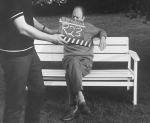
In Thomas Bernhard: Three Days, a documentary filmed in Hamburg in 1970, the Austrian novelist and playwright says, “As far as I am concerned, I am no writer, I am somebody who writes.” For Bernhard—known for his rant-like novels, at once devastating and entertaining, that criticize seemingly everything in a torrent of piercing observations and mordant epigrams—this distinction was crucial. Many of his clever, caustic narrators are artists or writers, such as the failed concert pianist in The Loser, the misanthropic Austrian musicologist in Concrete, and the writer in Woodcutters who recalls his hatred of old artistic acquaintances in Vienna. These cantankerous, lonely men see vanity, hypocrisy, and idiocy everywhere, and believe that they can only escape condemnation by showing the world its own folly. Perhaps because of the almost redemptive value they place on art, their strongest rebukes are aimed at hacks—artists who seem more interested in fame and accolades than in the creation of meaningful work.

It’s surprising, then, that Bernhard would agree to star in a documentary about his own life and work. (A new book featuring a translated transcript as well as a number of stills has just been released.) Although films about writers may satisfy the curiosity of readers—who might wonder what their favorite authors look like, what they sound like, or whether their work is somehow apparent in their personality—the actual process of writing and revision can make for tedious viewing. By participating in Three Days, Bernhard risked turning himself into writer, not someone who writes.

more here.

Donald Trump and the rise of white identity in politics

Image-20161013-3982-knbyey

Eric D. Knowles and Linda R. Tropp in The Conversation:

As whites increasingly sense that their status in society is falling, white racial identity is becoming politicized. Trump’s promise to “make America great again” speaks to these anxieties by recalling a past in which white people dominated every aspect of politics and society. That’s why media outlets from New York Magazine to The National Review have dubbed Trump an “ethnonationalist” candidate.

Hillary Clinton counters Trump’s exclusionary rhetoric with her message that all Americans are “Stronger Together.”

To test our ideas about Trump and white identity politics, we surveyed a nationally representative sample of about 1,700 white Americans. The survey covered racial identities, attitudes and political preferences. In examining the relationship between white identity and ethnic diversity, we chose to focus on an ethnic minority of particular salience in contemporary politics: Hispanics. More than any other group, Hispanics have been in the Trump campaign’s crosshairs.

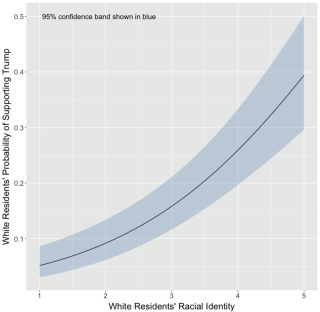
Do whites from heavily Hispanic neighborhoods show stronger white racial identity? To measure identity, we used a widely used questionnaire. On a five-point scale, participants rated their agreement with items such as “Being a white person is an important part of how I see myself” and “I feel solidarity with other white people.” As shown in the graph below, there is a positive relationship between exposure to Hispanics and white respondents’ sense of racial identity.

And does white identity lead to support for Donald Trump? We examined the relationship between white identity and respondents’ likelihood of supporting Trump for the presidency versus Hillary Clinton or several Republican primary challengers. Consistent with others’ analyses, white identity strongly predicts a preference for Trump.

More here.

How to cram your entire genome into a tiny nucleus

Elizabeth Pennisi in Science:

DnaStretched end to end, the DNA in the nucleus of just one of your cells would be as long as you are. Now, using sophisticated statistics, imaging, and experimental data, biophysicists have a clearer idea about how all this genetic material is squished into such a tiny space. “This new work does reveal a striking, high-resolution model of the human genome,” says Job Dekker, a biologist at the University of Massachusetts Medical School in Worcester, who was not involved with the work. “It is indeed beautiful.” Over the past decade, researchers have come to realize that how our DNA is bunched into the nucleus is a miracle of packaging, with very deliberate loops and bends that bring specific parts of each chromosome into contact to help control what genes are active. “Cells have been evolving to exploit this apparently chaotic organization to efficiently store the genetic information and use it for their function,” says Marco Di Stefano, a biophysicist now at the National Centre for Genomic Analysis in Barcelona, Spain.

In the new study, he and his colleagues used statistical approaches to convert experimental data into a 3D model. Previous experiments—capturing when one bit of DNA came close to another bit of DNA—had provided only indirect information about individual connections, but the new modeling resulted in a comprehensive, biologically correct depiction (visualized above) of how our DNA fits into a nucleus. In the video, each chromosome is a different color. The model incorporated imaging data with the experimental results about DNA contacts. The analysis yielded specifics not discernable from the experimental data alone, such as showing that active genes are near the center of the nucleus and inactive ones are toward the edges, the team reports this month in Scientific Reports.

More here.

Was “Lolita” About Race?: Vladimir Nabokov on Race in the United States

Lolita

Jennifer Wilson in the LA Review of Books [h/t: Tunku Varadarajan]:

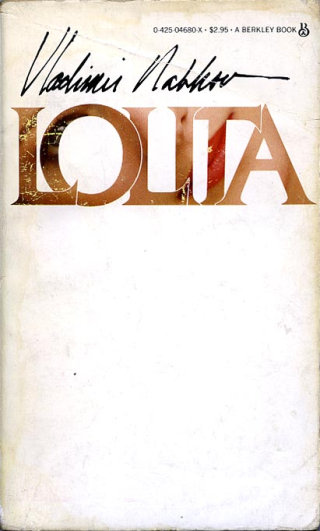
The question of miscegenation would not appear in Nabokov’s work until some 13 years later, with the scandalous 1955 publication of Lolita — a novel Nabokov knew was a “timebomb,” as he wrote to an American friend. In “On a Book Entitled Lolita,” Nabokov writes that there are only three subjects American publishers find taboo: pedophilia, atheism (which carried connotations of “godless” communism), and “a Negro-White marriage which is a complete and glorious success resulting in lots of children and grandchildren.” This invocation of American hysteria surrounding miscegenation seems jarring at first. After all, Lolita is concerned with actual sexual perversity, not what racist distortion falsely presents as sexual perversity. But a closer reading demonstrates just how central the theme of American racism is to Nabokov’s narrative.

Early on in Lolita, Humbert Humbert learns that his first wife, Valeria, relocated from Europe to the United States, where she became a subject of an ethnological experiment. The project involved research on “human and racial reactions to a diet of bananas and dates”; this vignette is emblematic of the United States’s obsession with understanding race through “science,” and is tinged with overtones of Nazi eugenicist experimentation. A forgotten target of Nabokov’s satirical eye, the United States’s obsession with racial purity and the policing sex almost exclusively toward that end, is arguably a subplot of Lolita.

Indeed, one could argue that part of why Humbert Humbert so successfully evades discovery as he takes Lolita from motel to motel is that white men, even white pedophiles, were not surveilled with the same force or regularity as black men engaged in the “sex crime” of miscegenation. The Mann Act, which made transporting girls and women across state lines for the purpose of “debauchery” illegal, looms in the background of Lolita.

More here.

Wednesday, November 2, 2016

A New Spin on the Quantum Brain

R5

Jennifer Ouellette in Quanta Magazine:

The mere mention of “quantum consciousness” makes most physicists cringe, as the phrase seems to evoke the vague, insipid musings of a New Age guru. But if a new hypothesis proves to be correct, quantum effects might indeed play some role in human cognition. Matthew Fisher, a physicist at the University of California, Santa Barbara, raised eyebrows late last year when he published a paper in Annals of Physics proposing that the nuclear spins of phosphorus atoms could serve as rudimentary “qubits” in the brain — which would essentially enable the brain to function like a quantum computer.

As recently as 10 years ago, Fisher’s hypothesis would have been dismissed by many as nonsense. Physicists have been burned by this sort of thing before, most notably in 1989, when Roger Penrose proposed that mysterious protein structures called “microtubules” played a role in human consciousness by exploiting quantum effects. Few researchers believe such a hypothesis plausible. Patricia Churchland, a neurophilosopher at the University of California, San Diego, memorably opined that one might as well invoke “pixie dust in the synapses” to explain human cognition.

Fisher’s hypothesis faces the same daunting obstacle that has plagued microtubules: a phenomenon called quantum decoherence. To build an operating quantum computer, you need to connect qubits — quantum bits of information — in a process called entanglement. But entangled qubits exist in a fragile state. They must be carefully shielded from any noise in the surrounding environment. Just one photon bumping into your qubit would be enough to make the entire system “decohere,” destroying the entanglement and wiping out the quantum properties of the system. It’s challenging enough to do quantum processing in a carefully controlled laboratory environment, never mind the warm, wet, complicated mess that is human biology, where maintaining coherence for sufficiently long periods of time is well nigh impossible.

More here.

THE BOOK THAT PREDICTED TRUMP

Matt Feeney in The New Yorker:

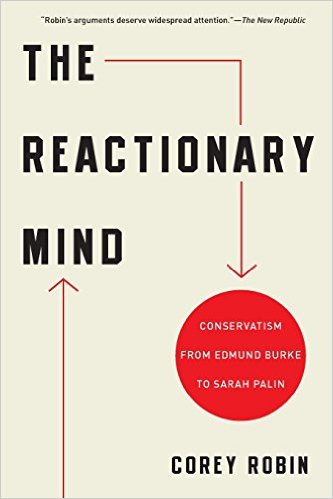
41lPrf+lvdL._SX331_BO1,204,203,200_There’s a sort of ideal figure that conservative intellectuals conjure when they want to argue about the essence of their ideology. This figure is a dreamy quietist of peaceable disposition, who savors apolitical friendship, nurses a skeptical outlook, and looks to an anti-theoretical politics of homey tradition and humane, but chastened, sentiment to guide him. The political scientist Corey Robin argues in his 2012 book, “The Reactionary Mind,” that this ideal is more like a myth. Conservatism, Robin says, is always inherently a politics of reaction—usually also populist, often also violent. From Robin’s argument, we could predict that a conservative party would be unlikely to nominate the idealized conservative as its standard-bearer, but that it would absolutely yoke itself to a populist nut job like Donald Trump.

Robin’s argument about why this happens is a little too sweeping at times, too reliant upon convenient factoids for its historical-theoretical linkages. For example, he dubiously establishes that libertarians are secret heirs to Hobbesian absolutism by noting that the free-market economist Milton Friedman was an adviser to the Chilean dictator Augusto Pinochet. And conservative readers would surely grind their molars on seeing John Calhoun and Ronald Reagan blithely summoned as members of the same political team. By the same token, this bold and maddening connection between a notorious slavery apologist and a beloved Republican provided a polemical charge that was no doubt central in turning the book into an unexpected publishing hit among progressives still energized by the Occupy movement.

More here.

Universe Not Accelerating? New Battle Over Supernova Results

Ethan Siegel in Forbes:

Merger_accretionIn 1998, the two leading independent collaborations working to measure distant supernovae in the Universe reported the same bizarre findings: they seemed to indicate that the Universe was accelerating. The only way to explain how distant these lights appeared was if the fabric of space was expanding at a rate that wasn’t decreasing like we’d expect, and if the most distant galaxies were receding faster and faster, despite the pull of gravity. Over the next 13 years, the evidence grew stronger and stronger for this picture, and in 2011 three pioneers in the field were awarded the Nobel Prize. And then, just last week, a new study came out alleging that the supernova evidence for this picture was marginal at best. The study concludes that perhaps the Universe hasn’t been accelerating, after all.

But is that fair and correct? Certainly the news reports are claiming it is, but what does the science say? Let’s start with what the supernova data is, and what it’s told us so far.

More here.

Shahzia Sikander interviewed by Sara Christoph

From The Brooklyn Rail:

Shahziasikander-webSince moving to the U.S. from Pakistan in the mid-’90s, Shahzia Sikander has pushed through boundaries corroded by decades of multiculturalist rhetoric with an artistic practice that reimagines the connections between Eastern experiences and Western perspectives. Sikander is best known for her early mastery of Indo-Persian miniaturist painting—a radical appropriation of a craft formerly considered kitsch—but her recent work in video is immersive, animated, and monumental in scale. She sat down with Sara Christoph to discuss the paradoxes of colonialism and translation, and the narratives that frame history, in the context of today’s charged atmosphere of divisive polemics.

Sara Christoph (Rail): I’d like to begin by touching on a theme that runs through your work as an artist: the imperative of imagination. You’ve said it is something that drives you, that “art is an instinct to imagine the future.” Let’s start there: imagination as instinct, as something that even in times of great divisiveness, binds us all. How would you articulate the role of imagination in your work?

Shahzia Sikander: When I think of the idea of the postcolonial, the rhetoric of imagination seems so much more buoyant, so full of visual possibilities, specifically as a foil to the notion of the exile. I think of it as a soaring and empowering space that is free from constraints. And if you’re thinking in terms of inter-connectivity, imagination is what ties all of us together.

More here.

WHAT AN UGLY CHILD SHE IS

Ferrante-Ugly-Child-826Elena Ferrante at The New Yorker:

I read “Madame Bovary” in the city of my birth, Naples. I read it laboriously, in the original, on the orders of a cold, brilliant teacher. My native language, Neapolitan, has layers of Greek, Latin, Arabic, German, Spanish, English, and French—a lot of French. Laisse-moi (“leave me alone”) in Neapolitan is làssame and sang (“blood”) is ’o sanghe. It’s not so surprising if the language of “Madame Bovary” seemed to me, at times, my own language, the language in which my mother appeared to be Emma and said laisse-moi. She also said le sparadrap (but she pronounced it ’o sparatràp), the adhesive plaster that had to be put on the cut I’d gotten—while I read and was Berthe—when I fell contre la patère de cuivre.

I understood then, for the first time, that geography, language, society, politics, the whole history of a people, were for me in the books that I loved and which I could enter as if I were writing them. France was near, Yonville not that far from Naples, the wound dripped blood, the sparatràp, stuck to my cheek, pulled the stretched skin to one side. “Madame Bovary” struck with swift punches, leaving bruises that haven’t faded. All my life since then, I’ve wondered whether my mother, at least once, with Emma’s words precisely—the same terrible words—thought, looking at me, as Emma does with Berthe: C’est une chose étrange comme cette enfant est laide! (“It’s strange how ugly this child is”).

more here.

Thomas De Quincey and the Making of a Murderer

Efd1f0de6df70171d7e4729a047a7670de24d82aColin Dickey at The New Republic:

Artistic considerations of death and mayhem were De Quincey’s bread and butter. De Quincey, she writes, “gorged on scenes of violence,” but unlike others he was able to transmute this passion into high art, particularly in his Macbeth essay and the satiric tour-de-force, “On Murder Considered as One of the Fine Arts. “Everything in this world has two handles,” the anonymous narrator tells the assembled Society of Connoisseurs in Murder. “Murder, for instance, may be laid hold of by its moral handle (as it generally is in the pulpit, and at the Old Bailey); and that, I confess, is its weak side; or it may also be treated aesthetically, as the Germans call it—that is, in relation to good taste.” Long before Hollywood began catering to our innate fascination with murder, De Quincey was, like no one else before him, plumbing the depths of our darkest humanity, eschewing morality in favor of that second handle. “It was De Quincey who legitimized the luxurious excitement of murder,” Wilson reminds us, “just as he legitimized, in his most famous work, Confessions of an English Opium-Eater, the pleasure of opiates.”

It is that most famous work, the opium essay, which has paradoxically stood in the way of properly appreciating De Quincey’s many other contributions to literature. InRebecca Solnit’s biography of Eadweard Muybridge, she describes how the photographer “undermined his vast output of good work with his great work.” Had he never done his excellent Yosemite studies, he might have been known for his less ambitious San Francisco cityscapes, and the Yosemite photos, in turn, have been all-but-forgotten by the later motion studies that changed the world.

more here.

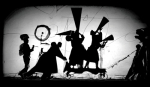
William Kentridge’s ‘Right into Her Arms’

Hard01_3821_01Jeremy Harding at The London Review of Books:

The most recent of William Kentridge’s works on display in Thick Time at the Whitechapel Gallery (until 15 January) is called Right into Her Arms. It’s also one of the best. A raised stage, three metres long, about a metre high, is dressed with a flimsy backdrop of beige, brown, grey; here and there are torn swatches of yellow, green and maroon. At first we seem to see an austere Kurt Schwitters collage from the early 1920s. Close up, we discover unadorned cardboard, plain or coloured card. The wings of the stage are decorated with pages from a dictionary. Front of stage are two rectangular, mobile panels, MDF or cork, decorated like the rest and attached to a guide rail that runs along the top of the proscenium. They are driven left and right by an electric motor, or angled, or made to pirouette through 360 degrees. Mostly they trundle to and fro; on occasion they whizz or flounce; once or twice they cross.

The show, which lasts 11 minutes, consists of a recorded montage of images, still and moving, beamed onto this protean set from a projector: ink splashes, ink and charcoal drawings, fragments of libretto and video outtakes, all retrieved from the workshop of ideas, materials and players that Kentridge put together for his production of Lulu, performed at the Met last year and coming to ENO on 9 November. Right into Her Arms restages the conception, design and history of the production as a kinetic notebook, full of surprise and comedy. As the panels go this way and that, the projected images are refracted across two, sometimes three planes. The little play reaches its climax over a soundtrack of Webern and Schoenberg and a recital by Kentridge of passages from Schwitters’s sound poem Ursonate.

more here.