
William Wright and Takaki Komiyama in The Conversation:
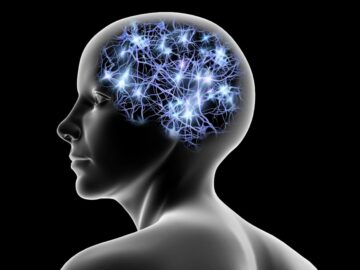 For decades, neuroscientists have thought that the brain learns by changing how neurons are connected to one another. As new information and experiences alter how neurons communicate with each other and change their collective activity patterns, some synaptic connections are made stronger while others are made weaker. This process of synaptic plasticity is what produces representations of new information and experiences within your brain.
In order for your brain to produce the correct representations during learning, however, the right synaptic connections must undergo the right changes at the right time. The “rules” that your brain uses to select which synapses to change during learning – what neuroscientists call the credit assignment problem – have remained largely unclear.
We decided to monitor the activity of individual synaptic connections within the brain during learning to see whether we could identify activity patterns that determine which connections would get stronger or weaker.
More here.
Enjoying the content on 3QD? Help keep us going by donating now.
 It’s been nearly two decades since I finished my undergraduate degree, and my memories of my philosophy major, like most things associated with one’s early adulthood, are hazy at best.
 B
B We all want
 GILLIAN CARNEGIE’S current show at
  In Plato’s dialogue Symposium, seven varied speeches are made on the meaning of love at an all-male drinking party set in ancient Athens in
 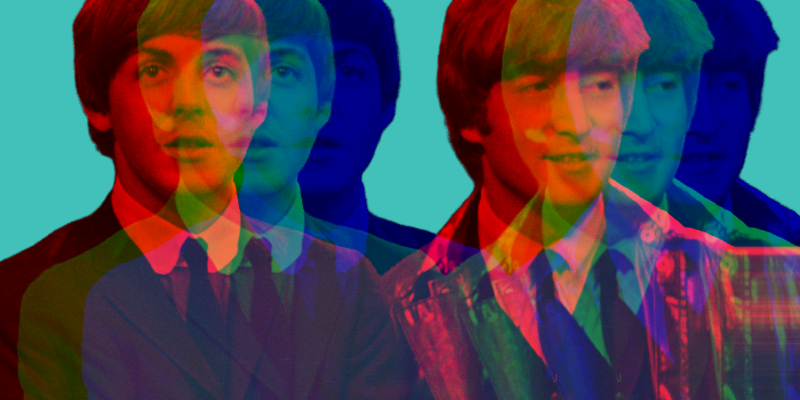 In the early months of 1966, whenever Paul McCartney sat down at a piano, wherever it was, he would start tinkering with a song he called “Miss Daisy Hawkins.” From the moment he found its first five syllabic notes, the song seems to have found its themes: loneliness, futility, the end of life. McCartney was twenty-three. Without discussing it, both John Lennon and Paul came back from their break with songs about death, written from a detached, omniscient perspective.
 Sixty years ago, a debate raged between two titans of evolutionary biology that came to be
 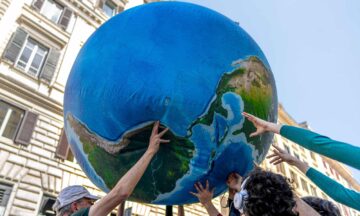 Inflation is, at base, a tax on consumption – and it hits the poor the hardest, since they consume more of their incomes and the rich consume less.
 Sometime in the next several months, a team of US scientists plans to pour a solution of antacid into the waves off the coast of Massachusetts. Using boats, buoys and autonomous gliders, the scientists will track changes in water chemistry that should allow this tiny patch of the Atlantic Ocean to absorb more carbon dioxide from the sky than it normally would.
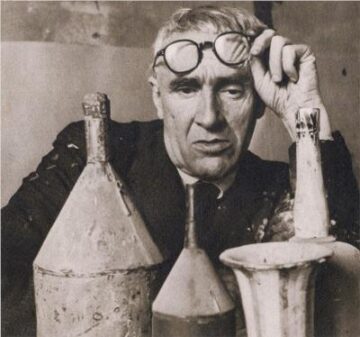 It’s been an exceptionally rich decade for fans of the great mid-century Italian master Giorgio Morandi here in New York City, beginning with the superb retrospective at the Metropolitan back in 2008 (which I’ve already referenced in the pages of this Cabinet back in
 After three years as a censor, Liu detests his job. He detests the white office ceiling, the grey industrial carpet and the office that feels more like a factory. He also detests his 200-odd colleagues sitting in their cubicles, each concentrating on their mouse and keyboard as they delete or hide content.