
Resemblances
On top of those low mountains the surprising snow lingers.
Here in the valley beside the small stream, a snow of almond blossoms.
A congruence, then, between high and low, or is it only the eye
playing its old game of this is like that?
How much we’ve learned from these resemblances,
the white horses of the waves, the white spume of their manes
flying behind their fierce, measured charge to the shore.
To make the image whole we see, behind them, a flash of the sea god riding
/his chariot.
And when a bolt of lightning hurtles down on us like a spear,
we think of the hurler and meet, for the first time the sky lord.
We must give him a place on which to stand and so – heaven.
And when the sweetness of spring softens our small wills,
we see the Goddess sailing on her shell into the bay of our wondering.
I know I have left out their dark brother, but he is never not here. The mountain
snow will melt. The almond blossoms, already, have fallen from the trees
Enjoying the content on 3QD? Help keep us going by donating now.
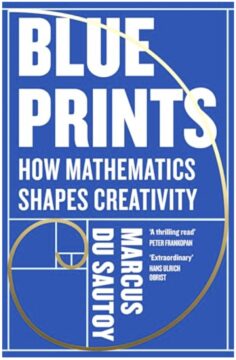 In the first movement of his piece, Messiaen wanted to create the strange sense of time ending. He achieved this in the most stunning manner. Time depends on things repeating, so he needed to produce a structure where you never truly hear the moment of repetition. While the clarinet imitates a blackbird and the violin a nightingale, the piano part plays a 17-note syncopated rhythm that just repeats itself over and over. But the chord sequence that the pianist plays, set to this rhythm sequence, consists of 29 chords, which are again repeated over and over. Such repeating patterns might lead to boredom and predictability, but not in this case. Because Messiaen’s choice of numbers—17 and 29—means that something rather magical… or mathematical, occurs. The numbers he chose are prime numbers, and their mutual indivisibility means that the rhythm and harmony that Messiaen has set up never get back in sync once the piece is in motion.
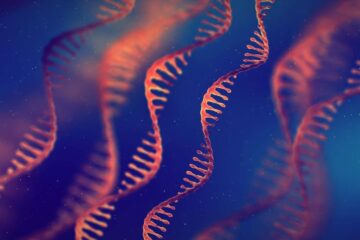 The goal of understanding how inert molecules gave rise to life is one step closer, according to researchers who have created a system of RNA molecules that can partly replicate itself. They say it should one day
 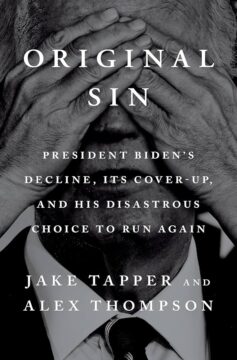 Public gaffes piled up. Biden referred to Vice President Harris as “Vice President Trump” and described himself as the first black vice president. At a NATO summit President Zelensky of Ukraine was called “President Putin.” Behind the scenes at photo ops Biden would regularly fail to recognize long-time friends and colleagues. Even George Clooney, not a man used to being ignored, went unrecognized at a Hollywood fundraiser that he himself had organized. At campaign events Biden would repeat stories or simply allow them to peeter out into an embarrassed silence. He would lose his way coming off stage. His voice, hoarse at the best of times, would often become an inaudible whisper.
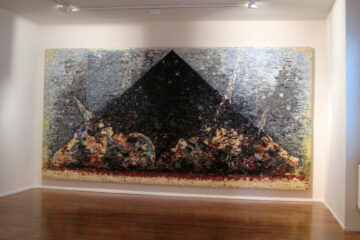 Why abstract art? The question is not rhetorical, especially as a point of entry into the visionary work of Jack Whitten, whose career spanned six decades before he died in 2018. One possible answer: the need to say what cannot be said according to the usual rules—rules for perspective, light, scale, and all the rest, but also, and maybe most importantly, rules for representing the world in a way that the world has already recognized. What looks real, what is real, may not be the same for you as it is for me. That makes it vitally important for artists to paint, sculpt, or draw the world as they see it, regardless of the rules. And that is particularly true when the rules—inside the world of art schools, galleries, and museums and, most especially, outside it—constitute the very evil that makes their work necessary.
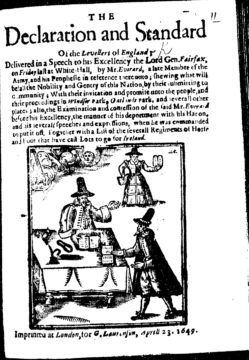 In April 1649, the earth of
  Through a stroke of good fortune, Elon Musk’s otherwise disastrous purchase of Twitter has turned into one of the great business acquisitions of all time. Buying control of a president was a start. What if the deal bought him something even more valuable?
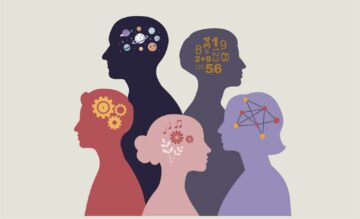 Autism spectrum disorder, or autism, is a neurodevelopmental disorder. People with the disorder may have deficits in social communication and interaction and restricted and repetitive patterns of behavior, interests, or activities. Autism is really a construct, an idea that there is something different about people who have very basic deficits or difficulties in social communication, starting very young, and also certain repetitive or sensory differences compared to neurotypical people.
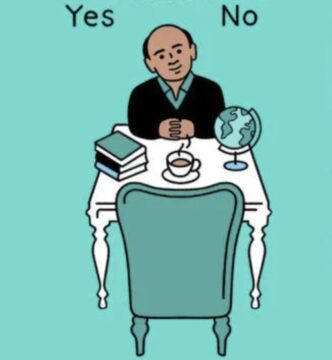 The term “first-world problem” is used to describe the type of minor nuisance that occupies the minds of the bourgeoisie. You dropped an AirPod in the urinal. You spilled chardonnay on the divan. Whole Foods was out of pomegranates. And so forth. These are perfectly real frustrations, but they only afflict the comfortable. We might define a parallel quandary in the field of moral philosophy: the first-world ethical problem. These are dilemmas about right and wrong that don’t actually touch any of the major ethical crises of our time or issues of structural injustice. They’re problems that only arise or seem worthy of spending time on once you reach a certain level of wealth and privilege. The New York Times advice column,
 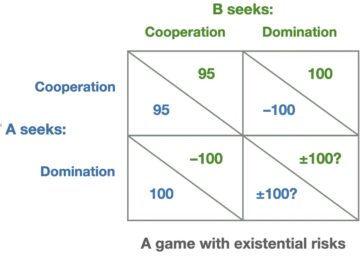 Advanced AI will transform possibilities, and our future will depend on which become real. Deep uncertainties make an AI arms race risky for all sides, yet AI also creates opportunities for unprecedented security. The key challenge isn’t technical feasibility — advanced AI can do that heavy lifting — but navigating from competition to cooperation against the friction of reality: institutional inertia, expectations rooted in thousands of years of state conflict, and sheer failure to recognize unprecedented options.
 Clara Collier: To start, do you want to give us a quick background of the book and your research?
 O
O U
U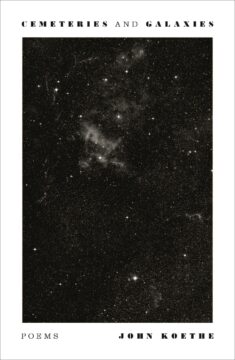 Koethe’s taste for self-contradiction or self-revision, and for rambling free-associative structures of “meditation gone awry” (as he puts it in the poem “Naturalism”) that move around in strange eddies before circling back to some revised perception of their starting point, may seem surprising in a poet whose day job has been in a philosophy department, where logical consistency and a rigorous organization of argument are valued. But then this is the philosopher-poet who once proclaimed, flatly, “I don’t like poems about philosophy.” His poetry seems to be the place for everything philosophy doesn’t know what to do with, for what in “Against Materialism” he calls, “Things so commonplace it’s easy to forget how strange they are” but which “Make up the furniture of the world, and if none of them pass muster metaphysically, / So what?”