Beautiful Silence Endless Talking
If your name is Omar nobody in the town of Kash
will sell you a loaf of bread, at any price.
You go to a bakery shop and say, “Hello, my name is Omar.
I’d like some bread.” The baker will reply, “Try the shop
down the street. One loaf of his bread is better than fifty of mine.”
But if you have healed your eyesight of all duality,
You can answer, “There is no other bakery!”
The illumination of that would blind the baker
and change your name.
As it is, the bakers a Kash nod, and with tones of voice
they know, send you on wild-goose chase around town.
Once you have said your name is “Omar” in one shop,
you may as well quit trying to buy bread in Kash.
You’re not only seeing double. You’re seeing ten-fold!
And you’ll never get fed.
You move from nook to nook in the ruins of a monastery,
thinking, The next prayer-place is the place I’m looking for.
Let your eyes see God everywhere. Give up fears
and expectations. The friend, the Beloved, your soul,
is a river with the trees and buds of the world
reflected in it. And it’s no illusion!
The reflections are real, real images, through which
God is made real to you. The River Water
is an orchard that fills your basket.
But not all flowings are the same. Different donkeys
take different loads and different persuasive sticks.
One principle does not apply to all rivers.
For example, inside this river there is a moon
which is not a reflection!
From the riverbottom the Moon speaks,
………………………………………………………….“I travel
in continuous conversation with the river as it goes.
whatever is above and seemingly outside this river
is actually in it. It all belongs to the Friend.”
Merge with it, in here or out there, as you please,
because this is the river of rivers
and the beautiful silence of Endless Talking.
by Rumi
from We Are Three
Coleman Barks, 1987
Enjoying the content on 3QD? Help keep us going by donating now.

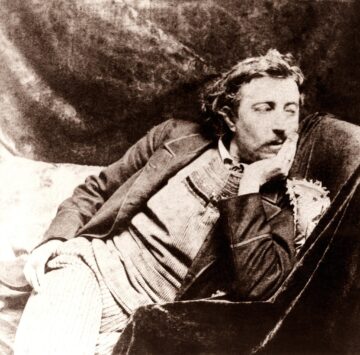 For much of his life, Paul Gauguin railed against the deadening effects of bourgeois domesticity. But as Sue Prideaux writes in “Wild Thing,” her terrific new biography of the artist, for about a decade early in his career the self-proclaimed “savage from Peru” enjoyed a stint as a happily married stockbroker in Paris.
 The outcome of quantum experiments is intrinsically unpredictable. Now physicists have combined that feature with blockchain techniques to generate random numbers in a fully transparent process for the first time
 In March 1988, the late Israeli historian Yehuda Elkana, an Auschwitz survivor, published an
  At this week’s U.N. Oceans Conference in the south of France, delegates need only glance outside the conference hall at the glittering Mediterranean for a stark reminder of the problem they are trying to solve. Scientists estimate there are now
 The cellular biology of reproduction is often depicted as an epic journey, in which millions of intrepid sperm fight to be the first to claim the ultimate prize: the chance to fertilize the egg, which has been passively waiting for the sperm to arrive. But is this an accurate picture? In a
  T
T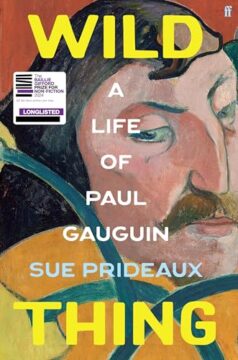 For much of his life, Paul Gauguin railed against the deadening effects of bourgeois domesticity. But as Sue Prideaux writes in “Wild Thing,” her terrific new biography of the artist, for about a decade early in his career the self-proclaimed “savage from Peru” enjoyed a stint as a happily married stockbroker in Paris.
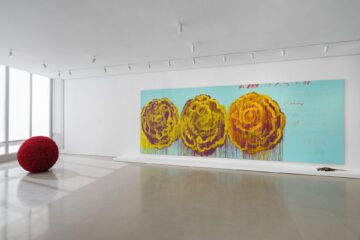 I begin with some questions. What is the difference between writing and drawing? What distinguishes seeing from reading? Can a painting be illegible? Can you write a drawing? In what ways can writing resist erasure and yet also be a mode of erasure? These are the dilemmas that haunt me when I think of the work of Cy Twombly, one of the United States’ most enigmatic artists.
 Google wasn’t around for the advent of the World Wide Web, but it successfully remade the web on its own terms. Today, any website that wants to be findable has to play by Google’s rules, and after years of search dominance, the company has
 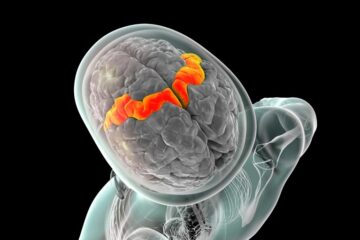 A man with a severe speech disability is able to speak expressively and sing using a brain implant that translates his neural activity into words almost instantly. The device conveys changes of tone when he asks questions, emphasizes the words of his choice and allows him to hum a string of notes in three pitches.
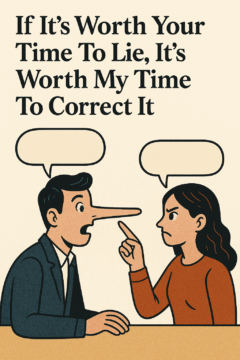 If you say Joe Criminal committed ten murders and five rapes, and I object that it was actually only six murders and two rapes, then why am I “defending” Joe Criminal?
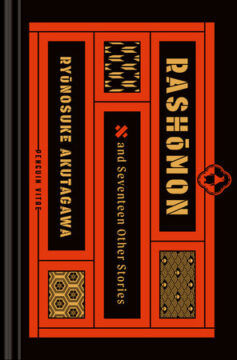 There is a certain privilege in looking at a group of novels-in-translation from a single country originally written and published across almost a century. What appears at first glance to be a disparate assortment of texts gathered solely by the date of their reissue in a new language reveals an unexpected coherence. That the following five short Japanese novels-in-translation are being made available to a wider audience now, in the middle of the 2020s, feels timely.
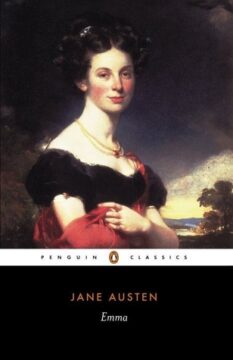 One of Jane Austen’s many mind-bending skills was her ability to wrest so much drama from a world that was, by present-day standards, almost unfathomably static. Austen’s novels are preindustrial time capsules from an era before even trains, gas lights, or telegraphs—the first in a stampede of inventions that transformed nineteenth-century life and are vividly present in the work of many novelists emblematic of that century. Born in 1775, a year before American Independence, Austen has preserved for us an epoch when indoor illumination required candles, remote communication took place by messenger or mail, and locomotion meant walking or engaging at least one horse—more if, like Emma’s protagonist and namesake (and indeed every woman in that novel), you didn’t ride, and needed a carriage to travel any distance.