The Public Face of Antifa

170822_CLAY_Protesters_GettyImages-53150058-smash

Michelle Goldberg in Slate:

It’s certainly true that antifa refuses to eschew violence. According to CNN’s Jake Tapper, left-wing counterprotesters assaulted at least two journalists in Charlottesville. “The riot is our version of the strike,” said Anderson, even as he acknowledges a disconnect between some of antifa’s tactics and its goals. “Step one, broken window. Step two, we don’t know. Step three, classless and stateless society,” he said wryly. “I don’t think it works like that.”

But at a moment when Trump’s “violence on many sides” rhetoric has installed a one-dimensional image of antifa in the wider imagination, Jenkins insists that large-scale standoffs are only part of what the movement does—and not the most important part. Antifa also aims to shame white supremacists, heightening the social cost of involvement with racist organizations. “You’ve got to be proactive against them when they’re not rolling 500 deep,” he said. That’s where doxing comes in. In the wake of Charlottesville, he points out, Unite the Right rallygoers are being identified online, with lasting consequences. One has left college, another has been fired from his job at a Berkeley, California, hot dog stand. “These are kids who thought it was funny hassling people online and think they can get away with it in real life,” said Jenkins. “And then they learn the hard way: Real life is different than online.”

More here.

The Confederate General Who Was Erased

599b38eb1900002500dd4acc

Jane Dailey in the Huffington Post:

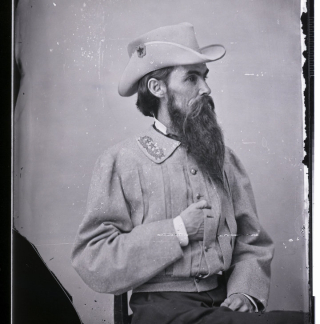
General William Mahone has not been forgotten entirely. Rather, he has been selectively remembered. There is a Mahone Monument, for example, erected by the Daughters of the Confederacy, at the Crater Battlefield in Petersburg, and Civil War scholars have treated Mahone’s military career with respect. There is an able biography. The problems posed by William Mahone for many Virginians in the past — and what makes it worthwhile for us to think about him in the present — lie in his postwar career.

Senator William Mahone was one of the most maligned political leaders in post-Civil War America. He was also one of the most capable. Compared to the Roman traitor Cataline (by Virginia Democrats), to Moses (by African American congressman John Mercer Langston), and to Napoleon (by himself), Mahone organized and led the most successful interracial political alliance in the post-emancipation South. Mahone’s Readjuster Party, an independent coalition of black and white Republicans and white Democrats that was named for its policy of downwardly “readjusting” Virginia’s state debt, governed the state from 1879 to 1883.

During this period, a Readjuster governor occupied the statehouse, two Readjusters represented Virginia in the United States Senate, and Readjusters represented six of Virginia’s ten congressional districts. Under Mahone’s leadership, his coalition controlled the state legislature and the courts, and held and distributed the state’s many coveted federal offices. A black-majority party, the Readjusters legitimated and promoted African American citizenship and political power by supporting black suffrage, office-holding, and jury service. To a degree previously unseen in Virginia, and unmatched anywhere else in the nineteenth-century South, the Readjusters became an institutional force for the protection and advancement of black rights and interests.

More here.

The Rise of Market Power and the Decline of Labor’s Share

Manufactury-worker-300x181

Asher Schechter over at Pro-Market:

Of the various ills that currently plague the American economy, one that has economists particularly worried is the decline in the labor share—that is, the part of national income that’s allocated to wages.

The two standard explanations for why labor’s share of output has fallen by 10 percent over the past 30 years are globalization (American workers are losing out to their counterparts in places like China and India) and automation (American workers are losing out to robots). Last year, however, a highly-cited Stigler Center paper by Simcha Barkai offered another explanation: an increase in markups. The capital share of GDP, which includes what companies spend on equipment like robots, is also declining, he found. What has gone up, significantly, is the profit share, with profits rising more than sixfold: from 2.2 percent of GDP in 1984 to 15.7 percent in 2014. This, Barkai argued, is the result of higher markups, with the trend being more pronounced in industries that experienced large increases in concentration.

A new paper by Jan De Loecker (of KU Leuven and Princeton University) and Jan Eeckhout (of the Barcelona Graduate School of Economics UPF and University College London) echoes these results, arguing that the decline of both the labor and capital shares, as well as the decline in low-skilled wages and other economic trends, have been aided by a significant increase in markups and market power.

More here. Critiques of the paper can be found here and here.

The princess myth

Hillary Mantel in The Guardian:

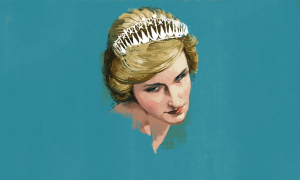
DianaFor some people, being dead is only a relative condition; they wreak more than the living do. After their first rigor, they reshape themselves, taking on a flexibility in public discourse. For the anniversary of her death, the princess’s sons remember her for the TV cameras, and we learn that she was “fun” and “very caring” and “a breath of fresh air”. They speak sincerely, but they have no news. Yet there is no bar on saying what you like about her, in defiance of the evidence. Private tapes she made with her voice coach have been shown in a TV documentary, Diana: In Her Own Words. They were trailed as revealing a princess who is “candid” and “uninhibited”. Yet never has she appeared so self-conscious and recalcitrant. Squirming, twitching, avoiding the camera’s eye, she describes herself hopefully as “a rebel”, on the grounds that she liked to do the opposite of everyone else. You want to veil the lens and explain: that is reaction, not rebellion. Throwing a tantrum when thwarted doesn’t make you a free spirit. Rolling your eyes and shrugging doesn’t prove you are brave. And because people say “trust me”, it doesn’t means they’ll keep your secrets. Yet royal people exist in a place beyond fact-correction, in a mystical realm with rules that, as individuals, they may not see; Diana consulted psychics to work out what was going on. The perennial demand for them to cut costs and be more “down to earth” is futile. They are not people like us, but with better hats. They exist apart from utility, and by virtue of our unexamined and irrational needs. You can’t write or speak about the princess without explicating and embellishing her myth. She no longer exists as herself, only as what we made of her. Her story is archaic and transpersonal. “It is as if,” said the psychotherapist Warren Colman, “Diana broadcast on an archetypal frequency.”

Though she was not born royal, her ancestors were ancient power-brokers, dug more deeply into these islands than the Windsors. She arrived on the scene in an era of gross self-interest, to distract the nation from the hardness of its own character. As she correctly discerned, “The British people needed someone to give affection.” A soft-eyed, fertile blond, she represented conjugal and maternal love, and what other source did we have? Until Tony Blair took office as a fresh-faced Prince Charming we had female leaders, but they were old and their cupboards were bare of food and love: a queen who, even at Diana’s death, was reluctant to descend from the cold north, and a prime minister formerly known as Maggie Thatcher, Milk Snatcher.

More here.

Emotional Intelligence Needs a Rewrite: Think you can read people’s emotions? Think again.

Lisa Barrett in Nautilus:

FaceYou’ve probably met people who are experts at mastering their emotions and understanding the emotions of others. When all hell breaks loose, somehow these individuals remain calm. They know what to say and do when their boss is moody or their lover is upset. It’s no wonder that emotional intelligence was heralded as the next big thing in business success, potentially more important than IQ, when Daniel Goleman’s bestselling book, Emotional Intelligence, arrived in 1995. After all, whom would you rather work with—someone who can identify and respond to your feelings, or someone who has no clue? Whom would you rather date? The traditional foundation of emotional intelligence rests on two common-sense assumptions. The first is that it’s possible to detect the emotions of other people accurately. That is, the human face and body are said to broadcast happiness, sadness, anger, fear, and other emotions, and if you observe closely enough, you can read these emotions like words on a page. The second assumption is that emotions are automatically triggered by events in the world, and you can learn to control them through rationality. This idea is one of the most cherished beliefs in Western civilization. For example, in many legal systems, there’s a distinction between a crime of passion, where your emotions allegedly hijacked your good sense, and a premeditated crime that involved rational planning. In economics, nearly every popular model of investor behavior separates emotion and cognition.

These two core assumptions are strongly appealing and match our daily experiences. Nevertheless, neither one stands up to scientific scrutiny in the age of neuroscience. Copious research, from my lab and others, shows that faces and bodies alone do not communicate any specific emotion in any consistent manner. In addition, we now know that the brain doesn’t have separate processes for emotion and cognition, and therefore one cannot control the other. If these statements defy your common sense, I’m right there with you. But our experiences of emotion, no matter how compelling, don’t reflect the biology of what’s happening inside us. Our traditional understanding and practice of emotional intelligence badly needs a tuneup.

…The second flawed assumption is we control emotions by rational thought. Emotions are often seen as an inner beast that needs taming by cognitive effort. This idea, however, is rooted in a bogus view of brain evolution. Books and articles on emotional intelligence claim that your brain has an inner core that you inherited from reptiles, wrapped in a wild, emotional layer that you inherited from mammals, all enrobed in—and controlled by—a logical layer that is uniquely human. This three-layer view, called the triune brain, has been popular since the 1950s but has no basis in reality. Brains did not evolve in layers. Brains are like companies—they reorganize as they grow in size. The difference between your brain and, say, a chimp or monkey brain has nothing to do with layering and everything to do with microscopic wiring. Decades of neuroscience research now show that no part of your brain is exclusively dedicated to thoughts or emotions. Both are produced by your entire brain as billions of neurons work together.

Even though the triune brain is a complete fiction, it’s had an outstanding public relations campaign.

More here.

Saturday Poem

The Secret

Two girls discover
the secret of life
in a sudden line of
poetry.

I who don’t know the
secret wrote
the line. They
told me

(through a third person)
they had found it
but not what it was
not even

what line it was. No doubt
by now, more than a week
later, they have forgotten
the secret,

the line, the name of
the poem. I love them
for finding what
I can’t find,

and for loving me
for the line I wrote,
and for forgetting it
so that

a thousand times, till death
finds them, they may
discover it again, in other
lines

in other
happenings. And for
wanting to know it,
for

assuming there is
such a secret, yes,
for that
most of all.

by Denise Levertov
from O Taste and See: New Poems
New Directions Publishing Corporation.

Who killed Roland Barthes?

81nBM5PAhZLMichael Dirda at The Washington Post:

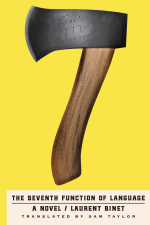
These are all, as far as history is concerned, discrete events. But could they actually be connected? What if Barthes — an authority on semiology, the study of signs and symbols — had discovered a linguistic secret of immense power, one for which people would kill? The pioneering structuralist Roman Jakobson had famously promulgated six functions to language, but he hinted at the possible existence of a seventh, one in which words acquired the persuasive force of incantations or magic spells. If a speaker knew how the seventh function operated, he or she could convince people of anything at all. One could potentially rule the world.

Like Umberto Eco’s conspiracy classic, “Foucault’s Pendulum,” or Zoran Zivkovic’s “Papyrus Trilogy,” Laurent Binet — a professor of French literature in Paris — has produced an intellectual thriller that will be catnip to serious readers. While it contains Bulgarian assassins, Japanese ninjas, a beautiful Russian agent, French politicians and several male prostitutes, its main characters are prominent European philosophers and cultural theorists, including Eco, Michel Foucault, Jacques Derrida, Julia Kristeva and Philippe Sollers.

more here.

Arthur Schopenhauer: the first European Buddhist

Arthur-Schopenhauer-605x454Julian Young at the TLS:

Schopenhauer’s discovery that the underlying “essence” of life is will is not a happy one. For, as the second of the Buddha’s “Four Noble Truths” tells us, to will is to suffer. What follows, as the first of the “Truths” tells us, is that life is suffering, from which Schopenhauer concludes that “it would be better for us not to exist”. He offers two main arguments in support of the claim that to will is (mostly) to suffer, the first of which I shall call the “competition argument” and the second the “stress-or-boredom argument”.

The world in which the will – first and foremost the “will to life” – must seek to satisfy itself, the competition argument observes, is a world of struggle, of “war, all against all” in which only the victor survives. On pain of extinction, the hawk must feed on the sparrow and the sparrow on the worm. The will to life in one individual has no option but to destroy the will to life in another. Fifty years before Darwin, Schopenhauer observes that nature’s economy is conserved through overpopulation: it produces enough antelopes to perpetuate the species but also a surplus to feed the lions. It follows that fear, pain and death are not isolated malfunctions of a generally benevolent order, but are inseparable from the means by which the natural ecosystem preserves itself.

more here.

What was a witch?

51nWsaNI6NL._SX331_BO1 204 203 200_Tracy Borman at Literary Review:

What was a witch? This deceptively simple question has prompted fierce debate among scholars for many years. There are several possible sources of the word, including the Old English wicca (meaning sorceress) and the German wichelen (meaning to bewitch or foretell). Although definitions vary, most describe a witch in a negative way, as someone who wishes to do harm to others. As Ronald Hutton, a leading witchcraft scholar, points out in his new study, this is both inaccurate and unhelpful. By taking the longer view, he provides a convincing alternative, arguing that for many centuries before it rose to notoriety, witchcraft meant something altogether more positive. It is an argument that will resonate with the hundreds of thousands of Wicca and pagan devotees today.

Most histories of witchcraft focus on the early modern period, and for good reason. This was when witch-hunts took centre stage, becoming intertwined with the intense religious and social strife that was sweeping across Europe and resulting in a rash of high-profile witchcraft cases. The beginning of serious official action against witches was signalled by a papal bull issued in December 1484 by Pope Innocent VIII. The bull, which was widely printed and circulated, decried those who had ‘abused themselves with devils … and by their incantations, spells, conjurations, and other accursed superstitions and horrid charms, enormities and offences, destroy the offspring of women and the young of cattle, blast and eradicate the fruits of the earth, the grapes of the vine and the fruits of trees’. In order to stop such evil, Innocent VIII gave great powers to the inquisitors responsible for rooting out such ‘heretical depravity’.

more here.

Friday, August 25, 2017

Neoliberalism: the idea that swallowed the world

Stephen Metcalf in The Guardian:

ScreenHunter_2806 Aug. 25 23.45Last summer, researchers at the International Monetary Fund settled a long and bitter debate over “neoliberalism”: they admitted it exists. Three senior economists at the IMF, an organisation not known for its incaution, published a paper questioning the benefits of neoliberalism. In so doing, they helped put to rest the idea that the word is nothing more than a political slur, or a term without any analytic power. The paper gently called out a “neoliberal agenda” for pushing deregulation on economies around the world, for forcing open national markets to trade and capital, and for demanding that governments shrink themselves via austerity or privatisation. The authors cited statistical evidence for the spread of neoliberal policies since 1980, and their correlation with anaemic growth, boom-and-bust cycles and inequality.

Neoliberalism is an old term, dating back to the 1930s, but it has been revived as a way of describing our current politics – or more precisely, the range of thought allowed by our politics. In the aftermath of the 2008 financial crisis, it was a way of assigning responsibility for the debacle, not to a political party per se, but to an establishment that had conceded its authority to the market. For the Democrats in the US and Labour in the UK, this concession was depicted as a grotesque betrayal of principle. Bill Clinton and Tony Blair, it was said, had abandoned the left’s traditional commitments, especially to workers, in favour of a global financial elite and the self-serving policies that enriched them; and in doing so, had enabled a sickening rise in inequality.

Over the past few years, as debates have turned uglier, the word has become a rhetorical weapon, a way for anyone left of centre to incriminate those even an inch to their right. (No wonder centrists say it’s a meaningless insult: they’re the ones most meaningfully insulted by it.) But “neoliberalism” is more than a gratifyingly righteous jibe. It is also, in its way, a pair of eyeglasses.

More here.

How the Forever War Brought Us Donald Trump

Jedediah Purdy in Dissent:

ScreenHunter_2805 Aug. 25 23.38Donald Trump’s big speech on Afghanistan didn’t announce much change from the Obama policies he complained about, except in style. And the style was unmistakable: Trump blamed his predecessor for leaving him with no good options, promised to untie soldiers’ hands and to get tough with allies, boasted about his problem-solving powers, and promised that we would “win.” He managed to squeeze in a little quasi-fascist rhetoric, calling on Americans to “heal” by displaying the unity of soldiers—another confirmation that he has no sense at all of the rhythm or feeling of a free society. He warned that Pakistan would have to embrace “civilization,” giving a little neo-colonial nudge to what was otherwise a repudiation of “nation-building.” Bombast and wheedling aside, the speech confirmed that Trump and his generals see no way to redeem the Afghanistan adventure but would rather drag along than openly accept defeat—and the political responsibility for any major terror attack that followed. Even the switch in tone is becoming a set-piece: This is how Republican populists talk about the Forever War, while Democrats get to the same place by invoking prudence, humanitarianism, and a sheen of legality. No president escapes, but they decorate their failure with bunting of different colors and cuts.

So Trump, besides being a vulgarian, is a prisoner of the same situation that he attacked Barack Obama for mishandling. Now in Obama’s old office, Trump is mimicking the policy that Obama announced early in his own first term: more troops, on the pretext that they will bring a decisive end to the Forever War.

This war has a knack for thwarting promises to end it, or at least revealing their hollowness. Obama himself ran on a version of such promises, only to become the country’s longest-sitting wartime president. Trump, too, is a creature of the Forever War.

More here.

Luso-Anomalies

Clever_costa

Daniel Finn in New Left Review:

Since the end of 2015, Portugal has been the scene of an unusual political drama. After failing to win a majority in parliament, the country’s long-established centre-left machine rejected the offer of a ‘grand coalition’ with its conservative rival to implement the demands of Brussels and Frankfurt. Straying from the beaten path of European social democracy, the Portuguese Socialist Party came to an arrangement instead with radical-left forces of the kind ostracized everywhere else in the EU. The Socialist Prime Minister António Costa governs with the support of two groups that lie well outside the bounds of respectable opinion: the Portuguese Communist Party, which never had any truck with Eurocommunism or its post-Soviet afterlives, and the Left Bloc, which traces its origins back to the revolutionary movement of the 1970s. On taking office, Costa pledged to ‘turn the page’ on austerity and roll back measures imposed by the Troika. European voters have often heard such promises on the campaign trail, but Costa’s government has broken with convention by following through on the initial rhetoric under pressure from its left-wing allies, reversing wage and pension cuts, halting privatizations and restoring collective-bargaining agreements. In defiance of conventional wisdom, these reforms have been followed by an upswing in economic growth. Dismissed by hostile critics as a rickety geringonça (‘contraption’), the alliance between the Socialists and Portugal’s radical left has confounded predictions that it would collapse in a matter of months. Costa’s own approval ratings have soared, along with those for his party, in pointed contrast with the fiasco of Hollande, the bubble of Renzi and the capitulation of Tsipras. What conditions—long- and short-term—have made this exception possible, and how long can it endure?

For a brief period in the mid 1970s, Portugal was a focus of international attention in the West, for fear that it might go Communist. Once that danger had passed, the development of the country attracted much less interest than the rest of Europe’s southern tier, and knowledge of it abroad has been much more limited. Perhaps the best way of sketching its founding coordinates is through a comparison with Spain. Both countries were ruled by long-standing dictatorships of clerico-fascist stamp—Franco’s regime lasting some forty years, Salazar’s nearly fifty—which came to an end at virtually the same time in 1974–75. But the origins and trajectories of the two regimes were very different. Franco was the military victor of a bloody civil war, won with the help of Mussolini and Hitler, and sealed with systematic extermination of those who had resisted him. Salazar was a civilian at the head of a police state that had been installed with scarcely a shot fired; although his regime crushed its opponents with iron determination, it never had to carry out baptismal massacres of the kind that consecrated Franco’s authority.

More here.

Why Vietnam Was Unwinnable

22Vietnam-BoylanWeb-master768

Kevin Boylan in the NYT:

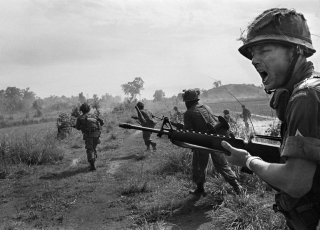
[T]he revisionist case rests largely on the assertion that our defeat in Vietnam was essentially psychological, and that victory would therefore have been possible if only our political leadership had sustained popular support for the war. But although psychological factors and popular support were crucial, it was Vietnamese, rather than American, attitudes that were decisive. In the United States, popular support for fighting Communism in South Vietnam started strong and then declined as the war dragged on. In South Vietnam itself, however, popular support for the war was always halfhearted, and a large segment (and in some regions, a majority) of the population favored the Communists.

The corrupt, undemocratic and faction-riven South Vietnamese government — both under President Ngo Dinh Diem, who was assassinated in a 1963 coup, and under the military cliques that followed him — proved incapable of providing its people and armed forces a cause worth fighting for. Unfortunately for the United States and the future happiness of the South Vietnamese people, the Communists were more successful: By whipping up anti-foreign nationalist sentiment against the “American imperialists” and promising to reform the corrupt socio-economic system that kept most of the country’s citizens trapped in perpetual poverty, they persuaded millions to fight and die for them.

More here.

Richard Florida Is Sorry

Richard_Florida_-_2006_Out__Equal

Sam Wetherell in Jacobin:

The “creative classes” both diagnosed the present state of cities and offered recommendations for future action. Along with Jane Jacobs, Richard Florida has served as an inspiration for mayors, developers, and planners who pedestrianized streets, built bike lanes, and courted cultural attractions like art galleries and theaters.

Setting aside the rhetoric of innovation, economic growth, and entrepreneurship, we can locate something ironically Marxist about Florida’s ideas: human beings are fundamentally creative, which is the source of economic value, and people become alienated when they cannot control the fruits of their creativity.

But Florida’s writing narrows human potential. His theory of art and creativity only acknowledges its contribution to economic growth. The insistence on tolerance’s benefits has a similarly utilitarian purpose: we should celebrate diverse communities not for their own sake but because they spur innovation.

After fifteen years of development plans tailored to the creative classes, Florida surveys an urban landscape in ruins. The story of London is the story of Austin, the Bay Area, Chicago, New York, Toronto, and Sydney. When the rich, the young, and the (mostly) white rediscovered the city, they created rampant property speculation, soaring home prices, and mass displacement. The “creative class” were just the rich all along, or at least the college-educated children of the rich.

More here.

In the version of history found in India’s new textbooks, China lost 1962 and Gandhi wasn’t murdered

History2

Harish C Menon in Quartz:

Long before the terms post-truth and alt-facts gained currency in the west, Indians were getting mass mails and text messages that often mixed myth with half-truths to glorify their past. It could be something as simple and patently false as the United Nations declaring India’s national anthem as the world’s best. Or bizarre achievements of ancient Indians.

Over the past few years, such trickery gained political legitimacy as senior leaders indulged in it using photoshopped images and administrative claims.

Now, with the full blessings of the powers that be, the phenomenon is seeping into Indian school textbooks, especially those used to teach history. For long a hotly-contested field among ideological rivals of the left, right, and centre of Indian politics, these textbooks have begun to peddle outright lies.

It may be still a trickle, but here is a glimpse of the false history that millions of Indian school students will be learning now on.

In the second half of 1962, a brief war with China along the Himalayas left India with a bloody nose. Despite individual acts of valour, India lost 4,000 soldiers. Though the country amply regained its military standing in subsequent standoffs with China, 1962 left a deep scar on the national psyche—a scar it has tried to efface ever since.

A section of Indians may have finally found a solution: Just lie.

A Sanskrit-language textbook meant for Class 8 students in the Indian state of Madhya Pradesh (MP) now says India won the war. “What famously came to be known as Sino-India war of 1962 was won by India against China,” The Times of India newspaper quoted the book, Sukritika, volume-3, on Aug. 10.

Published by the Lucknow-based Kriti Prakashan, the textbook is being used in several MP schools affiliated to the Central Board for Secondary Education (CBSE) of the government of India. The state itself is ruled by the Bharatiya Janata Party (BJP), to which Indian prime minister Narendra Modi belongs.

More here.

Friday Poem

Sky

I remember when the sky
was all the rage,
like last night and how it felt
like a bundle of letters
flung into the air
over the apartment
where you and I slept
like two keys in someone's pocket,
the same sky
as this morning but now it's more
like a sheet that's been
lifted like rice over a wedding
party. Jumbo jets
are swimming through the clouds
and you are driving
to California
with your son asleep
in the back, every microcosm
of his body is initialed
with your name, with the sound
and wet mouth of your skin.
I'm getting ready
to walk through this city
for the tenth billion time, getting
ready to be a person
who is not like an empty building,
who is not like an emergency
kit, the swabs and needles,
the antiseptic and Band-Aids,
today I will be the way
I always wanted to be, someone
drinking coffee and being
kind of knowing
the difference between making
love and putting on
his shoes. The way I smile,
with the dental dam
of death clouding up my teeth
is something you always
knew about me, something you liked
a little in the left part of your body
which is the part that has water
and trees, puddles of blood
and planets of organs. I want to know
just what kind of a person
goes to sleep with one name
and wakes up with another, my inner life
has so many passports
I don't think it belongs to any particular
Nation, nor would it be saved
if all out war were to appear over
the hedges like a mother
appearing in the middle of a Mall
where her lost child
has been watching a strange man
do a trick with a quarter,
a pin, and his thick hands. Whenever
you go, I am sawed in half
in front of an audience of one,
before the two boxes of myself
are wheeled back together and I get
to stand up again, and bow, and walk away.

by Matthew Dickman
from The Paris-American

Starman: the Norwegian musician who identified the rocks from our stars

Tom Whipple in The Economist:

A few hundred thousand years before Jon Larsen, a jazz musician, carried a wooden broom onto a Norwegian roof, two asteroids bumped into each other. These asteroids were old when the sun was new. Never responsible for anything so exciting as a dinosaur extinction, for billions of years they remained cold and lifeless – time capsules from a more primitive solar system. But when they collided, they at last did something interesting: they shed some fragments. One of those fragments was as small as this full stop. For aeons, this particle was buffeted by solar winds, adrift in the cold of interplanetary space. Then one day it found itself in the path of a watery planet with a thick atmosphere. Travelling at 12,000 metres per second, melting in the intense heat, this tiny rock, once part of the oldest rocks in our solar system, dropped onto a Norwegian rooftop. According to the world’s micrometeorite experts, that should have been that. On every square metre of the planet, every year half a dozen such alien rocks land. You have most likely had one on your head. But every year so, too, does all the non-alien detritus: dust from construction, metal spherules from lorry brake pads, sand from the Sahara. These terrestrial particles outnumber the micrometeorites by a billion to one. Undeterred, standing on that Norwegian roof, Larsen swept it all up together and put it in a jiffy bag. Somewhere in those sweepings was the micrometeorite, and he was going to find it. When he began searching for stardust eight years ago, even Larsen thought he would probably be unsuccessful in separating these extraterrestrial needles from their dusty terrestrial haystacks. The scientists he contacted, from the small international community of micrometeorite experts, were certain he would be.

Until then, the only micrometeorites that had been identified were ones that had fallen to Earth aeons ago, and been locked into rock and ice or eroded by the sea. Scientists knew how important it was to understand these tiny rocks and the clues they gave us to our own planet’s formation. They also knew that there was a tantalising prospect that the complex molecules they contained might give us a hint as to how life started afterwards. Yet they had all failed to find fresh examples. In fact, so ludicrous such a search appeared that they hadn’t even tried.

They were the experts. How could a Norwegian jazz musician without a degree ever succeed?

More here.

This 19th Century Lady Doctor Helped Usher Indian Women Into Medicine

Leila McNeill in Smithsonian:

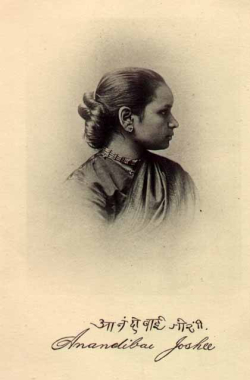
Anandibai_gopalrao_joshiOn February 24, 1883 18-year-old Ananabai Joshee announced her intentions to leave India and attend higher education in the United States. She would be the first Indian woman to do so. “In my humble opinion,” declared Joshee, addressing a packed room of Bengalese neighbors, acquaintances and fellow Hindus who had gathered at Serampore College, “there is a growing need for Hindu lady doctors in India, and I volunteer to qualify myself for one.” Though Joshee would indeed go on to become the first Indian woman to study medicine in America, she would not live long enough to fulfill her goal of serving Hindu women when she returned. However, her ambition and short-lived success would help blaze a new trail for future generations of Indian lady doctors: After Joshee’s educational victory, many medically-minded Indian women would follow in her footsteps.

Joshee was born with the name Yamuna on May 30, 1865 into a high-caste Brahmin family in Maharashtra, near Bombay. Her father Ganpatrao, straying from orthodox Hindu customs regarding women and girls, encouraged Joshee’s education and enrolled her in school from an early age. Joshee’s mother, however, was both emotionally and physically abusive. As Joshee would later recall: “My mother never spoke to me affectionately. When she punished me, she used not just a small rope or thong, but always stones, sticks and live charcoal.” When Joshee was six, Ganpatrao recruited a distant family relative named Gopalrao Joshee to tutor her. Three years into this arrangement, her tutor received a job promotion at the postal service in another city. There are few records of this time, but at some point, Yamuna and Gopalrao’s tutoring relationship became a betrothal, and they married on March 31, 1874. As was Maharashtrian custom, Yamuna changed her name upon marriage to Ananabai, which means “joy of my heart.” Joshee was only nine, but at the time it was not uncommon for a Hindu girl to be married so young. What was unusual was that one of Gopalrao’s terms for marrying Yamuna was that he continue to direct her education, as medical historian Sarah Pripas documents in her dissertation on international medical students in the U.S.

More here.

Thursday, August 24, 2017

A best-selling author submits a draft to his editor; hijinks ensue

Thomas E. Ricks in The Atlantic:

ScreenHunter_2804 Aug. 24 23.53I had written five books for Scott Moyers, following him as he moved from editing jobs at Scribner’s to Random House and then to Penguin Press. We worked well together, and in part thanks to his strong editing hand, my last three books had been bestsellers.

So what happened when I finished years of work and sent him the manuscript of my sixth book stunned me. In fact, I was in for a series of surprises.

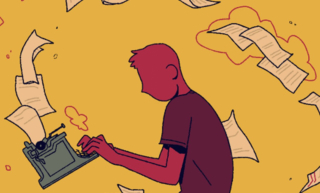
They began about 18 months ago, after I emailed to him that manuscript, a dual appreciation of Winston Churchill and George Orwell. When I had begun work on it, in 2013, some old friends of mine thought the subject was a bit obscure. Why would anyone care how two long-dead Englishmen, a conservative politician and a socialist journalist who never met, had dealt with the polarized political turmoil of the 1930s and the world war that followed? By 2016, as people on both the American left and right increasingly seemed to favor opinion over fact, the book had become more timely.

But two weeks after I sent him the manuscript, I received a most unhappy e-mail back from him. “I fear that the disconnect over what this book should be might be fundamental,” Scott wrote to me, clearly pained to do so. What I had sent him was exactly the book he had told me not to write. He had warned me, he reminded me, against writing an extended book review that leaned on the weak reed of themes rather than stood on a strong foundation of narrative. I had put the works before the two men, he told me, and that would not do.

There was more. But in short, he pissed all over it. It was not that he disliked it. It was that he fucking hated it.

More here.