The Origins of Hunter S. Thompson’s Loathing and Fear

004-hunter-s-thompson-theredlistTimothy Denevi at the Paris Review:

But the real surprise came just as his speech appeared to be winding down. Goldwater, after a brief silence, glanced at the podium, his jaw jutting sharply. Then, gazing out on the 1,308 delegatesbelow, he said, pausing every couple words, “I would remind you … that extremism … in defense of liberty … is no vice.” In the next instant, Thompson found himself at the epicenter of the most primal expression of political fervor he would ever witness. The delegates howled and cheered, their voices buttressed by innumerable noisemakers, trumpets, klaxons, and cowbells. Thompson watched people in the rows ahead of him bang their bodies against their chairs, their chairs against the floor, and the floor rumbled against their countless stomping feet.

Later that night, Thompson left the Cow Palace and crossed the six miles back to downtown San Francisco with thousands of other attendees. He’d pushed himself too hard; the crash was coming: in a few hours, he’d descend into a state of drunken dissolution. Still, that moment on the floor was one he’d never forget. “When GW made his acceptance speech,” he explained In a letter to his friend Paul Semonin a few months afterward, he admits to “actually feeling afraid because I was the only person not clapping and shouting. And I was thinking, God damn you nazi bastards I really hope you win it, because letting your kind of human garbage flood the system is about the only way to really clean it out. Another four years of Ike would have brought on a national collapse, but one year of Goldwater would have produced a revolution.”

more here.
Tuesday, July 18, 2017

Kurt Vonnegut Walks Into a Bar: How the legendary writer handled his Scotch and his fans

Terry McDonell in Electric Literature:

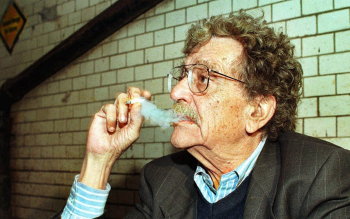
1-mlv9nDMSTxfujXjgw3r5JQI was on the corner of Third Avenue and Forty-eighth Street, and Kurt Vonnegut was coming toward me, walking his big, loose-boned walk. It was fall and turning cold and he looked a little unbalanced in his overcoat, handsome but tousled, with long curly hair and a heavy mustache that sometimes hid his grin. I could tell he saw me by his shrug, which he sometimes used as a greeting.

I was on my way to buy dinner for some Newsweek writers who were suspicious of me as their new assistant managing editor. I had been brought in from Rolling Stone, and no one at Newsweek had heard of me. I didn’t know them either, but I knew Kurt, who was one of the first people I met when I moved to New York. We were neighbors on Forty-eighth Street, where he lived in a big townhouse in the middle of the block, and he’d invite me over for drinks. I had gotten him to contribute to Rolling Stone by keeping an eye out for his speeches and radio appearances and then suggesting ways they could be retooled as essays.

“Come have dinner,” I said. “I’ve got some Newsweek writers who would love to meet you.”

“Not in the mood,” Kurt said.

“They’re fans,” I said. “It’s part of your job.”

Kurt lit a Pall Mall and gave me a look, one of his favorites, amused but somehow saddened by the situation. He could act, Kurt.

More here.

How a scientist you never heard of made String Theory possible

Paul Halpern in Medium:

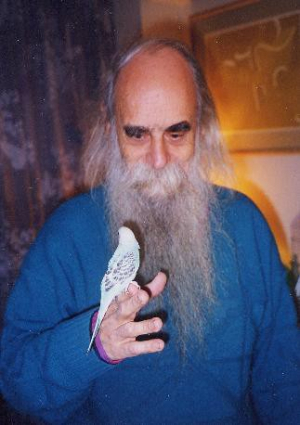
1-jBHiPADEY2dq_vJA_5zDPQWhen he died on September 7, 2012, theoretical physicist Claud W. Lovelace left behind a house filled with parakeets. With no family or close companions, the eccentric Rutgers professor loved to be surrounded by his colorful fine-feathered friends and listen to classical music as he contemplated the nuances of unified field theory. A loner not particularly close to his colleagues, members of the Physics and Astronomy department were astounded and delighted when he willed his entire fortune of $1.5 million to it. The funds were used to help establish endowed positions in practical fields of physics, a far cry from his own speculative work. He also willed his collection of more than 4000 classical CDs to Rutgers’ School of the Arts and donated his body to its Medical School.

While Lovelace’s death was little noted in the media — he certainly wasn’t well-known even among physicists outside of string theory — arguably one of his key findings about the high number of dimensions needed for string theory’s consistency had a critical impact on the history of the field. The surprising result established him as one of the most influential theoreticians of the early 1970s. String theorists still grapple with its repercussions.

Let’s step back to 1970, when string theory was in its infancy.

More here.

The End of the American Experiment

Umair Haque in Bad Words:

1-vvjE3kGcCIm1eN3LV3ecbAWhat does America not have that the rest of the rich world does? Public healthcare, transport, education, and so on. Every single rich nation in the world has sophisticated, broad, and expansive public goods, that improve by the year. Today, even many medium income and even poor nations are building public healthcare, transport, etc. America is the only one that never developed any. Public goods protect societies in deep, profound, invisible ways (we’ll get to that).

First, here is the really curious thing. American leaders are pretending like the relationship above is a great, confounding mystery. Like dumbfounded dinosaurs watching the mushroom cloud engulf the land, never — not once — in American media will you read a column, hear a voice, or see a face discussing the above. It has never happened a single time in my adult lifetime as far as I can remember. Yet the relationship couldn’t be any more obvious, clear, or striking: no public goods are what uniquely separates America, the uniquely failed state, from the rest of the world.

More here.

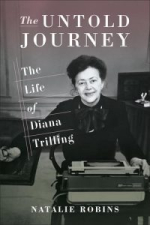
The Untold Journey: the Life of Diana Trilling

Untoldjourney-200x300Laura Tanenbaum at Open Letters Monthly:

“Writers are what they write, and also what they fail to write.” So Diana Trilling, book critic and author, wrote in her memoir. Natalie Robins, author of the first full-length biography of Trilling, spends a good deal of time on Trilling’s false starts: the unfinished, unpublished, and abandoned works that, like many writers, she often saw as her realest and most important. Robins begins the book by recounting the story of a fight between Diana and her husband Lionel when they were newlyweds. Diana was enraged when Lionel called a play she had written with a college friend “a vulgar babble.” Lionel responded by throwing his favorite pipe out the fifth-floor window.

Lionel called his one novel The Middle of the Journey; Diana called her memoir about her marriage The Beginning of the Journey. By titling her biography The Untold Journey, Robins suggests that she will fill in what Diana could not or would not write. In particular, she frequently evokes what she could or would not say during her marriage to Lionel, because of his rages and because of the complicated ways he both could and could not see her as an equal. And yet Robins’s book maintains some of the same distances and evasions; she doesn’t shy away from the more unflattering aspects of Diana’s life but she doesn’t know quite what to make of them, as if she herself feared being on the wrong end of Diana’s famously withering prose.

more here.

inside the confessional

SBM_SaintChristopher_CMYK_13_finalS. Billie Mandle at Cabinet:

Saint Christopher, the enigmatic martyr and patron saint of travelers and children who bore the increasingly heavy Christ child across a deadly river before his own decapitation, bears brown water stains across his acoustical tiles. Light falls in displaced blades through his half-shut opening, across his little ledge, glaring the green cover of a volume lying there, angling down brown half-wall panels into the shadow realm. Saint Elizabeth—who vanishes from the Bible eight days after giving birth, when the men who are to circumcise her son arrive and try to name him Zechariah, whereupon she cries out, “No, he is to be called John!” for this is John the Baptist—is transformed, as in a Greek myth, into the black constellations of perforations in her soundproof paneling, then mantled with a jointed beam of light. And Saint Thomas More, intently principled, severe and merciless, who would not bow to kings, is a single, narrow ray plunging down a wooden wall, illuminating the grain in patterns reminiscent of a seizure patient’s EKG.

For seven years, S. Billie Mandle traveled across the United States, photographing church confessionals, searching, she has written, “for what might be left behind in these private rooms.” One recognition she came to—documented in her series Reconciliation, selections from which are presented here—is that the imprint of what these spaces not only witnessed but lived through was so palpably vivid that the rooms themselves assumed the character of the church’s heroic intercessors. These chambers carried scars suggesting martyrdom and sacrifice—as well as lyric plays of light and color, attesting to the possibility of grace.

more here.

Soviet Women Snipers on the Eastern Front (1941 – 1945)

Download (1)Daniel Beer at Literary Review:

In March 1945, with victory over Nazi Germany only weeks away, Pravda praised the nearly one million Soviet women who had fought the Germans and their allies. They had ‘proved themselves as pilots, snipers, submachine gunners. But they don’t forget about their primary duty to nation and state – that of motherhood.’ In accordance with the official policy of the state, women combatants were henceforth to lay down not only their arms but also their wartime identities. While men were celebrated in the postwar years as frontoviki, frontline soldiers who had made heroic sacrifices to defeat fascism, the contribution of women to the struggle was reduced in popular memory to the traditionally familiar wartime occupations of nursing and cooking.

Drawing on diaries and her own interviews with veterans, Lyuba Vinogradova seeks to recover the experiences of Soviet women combatants from the obscurity to which they were consigned. Vinogradova’s rambling but highly readable Avenging Angels follows snipers from their first days of training and their first kills to their participation in great set-piece battles on the Eastern Front and their eventual deployment in the assault on Berlin. Some became accomplished soldiers who fought in the vanguard of the Soviet army and notched up dozens of confirmed kills. Yet in Vinogradova’s account, their voices are frequently submerged beneath a narrative that cannot decide whether it wants to be an exciting account of the heroic exploits of women in combat or a more reflective meditation on the personal dislocations, exhilarations and traumas of war. The female snipers themselves remain, for the most part, psychologically inaccessible. They fight, suffer the death of comrades, fall in love, participate in fierce battles, witness atrocities and (in some cases) eventually return home, often in a few short paragraphs that tend to summarise rather than illuminate.

more here.

Monday, July 17, 2017

Sunday, July 16, 2017

HE’S GOT THE FEVER . . . and the only cure is more literature

Stephen Akey in The Smart Set:

ScreenHunter_2754 Jul. 17 00.56Towards the end of Gabriel García Márquez’s Chronicle of a Death Foretold, a newly graduated magistrate is sent to a small Colombian town to investigate the circumstances surrounding the murder of the novel’s ill-fated protagonist, Santiago Nasar. 25 years after the murder, the narrator, conducting his own investigation, travels to the Palace of Justice in Riohacha to examine the magistrate’s report. Although the narrator can’t find the magistrate’s name on any of the surviving papers, “it was obvious that he was a man burning with the fever of literature. He had doubtless read the Spanish classics and a few Latin ones, and he was quite familiar with Nietzsche, who was the fashionable author among magistrates of his time . . . He was so perplexed by the enigma that fate had touched him with, that he kept falling into lyrical distractions that ran contrary to the rigor of his profession.”

In the decades since I first read Chronicle of a Death Foretold, I’ve often thought back to that unnamed magistrate, for one simple and terrible reason: He reminds me of me. Not that I’ve ever been tasked with anything so consequential as a murder investigation. My professional responsibilities as a lifelong librarian have tended to such things as answering reference questions and pointing patrons the way to the bathroom. What I share with the magistrate is the “fever of literature,” together with a choice of métier at variance with any literary dreams we might have had. Spiking our official reports about murder (in his case) and circulation statistics (in mine) with allusions to Nietzsche afforded some temporary relief of the fever but “ran contrary to the rigor” of our professions. Lamentably, no supervisor ever congratulated me on the lapidary elegance of my inter-office memos. I was lucky I didn’t get fired.

More here.

The weird power of the placebo effect, explained

Brian Resnick in Vox:

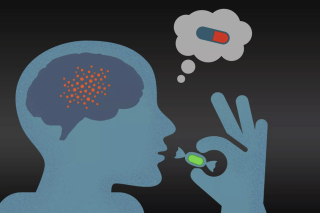
ScreenHunter_2753 Jul. 17 00.48Over the last several years, doctors noticed a mystifying trend: Fewer and fewer new pain drugs were getting through double-blind placebo control trials, the gold standard for testing a drug’s effectiveness.

In these trials, neither doctors nor patients know who is on the active drug and who is taking an inert pill. At the end of the trial, the two groups are compared. If those who actually took the drug report significantly greater improvement than those on placebo, then it’s worth prescribing.

When researchers started looking closely at pain-drug clinical trials, they found that an average of 27 percent of patients in 1996 reported pain reduction from a new drug compared to placebo. In 2013, it was 9 percent.

What this showed was not that the drugs were getting worse, but that “the placebo response is growing bigger over time,” but only in the US, explains Jeffrey Mogil, the McGill University pain researcher who co-discovered the trend. And it’s not just growing stronger in pain medicine. Placebos are growing in strength in antidepressants and anti-psychotic studies as well.

“The placebo effect is the most interesting phenomenon in all of science,” Mogil says. “It’s at the precise interface of biology and psychology,” and is subject to everything from the drug ads we see to our interactions with health care providers to the length of a clinical trial.

More here.

The Myth of the Muslim World

Asma Afsaruddin in the Chronicle of Higher Education:

Photo_82057_landscape_650x433In his influential History of the Saracen Empires, the early-18th-century British scholar Simon Ockley remarks benignly about Islam and its beliefs: "The intellectual image of the Deity has never been degraded by any visible idol; the hours of the Prophet have never transgressed the measure of human virtues; and his living precepts have restrained the gratitude of his disciples within the bounds of reason and religion." Such views influenced Edward Gibbon and his largely favorable depiction of Islam in his The History of the Decline and Fall of the Roman Empire. Similar positive assessments of Islam continued to be found through the first quarter of the 19th century; Goethe lists the Prophet Muhammad as his third source of inspiration, after Jesus and Apollo.

But a very different view emerges in the latter half of the 19th century. More typical of European attitudes during this period was that expressed by the French philosopher Ernest Renan in his now (in)famous lecture titled "Islam and Science," delivered at the Sorbonne in 1883. Renan pilloried Islam as being opposed to reason, progress, and reform. Continuing a familiar Orientalist theme grounded in the racial theories of the period, he attributed medieval Arab advances in the sciences and philosophy to Aryan and non-Muslim (primarily Greco-Sassanian) influences.

Cemil Aydin, in his thoughtful and provocative new book The Idea of the Muslim World: A Global Intellectual History (Harvard University Press), explores the reasons for this sea change in fundamental European attitudes toward Muslims. His study of the historical record demonstrates that the racialization of Muslims as a homogeneous group and the construction of the "Muslim world" as a seamless whole began in this period, with the onset of Western colonization of much of what we term today the Middle East and other parts of Asia.

What is interesting is that this European project of constructing a monolithic "Muslim world" was bolstered by Muslim intellectuals themselves, who, in the same period, sought refuge in Pan-Islamism.

More here. [Thanks to Yogesh Chandrani.]

From Kant to cant

Roger Kimball in New Criterion:

ImagesIn The Culture of Time and Space: 1880-1918, Stephen Kern sets out to show how the burst of technological, intellectual, and artistic innovation around the turn of the century “created distinctive new modes of thinking about and experiencing time and space.” This challenging task will attract anyone who is interested in modernism, though it is worth noting at the outset that Mr. Kern's “distinctive new modes” of experience are not really new but have their foundation in the revolutionary view of man's relation to nature that Descartes crystalized in the seventeenth century. Near the end of the Discourse on Method, Descartes notes that his study of philosophy has led him to a “knowledge that is most useful in life.” That knowledge is first of all not contemplative or theoretical but practical. It excludes the traditional idea that the world is a system of final causes in which man's destiny is figuratively writ, and it views nature as material to be grasped and manipulated according to human designs. The model is the artisan's knowledge of his craft: we really know something when we know how to make it. The index of such knowledge is the power and control it affords. Descartes thus envisions the growth of a “practical philosophy” that, unlike the speculative philosophy of the scholastics, can explain natural phenomena by explaining how things work. Hence the famous declaration that his method will render man “the master and possessor of nature.”

The success of modern technology has shown that Descartes's vision was not idle. For in an important sense, technology has remade the world, bringing close what was far away, delivering up the past to the inspection of the present. “All distances in time and space are shrinking,” Heidegger wrote in a late essay,

Man now reaches overnight, by plane, places which formerly took weeks and months of travel. He now receives instant information, by radio, of events which he formerly learned about only years later, if at all . . . Distant sites of the most ancient cultures are shown on film as if they stood this very moment amidst today's street traffic . . . The peak of this abolition of every possible remoteness is reached by television, which will soon pervade and dominate the whole machinery of communication.

It may be, as Heidegger is at pains to argue, that this conquest of time and space brings with it a new sense of distance, one less susceptible of technological abridgement. “Short distance,” he observes, “is not in itself nearness.” In taking charge of reality, man has not yet defeated distance. Instead, the speed and effectiveness with which he manipulates the world make genuine community and intimacy more elusive than ever. The dream of a “global village” remains unrealized.

More here.

Sunday Poem

Counterman

—What'll it be?

Roast beef on rye, with tomato and mayo.

—Whaddaya want on it?

A swipe of mayo.

Pepper but no salt.

—You got it. Roast beef on rye.

You want lettuce on that?

No. Just tomato and mayo.

—Tomato and mayo. You got it.

…Salt and pepper?

No salt, just a little pepper.

—You got it. No salt.

You want tomato.

Yes. Tomato. No lettuce.

—No lettuce. You got it.

…No salt, right?

Right. No salt.

—You got it. Pickle?

No, no pickle. Just tomato and mayo.

And pepper.

—Pepper.

Yes, a little pepper.

—Right. A little pepper.

No pickle.

Right. No pickle.

—You got it.

Next!

Roast beef on whole wheat, please,

With lettuce, mayonnaise and a center slice

Of beefsteak tomato.

The lettuce splayed, if you will,

In a Beaux Arts derivative of classical acanthus,

And the roast beef, thinly sliced, folded

In a multi-foil arrangement

That eschews Bragdonian pretensions

Or any idea of divine geometric projection

For that matter, but simply provides

A setting for the tomato

To form a medallion with a dab

Of mayonnaise as a fleuron.

And—as eclectic as this may sound—

If the mayonnaise can also be applied

Along the crust in a Vitruvian scroll

And as a festoon below the medallion,

That would be swell.

—You mean like in the Cathedral St. Pierre in Geneva?

Yes, but the swag more like the one below the rosette

At the Royal Palace in Amsterdam.

—You got it.

Next!

by Paul Violi
from Overnight
Hanging Loose Press

Biafra as memoir

Samuel Fury Childs Daly in Africa is a Country:

AchebeIn 2005, a former diplomat from the Republic of Biafra, named Godwin Alaoma Onyegbula reflected in his memoir on what being Nigerian meant to him: “I was born in this country, over seventy years ago, and know no other country better than I know Nigeria. I have lived through colonial Nigeria, independentNigeria, Biafran Nigeria, and present Nigeria.” Onyegbula continued, “We think we have lived through [this], [as] one country, but experience suggests otherwise. It is becoming more difficult to find an ‘authentic’ Nigerian; that is, someone whose ‘Nigerianess’ is obvious, and clearly distinguishable, to himself and others.” In the last 50 years, hundreds of people like Onyegbula who supported Biafra or fought against it have written their memoirs, ranging from small hand-printed pamphlets to thick, heavily-footnoted volumes. In various ways, all address what it means to be Nigerian in the wake of the Nigerian Civil War. In the long period of military rule that followed the end of the war, closed archives and an officially enforced silence meant that few historians openly reckoned with Biafra’s legacy.

Fiction was one site where Nigeria worked through the meanings of the war, especially in the work of well-known novelists, such as Chinua Achebe, Buchi Emecheta, Ken Saro-Wiwa, and Cyprian Ekwensi. Today the younger fiction writers, Chinelo Okparanta, Chimamanda Ngozi Adichie and Sefi Atta are helping to bring debates about the war back into public discussion. But by volume, the most significant body of writing on Biafra is neither history nor fiction, but memoir. A vast number of memoirs on Biafra circulate in Nigeria, and only a fraction of them are available outside of the country. The topics they address vary, from fiery political screeds on the causes and consequences of the war to intimate recollections of suffering and loss. Many, though not all, are written by people who supported the Biafran side. Some blend genres, mixing rumor with recollection, and a few take liberties with the war’s plot. As Onyegbula candidly warned in his own memoirs, “biography becomes boring when entirely true.” Virtually every important military figure on both sides wrote accounts of their lives (some, like Olusegun Obasanjo, wrote more than one). A fair number of these were ghostwritten or “as told to” someone else; penning memoirs for prominent people has become a cottage industry for Nigerian historians and journalists. The recollections of well-known figures in the war – government officials, officers, scientists and intellectuals among them – are widely read and discussed in Nigeria today. Some are hawked in bus stations and taxi ranks, alongside self-help books and prayer manuals. The contents of one unpublished autobiography by Emmanuel Ifeajuna, a 1966 coup-plotter turned Biafran officer, generates enormous speculation about the conspiracies leading up to the war.

More here.

Saturday, July 15, 2017

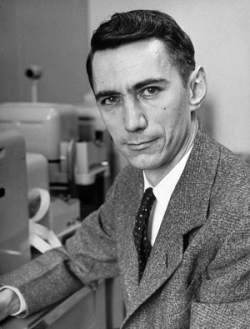
By day, Claude Shannon labored on top-secret war projects at Bell Labs. By night, he worked out the details of information theory

Jimmy Soni and Rob Goodman in IEEE Spectrum:

MjkyNDA4NALooking back on the last months of 1940, Claude Shannon was quite open about his desire to avoid the World War II draft: “Things were moving fast there, and I could smell the war coming along. And it seemed to me I would be safer working full-time for the war effort, safer against the draft, which I didn’t exactly fancy. I was a frail man, as I am now…. I was trying to play the game, to the best of my ability. But not only that, I thought I’d probably contribute a hell of a lot more.”

Shannon’s opportunity to contribute came at Bell Labs, which took him on board as a government contractor, and then as a full-time employee. His work for the war effort brought him to the Labs’ headquarters in Manhattan’s West Village, a scientific smorgasbord: chemical labs, vast production rooms, and “a warren of testing labs for phones, cables, switches, cords, coils, and a nearly uncountable assortment of other essential parts,” as the eminent U.S. engineer Vannevar Bush later described it.

With a host of new wartime projects under way and hundreds of new faces streaming through the office, including many in military uniforms, the thirteen stories on the Hudson’s edge felt especially chaotic. Even as several hundred Labs employees departed for active-duty service in the wake of Pearl Harbor, Bell’s in-house workforce swelled: 4,600 employees became over 9,000 in only a matter of a few years. More than 1,000 research projects were launched, each one a small piece of the war machine. The tempo picked up accordingly, and many of Shannon’s colleagues found themselves working six days a week.

More here.

Ravens have paranoid, abstract thoughts about other minds

Emily Reynolds in Wired:

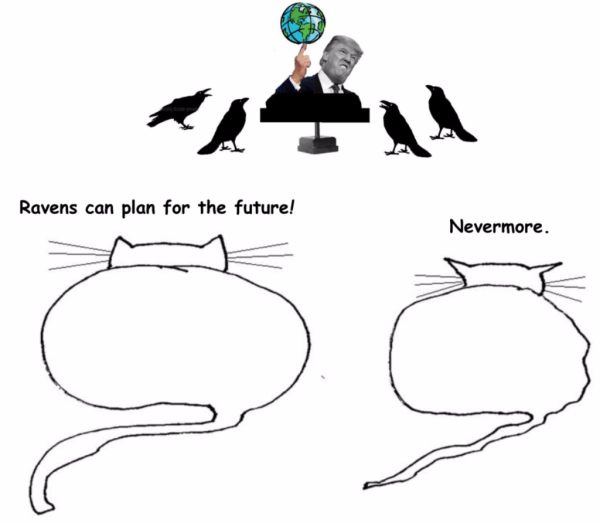
1620Cementing their status as the most terrifying of all the birds, a new study has found that ravens are able to imagine being spied upon — a level of abstraction that was previously thought to be unique to humans.

The ability to think abstractly about other minds is singled out by many as a uniquely human trait. Now, a study from the Universities of Houston and Vienna have found that ravens are able to adapt their behaviour by attributing their perceptions to others.

The study, published in Nature Communications, found that if a nearby peephole was open, ravens guarded pockets of food against discovery in response to the sound of other birds — even if they didn't see another bird. This was not replicated when the peephole was closed, despite hearing the same auditory clues.

According to the study's authors, the discovery "shed[s] a new light on Theory of Mind" — the ability to attribute mental states to others. A number of studies have found that animals are able to understand what others see — but only when they can see the head or eyes, which provide gaze cues. This suggests that these animals are responding only to surface cues, and are not experiencing the same abstraction as humans.

More here.