Enjoying the content on 3QD? Help keep us going by donating now.

Category: Recommended Reading
Rachel Cusk’s ‘Parade’
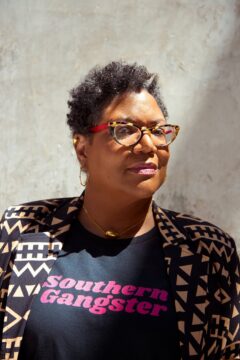
Jessica Swoboda at Commonweal:
Reading a Rachel Cusk novel is like watching a recording of your everyday life, with all your subtly unflattering habits, traits, and actions. A conversation with your seatmate on a plane reveals that you manipulate your family like items on an Excel sheet. A lunch meeting about a potential business partnership discloses that people only matter to you if you profit from them. No one at your get-together of acquaintances reacts when a woman admits she abuses her dog.
These are references to scenes from Cusk’s acclaimed Outline trilogy (2014–18), novels driven by a series of exchanges that Faye, the mostly mute narrator, has with those she encounters. Her conversations read more like monologues, the characters talking at her like she’s on a bad date. These quasi-vignettes replace a traditional narrative arc. The characters don’t have rich inner lives, and they’re largely indistinguishable, different only in the ways that their greed, narcissism, and self-centeredness manifest. As a narrator, Faye is deadpan, sometimes even cruel; she allows no wrongdoing, misstep, or embarrassment to go unnoticed
more here.
Enjoying the content on 3QD? Help keep us going by donating now.

A road forward for the center left
Matt Lutz at Persuasion:
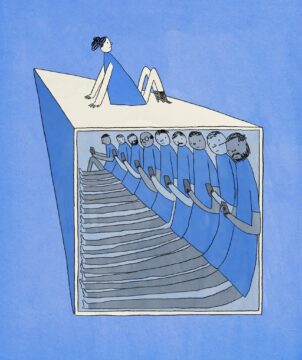
Left-wing activists benefit from a framework where “center left” just means “whatever the left says, but less,” because this gives them the power to alter what it means to be on the center left just by advocating for more extreme views. If the left gets more extreme, the center left must follow them at least part of the way, or risk being labeled as “on the right.” That can be an effective rhetorical cudgel against those who care about being “on the left.” And it raises the question: If your position is that you support what we do (just less), why not go all the way? Not only does this framework provide too much power to activists, it also harms the electoral prospects of center-left political parties, like the Democrats. If the best account the Democrats can give of their stance on cultural issues is “Whatever activists say, but less,” they’re setting themselves up for defeat. That message alienates everyone.
To resist this dynamic, those on the center left must defend a positive vision of what it means to be on the center left. To that end, here are three principles that can provide a unifying framework:
- Liberalism is the first principle.
- Inequalities are problems to be solved.
- Absolutes are unwise.
I don’t pretend that any of these ideas are novel. But they’re no less important for being familiar. Let’s look at them in more depth.
More here.
Enjoying the content on 3QD? Help keep us going by donating now.
William Kentridge on Picasso, Goya, and Others
Enjoying the content on 3QD? Help keep us going by donating now.
Silent Catastrophes: Essays in Austrian Literature
Ritchie Robertson at Literary Review:
Why Austrian literature? Sebald was not Austrian, though his south German birthplace, Wertach, was within walking distance of the Austrian border. Austrian literature appealed to his feeling for marginality. Its major writers, from Franz Grillparzer via Arthur Schnitzler, Hugo von Hofmannsthal and Kafka to Peter Handke, do not fit easily into the pattern of German literature, stretching from Goethe via Thomas Mann to Günter Grass. They excel, in Sebald’s view, in exploring psychological states ranging from obsession and melancholia to schizophrenic breakdown. One notably empathetic essay concerns an actual schizophrenic, Ernst Herbeck (1920–91), who was confined for fifty years in a mental hospital near Klosterneuburg, north of Vienna, where Sebald visited him. Herbeck wrote a large number of poems with enigmatic lines, such as ‘the raven leads the pious on’. Although these poems yield nothing to academic exegesis, they not only linger in the memory but may also, Sebald suggests, reveal the primitive processes through which poetic language arises.
Herbeck’s poems are at the furthest distance from the modern, bureaucratic, administered world which Sebald, like the Frankfurt School, wanted to resist. He traces its development in 19th-century bourgeois literature, in which Enlightenment reason is converted into prescriptive rationality, and emotional and erotic impulses are subjected to the discipline of bourgeois marriage.
more here.
Enjoying the content on 3QD? Help keep us going by donating now.
7 Big Questions About Cancer, Answered
Nina Agrawal in The New York Times:
Every day, billions of cells in our body divide or die off. It’s all part of the intricate processes that keep blood flowing from our heart, food moving through our gut and our skin regenerating. Once in a while, though, something goes awry, and cells that should stop growing or die simply don’t. Left unchecked, those cells can turn into cancer.
The question of when and why, exactly, that happens — and what can be done to stop it — has long stumped cancer scientists and physicians. Despite the unanswered questions that remain, they have made enormous strides in understanding and treating cancer.
“We’re a lot less fearful about telling patients what we do and don’t know, because we know a lot more,” said Dr. George Demetri, senior vice president for experimental therapeutics at Dana-Farber Cancer Institute in Boston.
Here are some of the biggest questions about cancer that scientists have started to answer.
More here.
Enjoying the content on 3QD? Help keep us going by donating now.
A Short History of Black Labor Movements in America
Emma Fridy in Louisville Review:
Born out of necessity, America’s Black labor movements have left an indelible mark upon the social fabric of our country. For hundreds of years Black activists have poured blood, sweat, and tears into organizing the American labor force for better working conditions. Until relatively recently, Black Americans were excluded from major unions, and therefore had to create separate institutions that fought for Black workers. Black men organized against all odds in the agriculture sector, and Black women, who were often excluded from leadership and sometimes even membership in other Black organizations, were early proponents of labor reform by unionizing domestic workers. As civil rights in America progressed, major unions integrated and partnered with Black labor movements across America to champion both economic reform and racial justice. Today, union membership in the Black community is declining despite the long tradition of Black-led labor activism.
More here. (Note: In honor of Black History Month, at least one post will be devoted to its 2025 theme of “African Americans and Labor” throughout the month of February)
Enjoying the content on 3QD? Help keep us going by donating now.
Tuesday Poem
Border
I’m going to move ahead.
Behind me my whole family is calling,
My child is pulling my sari-end,
My husband stands blocking the door,
But I will go.
There’s nothing ahead but a river.
I will cross.
I know how to swim,
but they won’t let me swim, won’t let me cross.
There’s nothing on the other side of the river
but a vast expanse of fields,
But I’ll touch this emptiness once
and run against the wind, whose whooshing sound
makes me want to dance.
I’ll dance someday
and then return.
I’ve not played keep-away for years
as I did in childhood.
I’ll raise a great commotion playing keep-away someday
and then return.
For years I haven’t cried with my head
in the lap of solitude.
I’ll cry to my heart’s content someday
and then return.
There’s nothing ahead but a river,
and I know how to swim.
Why shouldn’t I go?
I’ll go.
Enjoying the content on 3QD? Help keep us going by donating now.
Monday, February 3, 2025
Trump starts to break things
Noah Smith at Noahpinion:
Before the election, I wrote a whole bunch of posts about why it was a bad idea to elect Donald Trump. But sadly, America elected him anyway. After he won, I wrote a post outlining a best-case scenario for Trump’s second term. The optimistic scenario was that Trump’s threats to enact harmful policies and cause chaos were mostly bluster, and that in the end he’d end up just waging a bunch of culture wars instead of wrecking the economy and gutting U.S. institutions.
We’re only two weeks into Trump’s presidency, and that optimistic scenario is looking more and more remote by the day. Trump is creating a lot of institutional chaos, and I’ll talk about that in a bit. Today I’m going to talk about Trump’s main economic policy: tariffs.
More here.
Enjoying the content on 3QD? Help keep us going by donating now.
The Collapse of Ego Depletion
Michael Inzlicht at Speak Now, Regret Later:
In the winter of 2015, I stood before the largest gathering of social psychologists in the world to accept one of the field’s highest honours. My collaborators and I were being celebrated for our theory about willpower—a theory I’d spent many years refining. For a kid who grew up with empty bookshelves, this should have been a moment of triumph [1].
Instead, I felt like a fraud.
At that same conference, I had to confront an uncomfortable truth: the foundation of our celebrated paper was crumbling. Ego depletion—the once-famous idea that self-control relies on a finite resource that can be depleted through use—wasn’t real. That award? It was like winning a Nobel prize for developing the frontal lobotomy as a treatment for mental illness; and, yes, that really happened.
This isn’t just another story about failed replications or p-hacking (though those shenanigans will make an appearance). It’s a story about what happens when we fall in love with our theories more than the truth. The replication crisis didn’t just shake the foundations of psychology; it shook those of us who had built our careers on ideas that no longer held up to scrutiny.
More here.
Enjoying the content on 3QD? Help keep us going by donating now.
Nobel Laureate Saul Perlmutter and Tim Minchin: Facts, fictions and critical thinking
Enjoying the content on 3QD? Help keep us going by donating now.
The Norwegian rocket incident marked the only known activation of a nuclear briefcase in response to a possible attack
Laura Kiniry in Smithsonian Magazine:
When the Cold War ended in 1991 with the collapse of the Soviet Union, it greatly reduced the threat of global nuclear war. But on January 25, 1995, that threat once again came front and center when Russian officers mistook a Norwegian rocket sent to study the aurora borealis for a weapon of mass destruction.
While not as well known as the 1962 Cuban Missile Crisis, the “Norwegian rocket incident” is considered one of the world’s closest brushes with nuclear war.
In the early morning hours of January 25, a team of Norwegian and American scientists launched a Black Brant XII four-stage sounding rocket from Norway’s Andoya Rocket Range, a launch site off the country’s northwestern coast. Its purpose: to study the northern lights over Svalbard, a Norwegian archipelago in the Arctic Ocean.
Although the scientists had notified dozens of countries, including Russia, in advance of their high-altitude scientific experiment, the information never made its way to Russia’s radar technicians.
More here.
Enjoying the content on 3QD? Help keep us going by donating now.
Mitochondria as you’ve never seen them
Emma Stoye in Nature:
Powerhouses of the cell. This video of a human bone-cancer cell shows its three nuclei (blue —probably the result of failed cell divisions), actin cytoskeleton (red) and a network of moving mitochondria (yellow).
More here.
Ain’t I a Woman?
Sojourner Truth in LFJ:
I have borne thirteen children, and seen most all sold off to slavery, and when I cried out with my mother’s grief, none but Jesus heard me! And ain’t I a woman?
…Then that little man in black there, he says women can’t have as much rights as men, ’cause Christ wasn’t a woman! Where did your Christ come from? Where did your Christ come from? From God and a woman! Man had nothing to do with Him.
If the first woman God ever made was strong enough to turn the world upside down all alone, these women together ought to be able to turn it back, and get it right side up again!
And now they is asking to do it, the men better let them.
Obliged to you for hearing me, and now old Sojourner ain’t got nothing more to say.
More here. (Note: In honor of Black History Month, at least one post will be devoted to its 2025 theme of “African Americans and Labor” throughout the month of February)
Enjoying the content on 3QD? Help keep us going by donating now.
Sunday, February 2, 2025
Fragile Leviathan?
Cédric Durand in Sidecar:
In Robert Musil’s The Man Without Qualities (1930), set in Vienna on the eve of the First World War, the army general Stumm von Bordwehr asks, ‘How can those directly involved in what’s happening know beforehand whether it will turn out to be a great event?’ His answer is that ‘all they can do is pretend to themselves that it is! If I may indulge in a paradox, I’d say that the history of the world is written before it happens; it always starts off as a kind of gossip.’ Last week, with Donald Trump’s return to power, gossip swirled as the giants of the tech industry gathered at his inauguration. Front-row seats were reserved for Meta’s Mark Zuckerberg, Amazon’s Jeff Bezos, Google’s Sundar Pichai and Tesla’s Elon Musk, with Apple’s Tim Cook, Open AI’s Sam Altman and Tik Tok’s Shou Zi Chew sitting further back. Only a few years ago, the vast majority of these billionaires were outspoken supporters of Biden and the Democrats. ‘They were all with him’, Trump recalled, ‘every one of them, and now they’re all with me’. The crucial question concerns the nature of this realignment: is it a simple opportunistic turnaround, within the same systemic parameters? Or is this a moment of rupture worthy of being called a great event in history? Let us risk this second hypothesis.
More here.
Enjoying the content on 3QD? Help keep us going by donating now.
Searching For Climate Salvation In Deep Hellfire
Henry Wismayer in Noema:
On a tawny hillside in central Tuscany, in a compound just 20 miles west of Siena’s medieval piazzas, Francesco Cannata was drilling for energy. Looming behind him was a red and white derrick, 80 feet tall, surrounded by trucks and heavy machinery. For three months, Cannata and his team had been at work sinking a diamond drill bit through the carbonates and dolomites of the Tuscan continental crust.
Once they reached a point around a mile deep, they planned to augment the borehole with lengths of metal casing. By February, they’d stopper its narrow surface aperture with a configuration of valves connected to an insulated pipe, the latest strand in a spaghetti of carbonized steel tubes that snaked for miles through forests and over hill passes toward a turbine hall at Valle Secolo.
To my eye, the whole operation looked like a drilling rig for oil or gas. Across the horizon, flanking the junction points where the pipes converged, I could see voluminous chimneys, structures that seemed emblematic of our toxic industrial age. Yet the gas spilling from their gaping mouths was a mostly harmless vapor. Cannata and his team weren’t drilling for hydrocarbons. They were drilling for steam. “You can use the same tools,” said Cannata, who’d started his career in the oil and gas industry in India and Peru before switching to geothermal at Enel, Italy’s largest energy company. “But the process, and the result, is totally different.”
More here.
Enjoying the content on 3QD? Help keep us going by donating now.
Polycrisis 2025
Kate Mackenzie , Tim Sahay, and Lara Merling over at Polycrisis:
The United States will be a source of chaos and volatility for the next several years. The first month of 2025 has set the scene. Events so far have included imperial gangsterism against both a poor Latin American country (Colombia) and a rich northern European one (Denmark); a long-overdue ceasefire ending a genocidal military campaign (Gaza); the most expensive natural disaster in US history with climate-fuelled wildfires destroying homes (California); a trillion dollar sell off in the AI bubble in reaction to a Chinese firm’s innovation from behind the chips blockade; and the outbreak of a virus (H5N1) that has killed hundreds of millions of US poultry, sending egg prices soaring and raising concerns among scientists of another pandemic. OK, doomer.
It is hard to predict where exactly the administration’s stated goals of deporting immigrants, solidifying dollar strength, restoring trade surpluses, and maintaining low inflation will land—or how they may cause friction with the underlying agenda of authoritarian kleptocracy. Searching for a clearly defined, stably coherent ideology of the Trump administration may be a fool’s errand. In any case, it’s not as though the US has been known for providing stable, benevolent, or far-sighted hegemony; the rest of the world has been adjusting to an increasingly erratic US for many years.
But if a coherent worldview is out of reach, there are still patterns to be discerned in the order being formed around Trump, and the ways in which the rest of the world is bound to respond.
More here.
Enjoying the content on 3QD? Help keep us going by donating now.
The Secret to a Good Life? Thinking Like Socrates
Jennifer Szalai in The New York Times:
In “Open Socrates,” Agnes Callard suggests that self-improvement, at least as we usually understand the term, isn’t so much a matter of willpower, but of ideas. It’s not that we are weak-willed creatures, who know what “the good” is and then fail to pursue it; it’s that we haven’t given enough thought to what “the good” is in the first place. “The hard work of struggling to be a good, virtuous, ethical person” is, “first and foremost, intellectual work,” she writes.
…Callard’s name may be familiar to those who have read a profile of her in The New Yorker. She left her first marriage, to another philosopher, to marry a graduate student, also a philosopher. She talks as if love is an ecstatically intellectual pursuit, at least when it’s going well. In “Open Socrates,” she describes how we can get so caught up in our own thoughts that we don’t let evidence from the world in; another person can reveal to us our own blind spots, nudging us just so in order to see what we were missing. Socratic inquiry, with its emphasis on dialogue, reveals thinking as a communal process: “In the presence of others, something becomes possible that isn’t possible when you are alone.”
More here.
Enjoying the content on 3QD? Help keep us going by donating now.
2025 – African Americans and Labor
From ASLAH:
The 2025 Black History Month theme, African Americans and Labor, focuses on the various and profound ways that work and working of all kinds – free and unfree, skilled, and unskilled, vocational and voluntary – intersect with the collective experiences of Black people. Indeed, work is at the very center of much of Black history and culture. Be it the traditional agricultural labor of enslaved Africans that fed Low Country colonies, debates among Black educators on the importance of vocational training, self-help strategies and entrepreneurship in Black communities, or organized labor’s role in fighting both economic and social injustice, Black people’s work has been transformational throughout the U.S., Africa, and the Diaspora. The 2025 Black History Month theme, “African Americans and Labor,” sets out to highlight and celebrate the potent impact of this work.
…2025 marks the 100-year anniversary of the creation of Brotherhood of Sleeping Car Porters and Maids by labor organizer and civil rights activist A. Philip Randolph, which was the first Black union to receive a charter in the American Federation of Labor. Martin Luther King, Jr incorporated issues outlined by Randolph’s March on Washington Movement such as economic justice into the Poor People’s Campaign, which he established in 1967. For King, it was a priority for Black people to be considered full citizens.
More here. (Note: In honor of Black History Month, at least one post will be devoted to its 2025 theme of “African Americans and Labor” throughout the month of February)
Enjoying the content on 3QD? Help keep us going by donating now.
Sunday Poem
No Method of Self-knowledge
Seeking a method invariably implies desire
to attain a result which is what we want.
We follow authority – if not of a person,
then of a system, an ideology, because
we want a result that will be satisfactory,
and give us security.
We really do not want to understand ourselves,
our impulses and reactions, the whole process
of our thinking, the conscious as well as the unconscious;
we would rather pursue systems that assure us
results. But the pursuit of a system is invariably
the outcome of our desire for security, for certainty,
which result is to not understand oneself.
When we follow a method, we must have authorities
– the teacher, the guru, the savior, the Master
who will guarantee us what we desire,
which is surely not the way of self-knowledge.
Authority prevents the understanding
of oneself, does it not?
Under the shelter of authority, a guide,
you may temporarily have a sense of security,
of well-being, but that is not an understanding
of the whole process of oneself.
Authority in its very nature prevents
full awareness of oneself and therefore
destroys freedom, in freedom alone
can there be creativity.
There can be creativity
only through self-knowledge.
by Krishnamurti
from The Book of Life
Enjoying the content on 3QD? Help keep us going by donating now.