The correspondence of René Descartes and Princess Elisabeth of Bohemia—a debate about mind, soul, and immortality

Anthony Gottlieb in Lapham's Quarterly:

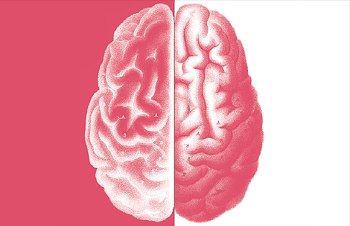
ScreenHunter_2902 Dec. 13 22.51There is an “official theory” about the nature of minds that “hails chiefly from Descartes,” wrote Gilbert Ryle, an Oxford philosopher. According to the theory, each person has a mind that is a private, inner world. It has no spatial dimensions and is not subject to laws that govern physical objects, yet it is mysteriously connected to a material body during a person’s earthly life. Ryle dubbed this “the dogma of the Ghost in the Machine.”

People have not always thought of the mind and the body in this way. Homer’s heroes are not depicted as composites that are only partly physical. Their awareness, intelligence, and other mental activities are part of their bodily lives. And although the shades of the dead lurk in the Homeric underworld, these etiolated creatures are little more than fading echoes of the living. Some later Greek philosophers explicitly stated that the soul is made of physical stuff. For Democritus, it was tiny units of solid matter. For the Stoics, it was a mixture of fire and air.

Unlike Homer and the Greek materialists, Plato did believe in something like René Descartes’ ghost in the machine. A person has an inner rational self, according to Plato, which can escape its bodily imprisonment with its powers intact. Yet Ryle was right to single out Descartes even though parts of the “official theory” can be traced to Plato. Descartes sharpened the concepts of mind and matter, crystallizing ideas that took shape in the seventeenth century and giving us the modern form of the so-called mind-body problem.

In his Meditations on First Philosophy, published in 1641, Descartes announced that he was essentially a thinking thing: “Thought…alone is inseparable from me.” There is an outer world, which includes my body, but I could still exist even if it were all destroyed. And what exactly is a thinking thing? Something that is aware. Descartes explained that by “thought” he meant “everything that is within us in such a way that we are immediately aware of it.” This included sensation, will, intellect, and imagination. Thus Descartes made consciousness the distinguishing mark of the mental.

More here.

AI-Assisted Fake Porn Is Here and We’re All Fucked

Samantha Cole at Vice:

1513018103056-Screen-Shot-2017-12-11-at-120730-PMThere’s a video of Gal Gadot having sex with her stepbrother on the internet. But it’s not really Gadot’s body, and it’s barely her own face. It’s an approximation, face-swapped to look like she’s performing in an existing incest-themed porn video.

The video was created with a machine learning algorithm, using easily accessible materials and open-source code that anyone with a working knowledge of deep learning algorithms could put together.

It's not going to fool anyone who looks closely. Sometimes the face doesn't track correctly and there's an uncanny valley effect at play, but at a glance it seems believable. It's especially striking considering that it's allegedly the work of one person—a Redditor who goes by the name 'deepfakes'—not a big special effects studio that can digitally recreate a young Princess Leia in Rogue One using CGI. Instead, deepfakes uses open-source machine learning tools like TensorFlow, which Google makes freely available to researchers, graduate students, and anyone with an interest in machine learning.

Like the Adobe tool that can make people say anything, and the Face2Face algorithm that can swap a recorded video with real-time face tracking, this new type of fake porn shows that we're on the verge of living in a world where it's trivially easy to fabricate believable videos of people doing and saying things they never did. Even having sex.

More here.

Scientific peer review: an ineffective and unworthy institution

Les Hatton and Gregory Warr in Times Higher Education:

Istock-695204718Given the entirely appropriate degree of respect that science has for data, the ongoing discussion of peer review is often surprisingly data-free and underlain by the implicit assumption that peer review – although in need of improvement – is indispensable.

The thing is, the peer review of scientific reports is not only without documented value in advancing the scientific enterprise but, in a manner that few care to acknowledge openly, primarily serves ends that are less than noble. Peer review is widely assumed to provide an imprimatur of scientific quality (and significance) for a publication, but this is clearly not the case.

While the many flaws of peer review are clearly laid out in the literature, its failure to protect the integrity of the scientific enterprise is notable. An estimated cost of irreproducible biomedical research is $28 billion (£20 billion) a year and“currently, many published research findings are false or exaggerated, and an estimated 85 per cent of research resources are wasted”, one paper found.

A prime example of the failure of peer review is the tainting of a significant segment of the biomedical literature by the use of misidentified and contaminated cell lines pointing, at best, to a culture of carelessness in cell biology research and the clear failure of peer review to discover and correct erroneous research.

There are many reasons why scientific peer review is ineffective.

More here.

The Legacy of Eric Garner: Policing Still Going Wrong

Shehryar Fazli in the Los Angeles Review of Books:

IcantbreatheIt’s worth starting with a few words about the recent controversy around Taibbi, related to a 2000 memoir, The eXile: Sex, Drugs, and Libel in the New Russia, he co-wrote with Mark Ames about their time editing an alt-weekly in Moscow during the 1990s. In one chapter, Ames described sexual harassment of female colleagues, which in the wake of the Weinstein affair has provoked fresh debate about Taibbi’s past conduct. In a late October Facebook post, after he faced questions about this while promoting the current book, Taibbi acknowledged that the behavior described in The eXile was “reprehensible” but also fictional, and denied having made “advances or sexually suggestive comments to any co-worker in any office, here or in Russia.” He said the memoir “was conceived as a giant satire” about Americans in post-Soviet Russia: “In my younger mind this sounded like a good idea, a cross of Andrew Dice Clay, The Ugly American and Charlie Hebdo. But in practice it was often stupid, cruel, gratuitous and mean-spirited.” To my knowledge, no one has accused either Taibbi or Ames of harassment.1

Taibbi’s career since The eXile has not been without controversy — a satirical 2005 New York Press essay titled “The 52 Funniest Things About the Upcoming Death of the Pope” led to his editor being fired — but in the process he’s also become the angry and eloquent writer these times need. His penchant for burlesque, like that of his Rolling Stone predecessor Hunter S. Thompson, is grounded in contempt at ruling classes and structures. Like Thompson, he can turn this contempt into powerful and elegant prose. His July 2009 essay, “The Great American Bubble Machine,” in which he memorably described Goldman Sachs as “a great vampire squid wrapped around the face of humanity, relentlessly jamming its blood funnel into anything that smells like money,” expanded our vocabulary for the Great Recession.

More here.

the writings of frank kermode

SenseofanEndingkermode-e1330564257142Sam Sacks at Open Letters Monthly:

Sir Frank Kermode once compared novels to angels. At first glance, this seems like an unfortunately saccharine proposition, inconsistent with the dignity and seriousness of a British knight, King Edward VII Professor of English Literature at Cambridge, and one of the most distinguished men of letters of the 20th century. But like all of Kermode’s ideas, it is based on a set of extraordinarily complex connections and is central to his lifelong investigation into some of the irreducible questions of literature: What is the purpose of fiction? Why do we read it?

These questions nip at the heels of all of Kermode’s books, but the comparison between angels and literature is made specifically in his evergreen study The Sense of an Ending, drawn from a series of lectures he gave at Bryn Mawr College in 1965. The year is important because the threat of nuclear annihilation lent intense clarity to Kermode’s main point: Humans, personally and collectively, are preoccupied with trying to understand their deaths. For life to have meaning, to amount to more than just a sequence of events, that meaning must be projected backwards from an ending that provides the key to interpreting everything that preceded it.

more here.

What is reading?

Hard01_3821_02Gill Partington at the LRB:

Behind the handsome 18th-century façade of The Hague’s Museum Meermanno, ‘the House of the Book’, pages are turning. Everywhere you look they are turning over, but also turning into other things: screens, data, moving image, sound, even skin. The Art of Reading: From William Kentridge to Wikipedia is not so much an exhibition of contemporary book artists as an attempt to use their work to ask what reading is. The question has increasingly exercised theorists and scholars as the printed book loses its dominance, but here the overfamiliar act is scrutinised through the lens of art.

A series of thematically arranged installations lead you to consider it from various angles: touching; seeing; remembering; concentrating; reacting. The cumulative effect makes reading sufficiently alien to leave you wondering how on earth you perform this weird feat. What does it mean to see written marks and transform them into meaning, or into speech? Does reading take place in the mind, the eye, the body, or in the digital devices on which we increasingly rely?

more here.

THE FIRST SEXUAL REVOLUTION

Sex2-1024x836Kyle Harper at First Things:

The Roman Empire that nurtured Stoic moralists such as Musonius and Epictetus was really an agglomeration of societies connected by bustling roads and busy sea-lanes. It was a sprawling, polyglot, and agrarian empire. The empire was home to a galaxy of cities—some one thousand of them, most of them smaller than their proud marble ruins might suggest. A grievously poor and unlettered peasantry constituted the silent majority, and some 10 or 15 percent of the empire’s inhabitants had the misfortune of finding themselves in bondage, as chattel slaves whose bodies could as well have been inert matter in the moral imagination of ancient philosophers. Life expectancy at birth was in the mid-twenties. The evanescence of all life turned eros into a divine blessing to be enjoyed in proper season. But the grim realities of Roman life expectancy also made reproduction urgent. Epictetus’s short list of human duties encompassed “citizenship, marriage, child production, piety to God, care of one’s parents.” Sex was a civic duty.

This was the scene onto which the Christians came loudly striding. The Christian movement’s sexual demands were not just austere or unusual. They were jolting, and deliberately so. The apostolic generation did not pour out of the Levant onto the open roads of the empire with anything like a detailed packet of sexual rules. Paul’s letters show us that Christian sexual morality was settled on the go, adapting the gospel’s searing ethic of radical love and interior purity to the realities of life in the towns of the empire.

more here.

This Begins with an Epigraph

Ed Simon in Avidly:

Montaigne-1024x535In the stone tower of his chateau in Dordogne, the sixteenth-century French writer Michel de Montaigne worked on his essays while surrounded by classical quotations painted on the oak beams of his study. Here, among the scenic vineyards within site of the Pyrenees, Montaigne had aphorisms of scholarly Horace, tragic Sophocles, introspective Lucretius, and of course the Bible, stenciled in red and green on the bare wooden joists and columns of the library. I like to think of Montaigne’s decorative fragments as a type of architectural adage, or epigraphic interior design. Indeed they served the same function that an epigraph does at the beginning of an essay or a novel, to introduce themes, spur anticipation, to pause for an initial reflection, to possibly connect the author to illustrious predecessors, and perhaps to also react against those same predecessors. But epigraphs are probably theorized about as much as wallpaper is. Indeed the epigraph to a book, if it is thought about at all, is normally simply classified as another bit of paratextual adornment that is largely unimportant. In the Great Chain of Being that constitutes what occupies our literary attention, epigraphs are much lower than titles, perhaps only a bit higher than blurbs and ISBN information. For many, focusing too much on the epigraph would be, if I am to extend my architectural metaphor, as if we stayed in the foyer rather than entering the building. But as an ornate decorative doorknocker can tell us something about the owner of a house, so to can an epigraph tell us something about a book before we cross the threshold of its entrance. Epigraphs (and decorative door-knockers) may be rarely analyzed, but neither are they incidental. Whether we’re considering epigraphs while interpreting a literary text, or we’re utilizing them in our own writing, what we need is a general theory concerning their use. And so I tentatively offer some thoughts on epigraphs here.

First, what exactly is an epigraph (and for that matter what exactly isn’t it)? The epigraph is often confused with the “epitaph” (a commemoration of the dead) or the “epithet” (normally a derogatory statement), though no doubt an enterprising writer can come up with a single example that demonstrates all three terms. From the Greek “to inscribe,” (appropriate to my earlier rhetorical conceit the epigraph has always had a bit of the architectural about it) the etymology of the very word harkens to the representative lines chiseled at the bottom of a sculpture. Someone said those lines in marble before, and so as it is with the epigraph, which is always a quotation, whether from the author of the text it precedes, another writer, or from something completely fabricated. The epigraph is a particular species of reference or allusion, or for the more academically inclined among you a type of “heteroglossia,” or a “dialogic statement.” But what purposes does the epigraph serve, this artifact that is placed like some sort of relic from a Wunderkammer upon the entrance to one’s writing?

More here.

Tuesday, December 12, 2017

Clickbaiting and the evils of Western philosophy

Massimo Pigliucci in Plato's Footnote:

11db370e-92b0-49a2-b196-af60a37cd286During the last several weeks I’ve been sparring on Twitter with Bryan van Norden, a self-described “leading scholar” of Confucianism, Daoism, and Buddhism, based in Singapore. He has written a book, just out, entitled Taking Back Philosophy: A Multicultural Manifesto, in support of which he has published a piece in Aeon magazine. It is that piece that has triggered our back and forth, which has, unfortunately, reached rare levels of unpleasantness.

The title of the Aeon article is “Why the Western Philosophical canon is xenophobic and racist,” a rare instance of vilification of an entire field and of an indiscriminate attack on every professional working within it. Is van Norden justified in his accusations? Is such an obvious clickbait the best way to foster a constructive dialogue about the problem? Let’s take a look.

First though, let me make clear that I agree with some of the substance of van Norden’s article (and, presumably, book). Philosophy departments the world over — not just in North America or Europe — should indeed be teaching as many of the varied philosophical traditions as logistically possible. Then again, that goes also for history departments, or literature, and so forth, I would think.

Second, the crucial kernel of truth in van Norden’s argument is the problem famously identified by Edward W. Said in his 1978 book, Orientalism.

More here.

The Year Kenny Loggins Ruined Christmas

Allie Brosh in Hyperbole and a Half:

Nativity51The year I learned that Christmas did not, in fact, originate as a celebration of my amazing ability to temporarily transform into a "good" child for a few weeks was the year my grandparents took me to see their church's nativity play. My dad's parents were heavily involved in their church and felt that, at six years old, it was time that I start appreciating the miracle of Jesus instead of using Christmas as an excuse to whore out my integrity for presents. Even though my parents weren't religious, they let me go to the play because it was important to my grandparents.

From my grandparents' flowery explanation and frequent use of the word "miracle," I went in expecting to be blown away by the production. Unfortunately, the church moms and the pathetic excuses for actors that they called their offspring failed to bring the characters to life in the way I had hoped. And the story just seemed to center around everyone being really impressed with Jesus and there wasn't much suspense and not a single battle scene.

I could see that the story had potential, but I was deeply disappointed by the whole experience.

By the time my grandparents dropped me off at home, I had convinced myself that I needed to take matters into my own hands and reinvent the birth of Christ so that it conformed to my expectations. My parents and I lived with my maternal grandmother and my aunt, so I would have more than enough talent to work with – all I had to do was create a compelling story line.

I walked through my front door with purpose and gathered my family members in the living room to tell them about my vision. I was going to rewrite the birth of Jesus Christ and I was going to make it POP.

More here. [Thanks to Margaret Morgan.]

AlphaZero learns chess

Albert Silver in Chess News:

69590Imagine this: you tell a computer system how the pieces move — nothing more. Then you tell it to learn to play the game. And a day later — yes, just 24 hours — it has figured it out to the level that beats the strongest programs in the world convincingly! DeepMind, the company that recently created the strongest Go program in the world, turned its attention to chess, and came up with this spectacular result.

More here.

ALABAMA HAS THE WORST POVERTY IN THE DEVELOPED WORLD, U.N. OFFICIAL SAYS

Carlos Ballesteros in Newsweek:

Gettyimages-465399024A United Nations official investigating poverty in the United States was shocked at the level of environmental degradation in some areas of rural Alabama, saying he had never seen anything like it in the developed world.

"I think it's very uncommon in the First World. This is not a sight that one normally sees. I'd have to say that I haven't seen this," Philip Alston, the U.N.'s Special Rapporteur on extreme poverty and human rights, told Connor Sheets of AL.comearlier this week as they toured a community in Butler County where "raw sewage flows from homes through exposed PVC pipes and into open trenches and pits."

The tour through Alabama's rural communities is part of a two-week investigation by the U.N. on poverty and human rights abuses in the United States. So far, U.N. investigators have visited cities and towns in California and Alabama, and will soon travel to Puerto Rico, Washington, D.C., and West Virginia.

Of particular concern to Alston are specific poverty-related issues that have surfaced across the country in recent years, such as an outbreak of hookworm in Alabama in 2017—a disease typically found in nations with substandard sanitary conditions in South Asia and sub-Saharan Africa, as reported by The Guardian.

More here.

WHY DO WE FEAR WOLVES?

Header_ESSAY_717311Erica Berry at Literary Hub:

“I have come to believe that fear is a cruelty to those who are feared,” writes Eula Biss in Notes from No Man’s Land: American Essays. When I read this, I thought of the wolf, and then I thought of the people we had turned into them, from Cotton Mather calling Native Americans “Ravenous howling Wolves” in 1689, to The New York Daily News’ headline about the Central Park “Wolf Pack” exactly 300 years later. In Songlines, Bruce Chatwin notes that wargus, the Middle Latin word for wolf, is the same as the word for “stranger,” and Harting writes that the Saxons once referred to outlaws as “wolfs-heads”—unprotected by the law and liable to be killed anywhere, like animals. In Shakespeare’s The Merchant of Venice, Gratiano references “a wolf, who hanged for human slaughter,” a line that smacks of metaphor until you read reports from medieval Germany of wolves that were dressed in human clothes, wigs, and masks before being strung up at a town gallows. The line between an evil man and an evil wolf has always been thin.

In other words: how have we tried to reconcile the evil that lies within our human communities and human hearts? We have made it strange. We have made it outlaw. We have made it a lone wolf.

more here.

Traces of Vermeer

Traces-of-vermeer-633x1024Laura Freeman at Literary Review:

Before he laid down even a dot of paint, Vermeer would have weighed, ground, burned, sifted, heated, cooled, kneaded, washed, filtered, dried and oiled his colours. Some pigments – the rare ultramarine blue made from lapis lazuli from Afghanistan, for example – had to be plunged into cold vinegar. Others – such as lead white – needed to be kept in a hut filled with horse manure. The fumes caused the lead to corrode, creating flakes of white carbonate that were scraped off by hand.

Vermeer knew how to soak old leather gloves to extract ‘gluesize’, applied as a coating to artists’ canvas. Or he might have followed the recipe for goat glue in Cennino Cennini’s painters’ manual The Craftsman’s Handbook: boiled clippings of goat muzzles, feet, sinews and skin. This was best made in January or March, in ‘great cold or high winds’, to disperse the goaty smell.

An artist had to be a chemist – and he had to have a strong stomach. He would have known, writes Jelley, ‘the useful qualities of wine, ash, urine, and saliva’. ‘Do not lick your brush or spatter your mouth with paint,’ warned Cennini. Lead white and arsenic yellow were poisonous, goat glue merely unpleasant.

more here.

Bob Dylan is a modern-day Odysseus

Anne Margaret Daniel in The Spectator:

Dylan-2‘There is only one thing in the world worse than being talked about, and that is not being talked about.’ Lord Henry Wotton said that. It is always better to read Bob Dylan than to read about him. I said that. Two new books by Dylan, and two about him, prove my point. Just out in a lovely slim hardback is Dylan’s Nobel lecture (Simon & Schuster, £14.99). Its 32 pages have already been well picked over and much written about, but Dylan’s own account of the way he took ‘folk lingo’ and ‘fundamental’ literary themes — by way of Moby-Dick, All Quiet on the Western Front and the Odyssey — to write ‘songs unlike anything anybody ever heard’ should be both read and heard. There are differences in the recorded and printed version to keep fans and Dylanologists busy, of course; is it ‘Lord Donald’ or ‘Lord Darnell’, more likely, whose ballad he invokes? A signed limited edition of the lecture can be yours for £1,900 or so.

100 Songs is a selection made not by Dylan himself but by the publisher (Simon & Schuster, £14.99). It performs the difficult feat of presenting only that number of original songs from a canon of close to six times this. Beginning with ‘Song to Woody’, written by a 19-year-old for Woody Guthrie, the dying hero he came to New York City to find in the frozen early days of 1961, and ending with four songs from Tempest (2012), the collection spans Dylan’s professional career of six decades, and counting. According to a recent interview in Harvard Magazine, Richard Thomas, the George Martin Lane professor of classics there, ‘sat down at his keyboard a couple of weeks after the announcement last fall of Dylan’s Nobel prize in literature’. He finished Why Bob Dylan Matters six months later .

More here.

Scientists ‘Inject’ Information Into Monkeys’ Brains

Carl Zimmer in The New York Times:

ZimmerWhen you drive toward an intersection, the sight of the light turning red will (or should) make you step on the brake. This action happens thanks to a chain of events inside your head. Your eyes relay signals to the visual centers in the back of your brain. After those signals get processed, they travel along a pathway to another region, the premotor cortex, where the brain plans movements. Now, imagine that you had a device implanted in your brain that could shortcut the pathway and “inject” information straight into your premotor cortex. That may sound like an outtake from “The Matrix.” But now two neuroscientists at the University of Rochester say they have managed to introduce information directly into the premotor cortex of monkeys. The researchers published the results of the experiment on Thursday in the journal Neuron. Although the research is preliminary, carried out in just two monkeys, the researchers speculated that further research might lead to brain implants for people with strokes. “You could potentially bypass the damaged areas and deliver stimulation to the premotor cortex,” said Kevin A. Mazurek, a co-author of the study. “That could be a way to bridge parts of the brain that can no longer communicate.” In order to study the premotor cortex, Dr. Mazurek and his co-author, Dr. Marc H. Schieber, trained two rhesus monkeys to play a game.

The monkeys sat in front of a panel equipped with a button, a sphere-shaped knob, a cylindrical knob, and a T-shaped handle. Each object was ringed by LED lights. If the lights around an object switched on, the monkeys had to reach out their hand to it to get a reward — in this case, a refreshing squirt of water. Each object required a particular action. If the button glowed, the monkeys had to push it. If the sphere glowed, they had to turn it. If the T-shaped handle or cylinder lit up, they had to pull it. After the monkeys learned how to play the game, Dr. Mazurek and Dr. Schieber had them play a wired version. The scientists placed 16 electrodes in each monkey’s brain, in the premotor cortex. Each time a ring of lights switched on, the electrodes transmitted a short, faint burst of electricity. The patterns varied according to which object the researchers wanted the monkeys to manipulate. As the monkeys played more rounds of the game, the rings of light dimmed. At first, the dimming caused the monkeys to make mistakes. But then their performance improved. Eventually the lights went out completely, yet the monkeys were able to use only the signals from the electrodes in their brains to pick the right object and manipulate it for the reward. And they did just as well as with the lights. This hints that the sensory regions of the brain, which process information from the environment, can be bypassed altogether. The brain can devise a response by receiving information directly, via electrodes.

More here.

Monday, December 11, 2017

Marriage on the blockchain

by Sarah Firisen

WeddingWhen I was in my early to mid twenties and starting out in my career, my grandmother repeatedly told me (and she meant it with love), that if I wasn’t careful, I’d quickly end up an old maid. The day she watched me marry a nice Jewish boy under a chuppah was truly one of the happiest days of her life. As far as she was concerned, nothing I’d achieved up to that point, undergraduate and graduate degrees, a pretty successful career for a 27 year old, nothing came close to matching the achievement of getting married. And it wasn’t just my grandmother; everything, everyone, all the messaging around me, confirmed that I had participated in an enviable, important rite of passage. Of course, when I got divorced 17 years late, I then participated in another increasingly common rite of passage.

Marrying for romantic love is a very recent human concept. Broadly speaking, in the western world at least, marriage 1.0 was about property, securing it, extending it, the inheritance of it. Marriage 2.0 became more about the sanctity of the family unit, elevating the notion of the perfect wife and mother, a Donna Reed like platonic ideal. With the sexual revolution and the rise of feminism, we moved to marriage 3.0, the marriage of equals: two working parents, paternity leave, fathers changing diapers, even stay-at-home days. How’s that working out for us? People are still marrying, according to the APA, “ In Western cultures, more than 90 percent of people marry by age 50.” However, it’s also the case that “about 40 to 50 percent of married couples in the United States divorce. The divorce rate for subsequent marriages is even higher.” Just anecdotally, I’m surprised it’s not even higher. I feel like I know fewer and fewer couples who are happy in their marriages and news about the most recent couple to split comes at a pretty fast clip. A good friend and I used to have this conversation all the time and she’d say “I really only know one couple who’ve been married for a while who I really think are genuinely happy together.” Well guess what, they’re now divorced as well.

And yet, despite the statistics, despite being surrounded by a deluge of examples of the failure of marriage as an institution, people keep doing it. Of course, the idea of “The Wedding”, the greatest day of your life, saying “Yes to the dress”, pledging to love honor and obey Mr Right till death do us part, the whole fantasy is constantly perpetuated in our culture (and not just by our Jewish grandmothers). And woman after woman, puts on a white dress and walks down that aisle complacent in the certain knowledge that HER marriage will be different. But it rarely is.

Read more »