In Search of Saul Bellow’s Montréal

Daniel Felsenthal in the Los Angeles Review of Books:

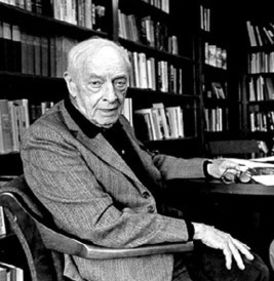
PhpThumb_generated_thumbnail (1)I leave the apartment soon after the snow begins to fall. The linoleum stairs are slick from days of muck, and in the little courtyard that separates the two wings of the housing complex, bikes are chained to the racks in defiance of winter, a blanket of white on their frames. My boyfriend, Jeff, is taking a shower. I slide across the frozen walkway. I am wearing Jeff’s hat, with ear flaps and a drawstring, as well as his gloves, which barely reach my wrists. I brought so few necessities on our trip that I can fit them easily into a small backpack. But because I was not sure what I might want to read, I carried a second piece of luggage, a black Nike duffle bag my parents gave me some years ago, which I filled with books. I have Ravelstein, the last novel by Saul Bellow, in the pocket of my puffy coat.

It is December 23, 2017. I have just read that this is the 18th birthday of the last child Saul Bellow sired, Naomi Rose, born when her father was 84. The Québecois amble on happily toward Christmas, a holiday that has probably overshadowed Naomi’s last 17 birthdays. The snowbanks flanking the path on the Rue Beaudry force pedestrians to walk in single file. Unhurried by the cold, they turn back to laugh, gesticulate, listen to one another. A police car rolls past the strip of gay bars on the Rue Sainte-Catherine. In front of the metro stop, men slouch in some indeterminate middle ground between loitering and cruising. A white-haired bundle of clothes walks past them unnoticed, changing his trajectory to intersect with mine as I walk in the opposite direction toward the car. He slides a map from somewhere in his peacoat. I realize, a moment before he begins to speak French, that his intention is to talk with me.

More here.

Humanistic Anatomy

Jackson Arn in The Point:

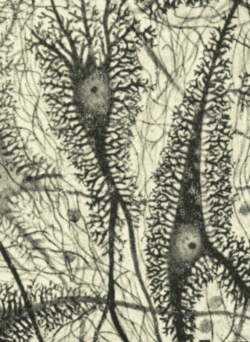
ScreenHunter_2989 Mar. 14 19.53I discovered anatomical drawing years before I could understand what I was looking at. When I was in the first grade, my grandfather took my interest in crayons and colored pencils as a sign that I might follow in his footsteps. He’s a doctor, with charmingly old-fashioned ideas about the unity of art and science, and looking back, it feels inevitable that he should have introduced me to Leonardo da Vinci.

I was too young to hold the book myself, but when he lifted it from the shelf and held it in his lap it seemed almost sacred, too complicated for any single person to comprehend. I still remember the yellowish sketches: ribs and tendons cross-hatched into three dimensions; perfectly rounded skulls that made me furious with my own clumsy hands; the fetus cleanly sliced from its mother’s womb. Mostly, I remember my envy for the man, centuries dead, who’d drawn all this so effortlessly—envy that was deeply bound up in awe and confusion and discomfort with how deeply he’d gazed into the body.

I felt similar emotions when I visited “The Beautiful Brain: The Drawings of Santiago Ramón y Cajal” at New York University’s Grey Art Gallery. Ramón y Cajal, the Spanish doctor often considered the father of modern neurology, won the 1906 Nobel Prize in Physiology or Medicine for his twenty years of research on the nervous system.

More here.

Antiguan Master Frank Walter

02-frank-walter-5.nocrop.w710.h2147483647Jerry Saltz at New York Magazine:

In 1953, Walter and the love of his life Eileen Galway set sail to London for a planned ten-year European Grand Tour: nothing but love, ambition, and promise was on the horizon. Yet by the time he died, in 2009, he had spent the last two decades of his life living alone, dirt-poor, in a shack without running water, electricity, or access to roads, on the side of an Antigua mountain. Here, rocketing between brilliant insight, wild imagination, full-on hallucination, and fits of delusional grandeur he produced an epic series of almost entirely unseen work — including a 25,000-page typed manuscript on philosophy, history, art, geology, and biology; numerous plays, poems, musical scores; and hundreds of hours of recorded audiotape. He also made over 5,000 sculptures, paintings, drawings, diagrams, cosmic charts, and heraldry designs on cardboard, wood panels, old photos, the backs of album covers, paper bags, planks, metal signs, and any surface he could scavenge. (All of this would likely have been lost were it not for art historian Barbara Paca happening upon his work in Antigua at the very end of Walter’s life, and seeing genius. In 2017, Paca oversaw Walter being named the representative of Antigua and Barbuda at the Venice Biennale.)

more here.

Muhammad Ali, The Greatest (1974)

Featured00_landscape_1064xAmy Taubin at Artforum:

EVEN IF YOU’VE SEEN WILLIAM KLEIN’S Muhammad Ali, The Greatest (1974) online or in a museum or festival, those are no substitutes for seeing it right now in a theater with an audience, just like you’ve seen Black Panther (2018). Take your kids, or any kids you know, to see a real-world hero. Muhammad Ali is one of the best films in “The Eyes of William Klein,” a retrospective at Quad Cinema of narrative and documentary features and shorts by the ninety-year-old photographer and filmmaker.

In a documentary made for the BBC (not part of this series) to coincide with the filmmaker’s 2012 retrospective at the Tate Modern, someone tells the story of how Klein got what in Muhammad Ali seemed to be almost unlimited access to the boxer in 1964–65, when he won the heavyweight championship against Sonny Liston in Louisville, Kentucky and then beat him at their rematch in Maine. Klein was flying to Miami, hoping to get a chance to shoot Ali during training, and took the only empty seat on the plane, which turned out to be next to Malcolm X. Somehow by the end of the flight the New York–born photographer of Hungarian-Jewish descent, best known for his Vogue fashion shoots as well as the street photography published in his book Life is Good & Good for You in New York: Trance Witness Revels (1956), had managed to convince Malcolm to recommend him to Ali.

more here.

on Norman Podhoretz’s memoir ‘Making It’

Malcolm_1-032218Janet Malcolm at the NYRB:

Norman Podhoretz’s memoir Making It was almost universally disliked when it came out in 1967. It struck a chord of hostility in the mid-twentieth-century literary world that was out of all proportion to the literary sins it may or may not have committed. The reviews were not just negative, but mean. In what may have been the meanest review of all, Wilfred Sheed, a prominent critic and novelist of the time, wrote:

In this mixture of complacency and agitation, he has written a book of no literary distinction whatever, pockmarked by clichés and little mock modesties and a woefully pedestrian tone…. Mediocrities from coast to coast will no doubt take Making It to their hearts and will use it for their own justification…. In the present condition of our society and the world, I cannot imagine a more feckless, silly book.

Even before the book was published it was an object of derision. Podhoretz’s friends urged him not to publish it, and his publisher shrank from it after reading the manuscript. Another publisher gamely took the book, but his gamble did not pay off. Word had spread throughout literary Manhattan about the god-awfulness of what Podhoretz had wrought. This and the reviews sealed the book’s fate. It was a total humiliating failure.

more here.

Tuesday Poem

My Husband Before the Occupation

He stumbled between his fear and his fire
I was slave but his mistress, lady

His name, a tattoo of my pain
His past, a crematorium for my poetry

Once upon a time, my husband—

My husband after the occupation

I said to my husband—
Be like a brother to me
Let’s not wet our marriage bed with even one drop of happiness

The Mujahideen, now in our house,
would smell love’s musk, our sweat

They’d behead anyone
who had both love and breath
.

by Amal Al-Jubouri
from Hagar Before the Occupation, Hagar After the Occupation
Alice James Books, 2011
translated from the Arabic by Rebecca Gayle Howell and Husam Qaisi
.

Science mourns Stephen Hawking’s death

David Castelvecchi in Nature:

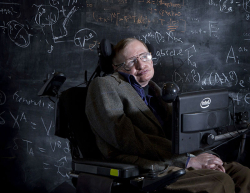
HawkStephen Hawking, one of the most influential physicists of the twentieth century and perhaps the most celebrated icon of contemporary science, has died at the age of 76. The University of Cambridge confirmed that the physicist died in the early hours of 14 March at his home in Cambridge, England. Since his early twenties, Hawking had lived with amyotrophic lateral sclerosis (ALS), a disease in which motor neurones die, leaving the brain incapable of controlling muscles. Hawking’s health had been reportedly deteriorating; just over a year ago, he was hospitalized during a trip to Rome.

His death was marked by statements from scientists around the world. Astrophysicist Neil DeGrasse Tyson, the director of the Hayden Planetarium in New York City, wrote on Twitter: "His passing has left an intellectual vacuum in his wake. But it's not empty. Think of it as a kind of vacuum energy permeating the fabric of spacetime that defies measure." One of Hawking’s former students at Cambridge, theoretical physicist Raphael Bousso, told Nature that his teacher was a brilliant physicist who also excelled at communicating science to the public. “These are two distinct skills. Stephen excelled at both.” Bousso, now at the University of California at Berkeley, recalls how he had to learn to shake off his awe and relax around Hawking. “Stephen was a joyful and lighthearted person, not to be burdened by excessively respectful and convoluted interactions,” he says. The British physicist was born in Oxford in 1942. He was diagnosed with ALS when he was 21, while a doctoral student in cosmology at the University of Cambridge. Hawking first realized that something was wrong when he went ice skating with his mother one day, he recalled in a speech on his 75th birthday celebration last year. “I fell over and had great difficulty getting up,” he told the audience. “At first I became depressed. I seemed to be getting worse very rapidly.” Although physicians initially gave him just a few years to live, his disease advanced more slowly than expected. He went on to have an active career for decades, both as a theoretical physicist and as a popularizer of science. Still, Hawking progressively lost use of most of his muscles, and for the last three decades of his life was communicating almost exclusively through a voice synthesizer.

More here.

Tuesday, March 13, 2018

Now you’re over the sticker shock, what about the art?

Morgan Meis in The Easel:

SalvatorIn 1500, Leonardo was an artist working for hire. One of his clients was Louis XII of France. The painting he had just completed was a portrait of Jesus Christ, quite possibly a commission from the French monarch. History does not record whether the completed work met with approval but, once painted, Salvator Mundi began a rather improbable journey in and out of oblivion. A couple of decades after it was completed (and by way of royal marriages) Salvator Mundi ended up on the British Isles. For the next hundred and fifty years, the painting was in the possession of various English courts and palaces. Then, in the late 18th century, the painting disappeared from the historical record. That’s the oblivion part of the story.

During the oblivion years, Leonardo’s painting fell on hard times. It was damaged and – in an attempt at restoration – painted over in such a way as to make Christ look like one of the dopier members of the Manson Family. The painting, no longer recognizable as a Leonardo, was sold at auction in 1904 – mentioned in a long CNN video on the piece that is here. It appeared at auction again in 1958, selling for the modest sum of forty-five British pounds.

It was sold again in the US in 2005 to a consortium of dealers led by Robert Simon. They got it for around $10,000. Simon, a New York fine art dealer specializing in Renaissance works, suspected it was worth much more than that, though he dared not yet dream it might be the lost Leonardo. Years of restoration work brought out the Leonardo concealed beneath the third-rate overpainting. It then sold for $75 million in 2013 and right away again for $127.5 million. Finally, just last October, Salvator Mundiwas purchased by a Saudi prince (on behalf of the Louvre Abu Dhabi) for $450.3 million dollars, making it the most expensive artwork ever sold.

More here.

How an inconspicuous slaughterhouse keeps the world’s premature babies alive

Eric Boodman in Stat News:

STAT-surfactants-final-size-1600x900On the night before his weekly trip into the slaughterhouse, Fraser Taylor stepped into the back of the truck to make sure everything was in place. The hold still smelled faintly of cow — a subtle whiff of something grassy — but the equipment inside seemed better suited to a day of spelunking through the sewers. There were hard hats and hoses and straps. There were huge conical tanks, and a valve-laden contraption that might come in handy for siphoning off the contents of pipes. The truck itself was white. It bore no sign of the company it belonged to or the strange journey it was about to take.

Taylor looked tired. It was almost 5 p.m., there was a snowstorm, and the team was already running late. Snow drifted down into the lights of the loading dock as Taylor slid the truck door shut. The roads would be terrible, just tire marks through slush instead of lanes. They had to go tonight, though. Lateness was not an option on Tuesday mornings. If they didn’t get onto the floor before the cattle started coming by, there would no way to load their equipment in, and they would get none of the precious liquid they’d come to collect.

It’s a substance that most meat processing plants hardly think about: Just another fluid in the fluid-filled business of turning an animal into a side of beef. But Taylor would panic if he saw any spill on the slaughterhouse floor — those lost drops could have saved babies’ lives.

This small firm had carefully courted slaughterhouses so that its workers could be allowed inside to suck this off-white foam out of cow lungs. Then, they purified the hell out of it, and shipped vials of it across Canada, and to India, Saudi Arabia, South Africa, Ecuador, and Iran, where it was shot into the lungs of struggling premature infants.

More here.

Advanced Creepology: Re-Reading “Lolita”

Michael Doliner in CounterPunch:

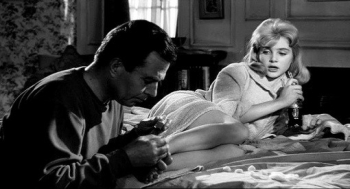
Lolita-2Creeps are big in the news these days and it is a truth universally acknowledged that all American creepiness is a Russian plot the notorious KGB agent, Vladimir Nabokov, hatched with his novel, Lolita. Humbert Humbert, it’s pseudonymous narrator, everyone agrees, is a creep. But he is not a run-of-the-mill creep. Humbert is not a creep because women find him disgusting and he tries to touch them, water-cooler style. On the contrary, he is quite “attractive” to women, that is women he finds, well… creepy. No, Humbert is a creep because he desires prepubescent “nymphets” and he is a 42-year-old man.

The novel, Lolita, with a couple of additions, is Humbert’s “confession”, the story of how he met the Hazes, mother and daughter, discovered that the girl, Dolores, was the nymphet, Lolita, then violated, imprisoned and lost her. Only through Humbert do we know anything about Lolita. Only Humbert can see Lolita. So without Humbert, Lolita would not exist. She would have remained Dolores Haze with the fate John Ray Jr. PhD., another Nabokov nom de plume reveals in his forward to Humbert’s confession. According to Ray, she dies as Mrs. Richard F. Schiller, in childbirth in Alaska. Even Mrs Richard F. Schiller would never have been mentioned without Humbert, for Ray would not have written his forward without Humbert’s confession.

More here.

David Foster Wallace and the Horror of Neuroscience

Download (17)M. M. Owen at The Millions:

This crushing weight of self-consciousness is at the heart of Oblivion’s most famous story, “Good Old Neon,” which n+1 called the collection’s “one indisputable masterpiece.” The pseudo-narrator of “Good Old Neon,” Neal, has spent his life tortured by “the fraudulence paradox”: “the more time and effort you put into trying to appear impressive or attractive to other people, the less impressive or attractive you felt inside—you were a fraud.” The pressure eventually becomes so great that Neal kills himself. The crucial point is that all of Neal’s extensive and extensively described suffering can be located in the makeup and character of the human brain, not society or culture. By the end of the story the strong impression is that Neal’s condition is but a particularly acute version of a basic human predicament. As he puts it, it’s “not as if this is an incredibly rare or obscure type of personality.” In the modern neuroscientific paradigm, Neal’s suspicion that “in reality I actually seemed to have no true inner self” is absolutely correct. There is really nothing outlandish about Neal’s fears; within Oblivion’s neuropessimism, they are simple truisms. We do experience time poorly; language is in many ways a weak tool. The same goes for his fear that he is “unable to love:” from a hard Darwinian viewpoint, we are all unable to love, really—or more accurately, what we think we are doing when we love is actually not loving at all as we understand that word. Neal recognizes this himself: “we are all basically just instruments or expressions of our evolutionary drives, which are themselves the expressions of forces that are infinitely larger and more important than we are.”

more here.

Why you should give money directly and unconditionally to homeless people

Gettyimages-631608752Matt Broomfield at The New Statesman:

Don’t just give to people who ask you directly, but to the guy with his head in his hands and a Styrofoam cup on the ground in front of him. Give to the woman who’s blind drunk. Give to the guy with meth-rotted teeth. Give to the spice addict who can’t look you in the eye.

Many street beggars are addicts, yes. Do addicts not deserve food? Wouldn’t you want to drink if you were in their position? Don’t you get drunk every weekend to cope with work stress anyway? Who are you to tell them what to do with their bodies?

As the founder of User Voice, a charity led and staffed by former homeless addicts, says: “If your money funds the final hit, accept that the person would rather be dead. If your act of kindness makes him wake up the next morning and decide to change his life, that’s nice but not your business either.”

Of course, it is true that your drinking habit and theirs are fundamentally different. Addiction is rooted in material circumstance – alcohol is the obvious example, but think how many skiing accidents end in courses of opiates far stronger than anything you’d find on the street without any long-term compulsion developing. It can only be tackled by raising people out of poverty, and a brute-force severing of cash flow is not going to starve people into seeking help from authorities they know will not, or cannot, help them.

more here.

#MeToo, Said the Shulamite

Gustave_Moreau_-_Song_of_Songs_(Cantique_des_Cantiques)_-_Google_Art_ProjectOri Weisberg at Moment:

The shift of #MeToo into #TimesUp suggests that we moderns should long since have eradicated sexual abuse and harassment, consigning them to a barbaric past. Their endurance is indeed beyond frustrating. But while some attribute them to an interruption of progress, to the fact that we have not reached a utopian modernity, others argue that modernity itself has prolonged these behaviors. They are seen as products of the sexual revolution, which must be reversed.

Yet both approaches are mistaken. Neither modernity nor tradition have, in and of themselves, offered solutions to sexual harassment and violence. In fact, the biblical Song of Songs, one of the oldest extant love poems, can be read as an extended protest against the sexual oppression of women. Since ancient times, the struggle against it has required the voices of women who can speak without shame about their own desire, their experiences of violation and their rights of refusal as full-fledged humans.

The central figure of Song of Songs is an unnamed young woman, referred to variously including as “the Shulamite,” who asserts her sexual and emotional agency while others attempt to control her.

more here.

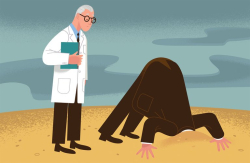
Ignoring Science at Our Peril

Jane Brody in The New York Times:

ManIgnore the warnings of scientists at your peril. That is a very valuable lesson our nation can learn from a horrific weather-related tragedy that befell London in 1952, bathing the city in toxic smog that claimed the lives of thousands of people. Had London acted as had been suggested after a nearly identical disaster struck Donora, Pa., four years earlier, many deaths could have been avoided. The yellow-brown “killer fog,” as it came to be called, reduced visibility to two feet. Thousands of tons of sulfurous coal smoke and diesel fumes were trapped over a 30-mile area by a cold, moist temperature inversion, covering London with a blanket of poisonous air. In less than a week, the fog killed about 4,000 people, and another 8,000 died prematurely in the months that followed. British scientists had been warning of such a disaster, but alas, the protective measures they suggested were approved by lawmakers but never implemented. To make matters worse, the government ignored its meteorologists’ warning that an extraordinarily dense fog was about to descend on London.

It took nearly four years for Parliament to pass the Clean Air Act of 1956 that restricted the burning of coal in urban areas and helped homeowners convert from coal to less harmful ways to heat their homes. The parallels of this catastrophic weather event to current concerns about climate change are hard to ignore. Already as the world’s climate warms, there has been an increase in devastating droughts and life- and property-destroying wildfires, mudslides and floods.

All the while the polar and Arctic ice caps are melting and, despite dire warnings from highly reputable scientists, the current administration is taking little action to protect its citizens from future climactic disasters that scientists say are sure to come. Instead, there has been a push to bring back coal and rescind regulatory measures that helped to clean the air and water of pollutants. Likewise, a loosening of regulations and appointments of agency administrators with strong ties to the industries they oversee threaten the safety and healthfulness of the foods and beverages we consume and feed to our most vulnerable: children, the elderly and those with compromised immunity. Agencies tasked with protecting public health are under fire and working with diminished resources.

More here.

Monday, March 12, 2018

Have kids or do not have kids, but let’s not blame climate change

by Liam Heneghan

KClimateHeneghan2017A writer’s path is paved with the flagstones of their unread essays. Years ago I wrote an essay entitled “Soil and Myself” for the collection Irish Spirit (Wolfhound, 2001). I was attempting there to come to grips with my youthful loss of religious faith and my growing enchantment with the earth as a source of inspiration and solace. This spiritual crisis occurred in the early eighties, an era when the dimensions of our global environmental problems were becoming apparent. I fell in love with a damaged world.

My turning to nature was a physical one to be sure, but my late teen years were also a time of reverie inspired by those Irish writers that cared about both people and wild landscapes: Liam O’Flaherty, W.B. Yeats, and Lady Gregory, for example, and by all the earthy shenanigans recorded in the Irish mythological cycles. An apposite ratio of nature hikes and of literary contemplation provided me a foundation for optimistic living.

“Soil and Myself” was published, the world turned, and I moved along as writers are wont to do. Several years later, I got a letter from a reader—perhaps the essay's only one—who remarked on how the piece had moved her. She was getting on, she wrote, and was latterly attempting to draw consolation from the same sources I had. As a codicil, she noted that she had elected not to have children because of her worry about nuclear armageddon. Why bring a child into this damned world? She concluded wistfully that had she had a child that child would be my age now. By the time I got that letter I had survived nearly four decades without facing down any real calamities.

This small but arresting exchange came to mind on encountering several discussions that assume a bleak environmental future. For example, a recent Onion headline quips dolefully “Sighing, Resigned Climate Scientists Say to Just Enjoy Next 20 Years As Much As You Can.” Less drolly, the “Climate Change and Life Events” app allows users map their future against projections of future global temperatures. The future will not look like the past. The New York Times reports on some couples’ deliberations about their reproductive future in the light of such realities: “No Children Because Of Climate Change? Some People Are Considering It” (New York Times, Feb 5, 2018). A new generation considers the prospects of raising children in perilous times. Unlike nuclear annihilation, which, so far, has failed to materialize, the bombs of climate change, so to speak, have already left their bunkers, though there is some uncertainty about their yield. Facing an uncertain environmental future, and occupying a planet that horrifyingly may be unable to sustain its burgeoning human population, determining to have, or not have, a child is a fraught decision.

Read more »

Monday Poem

I and I
One says to the other, no man sees my face and lives —Bob Dylan

When I confront a human being as my Thou and speak the basic word I-Thou to him, then he is no thing among things nor does he consist of things. Neighborless and seamless, he is You and fills the firmament.….—Martin Buber
____________________________________________________

Luminous Debris

…… through the debris of ages
…… too deep to grasp I spin
but you are with me in this thing so vast
that distances lose meaning
and time is neither slow nor fast

…… some spend years slicing its flesh
thin as shaved salmon into membranes
so fine the fabric of universes pass
without tangling warp or woof
……(though certainty snaps
….. with the slightest look)

…… others count and rout particles that nest
without rest:
………………….atomic bábushkaMatryoshkas
of prosaic electricity
in ghost orbits
…………………… being like us,
both here and there in bodymind
ensconced

……………… while others
fire duet lasers to catch ageless hints
of enormous pebbles that once dropped
into a ballooning lake of spacetime
stalking gravity waves of bygone quakes
like Greeks on a hill hailing Helios,
marking arrivals, noting,
watching his horse and chariot
drop with precision
blazing
into a wine-dark sea
leaving a jetblack wake

…… but you are with me
in this vast shadow

i and thou among receding sparks

luminous debris
…… under eternal sky
…… you and me
…… i and i
.

Jim Culleny
3/9/18

Men and Intimacy, Physical and Conversational

by Samir Chopra

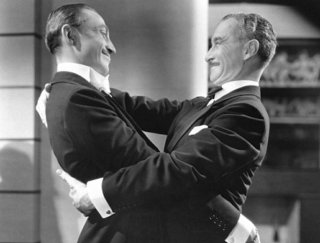
ScreenHunter_2988 Mar. 12 09.23A couple of years ago, I participated in a radio discussion on ‘Male Intimacy,’ hosted by Natasha Mitchell on the Australian Broadcasting Corporation’s show Life Matters. Natasha had invited me on to offer the ‘alternative perspective’ of an immigrant who had lived in India, the US, and briefly, in Australia. (Audio is available; I go on at the 20 minute mark; the whole show is worth a listen.)

While on air, when speaking about the cross-cultural differences in male intimacy I had experienced in my three ‘homes,’ I noted that growing up in India meant being socialized in a domain of relationships with men where physical contact was relatively unproblematic: I put my arms around my male friends’ shoulders, did not rigorously negotiate inter-personal physical space, and demonstrated affection and companionship through a variety of physical gestures—including hugs. (Avuncular affection almost always took these forms.) As the time approached for my move to the US, I was warned—by those Indians who had preceded me and were now already resident in the US—to not expect such ‘intimate’ contact when I crossed the waters, to desist from such overt displays of friendship and affection in my relationships with American men. Those warnings spoke to a culture that set much store by the careful maintenance of a physical and emotional space between its male members; ‘keep your distance’ applied to many dimensions of social interactions. I took these warnings to heart. There was no reason to disbelieve them; moreover, I was keen to ‘fit in,’ to not ‘stick out,’ to not take the risk of being called a ‘homo’ or a ‘fag’—as seemed to be the fate of those who transgressed in this domain. This was the 1980s; America seemed—from a distance—to be suffering a national crisis of masculine insecurity. I suffered from my own variant of it.

So the manner of my relationships with men changed once I moved to the US; besides the obvious psychosocial distance pertaining to matters of familial and filial structure, and political and cultural tastes and inclinations, I found men in my new home structured and conducted their relationships and friendships with each other quite differently. American men were not physically demonstrative in their claims of friendship; they did not hug their male friends; they did not put arms around male friends; they carefully established the requisite physical space between themselves and their friends. Immigration induced many changes in the qualitative and quantitative nature of my personal and social relationships with men and women alike; the parameters of male relationships in my new home denied me a very particular—and much desired when missed—kind of emotional sustenance.

Read more »