
Arlene Weintraub in Forbes:
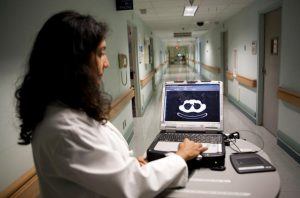 Artificial intelligence (AI) is being embraced by hospitals and other healthcare organizations, which are using the technology to do everything from interpreting CT scans to predicting which patients are most likely to suffer debilitating falls while being treated. Electronic medical records are scoured and run through algorithms designed to help doctors pick the best cancer treatments based on the mutations in patients’ tumors, for example, or to predict their likelihood to respond well to a treatment regimen based on past experiences of similar patients. But do algorithms, robots and machine learning cross ethical boundaries in healthcare? A group of physicians out of Stanford University contend that AI does raise ethical challenges that healthcare leaders must anticipate and deal with before they embrace this technology. “Remaining ignorant about the construction of machine-learning systems or allowing them to be constructed as black boxes could lead to ethically problematic outcomes,” they wrote in an editorial published this week in the New England Journal of Medicine.
Their warning was timely, considering developments such as this one, announced today with a rather breathless headline: “Smart software can diagnose prostate cancer as well as a pathologist.” A group of researchers from Drum Tower Hospital in Nanjing, China, who are attending the European Association of Urology congress in Copenhagen, said they have developed an AI system that can identify prostate cancer from human tissue samples and classify each case according to how malignant the cancer is. “This may be very useful in some areas where there is a lack of trained pathologists. Like all automation, this will lead to a lesser reliance on human expertise,” said an Italian researcher who reviewed the work of the Chinese team, in a statement.
Few medical experts expect AI to completely replace doctors—at least not in the short term. Instead machine learning is being used mostly for “decision support,” to help guide physicians towards accurate diagnoses and tailored treatment plans. These can be quite useful. Forbes contributor Robert Pearl, a professor at Stanford, wrote earlier this week about an AI application developed by Permanente Medical Group that uses data compiled from 650,000 hospital patients to identify which people admitted to hospitals today are at risk of needing intensive care. The system alerts physicians to the at-risk patients so they can try to intervene before patients end up in the ICU.
More here.
 Artificial Intelligence (AI) is nothing if not controversial. Whether the subject of scrutiny behind hair-raising advances in sex robots which was heavily
 D
D BLVR: Yeah, and it made me wonder about your dreams—do you have any recurring dreams?
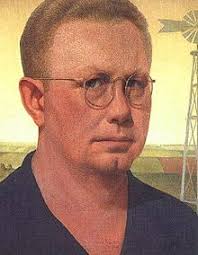 Grant Wood wanted to make art American. As with so many attempts to make things American, what this meant was distilling a particular region into the essence of the United States. New England and the Deep South are strong contenders, but the Midwest is perhaps the most plausibly all-American region. The visual and cultural tropes of the Midwest are the commonplaces of American kitsch—corn fields, barns, apple pie, churches, Main Street. By choosing to remain in his native Iowa, Wood was well positioned to do what he wanted, without having to forego success. The current Wood retrospective on view at the Whitney (closing June 10th) is hardly the first time his work has received sustained attention from the highest levels of the American art world. The Whitney itself held its last retrospective in 1983, and during Wood’s lifetime he was arguably the most famous artist in the United States. The current show acknowledges that one of Wood’s paintings dominates all other. The exhibition simply uses the name of American Gothic, adding, appropriately, “and other fables” after the obligatory colon.
 Asad Raza: In 2015, Nicola Lees invited me to do something for the Ljubljana Biennial, and I had a thought of the school, especially experimental pedagogy, as an interesting thing. I asked Jeff and Graham to collaborate on this, as they probably know the subject much, much better than I do. But I was interested in making some formal conditions, let’s say, under which an experimental school could flourish inside an exhibition. I think of these as sketches for an institution that would be up to the 21st century somehow, a multivalent cultural institution that could do exhibitions, that would have education, but the education wouldn’t function in the way that education departments do right now, you know?
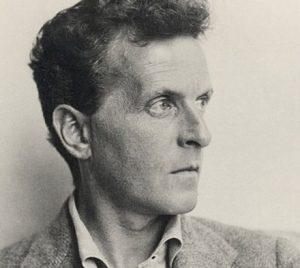 If you bring together two enigmas, do you get a bigger enigma, or do they cancel each other out, like multiplied negative numbers, to produce clarity? The latter, I hope, as I take on Wittgenstein and mysticism.
 As misinformation weapons go, fake news is sort of like a cannon: noisy and provocative. Innuendo is like a dirty bomb — invisible, toxic and lingering. I became more aware of the misleading uses of innuendo after I spoke with linguistics professor Andrew Kehler during the run-up to the 2016 election.
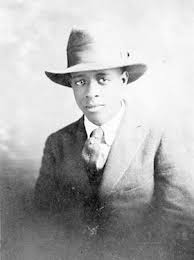 After graduation, Thurman settled in Harlem in the 1920s and became a leading (and legendary) figure in the Harlem Renaissance—part of the “niggerati,” as Zora Neale Hurston famously called this influential group of intellectuals and artists. Working with A. Philip Randolph, Thurman became an editor at The Messenger, a political and literary journal, and in 1926 he co-founded, with Hurston, Hughes, Aaron Douglas, Gwendolyn Bennett, and Bruce Nugent, a bold and innovative publication called Fire!!, which featured the work of younger artists but was disliked by the black middle class because of its candid presentation of black life. In 1929, Thurman collaborated with the white playwright William Jourdan Rapp to write and produce Harlem, which ran for 93 performances and became “the first successful play written entirely or in part by a Negro to appear on Broadway.” Thurman believed that African Americans could overcome racial barriers, but he experienced countless incidents of racism during his short life.
 What would
 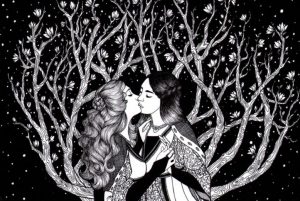 Refashioning history to include its countless heroines is essential work, long overdue. But what of the future? Will these books, as the introduction to Herstory implores, truly encourage young girls to “take inspiration from these . . . amazing women and girls and shake things up!”? Perhaps. Last year, Science magazine published research investigating the age at which girls begin to think that they are less intellectually brilliant than boys. The study involved reading two stories to children between the ages of five and seven. One, they explained, was about a “really, really smart” person; the other, a “really, really nice” one. Afterwards, the children were asked which was about a girl, and which about a boy. At five, the boys were sure the “really, really smart” character was a boy, the girls equally adamant it was a girl. By six, however, something had changed. In the space of twelve months, the girls had become 20 per cent less likely to think that a clever character could share their gender. According to Dario Cvencek, a research scientist at the University of Washington, the results would be more depressing still had the hero of the book been a mathematician. Children absorb the gender prejudices on display in their environments and reading matter from the age of around five, he says – especially the idea that girls don’t do numbers. The stereotypes portrayed in their reading material become their own stereotypes and, worse still, the limits of their ambitions. The most powerful way to combat this, as the psychologist Nilanjana Dasgupta has found, is through providing successful female role models to small girls before the disease sets in, as a form of “stereotype inoculation”.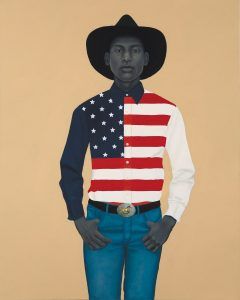
 It is not uncommon that I lie about what I do for a living. When meeting strangers, basic introductions quickly turn into conversational quicksand for me. Whether posed for identification, categorization, assessment of social status, or to fill an empty conversation, inquiries about work are difficult to avoid. I know that such questions are innocent attempts to situate me somewhere in the atmosphere; we use the occupational compass to direct us toward an identifiable point in each other’s lives. I know this, and yet the job question, when it comes, often has me squirming for answers. My eyes dart away from the pair in front of me expecting a straightforward reply.
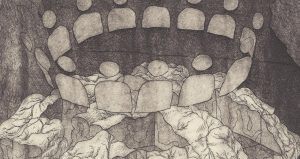 A few months into a cushy postdoctoral fellowship at Princeton, where the walls were a soothing yellow and poached salmon was a staple, it dawned on me that I could reasonably be considered an arsehole. This wasn’t the first time the thought had occurred to me: after all, I am the kind of Brit who insists on the difference between a donkey, otherwise known as an ass, and a backside, otherwise known as an arse. But on this occasion my reflection was prompted not by looking in the mirror or by hearing a recording of my voice but by the experience of being a philosopher in a non-philosophical setting. Calling yourself a philosopher already makes you sound a bit of an arse, but the fact remains that I have spent most of my professional life studying, discussing, writing and teaching philosophy—and it is this, I submit, that has made me liable to appear a right royal arsehole.
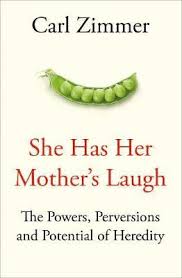 Few subjects have afforded more room for doubt, or caused more harm through false certainty, than heredity. In She Has Her Mother’s Laugh, an illuminating survey of the concept through history, science writer Carl Zimmer shows that scientists have often clung to travesties of the truth — and that we are still in danger of doing so.
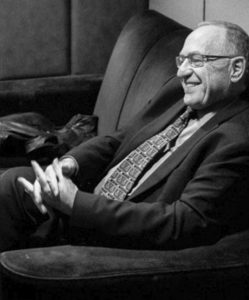 If you wanted to feel the full force of the intellectual whirlpool that is American politics in 2018, the place to go on April 2 was the Village Underground, a nightclub beneath West 3rd Street, where Alan Dershowitz, the longtime Harvard Law professor and civil liberties lion, was debating the future of American democracy on the side of President Donald Trump.
 Of course, I am happy for those I have never met. Prince Henry (Harry), who lost his mother at twelve—lost her to monarchy, and the occasionally murderous intrusions that now define it—found a woman to hold him and, I think, he laid his heart before her. She was touched by him—Harry is a lonely prince, a semi-mythical being—and she picked it up. It looked real. I hope it is real, even as I resent having an opinion on a stranger’s love. That this was televised in an event as emotionally grasping as the funeral that incited the very need we thought we saw sated on Saturday should be obvious, but it was not mentioned. It should be the final, impolite word on the royal wedding.