
Robin Varghese in Foreign Affairs [free registration required to read]:
 After nearly every economic downturn, voices appear suggesting that Marx was right to predict that the system would eventually destroy itself. Today, however, the problem is not a sudden crisis of capitalism but its normal workings, which in recent decades have revived pathologies that the developed world seemed to have left behind.
Since 1967, median household income in the United States, adjusted for inflation, has stagnated for the bottom 60 percent of the population, even as wealth and income for the richest Americans have soared. Changes in Europe, although less stark, point in the same direction. Corporate profits are at their highest levels since the 1960s, yet corporations are increasingly choosing to save those profits rather than invest them, further hurting productivity and wages. And recently, these changes have been accompanied by a hollowing out of democracy and its replacement with technocratic rule by globalized elites.
Mainstream theorists tend to see these developments as a puzzling departure from the promises of capitalism, but they would not have surprised Marx. He predicted that capitalism’s internal logic would over time lead to rising inequality, chronic unemployment and underemployment, stagnant wages, the dominance of large, powerful firms, and the creation of an entrenched elite whose power would act as a barrier to social progress. Eventually, the combined weight of these problems would spark a general crisis, ending in revolution.
Marx believed the revolution would come in the most advanced capitalist economies. Instead, it came in less developed ones, such as Russia and China, where communism ushered in authoritarian government and economic stagnation. During the middle of the twentieth century, meanwhile, the rich countries of Western Europe and the United States learned to manage, for a time, the instability and inequality that had characterized capitalism in Marx’s day. Together, these trends discredited Marx’s ideas in the eyes of many.
More here.
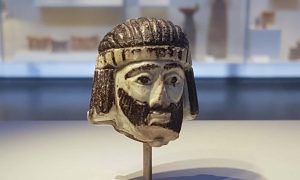 An enigmatic sculpture of a king’s head dating back nearly 3,000 years has left researchers guessing at whose face it depicts.
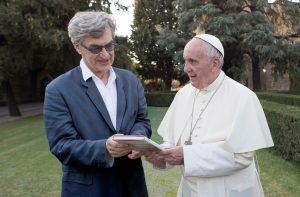 And then again this was, as filmmaking goes, not so different, at least in the impulse behind it, from some of my other films, because my documentaries don’t come out of a critical distance. Other filmmakers make films about something they want to expose or something they want to explore, or something that’s wrong with the world. My documentaries are all about things that I love and they show my affection, my desire to share this with as many people as possible, and that was definitely the case with Pope Francis. I loved this man and what he stood for, so anybody who expects a film that’s critical of the church or its policies is looking for the wrong movie. Already when I was a young film critic (I started as a film critic when I was a student and I earned money for my studies by writing criticism about movies) I refused to write about films I didn’t like. I thought it was not worth my time, or anybody’s time. I really only wrote about films I liked. And in a way that continued in my filmmaking career. I can’t even work with actors I don’t like. I don’t know what to do with them. I don’t know how to film them.
 Hatherley has a remarkable set of skills: he has the architectural, historical and political knowledge and the literary gifts to make him a worthy successor to the late, great and now rediscovered Ian Nairn – and occasionally some of the passion, too. Unfortunately, it all comes together here only in fits and starts. The main reason for that becomes clear at the end, in the acknowledgements, where he admits that the book is ‘essentially an anthology’. The majority of the chapters – portraits of individual cities – started as articles, published elsewhere, mostly in the Architects’ Journal.
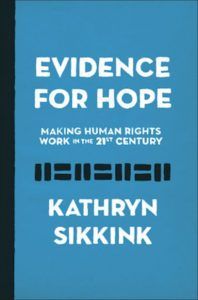 If human rights are to survive our fraught present and endure in the future, it is incumbent upon scholars to adopt a far more critical stance toward the study of human rights than they have so far been willing to do. Of course, academics have responded to the urgency of this crisis in a myriad of ways, and some had warned of the coming catastrophe from the politics of human rights. Despite the assault on human rights, some scholars cling to an uplifting and triumphalist story of the rise of human rights, one that leaves us both unable to understand the present and incapable of navigating the future. In this myth, humanity’s history is rendered as a slow but steady account of progress that will culminate in an Elysium of human rights. Far from helping us make sense of the challenges of our confusing present of human rights, these quixotic quests ransack the past in search of feel-good narratives of moral ascent and stirring stories of “hope” in the future — as if the misrepresentation of the past will magically bring about a brighter future in the name of human rights.
 Here is a novel that could so easily have been loud. It is set among large events: the fight for Indian independence and the second world war. It features characters from history who enter the lives of the novel’s fictional characters, often to dramatic effect – the poet
  Earlier this week,
  In a famous Hindu parable, three blind men encounter an elephant for the first time and try to describe it, each touching a different part. “An elephant is like a snake,” says one, grasping the trunk. “Nonsense; an elephant is a fan,” says another, who holds an ear. “A tree trunk,” insists a third, feeling his way around a leg.
 Scheib and her colleagues
  Claire Chambers (CC): In a way this book goes all the way back to the mid-1990s when I’d had a gap year in which I taught English to schoolchildren in Pakistan. I’d been motivated to go to Pakistan because of my experiences growing up in Leeds with many British-Asian friends. I first stayed briefly in a north-western city called Mardan, which was quite conservative. After leaving Mardan, my friend and I went to what seemed to us to be the big smoke of nearby Peshawar, the capital of what was then called the North-West Frontier Province, now Khyber Pakhtunkhwa. This was in 1993−94, not long after Osama bin Laden had left the city in 1990, having made it his home for eight years (Rashid
  During the romantic 19th century, even at the beginning of the 20th, art legends were born in the attics and garrets, preferably Parisian. During the more practical decades of the late 20th century, artists relocated to much more prosaic places, such as the smoke-filled cellars of Liverpool (The Beatles) or the garages and student dormitories of the American West Coast, populated by computer magicians and IT wizards. The great legend of the Lithuanian theatre was born in a warehouse in Vilnius, more specifically, in the section of the Youth Theatre used both as a workshop and a warehouse in which stage decorations were stored. Nowadays, the building – a newly redecorated palace, originally built during the 15th and 17th centuries by the Radziwiłł family – is difficult to recognize and hosts the Museum of Lithuanian Theatre, Music and Cinema. In the 1970s, it was a dilapidated structure, despite the fancy name – Experimental Stage of the Youth Theatre – given to one of its decrepit halls. It was this stage, the most modest among the Lithuanian theatres of the time, that was chosen by Eimuntas Nekrošius for his debut as a theatre director in 1977. Then a student of GITIS, the Lunacharsky State Institute for Theatre Arts in Moscow (renamed the Russian Institute of Theatre Arts in 1991), Nekrošius directed his diploma performance A Taste of Honey (Medaus skonis) with the troupe of the Youth Theatre.
 “These instructions enact a mimetic play with traditional ‘How-To’ manuals, which allow children to go through the process of making in a systematic way, adhering to tradition, or picking up a vernacular of handiwork,” Gallagher wrote, by way of introducing the book associated with the exhibition, which he characterizes as “a guide for emerging artists, to shepherd them through the process of making.” He added: “This prosthetic and hereditary knowledge, what we gain from those before us in their absence, is the foundation of how we understand the spaces we occupy.”
 When William Blake was four years old, he saw God press his head up against the window; the poor boy was set “a-screaming”. “Sauntering along” a few years later, Blake saw – and not for the last time – “a tree filled with angels, bright angelic wings bespangling every bough like stars”. Just before he died, in 1827, “his countenance became fair, his eyes brightened, and he burst out into singing of the things he saw in heaven”. Such was the visionary life of the writer and artist, as recorded by the fond few who had paid him any attention.
 Chemotherapy became the standard treatment for lung cancer in the twentieth century