
” The sickening images of children cruelly separated from their parents
and held in cages as a result of Attorney General Jeff Sessions’ policy of
‘zero-tolerance’ will leave an indelible stain on the reputation of the USA…”
………………………………………………………………. —Amnesty International
Voyage
Imagine you lived
in a ravaged place, your house
shaking with the loud calls of rage
at uncontrollable forces, the calls
spilling into the street. And now
the house is gone, and during the long fire
that swept through the city
as a Hand dusts a table,
you were taken from the destruction and death
of those who knew you, and you labor among another people,
now, in their language, who feed you
from their bowls and also teach you,
on the leaf-strewn ground, their dancing. Still,
you cannot go home. When you look at the grasses here,
they are not yours; when you rest your forehead on the table
or run your hand over the bedding
that you lay in last night
with the one who holds you
wildly, carefully, these are not yours. It is possible that, if you
displease,
if your voice does not lilt, anything could be taken from you.
Imagine that when you kneel down in the sand by the river
you see instead the ashes and bone chips
that are what’s left of your people now, and when you try to
hold
a handful to you, even that is merely the luminous green
river silt. You cannot remember their voices
under the river of other voices.
How then are you to sing in a strange land?
by Sharon Kraus
from Strange Land
University Press of Florida, 2001

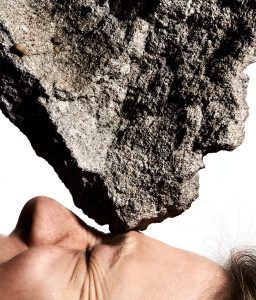 To be clear: A migraine is not a headache, and people with migraines don’t like their condition being called one. It’s not that headaches aren’t part of a migraine: They are. But a headache is a single symptom of a multifaceted neurological disease — one that includes loss of vision, intense nausea, and sensitivity to light and sound. And those are just the common side effects. Some sufferers find themselves yawning compulsively, slurring their speech, and losing sensation on one side of the body. Some migraineurs (yes, that is the technically accurate moniker for migraine sufferers) start seeing big things as small — a side effect dubbed “Alice in Wonderland syndrome” by doctors. Nonetheless, for as long as they have existed, migraines have been trivialized as headaches or dismissed altogether. Which is clear when you look at the treatments available: Almost every drug used between 1550 B.C. and today has been a repurposed one. Poultices of opium and honey, botox, anti-convulsant drugs, antidepressants, beta blockers — drugs whose efficacy was not intended but stumbled upon. Triptan, a class of vessel constrictors created to abort and lessen the effects of (not prevent) attacks at their onset was released in 1991. It was the only class of drug created specifically for migraines — that is, until now. On May 17, a preventative drug called Aimovig, 30 years in the making, gained FDA approval; it’s a monthly shot that modulates patients’ levels of CGRP, a neurotransmitter whose levels rise during migraine attacks. This means that it is days away from getting in the hands (or arms — it’s an injectable) of migraineurs. At at least for those who are able to pay full price: The drug costs $6,900 a year, or $575 per treatment.
 Regular readers know (recall) that
 “We cured alcoholism in every rat we ever tried,” says Heilig, who is now at Linköping University in Sweden. “And at the end of every paper, we wrote: This will lead to an exciting treatment. But everything we took from these animal models to the clinic failed. We needed to go back to the drawing board.”
 Anyone with a pundit’s opinion about the election in Turkey seemed to feel that it was, in some way or other, the ‘most important’ one in.. well.. in a generation, in modern times, possibly ever. Yet it was hardly as pivotal as the referendum a year ago when Recep Tayyip Erdogan barely scraped a majority to move all executive power to the Presidency where he presided. After that, his triumph in the recent June 24th balloting was a foregone conclusion. Because we know this much about populist authoritarians hiding behind the legitimacy of plebiscites: they never lose. They don’t leave things to chance. They orchestrate the media, the opinion polls, the electoral commissions, the permits for rallies, political party funders, last-minute money printing, naturalization of foreigners, and the police who arrest opposition candidates.
 “The idea of death, the fear of it, haunts the human animal like nothing else,” wrote Earnest Becker in his book,
 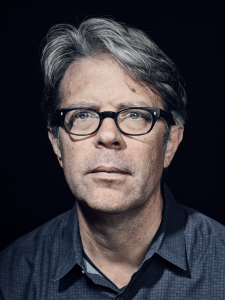 Jonathan Franzen now lives in a humble, perfectly nice two-story house in Santa Cruz, Calif., on a street that looks exactly like a lot of other streets in America and that, save for a few cosmetic choices, looks exactly like every other house on the block. Santa Cruz, he says, is a “little pocket of the ’70s that persisted.” Inside his house, there is art of birds — paintings and drawings and figurines. Outside, in the back, there are actual birds, and a small patio, with a four-person wrought-iron dining set, and beyond that, a shock: a vast, deep ravine, which you would never guess existed behind the homes on such a same-looking street, but there it is. There is so much depth and flora to it, so much nature, so many birds — whose species Franzen names as they whiz by our faces — that you almost don’t notice the ocean beyond.
 White House Press Secretary Sarah Sanders went to have dinner
 Early on in the study of quantum computers, computer scientists posed a question whose answer, they knew, would reveal something deep about the power of these futuristic machines. Twenty-five years later, it’s been all but solved. In a paper
  I became aware of his utter lack of vanity. He never adjusted his hair or gave a damn about makeup or a lighting setup.
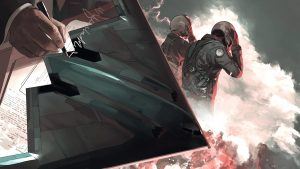 The B-2 stealth bomber is the world’s most exotic strategic aircraft, a subsonic flying wing meant to be difficult for air defenses to detect—whether by radar or other means—yet capable of carrying nearly the same payload as the massive B-52. It came into service in the late 1990s primarily for use in a potential nuclear war with the Soviet Union, and clearly as a first-strike weapon rather than a retaliatory one. First-strike weapons have destabilizing, not deterrent, effects. It is probably just as well that the stealth bomber was not quite as stealthy as it was meant to be, and was so expensive—at $2.1 billion each—that only 21 were built before Congress refused to pay for more. Nineteen of them are now stationed close to the geographic center of the contiguous United States, in the desolate farmland of central Missouri, at Whiteman Air Force Base. They are part of the 509th Bomb Wing, and until recently were commanded by Brigadier General Paul W. Tibbets IV, whose grandfather dropped the atomic bomb on Hiroshima. B-2 bombers are still primarily regarded as a nuclear-delivery system, meaning that their crews are by selection the sort of men and women capable of defining success as a precisely flown sortie at the outset of mass annihilation. No one should doubt that, if given the order to launch a nuclear attack, these crews would carry it out. In the meantime, they have occasionally flown missions of a different sort—make-work projects such as saber rattling over the Korean peninsula, and the opening salvos in Serbia, Afghanistan, and Iraq—to tactical advantage without American discomfort.
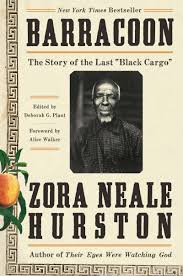 Anne Enright recently said of the Irish-American writer Maeve Brennan: “[she] didn’t have to be a woman to be forgotten, but it surely helped”. The same could be said of the African-American writer Zora Neale Hurston (1891-1960), whose extraordinary fictional and anthropological works of the 1930s disappeared into obscurity until revived by feminist scholars in the 1970s. Alongside the better-remembered male writers Langston Hughes and Alain Locke, Hurston was a significant figure of the Harlem Renaissance, though her work was less concerned with the urban “New Negro” than with the rural black subject whose experience she documented alongside her mentor, Franz Boaz, the founder of American anthropology. Her ethnographic scholarship considered the chains that link African, Caribbean, and African-American culture, and she frequently turned to her own home town of Eatonville, Florida for material. She is best-known, however, for her fiction, in particular for her remarkable 1937 novel Their Eyes Were Watching God, which tells the tale of Janie Crawford, an African-American woman born in the aftermath of slavery who must contend not only with white oppression but with black male dominance as well.
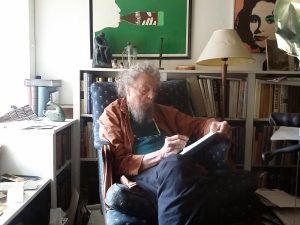 He worked hard and now can rest. He was one of America’s best-loved poets and won all the literary awards. At eighty-six, he had his first New York Times best seller, with Essays After Eighty, celebrating the indignities of growing old. I once gave him a terrible review, and we didn’t speak for years. “I know I was pissed at you for ten or twelve years,” he wrote. “I take it back. You are good.” He was a judge for the Pulitzer the year I was a finalist. We became friends.
 Soccer makes very little sense at the best of times, and on Monday, in the dying moments of Iran’s World Cup match against Portugal, it made no sense at all. The game had been combative. It was the third and final match day in Group B, and both teams had a chance to advance to the knockout stage; both teams also knew that a bad result could send them home. Elbows flew on every contested header. Bodies strained in ways that made you think of the word “sinew,” possibly for the first time all year. Cristiano Ronaldo, the Portuguese star, winced so hard after bashing a free kick into the Iranian wall that his neck briefly looked like the Rock’s neck.