
by Thomas R. Wells
Tyrants like Vladamir Putin and Kim Jong Un seem to win a lot of their geopolitical contests against democratic governments. How do they do it?
A common explanation is that these tyrants are better at playing the game. They are strategic geniuses leading governments with decades of experience in foreign affairs and characterised by single-mindedness and a long-term horizon. Of course they are going to make better geopolitical moves than democratic governments riven by political factionalism and only able to think as far ahead as the next election.
This explanation is wrong. Tyrants don’t succeed because they are especially skilled at the game of geopolitics, but because they are baddies. Tyrants make bold moves because they are willing to subject their country (and the whole world) to more risk. They can do that because they care less than democrats, and hence worry less, about bringing harms to their people. Like a hedge fund manager, they can afford to take big risks because they are not playing with their own money. When tyrants win it is because of luck, not brilliance. This is easier to see when tyrants lose – as they nearly all do in the end, when their luck runs out.
I. The Clownish Incompetence of Tyranny
The myth of the strategic brilliance of tyrants is driven by cognitive biases. There is the assumption that significant events must have significant agency behind them (the same bias that drives conspiracy thinking). And there is the tendency to fill in the murky mysteries of tyrants’ decision-making by projecting our own worst fears. But if you actually think it through it is rather unlikely that tyrannies would be more competent than democracies, let alone bastions of brilliance. Read more »

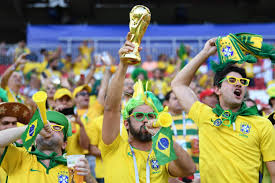 Why do people care about sport? With hundreds of millions of human beings (myself included) obsessively following the world cup that is being played out in Russia, it’s a good time to reflect once again on this perennially interesting question.
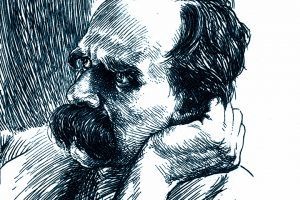 The German philosopher Friedrich Nietzsche (1844–1900) pursued two main themes in his work, one now familiar, even commonplace in modernity, the other still under-appreciated, often ignored. The familiar Nietzsche is the “existentialist”, who diagnoses the most profound cultural fact about modernity: “the death of God”, or more exactly, the collapse of the possibility of reasonable belief in God. Belief in God – in transcendent meaning or purpose, dictated by a supernatural being – is now incredible, usurped by naturalistic explanations of the evolution of species, the behaviour of matter in motion, the unconscious causes of human behaviours and attitudes, indeed, by explanations of how such a bizarre belief arose in the first place. But without God or transcendent purpose, how can we withstand the terrible truths about our existence, namely, its inevitable suffering and disappointment, followed by death and the abyss of nothingness?
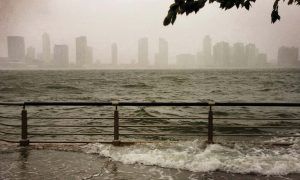 In 1890, just over six thousand people lived in the damp lowlands of south
  EARLY IN THE MORNING
 Here is the predicament that most of us seem to be in. We are not virtuous people. We simply do not have characters that are good enough to qualify as honest, compassionate, wise, courageous, and the like. We are not vicious people either—dishonest, callous, foolish, cowardly, and so forth. Rather we have a mixed character with some good sides and some bad sides. This is the most plausible interpretation of what psychology tells us. It is also true to our lived experience in the world. Those are the facts as I see them. Now comes the value judgment—this is a real shame. It is very unfortunate that our characters are this way. It is a good thing—indeed, a very good thing—to be a good person. Excellence of character, or being virtuous, is what we should all strive for. Admittedly, the news is not all bad. It would be a lot worse if most of us were vicious people. Imagine what it would be like to live in a world full of mostly cruel, self-centered, dishonest, and hateful people. It would be hell on earth.
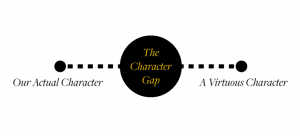 What strategies are there to try to develop a better character, and which of these strategies show substantial promise? In my book The Character Gap: How Good Are We?, I consider a number of different strategies. One I find quite interesting is what we might call “virtue labeling.” Suppose you come to believe, as I do, that most of the people we know do not have any of the virtues. So your friend, your boss, your neighbor … you need to change your opinion of all of them. Now here is the interesting idea—even with this new outlook firmly in mind, you should still go ahead and call them honest people next time you see them. You should still praise them for being compassionate. You should go out of your way to comment on their courage.
 You might feel that you have the ability to make choices, decisions and plans – and the freedom to change your mind at any point if you so desire – but many psychologists and scientists would tell you that this is an illusion. The denial of
  Billions of years ago, life crossed a threshold. Single cells started to band together, and a world of formless, unicellular life was on course to evolve into the riot of shapes and functions of multicellular life today, from ants to pear trees to people. It’s a transition as momentous as any in the history of life, and until recently we had no idea how it happened.
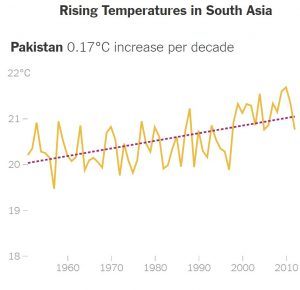 Climate change could sharply diminish living conditions for up to 800 million people in South Asia, a region that is already home to some of the world’s poorest and hungriest people, if nothing is done to reduce global greenhouse gas emissions,
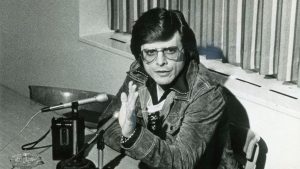 What did I do to deserve a yelling at from the famously curmudgeonly and irascible Harlan Ellison? Well, from 2010 to 2013, I was the president of SFWA, the Science Fiction and Fantasy Writers of America, an organization to which Harlan belonged and which made him one of its Grand Masters in 2006. Harlan believed that as a Grand Master I was obliged to take his call whenever he felt like calling, which was usually late in the evening, as I was Eastern time and he was on Pacific time. So some time between 11 p.m. and 1 a.m., the phone would ring, and “It’s Harlan” would rumble across the wires, and then for the next 30 or so minutes, Harlan Ellison would expound on whatever it was he had a wart on his fanny about, which was sometimes about SFWA-related business, and sometimes just life in general.
 F
F