
Aida Edemariam in The Guardian:
 On Sunday night, Michael Ondaatje stepped on to the wide stage of the Royal Festival Hall in London. He found a lectern and, white head bowed, reached into his pocket for a small piece of paper. “It began with a small night conversation between a burned patient and a nurse,” he said. “I did not know at first where it was taking place, or who the two characters were. I thought it might be a brief novella – all dialogue, European-style, big type.”
The audience laughed. Because what actually turned up, of course, was The English Patient: 300-plus pages about four people inhabiting the mined rooms of a remote Italian villa at the end of the second world war; four very different people who meet in damaged solitude, who talk (there are a lot of night conversations), who love, whose histories, revealed in vivid flashes, become a taut, outraged meditation on the idea of war, of nationalism and of prejudice; a meditation that slips between spies and explorers, Suffolk and the Egyptian desert; the Punjab and Women’s College Hospital, Toronto, as easily as the sapper, Kip, slips into bomb craters to defuse bombs.
More here.
 ALAN BEAM WAS
 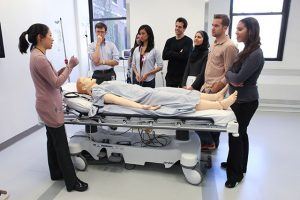 Identity politics has engulfed the humanities and social sciences on American campuses; now it is taking over the hard sciences. The STEM fields—science, technology, engineering, and math—are under attack for being insufficiently “diverse.” The pressure to increase the representation of females, blacks, and Hispanics comes from the federal government, university administrators, and scientific societies themselves. That pressure is changing how science is taught and how scientific qualifications are evaluated. The results will be disastrous for scientific innovation and for American competitiveness.
  It’s a tough time to defend religion. Respect for it has diminished in almost every corner of modern life — not just among atheists and intellectuals, but among the wider public, too. And
 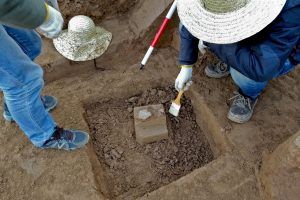 The oldest stone tools outside Africa have been discovered in western China, scientists reported on Wednesday. Made by ancient members of the human lineage, called hominins, the chipped rocks
  For nearly 40 years, the gender gap in voting has been the subject of continued speculation. How much does it matter? Would it be wide enough to put Democrats in office? Now, with President Trump ascendant, the question becomes still more urgent: What happens if the gender gap becomes a gender chasm?
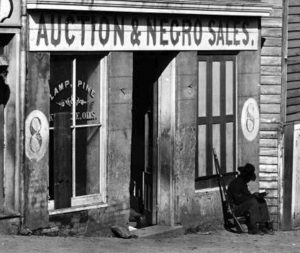 Tribalism and slavery are as old as humanity. The very first human records are records of human bondage. Reports estimate that today 60 million people are held as slaves. While each one of these lives represents an unacceptable tragedy, not one occurs with the approval of law. And that is revolutionary. For while slavery is as old as humanity, abolitionism is a relatively recent phenomenon that did not emerge until the ideas and ideals of the Enlightenment nurtured it into existence.
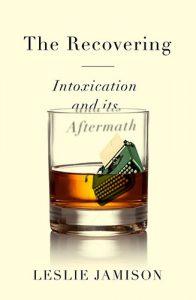 The Recovering is interested in resonance, or in what Jamison calls the ‘chorus’ – other voices, other narratives of both illness and recovery – and what they might offer to other people suffering or in pain. Resonance, she insists, isn’t ‘the same as conflation’ and doesn’t ‘mean pretending we’[ve] all lived the same thing.’ It’s not about ‘perfect correspondence’ but about ‘the possibility of company’, about fellowship, perhaps, or the realisation that our experiences are so often shared, that they aren’t ever unique, and that it’s precisely this commonality that makes them important. ‘Every addiction,’ she writes, ‘lives at the intersection between public and private experience.’ So too, perhaps, every illness, every bodily injury, everything that changes the way in which we are in the world.
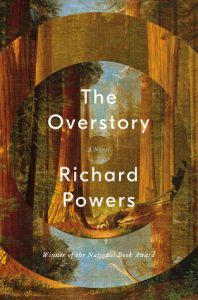 The Overstory displays some of the formal and stylistic ingenuity we have come to expect from a Richard Powers novel, from his acoustically adventurous prose to his multiple, intertwined narratives (even more multiple in this novel), so characterizing it as purely “agitprop” would be neither fair nor accurate, although the novel is certainly transparent enough in its effort to promote environmental mindfulness. And since Powers has always been willing to take on the weightiest of subjects, generally treated in an earnestly sincere manner, it would go too far to call The Overstory sentimental, although the passages invoking its characters’ often rapturous appreciation of the trees that threaten to replace the characters themselves as the novel’s true dramatis personae are surely full of passionate intensity.
 The received view of Smith is as the founding father of laissez-faire economics (the institute that bears his name certainly provided intellectual fuel to the laissez-faire policies of Margaret Thatcher). But as Norman – mostly correctly – argues, this is wrong, or at least an incomplete view. His goal is to round it out. He is not engaged, however, in just an intellectual exercise. He is battling for the soul of modern conservatism and he wants Smith on his side.
 On August 1943, the sales team at
  When Masih Alinejad was a girl in the tiny Iranian village of Ghomikola, her father — who eked out a living selling chickens, ducks and eggs — once brought home a thick yellow stick. Her mother, the village tailor, cut it into six tiny pieces at her husband’s instruction. Each child got one, including the youngest, our author. The yellow stick was a banana, a fruit that the poor family had never seen or tasted. Alinejad, the rebel of the lot, didn’t listen when told to throw the skin away; she sneaked it to school the next day to show off to her friends.
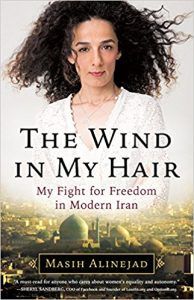 She got away with it, but the episode was a precursor of what is to come; hers is a life of rebellions big and small followed by ignominious and sometimes draconian punishments. At 18, Alinejad, who would ultimately rise from her humble beginnings to become one of Iran’s top journalists, is carried off to prison. She has been stealing books and carrying on with a ragtag group of feverish ideologues whose crime is printing pamphlets calling for greater dissent in Iranian society. It is enough to get them all arrested.
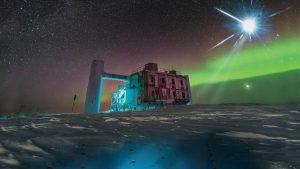 On September 22, 2017, a tiny but energetic particle pierced Earth’s atmosphere and smashed into the planet near the Amundsen-Scott South Pole Station in Antarctica. The collision set loose a second particle, which lit a blue streak through the clear ice.
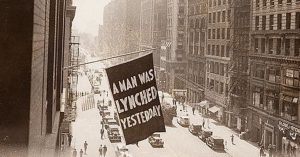 The word ‘lynching’, which has recently flooded our newspapers, has an American
  One afternoon in the spring of 2015, a senior State Department official named Frank Lowenstein paged through a government briefing book and noticed a map that he had never seen before. Lowenstein was the Obama Administration’s special envoy on Israeli-Palestinian negotiations, a position that exposed him to hundreds of maps of the West Bank. (One adorned his State Department office.)