
Dear Readers and Writers,
First of all, I want to thank all the people who have sent me excellent samples of their writing as a response to our call for new Monday Magazine columnists. I had promised that I would announce the names of the new people who will be writing for us today but, after doing some thinking and talking to various colleagues and friends, I am not going to do that and here’s the reason: among the approximately 40 excellent people who have applied, there is not a single woman. This is very strange and nothing like it has ever happened before at 3QD. While we do not follow anything like quotas and basically make our decisions based on the quality of the pieces submitted, this complete lack of women applicants is so anomalous that it has caused me to think hard about what we might be doing to discourage women from applying. I have spoken to a couple of experts on diversity in hiring about this and even ran the text of my initial call for writers through an AI-based program which tries to identify language which might not appeal to certain groups of people (based on a deep-learning analysis of several hundred million job descriptions and responses to them) but it had little criticism of what I had written and even diagnosed my writing as “slightly feminine”.
One woman whom I asked for advice said to me that, “Sometimes the problem is not what you say but what you don’t say”. This struck me as sensible and so I would like to open up the window for submissions for another 5 days to everyone again after saying this:
We would certainly love for our pool of writers to reflect the diversity of our readers in every way, including gender, age, ethnicity, race, sexual orientation, etc., and we encourage people of all kinds to apply. And we like unusual voices and varied viewpoints. So please send us something. What have you got to lose?
The new deadline for submissions is 11:59 pm, Friday, July 20, 2018 (New York Time). Please click here for details of what to send if you want to write for us. I now plan to announce whom we’ll be taking next Monday, July 23, 2018. Sorry about the delay.
Best wishes,
Abbas
 Four years ago, Human Rights Watch and Amnesty International—joining hundreds of others—urged the United Nations Security Council to send atrocity crimes committed in Syria to the International Criminal Court (ICC) for prosecution. Then, the conflict had already claimed 100,000 lives, overwhelmingly civilians. Today, the death toll is estimated at over half a million, with each day bringing new violations and unlawful killings.
 The obelisk bearing the chiseled gray-granite face of a Confederate soldier enters my field of vision each morning as I stroll across campus. After forty years away from Mississippi, I returned last year to teach at my alma mater, Ole Miss. Having entered the University of Mississippi in 1974, only twelve years after James Meredith shattered the color barrier, I was one of about fifty black students in a freshman class of more than 800, African Americans then making up less than 5 percent of the entire student body.
 In Tamil, farewells are never final. As Akil Kumarasamy pointed out in a 2017 interview, the Tamil equivalent of goodbye is poyittu varen, meaning “I’ll go and return.” These are parting words especially suited to the refugee: ever running away, ever looking back.
 Last month, the artificial intelligence company DeepMind
  On Sunday night,
  ALAN BEAM WAS
  Identity politics has engulfed the humanities and social sciences on American campuses; now it is taking over the hard sciences. The STEM fields—science, technology, engineering, and math—are under attack for being insufficiently “diverse.” The pressure to increase the representation of females, blacks, and Hispanics comes from the federal government, university administrators, and scientific societies themselves. That pressure is changing how science is taught and how scientific qualifications are evaluated. The results will be disastrous for scientific innovation and for American competitiveness.
  It’s a tough time to defend religion. Respect for it has diminished in almost every corner of modern life — not just among atheists and intellectuals, but among the wider public, too. And
  The oldest stone tools outside Africa have been discovered in western China, scientists reported on Wednesday. Made by ancient members of the human lineage, called hominins, the chipped rocks
  For nearly 40 years, the gender gap in voting has been the subject of continued speculation. How much does it matter? Would it be wide enough to put Democrats in office? Now, with President Trump ascendant, the question becomes still more urgent: What happens if the gender gap becomes a gender chasm?
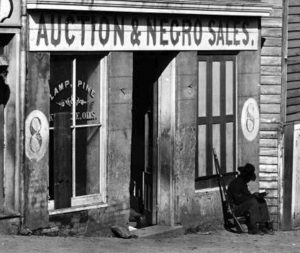 Tribalism and slavery are as old as humanity. The very first human records are records of human bondage. Reports estimate that today 60 million people are held as slaves. While each one of these lives represents an unacceptable tragedy, not one occurs with the approval of law. And that is revolutionary. For while slavery is as old as humanity, abolitionism is a relatively recent phenomenon that did not emerge until the ideas and ideals of the Enlightenment nurtured it into existence.
 The Recovering is interested in resonance, or in what Jamison calls the ‘chorus’ – other voices, other narratives of both illness and recovery – and what they might offer to other people suffering or in pain. Resonance, she insists, isn’t ‘the same as conflation’ and doesn’t ‘mean pretending we’[ve] all lived the same thing.’ It’s not about ‘perfect correspondence’ but about ‘the possibility of company’, about fellowship, perhaps, or the realisation that our experiences are so often shared, that they aren’t ever unique, and that it’s precisely this commonality that makes them important. ‘Every addiction,’ she writes, ‘lives at the intersection between public and private experience.’ So too, perhaps, every illness, every bodily injury, everything that changes the way in which we are in the world.
 The Overstory displays some of the formal and stylistic ingenuity we have come to expect from a Richard Powers novel, from his acoustically adventurous prose to his multiple, intertwined narratives (even more multiple in this novel), so characterizing it as purely “agitprop” would be neither fair nor accurate, although the novel is certainly transparent enough in its effort to promote environmental mindfulness. And since Powers has always been willing to take on the weightiest of subjects, generally treated in an earnestly sincere manner, it would go too far to call The Overstory sentimental, although the passages invoking its characters’ often rapturous appreciation of the trees that threaten to replace the characters themselves as the novel’s true dramatis personae are surely full of passionate intensity.
 The received view of Smith is as the founding father of laissez-faire economics (the institute that bears his name certainly provided intellectual fuel to the laissez-faire policies of Margaret Thatcher). But as Norman – mostly correctly – argues, this is wrong, or at least an incomplete view. His goal is to round it out. He is not engaged, however, in just an intellectual exercise. He is battling for the soul of modern conservatism and he wants Smith on his side.
 On August 1943, the sales team at