
Jacob Dreyer in the Ideas Letter:
In these hot summer mornings, I go with my son to the park to look at swans. One day, we passed by a government-run canteen, and I stopped to pick up a snack for him. I noticed, mounted on the wall, a huge screen that captured data of the most banal kind: the patrons’ age group, the most commonly ordered dish. A high-tech control room was on display as the elderly diners ate their breakfast. I did a bit of research and discovered that this place was a pioneer project that might be going national soon. In cities across China, government-subsidized food halls for seniors use AI to optimize ingredient ordering, reduce food waste, and track nutritional data. These smart canteens, often tucked into public housing complexes or community centers, demonstrate how AI-enhanced cost-effectiveness allows the state to provide services that would once have been seen as too expensive to sustain.
In my area of Shanghai, many of the elderly are living alone in small apartments, sustained by a Chinese form of rent control. Shanghai’s infrastructure simultaneously caters to upper-middle-income families like my own, with expectations that the city is as livable London or New York, and to the elderly pensioners who skip meals to save money. As the city tries to prepare for an aging population, AI and big data are seen as the magic bullet that can help the government solve its problems.
More here.
Enjoying the content on 3QD? Help keep us going by donating now.
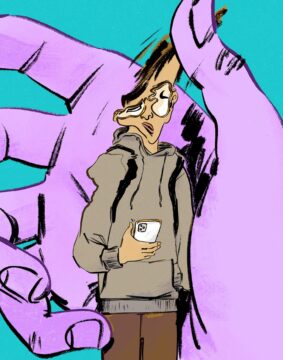 It’s now almost a reflex: An election is held, and someone pushes the big, red Death of Democracy panic button. When Donald Trump won in 2016, liberals saw a gold-plated Adolf Hitler in a red baseball cap. Then Joe Biden took over and conservatives warned of Joseph Stalin or Pol Pot reborn, an America where your kids would be forced to go to gay camp and pray to RuPaul before lunch. (They’re panicking again with Zohran Mamdani in New York’s mayoral race.) Now, we have Trump redux. The hysterias flip, but the impulse stays the same: to imagine top-down tyranny as a looming catastrophe.
 It is no great secret that the undergraduate English department is in a state of decline: a shrinking number of English majors, a decrease in faculty, and a reputation of unemployability and irrelevance. Much has been written about this decline. Nathan Heller’s recent New Yorker piece,
  One of the biggest stories in science is quietly playing out in the world of abstract mathematics. Over the course of last year, researchers fulfilled a decades-old dream when they unveiled a proof of the geometric Langlands conjecture — a key piece of a group of interconnected problems called the Langlands programme. The proof — a gargantuan effort — validates the intricate and far-reaching Langlands programme, which is often hailed as the grand unified theory of mathematics but remains largely unproven. Yet the work’s true impact might lie not in what it settles, but in the new avenues of inquiry it reveals.
 N
N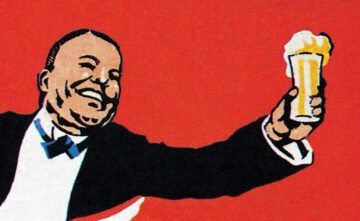 Have you ever sat through a dull or inappropriate toast at a celebration, desperately wishing for it to end? You’re not alone. Bad toasts have a way of dragging down events, resulting in awkward silences, eye-rolling, and seat shifting. The problem with these subpar tributes is that they often make the audience uncomfortable, drag on and on, or focus too much on the speaker, rather than the individual or occasion being honored. Bad toasts can easily drain the energy from the room, detracting from the purpose of the celebration—to unite people in a moment of joy, respect, or reflection.
 IN 1946 THE AUSTRIAN WRITER Marlen Haushofer began publishing fairy tales and short stories in newspapers and small magazines. Her prewar writings—stories, poems, chapters of novels—had all been lost, and during the war she wrote “not a single line.” The new stories were a pragmatic measure: they were written to be published, to supplement the household budget. (Her husband, a provincial dentist, frittered the family’s finances away on flashy cars.) Yet since neither he nor her sons read her works, they could also be a form of revenge. “Professionally, I feed on anger,” she wrote to a friend in 1968, two years before her death. This stifled anger takes oblique forms. Philosophical novels, thrillers, dreams: her enervating allegories are like burrs—they stick.
 A coming-of-age ceremony, a Burmese bar mitzvah, a meditation retreat: I had called it all of those things to friends in the weeks before. It was a little bit of each but “more ceremonial slash familial than necessarily religious,” I’d qualified. We’d bargained with my mother for weeks to get out of it. We’re nearly thirty, my brother Nick reasoned. We’re adults. We didn’t want to shave our heads, wear monk’s robes, meditate all day. Maybe it is important to you, but we don’t care about religion, we said, armed with years of therapy.
 In the Middle Ages, friendship was
 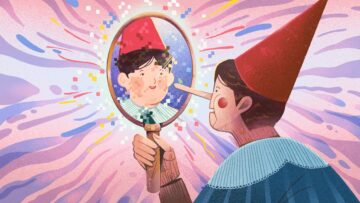 Randomness is a source of power. From the coin toss that decides which team gets the ball to the random keys that secure online interactions, randomness lets us make choices that are fair and impossible to predict.