
 Henry Farrell in Crooked Timber:
Jacob Hamburger has an article in the LA Review of Books on the “Intellectual Dark Web” which is really very sharp, but ends up in the wrong place.
First, what is absolutely right, and explained much better than I’ve seen it explained elsewhere, or, for that matter, been able to explain it to myself:
A common refrain on the dark web is to debunk various left-of-center critiques by arguing that what appears to be systemic inequality is actually the result of individual choices or behavior. Christina Hoff Sommers argues, for example, that the gender wage gap is a result of women’s choices to work jobs that pay less, while Ben Shapiro believes the problem of police brutality could be solved by people — presumably African Americans — simply “avoiding interactions with the cops.” On many occasions, these sorts of arguments involve uses of social science statistics that political correctness is said to ignore; on other occasions the statistics are omitted and the left’s blindness to “reality” and “facts” is simply asserted or implied. In either case, the dark web’s impulse when confronted with claims of inequality is almost always to deny or justify it. Either the left is making up injustices where they do not exist, the argument goes, or they disregard evidence that social disparities are in fact grounded in scientific reality.
This seems to me to be completely on target, and to correctly identify the organizing impulse behind the IDW. It manifestly isn’t an intellectual movement: if it were, what would unite spewers of Jungian witch-symbol gibberish like Jordan Peterson with self-professed admirers of the scientific method like Sam Harris? It’s a political one, which is largely organized around opposition to claims about structural power inequalities – especially claims that map onto categories such as race and gender. This also explains very neatly the Quillette publishing model: any old shite that supports this specific set of prejudices is acceptable so long as it annoys the right people.
But Hamburger’s organizing argument that this is inherently conservative seems wrong to me.
More here.
 John Horgan in Scientific American:
 Adam Tooze in Dissent:
 Merve Emre in Boston Review:
 The word Gidget, if it evokes anything in one’s mind, likely compels mental images of gingham bikinis, improvised luaus, and berserk 1950s-style optimism. Maybe Sandra Dee, pre-alcoholism, is pictured, or Sally Field before she was a flying nun. One definitely does not imagine a Jewish septuagenarian, married to a Yiddish scholar, with a tendency toward recreational hitchhiking. But that is who Kathy Zuckerman is, and Kathy Zuckerman is Gidget.
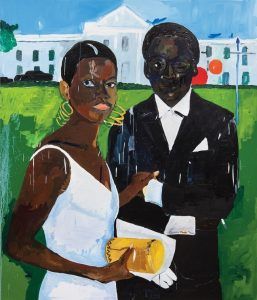 Yet to speak of this painting as I have—conceptually—is to pass over the difference between thinking with language and thinking in images, and no narrative explanation of the relation between these two pictures is as compelling as the horizontal line that marks the credenza in the photograph and the edge of the White House gardens in the painting, or the verticality of the white man in the photo’s top-right corner—with his squared-off shoulders—and his painterly analogue: a blue flagpole, with its crossbar and absence of flag. Taylor thinks primarily in colors, shapes, and lines—he has a spatial, tonal genius. Form responds to form: the negative space around Cicely and Miles in the photograph suggests the exact proportions of the White House, yet in the transition the abstract sometimes becomes figured, and vice versa, as if the border between these things didn’t matter. A burst of reflected light in the photo decides the height and placement of the windows in the painting, while two round signs at the movie première—one for Coca-Cola, the other for “Orange”—which can have no figurative echo in the painting, turn up anyhow on the White House façade as abstraction: a red sphere and an orange sphere, tracking the walls of what, in reality, now belonged to Trump. Like two suns setting at the same time.
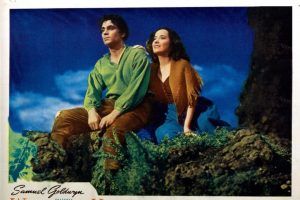 Emily Brontë was born on July 30, 1818, in the village of Thornton, West Yorkshire, far from the mainstream of literary life. She died of tuberculosis at Haworth Parsonage, not six miles away, at the age of thirty. Her work had startled the critics with the force of its passion, but, over the years, shock was to settle into widespread admiration. In 1948, in a note added to the first chapter of The Great Tradition, F. R. Leavis described the author as the genius of her family, and her only novel, Wuthering Heights, as “astonishing”. When he added that it was a “kind of sport”, he was implying not its triviality, but its uniqueness. Forty years later, John Sutherland could introduce it in his Longman Companion to Victorian Fiction as the “twentieth century’s favourite nineteenth-century novel”. Emily’s poetry, which she published with great reluctance, has also continued to rise in the public estimation. The opening line of one of her poems, “No coward soul is mine”, can now be found emblazoned on mugs and key rings. It is even popular as a tattoo.
 When Science published a monkey study nearly 2 years ago that showed an anti-inflammatory antibody effectively cured monkeys intentionally infected with the simian form of the AIDS virus, the dramatic results turned many heads. But some skeptical researchers thought the data looked too good to be true and predicted the intervention wouldn’t work on HIV in humans. They were right. Anthony Fauci, head of the U.S. National Institute of Allergy and Infectious Diseases in Bethesda, Maryland, and a co-author of the Science paper, today reported the failure of a clinical trial that attempted to translate the remarkable monkey success to humans. “We did not see those dramatic results at all,” Fauci said at the International AIDS Conference in Amsterdam that is taking place this week.
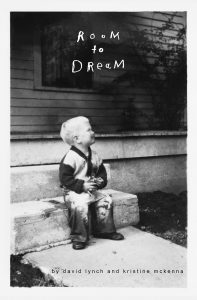 CRITICS GENERALLY DEFINE “Lynchian” as the cohabitation of the macabre and the mundane. The severed ear hidden in the field in Blue Velvet may be the most iconic representation of this junction, but it’s everywhere in David Lynch’s work: from Twin Peaks’s sweet, brochure-like title sequence of a mountainous town that, as it turns out, hides Laura Palmer’s corpse and many other monstrosities, to the arrival of Naomi Watts’s aspiring actress Betty in a dreamlike Hollywood in Mulholland Drive, before the nightmare of that city consumes her. In Lynch’s early work, the small town is the theater of this dance of innocence and evil, but in his later films, namely the loose trilogy of Lost Highway (1997), Mulholland Drive (2001), and Inland Empire (2006), the macabre and the mundane coexist in the individual soul. Upon reading Room to Dream — Lynch’s newly released experimental memoir — one’s tempted to say that the same coupling exists in David Lynch himself.
 Researchers have found evidence of an existing body of liquid water on Mars.
 Pakistan heads to the polls on July 25th. I happen to be in the middle of a move, so I have not been posting much but a short note on the election is certainly due. Back in 2013 Pakistan had its first peaceful democratic transfer of power and it looked like some sort of democracy was finally taking root, with the military still exercising disproportionate influence but with an elected government running most of the country according to its own priorities. Unfortunately, the trend line has since reversed and done so in spectacular fashion. There are many theories about why this particular reversal happened, with some people blaming the party in power (the nominally right of center PMLN) and others the overweening ambitions of GHQ (*General Headquarters. The army). Whatever the triggers, it seems that at some point the army high command decided that it could not coexist with Mian Nawaz Sharif and his politically ambitious daughter (Maryam Nawaz Sharif) and for the last year and a half the army, primarily acting through its intelligence agencies (for the rough stuff) and ISPR (the PR wing of the army, now expanded into a vast public relations operation with a serving general in charge) has been on a crusade against the PMLN in general and Mian Nawaz Sharif (MNS) and his daughter in particular.
 It is difficult to understand the genocide because the genocide occurred not in a secret place, but in full view of the observing world. In 1993, Lieutenant General Philippe Morillon, the United Nations Protection Force (UNPROFOR) Commander in Bosnia-Herzegovina, came to Srebrenica and, after seeing the death camp circumstances of the civilians living under the siege, declared that Srebrenica was under the protection of the UN. In April 1993, the UN Security Council, adopted Resolution 819 which formally declared Srebrenica a UN “safe area,” following after Morillon’s declaration, and sent UNPROFOR soldiers from Canada, and later the Netherlands to the town. As part of the demilitarization agreement, military commanders defending Srebrenica agreed to turn over their heavy arms in exchange for UN protection. As early as April 1993, Ambassador Diego Arria, Permanent Representative of Venezuela to the UN Security Council, described the situation in Srebrenica as a “slow-motion genocide under the protection of the UN forces” In July 1995, Srebrenica—under the protection of UN forces—became a fast-motion genocide.
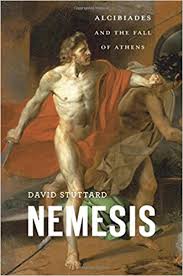 But Alcibiades, like Byron, clearly had that indefinable something. One catches a glimpse of it in the unforgettable last scene of Plato’s Symposium, when he crashes into the room, blind drunk, flirting with everything on legs, shouting about his love for Socrates. Thucydides captures it in his report of Alcibiades’s speech whipping up the Athenian assembly to vote for the disastrous Sicilian expedition of 415 BC – an extraordinary stew of egotistic bragging (about how successful his racehorses are), mendacious demagoguery and brilliantly acute strategic thinking. The unwashed Athenian masses, not usually prone to atavistic toff-grovelling, absolutely adored him: when Alcibiades finally returned to Athens in 407 BC after eight years of exile, sailing coolly into Piraeus on a ship with purple sails, they welcomed him back with paroxysms of joy.
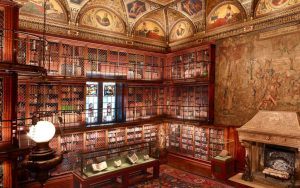 In the Chester Beatty Library, there are books made entirely of jade. There are picture scrolls featuring calligraphy by the brother of the Japanese emperor. There are papyrus codices that constitute some of the few surviving texts of Manichaeism, a religion of darkness and light that rivaled Christianity in scale until its last believers died out in fourteenth-century China. There are Armenian hymnals, Renaissance catalogues of war machines, and monographs on native Australian fauna. There is all of this and more—thousands and thousands of other works diverse in period and place of origin, waiting for human eyes. And yet as I walk through the galleries, as I survey the cases of books safe behind their glass, it occurs to me that if a book is a thing meant to be read, then in a certain sense, these objects have lost their function to all but the scholarly epigraphists, backs bent in the private study room. And yet far from becoming something less because of this, the books on display have become something more.
 “Castle Rock,” Hulu’s longform series ode to
  In early 2014