
Adam Aleksic at Literary Hub:
 It seems as though everything happens faster on the internet. Each week brings a dizzying parade of new memes, fads, and slang words that evaporate as quickly as they materialize. It can be hard to keep up with the latest references unless you’re spending hours a day catching up on social media trends.
Of course, it wasn’t always like this: Look at Middle English six hundred years ago. Language was far more insular. Each city and region had its own, different dialect, to a point where there can scarcely be any discussion of a uniform “English” language as we understand it today. The only reason to adopt a new word was that it helped you better communicate with your fellow townspeople, so of course change came about more slowly.
Then England centralized, and the dialects of London and the East Midlands became the basis of what we now think of as Standard English. It was as if a switch had flipped: The upper class suddenly had a set vocabulary they could point to as “correct,” meaning that all other dialects became “incorrect.” By the 1750s, the word “slang” emerged as a catchall term to describe the nonstandard words used by the lower classes.
More here.
Enjoying the content on 3QD? Help keep us going by donating now.
 The Chinese AI company DeepSeek released a chatbot earlier this year called R1, which drew a huge amount of attention. Most of it
 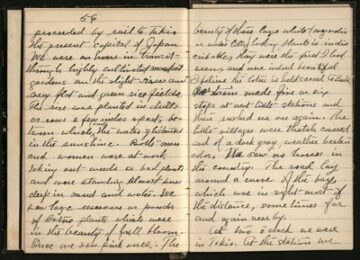 “The sea is a stranger to me,” Sheldon confessed in the first pages of her journal, yet the thirty-six-year-old had not hesitated a moment when she had been asked, two days earlier, to join the voyage as the stewardess—the only woman on the crew for the sixty-five-day trip to Hong Kong and back, with stops for additional passengers and cargo in Japan and Hawai‘i. For Sheldon, who had been born into a farming family in central Wisconsin before the Civil War, and for other women like her, the position of ship stewardess was
 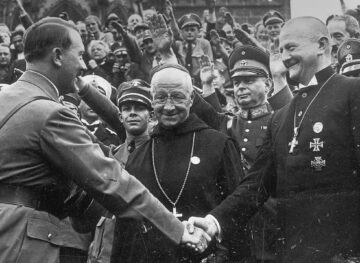 To grasp just how revolutionary this inter-Christian peace was, it’s worth remembering what came before it. Because the mutual hatred between the confessions shaped not only the early modern era, when gruesome acts of violence like
  T
T I
I

 Finally, the vacation you’ve been waiting for is happening tomorrow. You and your friends are going on a two-week cruise, free of responsibilities and full of fun. You’re starting to pack when you feel a little bit lightheaded. You don’t think much of it because you’ve been stressed lately trying to get ready for the trip. Later, you start coughing. Probably just allergies, you think to yourself as you go about your day. When you wake up in the morning – the day of the trip – you have a sore throat and chills. You briefly think to yourself: This feels like it could be COVID. Maybe I should take a self-test. You start walking to your medicine cabinet, but then you pause. If you test positive, you’ll feel obliged to isolate from others and miss the trip. You’ve spent so much time thinking about the trip and paid a lot for the tickets. Your friends will be disappointed. I’m sure I’m fine. You decide it’s better not to know.
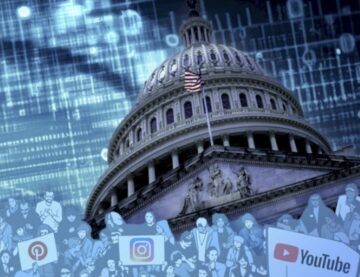 A senior researcher at Microsoft tells me that the sale of TikTok is more momentous to the fate of American democracy than the mobbing of the Capitol on January 6, 2021. He argues that the latter was a circumscribed event, while the enforced sale of TikTok will put the eyeballs of 170 million American users under the control of one of the two or three bidders already wealthy enough to buy it—such as Elon Musk. I find this view awfully grim, not because Musk has too many conflicts of interest to be a benign presence in government but because I find it dismaying that “American democracy” should occur in the same sentence with “TikTok,” let alone be identified with it. If the fate of American democracy rests on the ownership of TikTok, then maybe the towel has already been thrown in.
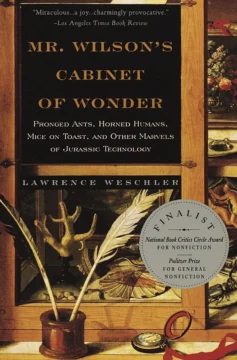 Many readers of this particular Substack may already realize that its very name—“Wondercabinet”—wends back, in terms of my own lifework, to my days covering the then-barely-nascent Museum of Jurassic Technology, for what became my 1995 book
 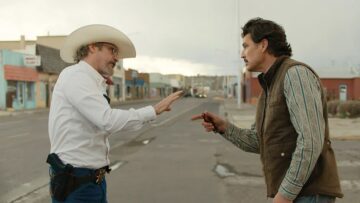 Eddington
 We’re living longer than ever—but those extra years aren’t unfolding the way many hoped. Instead of later years spent thriving, millions are instead facing