
Udi Greenberg in Aeon:
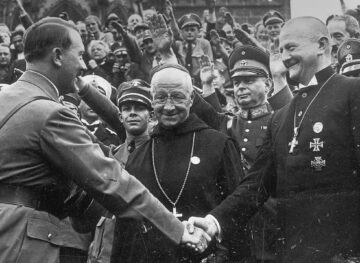 To grasp just how revolutionary this inter-Christian peace was, it’s worth remembering what came before it. Because the mutual hatred between the confessions shaped not only the early modern era, when gruesome acts of violence like St Bartholomew’s Day (1572) and the Thirty Years’ War (1618-48) tore Europe apart. Anti-Catholicism and anti-Protestantism remained powerful forces well into the late 19th and early 20th centuries, and shaped social and political life. The most extreme case was Germany, where the Protestant majority in 1871 unleashed an aggressive campaign of persecution against the Catholic minority. For seven years, state authorities expelled Catholic orders, took over Catholic educational institutions, and censored Catholic publications.
In the Netherlands, Protestant crowds violently attacked Catholic processions; in Austria, a popular movement called ‘Away from Rome’ began a (failed) campaign in 1897 to eradicate Catholicism through mass conversion. Catholics, for their part, were just as hostile to Protestants. In France, Catholic magazines and sermons blamed Protestants for treason, some even called for stripping them of citizenship. Business associations, labour unions and even marching bands were often divided across confessional lines.
Even on an everyday level, it still was common into the 20th century for neighbourhoods, parties and magazines to be strictly Catholic or Protestant.
More here.
Enjoying the content on 3QD? Help keep us going by donating now.