
by Thomas O’Dwyer
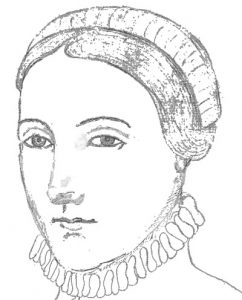 When Mrs. William Shakespeare died on this August day in 1623, her family and friends believed they would lay her to eternal rest beside her renowned husband. They did not. They did inter an ordinary wife and mother, but the memory of her went out to become a Frankenstein monster, cut up and reassembled down the centuries. Few of the many makeovers done to Anne Hathaway Shakespeare since her passing have been flattering.
It’s hard to say how Anne came to deserve this cruel fate. Gossips, academics and a myriad of random scribblers have mocked her in many contradictory guises. She is a dumpy, illiterate house wench who clamped herself like an iron ball to the ankle of an unfortunate great man. She is a calculating promiscuous slut having a fine time with young men on the coin of a struggling genius. A dreary drudge, or a vicious vamp – sound familiar, ladies?
In a once common version of her story, 26-year-old Anne Hathaway seduced the boy William, eight years her junior. She became pregnant and forced him to marry her. Poor Will had no choice but to flee from the provincial prison of Stratford to London. There he blossomed as the world’s greatest playwright before returning to Stratford as a tired old gentleman. He never wrote again and was dead within six years. There are many versions of this theme. Some purport to be factual portrayals of Anne Hathaway’s life, some admit to being fictional-but-possible. Facts do not get in the way of the tall tales because there are so few of those – rare brief mentions of Anne in legal documents. In place of the facts, we got the twisted facts and then the fictions. Original documented references to Anne Hathaway are like a few random pencil marks on a blank white canvas. Biographers and faux biographers, mostly men, have each in turn approached the canvas to draw a complete picture. What they have left behind are portraits of their own male fantasies and misogynistic inventions unrelated to any real woman. Read more »
 I’m tempted to describe Marion Milner’s book A Life of One’s Own as the missing manual for owners of a human mind. However, it’s not didactic or prescriptive. In fact, it’s useful mainly because it’s nothing like a manual or a self-help book. The book is more like an insightful travelogue by an articulate and honest observer with a gift for using vivid physical imagery and metaphors to describe her inner world.
 The 2020s will have a name. In the nursing homes of the future, Millennials’ grandchildren will hear all about the coming decade. Gran will remove her headset, loaded out with VR-entertainment and the latest in biometric tech, and she’ll tell the kids about the world as it was in the third decade of the 21st Century. For now, we look ahead to the Twenties, a decade certain to be charged with meaning, roaring in one way or another.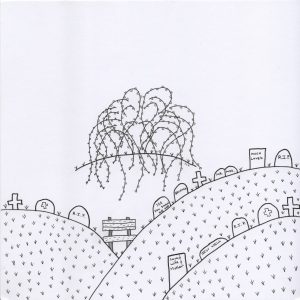
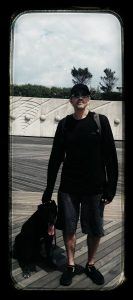 As a child, I feared dogs. A neighbor kept his German Shepherds, Heidi and Sarge, in a large pen along the alley. The yard and house, his parents’, were the biggest for many blocks. On the alley side, the chain link fence stood 10 feet. The dogs would charge out of their houses silently and hurl their bodies at the fence snarling and barking. I was caught unaware at the fence a few times. My stomach curdled and legs buckled. My mother’s family are dog people. My grandparents cared for a series of large overfed dogs who cavorted in the swamps surrounding their Massachusetts home and otherwise slumped under the kitchen table waiting for my grandmother to put together meals of breakfast scraps bound with maple syrup or for treats from a cookie jar on her counter. My uncles had shambling dogs who would leap into rough water off Cape Cod to retrieve balls from seaweed choked waves. As their fur dried, they smelled of sour salt water and general funk. At the rented house, they showed a gentle deference to humans and lolled on the grass or carpet while my cousins and I ate and talked.
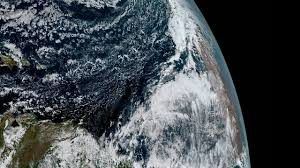 This weekend, the New York Times’ print subscribers received something kind of crazy: A 66-page magazine with only a single article — and it’s on climate change. The long-form piece, written by Nathaniel Rich and titled “Losing Earth,”
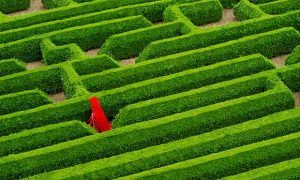 Charlotte Higgins
 On a cool spring day in April 2014, Dayne Walling, the mayor of Flint, Mich., entered an old water-treatment plant and, amid cheers from a crowd of city officials and engineers, pushed a small black button on a cinder-block wall. With that gesture, the mayor switched Flint’s water supply from a tested and reliable source provided by the city of Detroit to a cheaper and untested one, the nearby Flint River. City officials defended the move as necessary cost-cutting for a bankrupt city. Like his colleagues, Walling — a Rhodes scholar who had a master’s degree in urban studies — believed that Flint, by deciding to rely on its own river for water, was taking control of its destiny. He called it “a historic moment.”
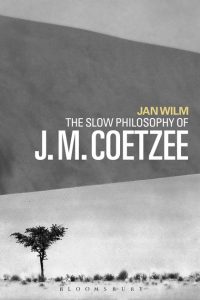 Particularly since the publication of Elizabeth Costello (2003), a strong academic conversation on literature and philosophy has developed around the writings of J.M. Coetzee. As literary scholars and philosophers have approached this nexus, they have confronted questions about what counts as “philosophy” or “literature,” and what benefits are afforded by conversing across the disciplines. So, as this dialogue continues moving forward, there may be some benefit in also slowing down, pausing, and looking back at the one monograph to expressly locate Coetzee’s writings on a spectrum between literature and philosophy. Although not the most recent publication on the topic, Jan Wilm’s The Slow Philosophy of J.M. Coetzee (2016) merits renewed attention for its use of both literary and philosophical tools in explicating how Coetzee’s texts act upon their readers’ very modes of thinking.
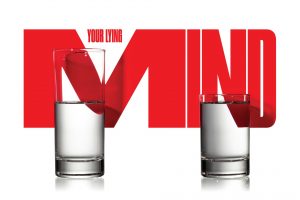 I am staring
 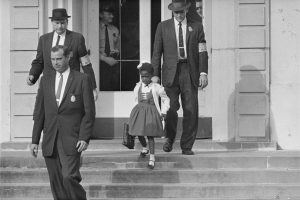 April 13, 1947, holds little significance in the American historical memory, and yet that day was one in a long series that led to the legal desegregation of American schools. On that morning, Marguerite Daisy Carr, a 14-year-old black girl from Washington, D.C., attempted to enroll at Eliot Junior High School, the all-white middle school closest to her home. Carr’s efforts to integrate the school, which were supported by her family and local black community, preceded the landmark Supreme Court decision in
  4:30 Movie, then, is a book about the general ambience of film, although Masini does invoke specific titles—most notably, the original drive-in version of The Blob (1958), which screened in the 4:30 slot during Masini’s childhood and inspired the title of her book. In the film’s final scene, the hero—“his name was Steve in the movie and Steve in real life,” Masini writes, referring to lead actor Steve McQueen—and the police douse the blob with fire extinguishers to freeze it. A police officer observes that the gelatinous creature can’t be killed but can be stopped. The Air Force drops the blob into the Arctic, and then The End? appears on screen, a playful hint that perhaps the terror isn’t over. Masini is bemused by how hokey and silly the film is, the blob “mindless, deadly, malignant. Amorphous, devouring monster. / Why didn’t we laugh?” But by the end of the poem, she asks herself, “Why am I so frightened?” The whiplash of the question mimics the way viewers abruptly surrender to the magic of film.
 On almost every page, The Five Quintets praises conversation’s endless interplay—“those evenings when time’s rigid arrow bends,” as we dance from one topic to another. So it’s appropriate that, when I came into New York to discuss the book with O’Siadhail (pronounced “O’sheel”), I first spotted him on a street corner, leaning into a conversation. The seventy-one-year-old O’Siadhail is hard to miss. He has published more than a dozen volumes of poetry, including his eight-hundred-page Collected Poems in 2014, and he looks every inch the poet: tall and handsome, with a craggy face, deep-set eyes, and a hawk-like nose. And there he was, a few blocks from Commonweal’s offices, where we’d agreed to meet, asking a woman where he might grab a bite to eat. He was “feeling a bit peckish,” he later told me, and was thinking about getting a snack. He wasn’t sure if I wanted to talk first and then eat or have lunch and then talk.
 When young we think there will come one person who will savor and sustain us always; when we are older we know this is the dream of a child, that all hearts finally are bruised and scarred, scored and torn, repaired by time and will, patched by force of character, yet fragile and rickety forevermore, no matter how ferocious the defense and how many bricks you bring to the wall. You can brick up your heart as stout and tight and hard and cold and impregnable as you possibly can and down it comes in an instant, felled by a woman’s second glance, a child’s apple breath, the shatter of glass in the road, the words I have something to tell you, a cat with a broken spine dragging itself into the forest to die, the brush of your mother’s papery ancient hand in the thicket of your hair, the memory of your father’s voice early in the morning echoing from the kitchen where he is making pancakes for his children.
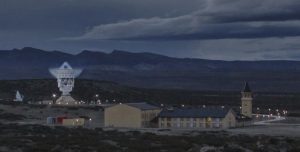 The giant antenna rises from the desert floor like an apparition, a gleaming metal tower jutting 16 stories above an endless wind-whipped stretch of Patagonia.