Emily Wilson in The Guardian:
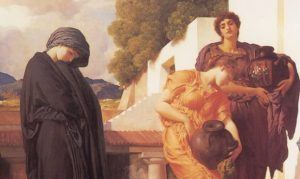 In The Iliad, a poem about the terrible destruction caused by male aggression, the bodies and pretty faces of women are the objects through which men struggle with each other for status. The women are not entirely silent, and goddesses always have plenty to say, but mortal women speak primarily to lament. They grieve for their dead sons, dead fathers, dead husbands and dead protectors; for the city of Troy, soon to fall, and for their own freedom, taken by the victors of war. Andromache pleads with her Trojan husband Hector not to leave her and their infant son to go back to fight Achilles. She has already endured the sack of her home city by Achilles, and seen the slaughter of her father and seven brothers, and the enslavement of her mother. If Hector dies, their child will be hurled from the city walls, Troy will fall and Andromache will be made the concubine of the son of her husband’s killer. Hector knows this, but he insists that his own need to avoid social humiliation as a battle-shirker trumps it all: “I would be ashamed before the Trojan men and women,” he says. He hopes only to be dead before he has to hear her screams.
Pat Barker’s brilliant new novelistic retelling of The Iliad puts the experience of women like Andromache at the heart of the story: the women who survive in slavery when men destroy their cities and kill their fathers, brothers and children. The central character is Briseis, the woman awarded to Achilles, the greatest Greek fighter, after his army sacks one of the towns neighbouring Troy. Agamemnon, the most powerful, although not the bravest, of the Greek warriors – a character whose downright nastiness comes across beautifully in Barker’s telling – has lost his own most recent female acquisition and seizes Briseis from Achilles. Achilles’ vengeful rage against Agamemnon and his own comrades, and the subsequent vast death toll of the Greeks and Trojans, is the central theme of The Iliad.
More here.
 Is capitalism immoral? Bill Gates, the second-richest man in the world, doesn’t believe that it has to be. In a recent interview, Gates argued that anyone with money has an ethical responsibility to do something positive with it. “Once you’ve taken care of yourself and your children, the best use of extra wealth is to give it back to society.” Gates himself lives this approach, recently giving away $4.6 billion in Microsoft shares to his philanthropic organization, the Bill and Melinda Gates Foundation. “We are impatient optimists,” its webpage declares, “working to reduce inequity.”
 The awful news that all but two penguin chicks have starved to death out of a
  Arguably the most alarming thing about the war against Jones is the fact that media leftists have been so quick to boast about the activist role they played in getting him silenced. In years past, the “mainstream” press always took a position of “We just report, we don’t influence,” like they’re bound by Jor-El’s stern proscription against influencing human history. And sure, they “influenced,” they just never admitted it. But these days, “respectable” journos are openly
 That an author whose chosen pseudonym is a conscious inversion of Napoleon Bonaparte would have a fondness for provocation is no real surprise. Malaparte’s work falls uneasily in the gulf between fiction and nonfiction: 1957’s The Kremlin Ball, newly translated into English by Jenny McPhee, is subtitled (Material For a Novel), and its opening pages set out exactly how fiction and nonfiction will intermingle. “The characters did not originate in the author’s imagination, but were drawn from life, each with his own name, face, words, and actions,” Malaparte writes.
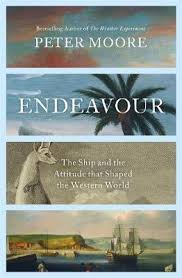 For readers not of a nautical persuasion, knowing that Captain James Cook’s famous expedition of 1768–71 took place aboard the Endeavour, and that the Endeavour was a type of vessel known as a Whitby collier, probably marks the limit of their interest in the ship that took him to the South Seas. (The really well informed may also know that the Resolution, the flagship for Cook’s second voyage to the South Seas, was the same type of vessel.) While the town of Whitby makes some capital out of its linkage with Cook via a museum, and while maritime historians and enthusiasts have researched the Endeavour exhaustively, the general reader has had no further reason to consider Cook’s ship. Until now, that is. Peter Moore’s elegant and entertaining new book offers us a fascinating biography of the Endeavour, using it as a window onto the broader world of the mid-18th-century English Enlightenment.
 V
V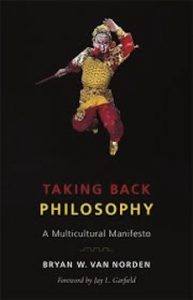 “IT’S HARDER to get two philosophers to agree,” says the ancient savant, “than two water-clocks.” Philosophers love to disagree, and disagreement is the lifeblood of philosophy. The tools and techniques of philosophy — debate, reasoned deliberation, weighing of evidence, clarification of concepts, consideration of consequences — are all instruments in the management of disagreement. And there is disagreement whenever there is reflection — whenever, that is to say, people think about things, and seek to comprehend and make sense of what is going on in the world around them, or between themselves and others, or inside their own minds. Then the question arises: who is right? Which brings in its train further reflection on who has the better evidence and the sounder arguments and so, inevitably, still more reflection on what it is that counts as good or bad in matters of evidence and argument. Even before the times of Socrates and the Buddha, in the oldest of the surviving Upanishads, we find these questions, and they have been asked ever since by people everywhere.
 In a limestone cave nestled high above the Anuy River in Siberia, scientists
  In any era of systemic corruption and malpractice, whistleblowers naturally emerge. But rarely do we get to see the human face behind their mettle, let alone the toll it takes on the psyche to be a cog in the machine of a system they know to be unjust. That’s what film-maker Stephen Maing achieves with Crime + Punishment, his new documentary about the 12 cops, all people of color, who fought back against the New York police department’s covert and illegal quota system, which led to a class action against the department over its practice of pressuring minority officers to issue predetermined numbers of arrests and summonses per month – oftentimes in communities of color deemed “high-crime”.
 Both words in the phrase “liberal democracy” carry meaning, and both concepts are under attack around the world. “Democracy” means that they people rule, while “liberal” (in this sense) means that the rights of individuals are protected, even if they’re not part of the majority. Recent years have seen the rise of an authoritarian/populist political movement in many Western democracies, one that scapegoats minorities in the name of the true “will of the people.” Yascha Mounk is someone who has been outspoken from the start about the dangers posed by this movement, and what those of us who support the ideals of liberal democracy can do about it. Among other things, we discuss how likely it is that liberal democracy could ultimately fail even in as stable a country as the United States.
 You don’t often see the word beautiful in scientific articles. Yet it’s easy to see why cell biologists Niccolò Banterle and Pierre Gönczy used the word when describing a crucial cell structure called the centriole in a recent