
Matt Lutz at Humean Being:
 Here’s an old paradox. The scientist declares that science is the only way to truth and that philosophy is bunk. “Over here in my department,” he proclaims, “we really learn things about reality. We poke and prod the universe and see what happens. We formulate hypotheses, design and conduct experiments to test them, analyze the data, and form justified conclusions about the way the world works on that basis. Over in the philosophy department, they don’t do any of that. They make shit up. What I’m doing is REAL and IMPORTANT and GENERATES KNOWLEDGE. Philosophers do none of those things!” And the philosopher, hearing this rant, has a ready reply: “What experiments did you do to establish the truth of that little speech? None at all! (And if you did run an experiment, I’d love to hear about the setup!) Turns out that you’re endorsing a bunch of philosophical claims. So you yourself have a philosophy all your own! Philosophy is inescapable for both of us. The only difference is that I’m honest about it.”
For those with training in philosophy, this quick back and forth is extremely well-known. (Those without philosophical training often find themselves playing the role of the scientist in that exchange; I see some version of it play out once a month or so on social media.) The lesson that follows is simple and devastatingly compelling: philosophy is not all bullshit.
More here.
Enjoying the content on 3QD? Help keep us going by donating now.
 Put a bagel in a toaster oven and push a button. In a few seconds, heating elements inside the oven glow red and heat the bagel. The action seems simple — after all, ten-year-olds routinely toast bagels without adult supervision. Matters look different if you inquire into what must happen to make the oven work. Pushing the button engages the mechanism of an incomprehensibly vast multinational network: the North American electrical grid.
 Zohran Mamdani’s triumph in New York City’s Democratic primary for mayor has forced, among many Jews, a reckoning with how far they have drifted from one another. Mamdani does not use the slogan “globalize the intifada,” but he does not condemn those who do. He has said that if he were mayor, Benjamin Netanyahu, the prime minister of Israel, would face arrest on war crimes charges if he set foot in New York City. Israel has a right to exist, he says, but “as a state with equal rights.”
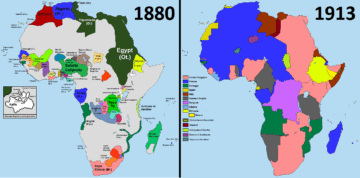 The great surprise of the first quarter of the 21st century has been the endurance of Africa’s colonial borders. The durability of Africa’s multiethnic states, most of which project power unevenly over vast territories and possess relatively small militaries, has everything to do with their tradition of multilateralism, a tradition born out of the social networks of anticolonial struggle and the Pan-African Congresses of the first half of the 20th century. Rather than a
 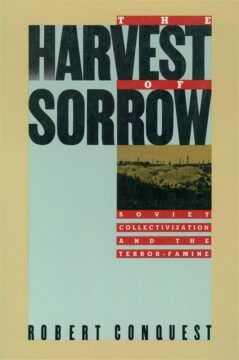 Robert Conquest is a man of contradictions: He has been called “a comic poet of genius” and “a love poet of considerable force” – but he made his mark as one of the first to expose the horrors of Stalinist communism.
 An antibody treatment developed at Stanford Medicine successfully prepared patients for stem cell transplants without toxic busulfan chemotherapy or radiation, a Phase I clinical trial has shown.
 A major mystery about a long-lost legend that was all the rage in Medieval England but survives in only one known fragment has been solved, according to
  The Doomsday Clock — a symbolic arbiter of how close humanity is to annihilating itself — now sits at 89 seconds to midnight, nearer than it has ever been to signalling our species’ point of no return.
 Zorhan Mamdani, the presumed front-runner in the New York mayoral race, calls himself a democratic socialist (which scares Wall Street). So did US senator Bernie Sanders in his earlier election campaigns. Historically, a socialist is usually associated with advocacy of ownership or control of means of production primarily resting with the state or other non-private entities (like cooperatives or worker-owned enterprises). I have not heard either Mamdani or Sanders being associated with the advocacy of any such transformation of most of the means of production in the US. I think they are simply European-style social democrats, who would keep the mode of production essentially capitalist (with some possible light modifications) but with a somewhat greater role of the state in education, health and other welfare services (which, of course, may require higher taxes on the rich).
 Marie NDiaye’s books are often violent, but the violence takes highly particular forms. A person might find herself suddenly called a different name by everyone around her, like Fanny in Among Family (1990, translation 1997), or pregnant with a strange creature, as does Nadia in My Heart Hemmed In (2007, 2017). A lawyer might try to comprehend an act of infanticide; a woman working in a hotel might find herself in a sexual relationship with her boss, who has their encounters filmed. The shocking nature of such scenarios is offset by NDiaye’s prose, precise and formal, with a restraint that adds to her work’s unnerving quality: a placidity where one might expect horror. Claire Denis, with whom NDiaye wrote the screenplay for the film White Material (2009), has described her work as “unbearably sweet.”
 On July 14, 48 students walked through the doors of the Alice L. Walton School of Medicine in Bentonville, Ark. to become its inaugural class. Some came from neighboring cities, others from urban centers in Michigan and New York. Almost all had a choice in where they could become doctors but took a chance on the new school because of its unique approach to rethinking medical education.
 Rail: We have spoken in the past of the status that a copy has in Japan, that, for instance, it is not unusual or out of place to see a copy of a national treasure standing in for an original work in a museum. Practically, most treasures are too fragile and too old to be on continuous view, but it is also more than that, more like the copy can transmit what the original is meant to transmit. This bothers us in the West, but less so in Japan. We have also spoken of a copy as a way of both affirming and breaking from a teacher. Your idea of a person vicariously reaching back to Matabei through your work seems in this vein.
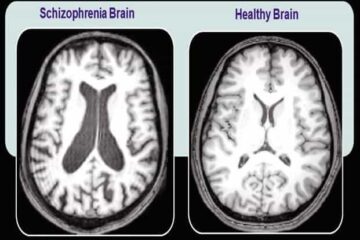 Karl Jaspers, the German psychiatrist and philosopher, has described what he calls the “delusional atmosphere,” a profound alteration in the way certain people experience the world. “There is some change which envelops everything with a subtle, pervasive and strangely uncertain light,” he wrote. People in this state search for a story that explains why everything suddenly feels uncanny and ominous. The “vagueness of content must be unbearable,” he wrote. “To reach some definite idea at last is like being relieved from some enormous burden.”