
Haidt and Lukianoff in The New York Times:
 Before he died, Senator John McCain wrote a loving farewell statement to his fellow citizens of “the world’s greatest republic, a nation of ideals, not blood and soil.” Senator McCain also described our democracy as “325 million opinionated, vociferous individuals.” How can that many individuals bind themselves together to create a great nation? What special skills do we need to develop to compensate for our lack of shared ancestry? When Alexis de Tocqueville toured America in 1831, he concluded that one secret of our success was our ability to solve problems collectively and cooperatively. He praised our mastery of the “art of association,” which was crucial, he believed, for a self-governing people.
In recent years, however, we have become less artful, particularly about crossing party lines. It’s not just Congress that has lost the ability to cooperate. As partisan hostility has increased, Americans report feeling fear and loathing toward people on the other side and have become increasingly less willing to date or marry someone of a different party. Some restaurants won’t serve customers who work for — or even just support — the other team or its policies. Support for democracy itself is in decline. What can we do to reverse these trends? Is there some way to teach today’s children the art of association, even when today’s adults are poor models? There is. It’s free, it’s fun and it confers so many benefits that theAmerican Academy of Pediatrics recently urged Americans to give far more of it to their children. It’s called play — and it matters not only for the health of our children but also for the health of our democracy.
More here.
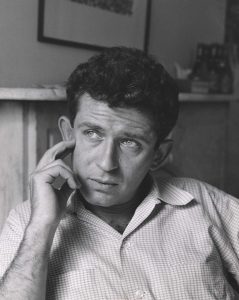 Sometimes I think my work may be seen eventually as some literary equivalent (obviously much reduced in scale) to Picasso. My vice, my strength, is beginnings. Usually I begin well—it is just that I seem to have little interest in finishing. It seems adequate to start a piece, go far enough to glimpse what the possibilities and limitations might be, and then move on. Which for that matter is close to the discrete temper of our time.
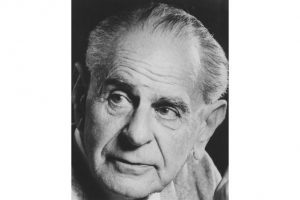 John Horgan in Scientific American:
 Chris Mackin in TNR:
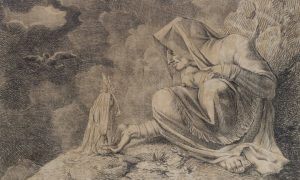 But rationalism doesn’t make the magical universe go away. Possibly because I earn my living as a writer of fiction, and possibly because it’s just the sensible thing to do, I like to pay attention to everything I come across, including things that evoke the uncanny or the mysterious. Homo sum, humani nihil a me alienum puto (I am human, I consider nothing human alien to me). My attitude to magical things is very much like that attributed to the great physicist Niels Bohr. Asked about the horseshoe that used to hang over the door to his laboratory, he’s claimed to have said that he didn’t believe it worked but he’d been told that it worked whether he believed in it or not. When it comes to belief in lucky charms, or rings engraved with the names of angels, or talismans with magic squares, it’s impossible to defend it and absurd to attack it on rational grounds because it’s not the kind of material on which reason operates. Reason is the wrong tool. Trying to understand superstition rationally is like trying to pick up something made of wood by using a magnet.
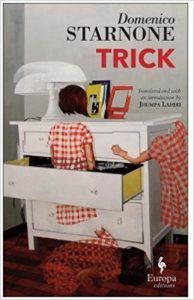 Perhaps it is Starnone’s newness in the English-speaking world that explains why reviewers have tended to jump over his proven track record and speculate about his connections to the mysterious and pseudonymous Italian author Elena Ferrante. Their rumored personal relationship is beside the point, but their books are similarly staggering—and the resemblances between their styles and subjects is hard to ignore.
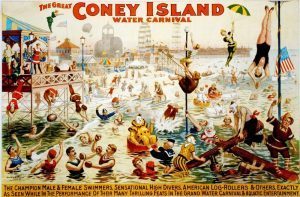 The incredible temple of pity and terror, mirth and amazement, which is popularly known as Coney Island, really constitutes a perfectly unprecedented fusion of the circus and the theatre. It resembles the theatre, in that it fosters every known species of illusion. It suggests the circus, in that it puts us in touch with whatever is hair-raising, breath-taking and pore-opening. But Coney has a distinct drop on both theatre and circus. Whereas at the theatre we merely are deceived, at Coney we deceive ourselves. Whereas at the circus we are merely spectators of the impossible, at Coney we ourselves perform impossible feats—we turn all the heavenly somersaults imaginable and dare all the delirious dangers conceivable; and when, rushing at horrid velocity over irrevocable precipices, we beard the force of gravity in his lair, no acrobat, no lion tamer, can compete with us.
 After World War II, tiny Albania became a hermit state, rigidly controlled by a Stalinist dictator,
  In April 2015, after a long and very public career, first as a male decathlete, then as a reality TV star,
  How the brain fixes the timing of the events we experience depends on episodic memory. Whenever you remember key events from your past, you are tapping into episodic memory, which encodes what happened, where it happened, and when it happened, doing so for all our remembered experiences. Neuroscientists know the brain must have a kind of internal clock or pacemaker to help it track those experiences and record them as memories.
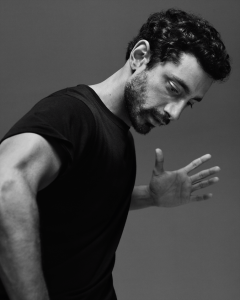 When I let it slip that the press kit I’d been given had referred to him as a ‘Renaissance man,’ Riz Ahmed looked angrily down into his breakfast, a chicken-quinoa bowl with extra chicken. It lasted for just a moment, but the image stayed with me, because it was the only time during our approximately 10 hours together — breakfast in Brooklyn, private sessions with the Islamic art collection at the Metropolitan Museum of Art, YouTube sessions listening to 1970s Qawwali-inspired Iraqi disco, talks on park benches in Fort Greene, tea on the sidewalk of Fulton Avenue and even dinner in Boston, where Ahmed was filming an independent feature about a heavy-metal drummer who’s losing his hearing — that the 35-year-old actor seemed to be truly, genuinely upset.
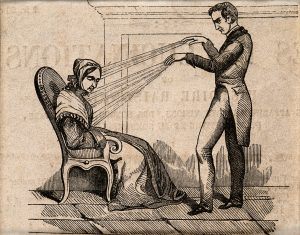 In 1784, America’s soon-to-be second, third, and fourth presidents celebrated the publication of a report debunking the practices of Franz Anton Mesmer, a Vienna-educated physician whose name gives us the word mesmerizing.
 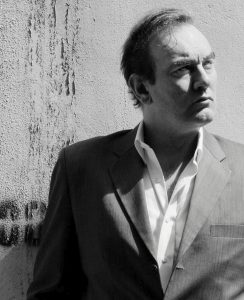 Lawrence Osborne’s death certificate hangs above his desk. “Tuberculosis, 2009,” he says with a laugh over the phone from Bangkok. It is the legacy of an article he wrote about men who fake their deaths for insurance payouts. It’s not hard to see why Raymond Chandler’s estate approached him to write a Philip Marlowe sequel: between writing assignments in seedy, dangerous places and a career spent drinking his way around Poland, Paris, Tuscany, California, New York, Mexico, Morocco, Istanbul and Bangkok, he is a match for Marlowe when it comes to dark and thrilling encounters.
 Theoretical physics has a reputation for being complicated. I beg to differ. That we are able to write down natural laws in mathematical form at all means that the laws we deal with are simple — much simpler than those of other scientific disciplines.
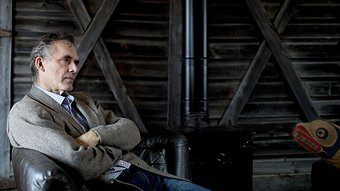 “Comically befuddled, pompous, and ignorant … half nonsense, half banality … the kind of tedious crackpot that one hopes not to get seated next to on a train.”
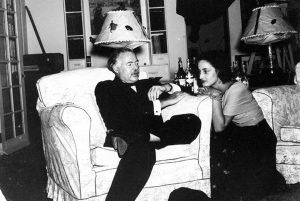 One rainy evening in December 1948, a blue Buick emerged from the darkness of the Venetian lagoon near the village of Latisana and picked up an Italian girl — 18, jet black wet hair, slender legs — who had been waiting for hours at the crossroads. In the car, on his way to a duck shoot, was Ernest Hemingway — round puffy face, protruding stomach and, at 49, without having published a novel in a decade, somewhat past his sell-by. He apologised for being late, and offered the rain-sodden girl a shot of whisky which, being teetotal, she refused.