Christy Wampole in Aeon:
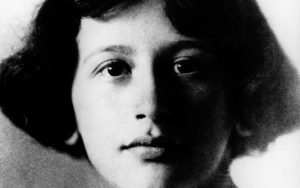 Simone Weil (1909-43) belonged to a species so rare, it had only one member. This peculiar French philosopher and mystic diagnosed the maladies and maledictions of her own age and place – Europe in the first war-torn half of the 20th century – and offered recommendations for how to forestall the repetition of its iniquities: totalitarianism, income inequality, restriction of free speech, political polarisation, the alienation of the modern subject, and more. Her combination of erudition, political and spiritual fervour, and commitment to her ideals adds weight to the distinctive diagnosis she offers of modernity. Weil has been dead now for 75 years but remains able to tell us much about ourselves. Born to a secular Jewish family in Paris, she was gifted from the beginning with a thirst for knowledge of other cultures and her own. Fluent in Ancient Greek by the age of 12, she taught herself Sanskrit, and took an interest in Hinduism and Buddhism. She excelled at the Lycée Henri IV and the École normale supérieure, where she studied philosophy. Plato was a lasting influence, and her interest in political philosophy led her to Karl Marx, whose thought she esteemed but did not blindly assimilate.
As a Christian convert who criticised the Catholic Church and as a communist sympathiser who denounced Stalinism and confronted Trotsky over hazardous party developments, Weil’s independence of mind and resistance to ideological conformity are central to her philosophy. In addition to her intelligence, other aspects of her biography have captured the public’s imagination. As a child during the First World War, she refused sugar because soldiers on the front could have none. Diagnosed with tuberculosis, she died at 34 when working for the resistance government France libre in London, refusing to eat more than the citizens’ rations of her German-occupied France. Teachers and classmates called her the Martian and the Red Virgin, nicknames suggestive of her strangeness and asexuality. A philosopher who refused to cloister herself behind academia’s walls, she worked in factories and vineyards, and left France during the Spanish Civil War to fight alongside the Durruti Column anarchists, a failed mission in many respects.
Several mystical experiences, including Weil’s discovery of the poem ‘Love (III)’ by the 17th-century poet George Herbert led her to embrace Christianity, and many have called for her canonisation as a saint. In her book Devotion (2017), the Francophile poet and punk-rock star Patti Smith described Weil as ‘an admirable model for a multitude of mindsets. Brilliant and privileged, she coursed through the great halls of higher learning, forfeiting all to embark on a difficult path of revolution, revelation, public service, and sacrifice.’ The French politician Charles de Gaulle thought Weil was mad, while the authors Albert Camus, André Gide and T S Eliot recognised her as one of the greatest minds of her time.
More here.
 When something in the body goes wrong, we see a doctor, get examined, get swabbed or draw blood, and usually leave with an answer. But for many patients and families, medical examination doesn’t lead to a diagnosis—and what do they do then? A paper
  No matter how hard they try, brain scientists and cognitive psychologists will never find a copy of Beethoven’s 5th Symphony in the brain – or copies of words, pictures, grammatical rules or any other kinds of environmental stimuli. The human brain isn’t really empty, of course. But it does not contain most of the things people think it does – not even simple things such as ‘memories’.
 “I denounce European colonialism”, wrote CLR James in 1980, “but I respect the learning and profound discoveries of Western civilisation.” A Marxist revolutionary and Pan-Africanist, a historian and novelist, an icon of black liberation and die-hard cricket fan, a classicist and lover of popular culture, Cyril Lionel Roberts James, described by V.S Naipaul as “the master of all topics”, was one of the great (yet grossly underrated) intellectuals of the 20th century.
 The woman sitting next to me in the waiting room is wearing a blue dashiki, a sterile paper face mask to protect her from infection, and a black leather Oakland Raiders baseball cap. I look down at her brown, sandaled feet and see that her toenails are the color of green papaya, glossy and enameled.
 Often, in the study of past human and natural processes, the realisation that we have no evidence of something, and therefore no positive knowledge, transforms too quickly into the conclusion that because we have no positive knowledge, we may therefore assume the negative. Sometimes this conclusion is correct, but it cannot be applied indiscriminately. To cite one interesting example of the correct and useful refusal to apply it, in recent probabilistic reasoning about extraterrestrials the absence of any direct evidence for their existence is taken as irrelevant to whether we should believe in them or not. Drake’s equation is more powerful than radio signals or space ships in shaping our beliefs.
 A few years ago, a senior Japanese central banker let me in on a secret side of his life: Like some others in his rarefied world, he is a passionate devotee of Sherlock Holmes. After formal meetings in capitals around the world, he joins the other Sherlock Holmes buffs over drinks or dinner for trivia competitions, to test their knowledge of obscure plot details, or to share amateur historical research into Victorian London.
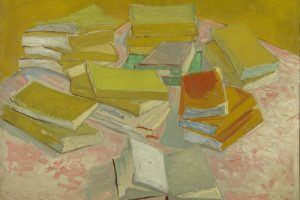 It may strike a reader new to George Scialabba’s writing as extraordinary that
 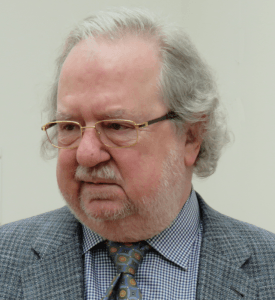 Every time Jim meets a patient, he cries,” Padmanee said to The New York Times in 2016. “Well not every time,” Jim added. Jim Allison and Padmanee Sharma work together at the MD Anderson Cancer Center in Houston, Texas, having met in 2005 and married in 2014. A decade before they met, Allison and his lab team made a seminal discovery that led to a revolution in cancer medicine. The hype is deserved; cancer physicians agree that Allison’s idea is a game-changer, and it now sits alongside surgery, radiation, and chemotherapy as a mainstream option for the treatment of some types of cancer.
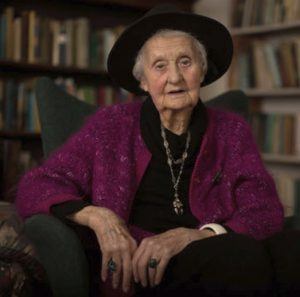 Just a few weeks before her death in October, Mary Midgley agreed to meet and discuss her new book, What Is Philosophy For? It seemed astonishing that someone about to celebrate her 99th birthday had a new book out, but I was less in awe of that than the reputation of one of the most important British philosophers of the 20th century and beyond.
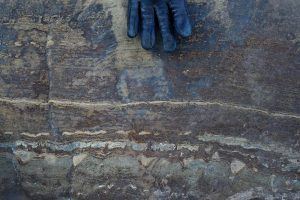 In 2016, a series of unassuming stone shapes rocked the paleobiology world when they were
 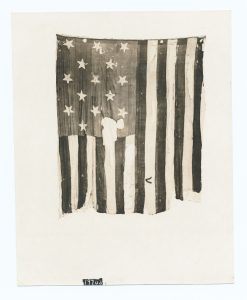 What was America? The question is nearly as old as the republic itself. In 1789, the year George Washington began his first term, the South Carolina doctor and statesman David Ramsay set out to understand the new nation by looking to its short past. America’s histories at the time were local, stories of states or scattered tales of colonial lore; nations were tied together by bloodline, or religion, or ancestral soil. “The Americans knew but little of one another,” Ramsay wrote, delivering an accounting that both presented his contemporaries as a single people, despite their differences, and tossed aside the assumptions of what would be needed to hold them together. “When the war began, the Americans were a mass of husbandmen, merchants, mechanics and fishermen; but the necessities of the country gave a spring to the active powers of the inhabitants, and set them on thinking, speaking and acting in a line far beyond that to which they had been accustomed.” The Constitution had just been ratified at the time of Ramsay’s writing, the first system of national government submitted to its people for approval. “A vast expansion of the human mind speedily followed,” he wrote. It hashed out the nation as a set of principles. America was an idea. America was an argument.
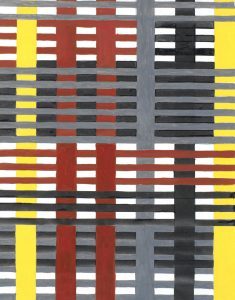 IN A 1985 INTERVIEW, Anni Albers remarked, “I find that, when the work is made with threads, it’s considered a craft; when it’s on paper, it’s considered art.” This was her somewhat oblique explanation of why she hadn’t received “the longed-for pat on the shoulder,” i.e., recognition as an artist, until after she gave up weaving and immersed herself in printmaking—a transition that occurred when she was in her sixties. It’s hard to judge whether Albers’s tone was wry or rueful or (as one critic alleged) “some-what bitter,” and therefore it’s unclear what her comment might indicate about the belatedness of this acknowledgment relative to her own sense of her achievement. After all, she had been making “pictorial weavings”—textiles designed expressly as art—since the late 1940s. Though the question might now seem moot, it isn’t, given the enduring debates about the hierarchical distinctions that separate fine art from craft, and given the still contested status of self-identified fiber artists who followed in Albers’s footsteps and claimed their woven forms as fine art, tout court.
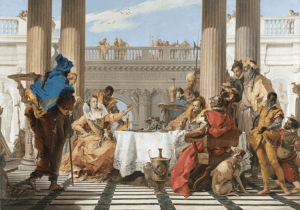 When George Frideric Handel arrived in London in 1710—he was in his mid-20s at the time and would reside in the capital for the duration of his life, becoming a naturalized British subject—he made his reputation composing operas, their librettos written not in his native German but in Italian, as was the fashion of the day. Working tirelessly and continuously, Handel produced an astonishing succession of operatic masterpieces: Giulio Cesare, Tamerlano, Rodelinda, Orlando, and Alcina, to name just a few. Eventually, however, he turned to the language of his adopted land, and it was in his English oratorios—Esther, Saul, Israel in Egypt, Samson, Judas Maccabaeus, Jephtha, and most famously of all, Messiah—that he arguably made his most striking contributions to Western music. Handel was attracted not only to the Bible but also to secular poetry, his subjects inspired by the likes of Milton, Pope, and Dryden. The composer’s command of English was never stellar (he was hardly a fluent exophone in the manner of Voltaire, Conrad, or Beckett), which makes his facility with the cadences, imagery, rhythms, and rhymes of English verse all the more remarkable.