Steven Mithen in The Guardian:
 We will soon be able to identify the likelihood that a newborn baby – perhaps your baby – will be susceptible to depression, anxiety and schizophrenia throughout his or her life. We will know the probability that our newborns will have difficulty learning to read, become obese and be prone to Alzheimer’s disease in their later years. Good news? Robert Plomin thinks so. In Blueprint, he argues such insights should make us more tolerant of those who might be overweight or prone to depression; they will enable us to support our children better and plan for our own life’s course. He is equally pleased with the discovery that much of what we think of as nurture – the caring, supporting environments we build for our children – has, on average, no impact on our loved ones’ development. Plomin explains that nurture in the home is as irrelevant as the school environment for influencing whether we become kind or gritty, happy or sad, wealthy or poor, and that this leads to greater equality of opportunity than would have otherwise been the case. The only thing that matters for our personalities and much else is the DNA that we inherit and those chance events of our lives beyond anyone’s control.
This is good news certainly if it follows that knowledge is always better than ignorance and self-delusion. If parents are wasting their time reading bedtime stories when their children really don’t want to listen, or wasting their money paying for expensive private schools, then that is all good to know. I am not in a position to question the science, and Plomin has been studying the genetics of personality for 45 years. He is a pioneer in studying identical twins (with their identical DNA) growing up in different families and in comparing adopted and birth children within the same family (having no overlap in their DNA other than the 99% that we all share). By such studies, typically involving thousands of participants and extending over several decades, Plomin and his colleagues have examined the relative contributions of genes and environment, otherwise known as nature and nurture, to the formation of personalities. Genes win out every time.
More here.
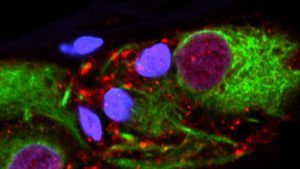 The appendix has a reputation of being useless at best. We tend to ignore this pinkie-size pouch dangling off our large intestine unless it gets inflamed and needs cutting out. But a new study suggests this enigmatic organ in the gut harbors a supply of a brain-damaging protein involved in Parkinson’s disease—even in healthy people. The study is the largest yet to find that an appendectomy early in life can decrease a person’s risk of Parkinson’s or delay its onset. “It plays into this whole booming field of whether Parkinson’s possibly starts in the gut,” says Per Borghammer, a neuroscientist at Aarhus University in Denmark who was not involved in the study. “And that would be a radical change in our understanding of the disease.” Look inside the brain of a person with Parkinson’s and you’ll find clumps of a misfolded form of a protein known as α-synuclein (αS). The protein’s normal function isn’t fully clear, but in this clumpy state, it may damage and kill neurons, including those near the base of the brain that help control movement. The results are the hallmark tremors and body rigidity of Parkinson’s.
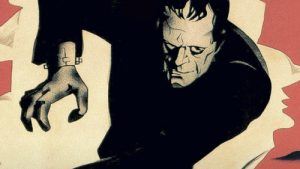 Mary Wollstonecraft Shelley’s 200-year-old creature is more alive than ever. In his new role as the bogeyman of artificial intelligence (AI), ‘the monster’ made by Victor Frankenstein is all over the internet. The British literary critic Frances Wilson even
  HALLOWEEN IS THE ONE
  When we consider the future that technological change will bring about, it is tempting to envision a world taken over by robots, where the singularity has given way to superintelligent agents and human extinction. This is the image of our future we have grown accustomed to seeing in cinematic depictions, but it is not the future that British barrister Jamie Susskind wants us to worry about. Instead, in Future Politics: Living Together in a World Transformed by Tech, Susskind focuses on how digital technologies control human life rather than eliminate it.
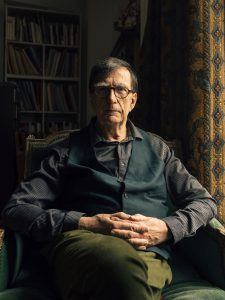 In the summer of 1996, during an international anthropology conference in southeastern Brazil, Bruno Latour, France’s most famous and misunderstood philosopher, was approached by an anxious-looking developmental psychologist. The psychologist had a delicate question, and for this reason he requested that Latour meet him in a secluded spot — beside a lake at the Swiss-style resort where they were staying. Removing from his pocket a piece of paper on which he’d scribbled some notes, the psychologist hesitated before asking, “Do you believe in reality?”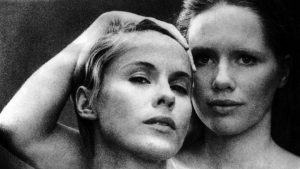
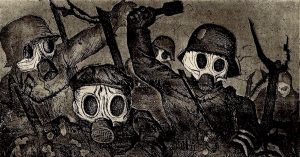 “The war has left its imprint in our souls [with] all these visions of horror it has conjured up around us,” wrote French author Pierre de Mazenod in 1922, describing the Great War. His word, horreur, appears in various forms in an incredible number of accounts of the war, written by English, German, Austrian, French, Russian, and American veterans. The years following the Great War became the first time in human history the word “horror” and its cognates appeared on such a massive scale. Images of catastrophe abounded. The Viennese writer Stefan Zweig, one of the stars in the firmament of central Europe’s decadent and demonic café culture before 1914, wrote of how “bridges are broken between today and tomorrow and the day before yesterday” in the conflict’s wake. Time was out of joint. When not describing the war as horror, the imagery of all we would come to associate with the word appeared. One French pilot passing over the ruined city of Verdun described the landscape as a haunted waste and a creature of nightmare, “the humid skin of a monstrous toad.”
 The mesmeric work of Lou Harrison (1917–2003) stands apart from so much of the music written in 20th-century America—so singular is its idiom, so striking are its borderless, cross-cultural sounds—yet despite a swell of interest coinciding with the composer’s centennial last year, his scores are all too rarely heard. He was always something of an outsider, this unrepentant free spirit and individualist. Harrison studied with Arnold Schoenberg in the 1940s, when the 12-tone master was ensconced in Los Angeles, and gave serial techniques a serious go, but his best music—lyrical, melodic, indebted to the sounds of Southeast Asia—inhabits a different world from so much of the postmodern avant-garde.
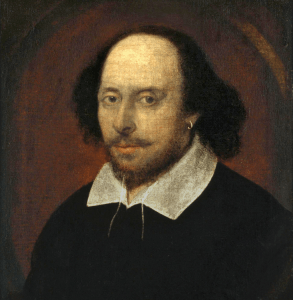 You’ve heard the argument before: Genes are the permanent aristocracy of evolution, looking after themselves as fleshy hosts come and go. That’s the thesis of a book that, last year, was christened the most influential science book of all time: Richard Dawkins’ The Selfish Gene. But we humans actually generate far more actionable information than is encoded in all of our combined genetic material, and we carry much of it into the future. The data outside of our biological selves—call it the dataome—could actually represent the grander scaffolding for complex life. The dataome may provide a universally recognizable signature of the slippery characteristic we call intelligence, and it might even teach us a thing or two about ourselves. It is also something that has a considerable energetic burden. That burden challenges us to ask if we are manufacturing and protecting our dataome for our benefit alone, or, like the selfish gene, because the data makes us do this because that’s what ensures its propagation into the future. Take, for instance, William Shakespeare.
 The cognitive revolution
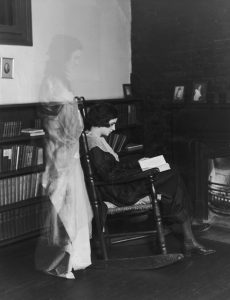 In 1960, the literary critic Leslie Fiedler delivered a eulogy for the ghost story in his classic study “Love and Death in the American Novel.” “An obsolescent subgenre,” he declared, with conspicuous relish; a “naïve” little form, as outmoded as its cheap effects, the table-tapping and flickering candlelight. Ghost stories belong to — brace yourself for maximum Fiedlerian venom — “middlebrow craftsmen,” who will peddle them to a rapidly dwindling audience and into an extinction that can’t come soon enough.
 Some of the scientists most often cited by the Intergovernmental Panel on Climate Change (IPCC) have taken the unusual step of
 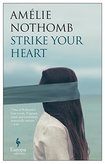 NO WORKING WRITER believes in the shattering power of an encounter—with another person, with a new sensation, with possibility—more than Amélie Nothomb, the prolific Paris-based Belgian who’s published a novel a year since 1992’s Hygiène de l’assassin (rendered in English as Hygiene and the Assassin, though a more accurate title would be The Assassin’s Purity). Her first book offered an impressive blueprint of what would define her subsequent work: arrogant, infuriating personalities; vicious character clashes; childhood love so obsessive that it bleeds out over an adult’s entire history; and philosophical declarations about war. (Nothomb’s fervent worship of “war,” used to describe any grand conflict, is as distinctive a signature as her actual name.) “My books are more harmful than war,” brags the author at the center of Hygiene, “because they make you want to die, whereas war, in fact, makes you want to live.” His demeanor is so provoking that it incites murder, which is another Nothomb theme. People are always destroying one another. She’s killed a self-named avatar off on at least two separate occasions.