
Jordan Robertson and Michael Riley at Bloomberg:
 In 2015, Amazon.com Inc. began quietly evaluating a startup called Elemental Technologies, a potential acquisition to help with a major expansion of its streaming video service, known today as Amazon Prime Video. Based in Portland, Ore., Elemental made software for compressing massive video files and formatting them for different devices. Its technology had helped stream the Olympic Games online, communicate with the International Space Station, and funnel drone footage to the Central Intelligence Agency. Elemental’s national security contracts weren’t the main reason for the proposed acquisition, but they fit nicely with Amazon’s government businesses, such as the highly secure cloud that Amazon Web Services (AWS) was building for the CIA.
To help with due diligence, AWS, which was overseeing the prospective acquisition, hired a third-party company to scrutinize Elemental’s security, according to one person familiar with the process. The first pass uncovered troubling issues, prompting AWS to take a closer look at Elemental’s main product: the expensive servers that customers installed in their networks to handle the video compression. These servers were assembled for Elemental by Super Micro Computer Inc., a San Jose-based company (commonly known as Supermicro) that’s also one of the world’s biggest suppliers of server motherboards, the fiberglass-mounted clusters of chips and capacitors that act as the neurons of data centers large and small. In late spring of 2015, Elemental’s staff boxed up several servers and sent them to Ontario, Canada, for the third-party security company to test, the person says.
Nested on the servers’ motherboards, the testers found a tiny microchip, not much bigger than a grain of rice, that wasn’t part of the boards’ original design.
More here.
 In the wake of Hurricane Florence and the rains that followed, residents of disaster-stricken areas of North Carolina are now also dealing with swarms of “
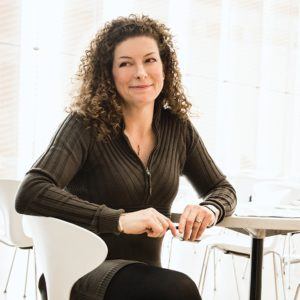 Aging — everybody does it, very few people actually do something about it. Coleen Murphy is an exception. In her laboratory at Princeton, she and her team study aging in the famous C. Elegans roundworm, with an eye to extending its lifespan as well as figuring out exactly what processes take place when we age. In this episode we contemplate what scientists have learned about aging, and the prospects for ameliorating its effects — or curing it altogether? — even in human beings.
 A village boy once asked his local priest, “Father, when you go to sleep, where do you lay your beard, under or over your blanket?” Ever since he heard the question, the priest couldn’t sleep through the night. If he laid his beard under the blanket, he felt hot; if his beard was over the blanket, he got cold. He had always slept fine, without waking. But once he was asked to pick a single side, neither one seemed comfortable.
 When I first adopted Lucas nine years ago from a cat rescue organization in Washington, D.C., his name was Puck. “Because he’s mischievous,” his foster mother said. Although we changed the name, her analysis proved correct. Unlike his brother Tip, whom I also adopted, a gray cat with white paws and an Eeyore-ish dour doofy sweetness, Lucas was from the start a fierce black fireball, a menace to stray toes or blanket fringes or loose items on tabletops. He was my alarm clock in the morning with his habit of knocking my hairbrush, deodorant, and earrings box off my bureau until I got up to feed him.
 As former Labor secretary Robert Reich recently noted, Ivy League schools are government-subsidized playgrounds for the rich: “Imagine a system of college education supported by high and growing government spending on elite private universities that mainly educate children of the wealthy and upper-middle class, and low and declining government spending on public universities that educate large numbers of children from the working class and the poor.
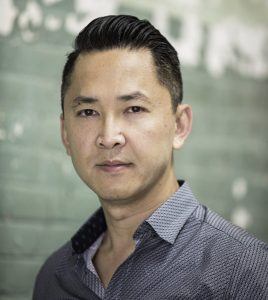 Since the 2015 publication of his Pulitzer Prize–winning debut novel The Sympathizer, Viet Thanh Nguyen has emerged as one of the literary world’s leading public intellectuals. At a time of rising xenophobia and anti-refugee sentiment in the United States and elsewhere, Nguyen’s fiction, academic writing, and media commentary remind us of the need to keep telling the stories that drop out of national narratives, and to remember the histories that the powerful would have us forget. In the following conversation with Karl Ashoka Britto, Nguyen discusses literary form and the representation of violence, the complex dynamics of remembering and forgetting, and the possibility of a politics that could be post-communist without being pro-capitalist.
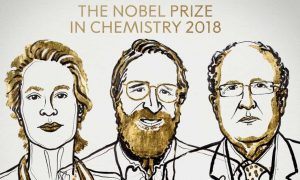 Three scientists have won the Nobel prize in chemistry for their work in harnessing evolution to produce new enzymes and antibodies.
 Something has gone wrong in the university—especially in certain fields within the humanities. Scholarship based less upon finding truth and more upon attending to social grievances has become firmly established, if not fully dominant, within these fields, and their scholars increasingly bully students, administrators, and other departments into adhering to their worldview. This worldview is not scientific, and it is not rigorous. For many, this problem has been growing increasingly obvious, but strong evidence has been lacking. For this reason, the three of us just spent a year working inside the scholarship we see as an intrinsic part of this problem.
 Physically unprepossessing – overgrown, clumsy, “slab-faced” – he was nonetheless a magnetic presence, and in his fledgling days in London as high priest of the aesthetic movement he endured chaffing with “remarkable nonchalance”. One gets here the sense of the young Wilde’s talent to annoy as much as to amuse.
 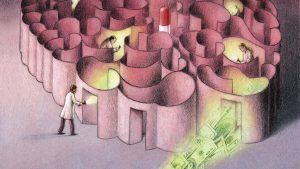 When molecular biologist Darren Baker was winding up his postdoc studying cancer and aging a few years ago at the Mayo Clinic in Rochester, Minnesota, he faced dispiritingly low odds of winning a National Cancer Institute grant to launch his own lab. A seemingly unlikely area, however, beckoned: Alzheimer’s disease. The U.S. government had begun to ramp up research spending on the neurodegenerative condition, which is the sixth-leading cause of death in the United States and will afflict an estimated 14 million people in this country by 2050. “There was an incentive to do some exploratory work,” Baker recalls.
 The
The  It takes Deborah Eisenberg about a year to write a short story. She works at a desk overlooking the gently curving stairwell in her spacious, light-soaked Chelsea apartment. A small painting of a brick wall, suspended from the high ceiling by two slender cables, hangs at eye level in front of the desk, a sardonic reminder of the nature of her task. For Eisenberg, coming up against a brick wall is what writing often feels like. At 72, she has been conducting her siege on the ineffable for more than four decades, and yet the creative process remains almost totally opaque to her. “You work and you work and you work and you work,” she told me recently, her delicate, quavering voice an audible testament to the endless hours of labor. “And for months or years on end, you’re just a total dray horse, and then you finally finish something, and the next day you look at it and you think, How did that get there? What is that? Why were those the things that I seemed to need to say?”
 Prisons are reminiscent of Tolstoy’s famous observation about unhappy families: Each “is unhappy in its own way,” though there are some common features — for prisons, the grim and stifling recognition that someone else has total authority over your life.