
Charles T. Rubin at the New Atlantis:
 What makes Gibson’s portrait of great cities thought-provoking is that, despite all this change, he imagines them persisting at all, in some ways operating no worse than the worst that can be found today. This situation becomes all the more thought-provoking when we see how he links the fate of his cities to the fate of the modern project itself, whose deep impact on making cities what they are today will persist into the future.
The modern project — meaning here not just scientific and technological progress, but also liberal democratic politics, free market economics, and social egalitarianism — promised to alleviate many of the historical givens of the human condition, like material scarcity, rampant disease, inequality, and social and political oppression. And it absolutely has expanded the possibilities of human life for vast numbers of people over the course of time. Yet for Gibson, the modern project is also in some ways responsible for, or at least unable to prevent, the civilizational crashes his stories anticipate. Modernity does not survive unaltered in his stories. The technological center no longer holds, and we see increased social stratification and the rise of oligarchic political and economic arrangements of a sort that some will say are quite familiar today.
more here.
Enjoying the content on 3QD? Help keep us going by donating now.
 For many months, the only place in New York City still showing Pedro Almodóvar’s most recent film—his first English-language feature,
 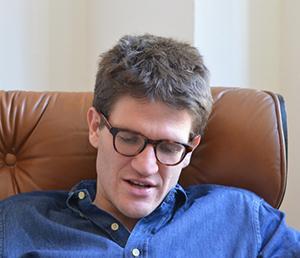 For the last two and a half years, since the release of ChatGPT, I’ve been suffering from fits of dread. It’s not every minute, or even every day, but maybe once a week, I’m hit by it—slackjawed, staring into the middle distance—frozen by the prospect that someday, maybe pretty soon, everyone will lose their job.
 In November, James Lindsay—an independent scholar, author, and sometime
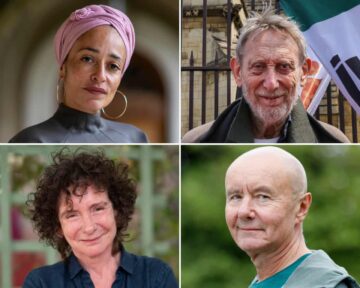 Zadie Smith, Michael Rosen, Irvine Welsh and Jeanette Winterson are among more than 200 writers who have
 The effect of a gene can vary greatly — and sometimes be the complete opposite — depending on whether it is inherited from the mother or the father. Some genetic variants can, for instance, increase a person’s risk of developing type 2 diabetes when inherited from the father, but lower it when inherited from the mother. But such effects have been challenging to unpick owing to gaps in genomic data. A study published in Nature this week describes a
  Two moments in Graham Greene’s published life have often returned to me in the past twenty years. This may sound strange: an ideal reader should refrain from crossing the boundary between a writer’s work and his life. And yet it is inevitable: rarely does an author have the luxury of having no known biography. Greene, having written about his life and having had his life extensively written about by others, remains near when one reads his work—not insistently dominating or distracting, as some writers may prove to be, but as a presence often felt and at times caught by a side glance.
 Yes, every fashionable conference has some panel on AI. Yes, social media is overrun with hypemen trying to alert their readers to the latest “mind-blowing” improvements of Grok or ChatGPT. But even as the maturation of AI technologies provides the inescapable background hum of our cultural moment, the mainstream outlets that pride themselves on their wisdom and erudition—even, in moments of particular self-regard, on their meaning-making mission—are lamentably failing to grapple with its epochal significance.
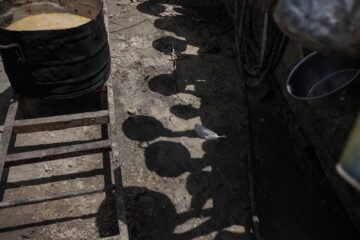 The worst-case scenario of famine is currently playing out in the Gaza Strip.” These were the
  A
A