Adam Gopnik at The New Yorker:
 Every death erases a uniqueness. But to say that there was no one on earth like Francine du Plessix Gray is to state a simple and obvious truth. There were three cultural—call them national—streams in her existence: French by birth and background, she was American in upbringing and in principles, and yet also deeply Russian in personal mythology and values and warmth. (Her Russian mother, Tatiana Yakovleva, was the great love of the poet Mayakovsky’s life, and Francine, by a rumor that both exasperated and entertained her, was acclaimed on her visits to Russia as his illegitimate daughter.) Francine, who died on Sunday, at the age of eighty-eight, was raised in what used to be called high or café society—Tatiana, whom she once profiled warmly but warily in this magazine, became, after a hair-raising escape from France during the war, a leading hat maker and style setter at Saks Fifth Avenue; her stepfather, Alexander Liberman, was for many decades the editorial director of all Condé Nast magazines. Francine was thin, tall, beautiful, stylish, and naturally elegant. (Someone who adored her recalls her welcoming visitors to a showing of paintings by her husband, Cleve Gray, dressed all in white, a cashmere sweater perfectly thrown around her shoulders.) She could easily have settled for a life as a model—astonishingly photogenic, she was photographed many times by Irving Penn—or simply as a society beauty, a New York “philanthropist.” But she chose, with an energy and a purpose not made less admirable by the taut stylishness with which she accomplished it, to become what she admired: a novelist, a working reporter, a biographer, a leading feminist, a woman of letters, an honest and unsparing and tender memoirist. She became Francine du Plessix Gray.
more here.
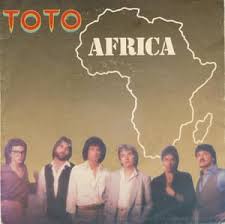 Somewhere amid the sand dunes of the world’s oldest desert croons a soft voice: “It’s gonna take a lot to take me away from you.”
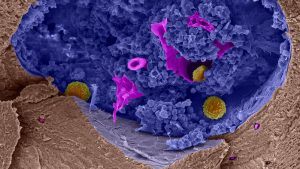 In multiple sclerosis (MS), a disease that strips away the sheaths that insulate nerve cells, the body’s immune cells come to see the nervous system as an enemy. Some drugs try to slow the disease by keeping immune cells in check, or by keeping them away from the brain. But for decades, some researchers have been exploring an alternative: wiping out those immune cells and starting over. The approach, called hematopoietic stem cell transplantation (HSCT), has long been part of certain cancer treatments. A round of chemotherapy knocks out the immune system and an infusion of stem cells—either from a patient’s own blood or, in some cases, that of a donor—rebuilds it. The procedure is already in use for MS and other autoimmune diseases at several clinical centers around the world, but it has serious risks and is far from routine. Now, new results from a randomized clinical trial suggest it can be more effective than some currently approved MS drugs. “A side-by-side comparison of this magnitude had never been done,” says Paolo Muraro, a neurologist at Imperial College London who has also studied HSCT for MS. “It illustrates really the power of this treatment—the level of efficacy—in a way that’s very eloquent.”
 Just over forty years ago the Supreme Court struck down race-based quotas in school admissions while also upholding the core tenets of affirmative action. In the landmark 1978 decision, Regents of the University of California v. Bakke, Justice Lewis F. Powell, Jr., singled out Harvard’s admissions program as an exemplar for achieving diversity and applauded the university’s own description of its policy, according to which the “race of an applicant may tip the balance in his favor just as geographic origin or a life spent on a farm may tip the balance in other candidates’ cases.” As the Supreme Court would later emphasize, such review considered race merely a “factor of a factor of a factor.”
 Among the world’s endangered minorities, Iranian Jews are an anomaly. Like their counterparts, their conditions categorically refute all the efforts their nation makes at seeming civilized and egalitarian—and so they embody, often without wanting to, all that is ugly and unjust about their native land.
 Rosa Luxemburg thought Berlin could hide her. Five days into 1919, the Marxist revolutionary had helped to transform a wave of strikes and protests in the city into open revolution – the so-called Spartacist uprising. But by January 12, she was on the run, the revolt crushed by right-wing militia groups deployed by Germany’s new socialist government.
 And even if we could get a President Gillibrand in 2020, another lukewarm Democratic presidency will not only further impoverish and destabilize the working class and its suffering institutions, it will also all but guarantee that 2024 brings us POTUS Hamburglar in an SS uniform. No, it’s Bernie or bust. I don’t care if we have to roll him out on a hand truck and sprinkle cocaine into his coleslaw before every speech. If he dies mid-run, we’ll stuff him full of sawdust, shove a hand up his ass, and operate him like a goddamn muppet.
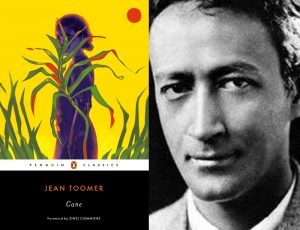 The literary world was then (as it is now, perhaps) hungry for representative black voices; as Hutchinson writes, “Many stressed the ‘authenticity’ of Toomer’s African-Americans and the lyrical voice with which he conjured them into being.” This act of conjuring lured critics into reflexively accepting the book as a representation of the black South—and Toomer as the voice of that South. As his one-time friend Waldo Frank remarked in a forward to the book’s original edition, “This book is the South.” Cane transformed Toomer into a Negro literary star whose influence would filter down through African-American literary history: his interest in the folk tradition crystallized the Harlem Renaissance’s search for a useable Negro past, and would be instructive for later writers from Zora Neale Hurston to Ralph Ellison to Elizabeth Alexander.
 It is not the critical fashion to dwell on Shelley’s Platonism, and it is true that his expressions of enthusiasm for various Platonic doctrines were qualified. But it is difficult not to see the main feeling in his work as a conviction that the world of experience is merely an imperfect clue to the real reality that lies beyond, the idea of which haunts it; and, after all, that is nothing but a Platonic notion. ‘The truth and splendour of his imagery and the melody of his language is the most intense that it is possible to conceive,’ Shelley says of Plato in his polemic A Defence of Poetry; he translated the Symposium, and once said he would rather be damned with Plato and Bacon than go to heaven with the Anglican worthies Paley and Malthus. ‘You know that I always seek in what I see the manifestation of something beyond the present & tangible object,’ he told a correspondent: there is ‘no more fitting epigraph to the dynamic driving Shelley’s literary career’, according to the poet and critic Michael O’Neill, one of our best Shelleyan commentators. The ghostly effects that this penchant for intangibility enables in his poetry – its distinctive repertoire of veils and shadows and hauntings – are eerily magnificent and inimitably his own. No other poet could have conceived the extraordinary opening lines of the ‘Hymn to Intellectual Beauty’: ‘The awful shadow of some unseen Power/Floats though unseen amongst us’. Not even a Power, but the shadow of a Power, so already placed at two removes from anything like concrete presence; and then the oddly effective insistence involved in repeating the word ‘unseen’, as though he were struggling to capture the Power’s sheerly counter-empirical invisibility by doubling up the word.
 On October 1, 2014, the National Labor Relations Board ruled that a Burger King franchise in Ferndale, Michigan, near Detroit, had bullied a part-time worker, Claudette Wilson, by sending her home two hours early for not positioning pickles correctly on her burgers. As Judge Arthur J. Anchan put it, the company illegally sent Wilson home for failing to “put pickles on her sandwiches in perfect squares.”
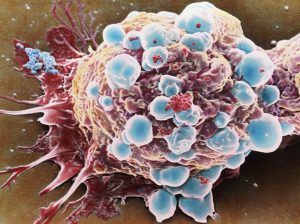 A survey of thousands of advanced cancers suggests a way to identify those most likely to respond to revolutionary therapies that unleash an immune response against tumours. But the results highlight how difficult it will be to translate such an approach into a reliable clinical test. The findings
 Like millions of other people in the US, I often begin the day by listening to ‘Morning Edition,’ the early morning news program on National Public Radio. Sometimes, though, I get so disgusted by the rubbish spewed by the politicians being interviewed, or so infuriated by the flimsiness of the questions put to them, that I just can’t stand it and have to take myself out of earshot. Friday was a case in point.
 In October of 2014, a bunch of young men and women did their university proud. A couple of engineers, two finance graduates, a biology major, some finishing accounting and business degrees, and a clutch from the school of humanities and social sciences; Muslims mostly, two Christians, a lone Hindu, one Buddhist wannabe, and two oblivious to religion though aware of its place in other folks’ lives. They came together from Sahiwal, Karachi, Gilgit, Swat, Peshawar, Gujranwala, one from Quetta (non-Baluchi), and two from Delhi via the University of Texas. Though the majority of students and faculty stayed away, these young men and women with similar features and skin tones, in colorful flowing kurtas, chooridars, skinny jeans, funky T-shirts, and hijabs, got together to celebrate Diwali, a festival that celebrates Ram’s return from exile.