
Roya Hakakian in Tablet:
 Among the world’s endangered minorities, Iranian Jews are an anomaly. Like their counterparts, their conditions categorically refute all the efforts their nation makes at seeming civilized and egalitarian—and so they embody, often without wanting to, all that is ugly and unjust about their native land.
But Iran’s Jewish community does something more. It also embodies the nation’s hope, the narrative of its resistance and struggle for a better future—one that has been on the brink of arriving ever since the revolution in 1979. To understand why Jews continue to remain in Iran is to understand the tortured tale of Iran. Nowhere else can the stubborn continuity of a minority stand as a metaphor in the elegy of a nation’s downfall.
The metaphor is apt because it is born out of a paradox. And contemporary Iran is nothing if not an enigmatic paradox. The world’s only Shiite theocracy—the archenemy of Israel—led by Holocaust deniers, is still home to some 10,000 Jews. Time and again, leading journalists have used this fact to make a partisan point. They have gone into synagogues, sat across from one of the few savvy representatives of the community, and asked the same tired questions: Are you afraid? Are you mistreated? Do you like Israel? Only to return to broadcast the same tired answers: We are not afraid. We are treated very well. We only pray to Jerusalem, but belong to Iran.
More here.
 Rosa Luxemburg thought Berlin could hide her. Five days into 1919, the Marxist revolutionary had helped to transform a wave of strikes and protests in the city into open revolution – the so-called Spartacist uprising. But by January 12, she was on the run, the revolt crushed by right-wing militia groups deployed by Germany’s new socialist government.
 And even if we could get a President Gillibrand in 2020, another lukewarm Democratic presidency will not only further impoverish and destabilize the working class and its suffering institutions, it will also all but guarantee that 2024 brings us POTUS Hamburglar in an SS uniform. No, it’s Bernie or bust. I don’t care if we have to roll him out on a hand truck and sprinkle cocaine into his coleslaw before every speech. If he dies mid-run, we’ll stuff him full of sawdust, shove a hand up his ass, and operate him like a goddamn muppet.
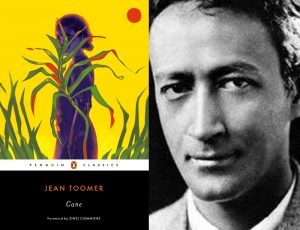 The literary world was then (as it is now, perhaps) hungry for representative black voices; as Hutchinson writes, “Many stressed the ‘authenticity’ of Toomer’s African-Americans and the lyrical voice with which he conjured them into being.” This act of conjuring lured critics into reflexively accepting the book as a representation of the black South—and Toomer as the voice of that South. As his one-time friend Waldo Frank remarked in a forward to the book’s original edition, “This book is the South.” Cane transformed Toomer into a Negro literary star whose influence would filter down through African-American literary history: his interest in the folk tradition crystallized the Harlem Renaissance’s search for a useable Negro past, and would be instructive for later writers from Zora Neale Hurston to Ralph Ellison to Elizabeth Alexander.
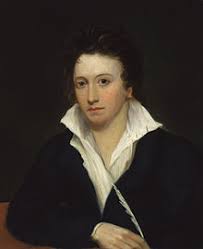 It is not the critical fashion to dwell on Shelley’s Platonism, and it is true that his expressions of enthusiasm for various Platonic doctrines were qualified. But it is difficult not to see the main feeling in his work as a conviction that the world of experience is merely an imperfect clue to the real reality that lies beyond, the idea of which haunts it; and, after all, that is nothing but a Platonic notion. ‘The truth and splendour of his imagery and the melody of his language is the most intense that it is possible to conceive,’ Shelley says of Plato in his polemic A Defence of Poetry; he translated the Symposium, and once said he would rather be damned with Plato and Bacon than go to heaven with the Anglican worthies Paley and Malthus. ‘You know that I always seek in what I see the manifestation of something beyond the present & tangible object,’ he told a correspondent: there is ‘no more fitting epigraph to the dynamic driving Shelley’s literary career’, according to the poet and critic Michael O’Neill, one of our best Shelleyan commentators. The ghostly effects that this penchant for intangibility enables in his poetry – its distinctive repertoire of veils and shadows and hauntings – are eerily magnificent and inimitably his own. No other poet could have conceived the extraordinary opening lines of the ‘Hymn to Intellectual Beauty’: ‘The awful shadow of some unseen Power/Floats though unseen amongst us’. Not even a Power, but the shadow of a Power, so already placed at two removes from anything like concrete presence; and then the oddly effective insistence involved in repeating the word ‘unseen’, as though he were struggling to capture the Power’s sheerly counter-empirical invisibility by doubling up the word.
 On October 1, 2014, the National Labor Relations Board ruled that a Burger King franchise in Ferndale, Michigan, near Detroit, had bullied a part-time worker, Claudette Wilson, by sending her home two hours early for not positioning pickles correctly on her burgers. As Judge Arthur J. Anchan put it, the company illegally sent Wilson home for failing to “put pickles on her sandwiches in perfect squares.”
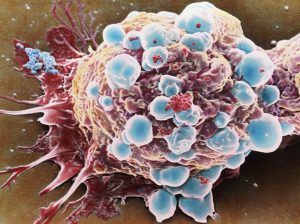 A survey of thousands of advanced cancers suggests a way to identify those most likely to respond to revolutionary therapies that unleash an immune response against tumours. But the results highlight how difficult it will be to translate such an approach into a reliable clinical test. The findings
 Like millions of other people in the US, I often begin the day by listening to ‘Morning Edition,’ the early morning news program on National Public Radio. Sometimes, though, I get so disgusted by the rubbish spewed by the politicians being interviewed, or so infuriated by the flimsiness of the questions put to them, that I just can’t stand it and have to take myself out of earshot. Friday was a case in point.
 In October of 2014, a bunch of young men and women did their university proud. A couple of engineers, two finance graduates, a biology major, some finishing accounting and business degrees, and a clutch from the school of humanities and social sciences; Muslims mostly, two Christians, a lone Hindu, one Buddhist wannabe, and two oblivious to religion though aware of its place in other folks’ lives. They came together from Sahiwal, Karachi, Gilgit, Swat, Peshawar, Gujranwala, one from Quetta (non-Baluchi), and two from Delhi via the University of Texas. Though the majority of students and faculty stayed away, these young men and women with similar features and skin tones, in colorful flowing kurtas, chooridars, skinny jeans, funky T-shirts, and hijabs, got together to celebrate Diwali, a festival that celebrates Ram’s return from exile.
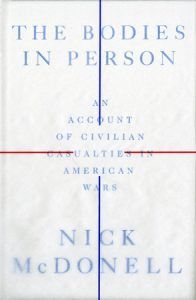 Nick McDonell has spent the past decade going in and out of war zones across the
  Not long ago, during an Amtrak ride, I met a college student who told me he was a fiction writer. I asked him what he’d been writing and reading, and he said that he was writing a novel about time travel, and that he was reading — well, he had been reading Edith Wharton’s “The House of Mirth,” but after about 50 pages, he said, he’d tossed it into the trash.
 During the twentieth century, discoveries in mathematical logic revolutionized our understanding of the very foundations of mathematics. In 1931, the logician Kurt Gödel showed that, in any system of axioms that is expressive enough to model arithmetic, some true statements will be unprovable
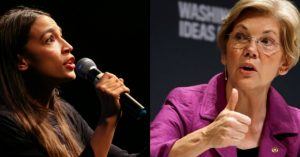 On “60 Minutes” Sunday, Ocasio-Cortez talked about a 70 percent tax rate for Americans earning more than $10 million a year. She said this would fund a Green New Deal: big money for renewable energy and technologies to avert climate catastrophe.