
Enjoying the content on 3QD? Help keep us going by donating now.
Category: Recommended Reading
The Secret In Surfing
M M Owen at Aeon Magazine:
 The first time I ever caught an unbroken wave was one of the greatest moments of my life. The memory is crystalline, perfect: the glistening aquamarine curl extending away from me, the massive sky above; my orange foam board under the soles of my feet, and a feeling of sliding, slicing downward – feet like knives in those precious impossible seconds before the wave begins to break. The dismount was not elegant. Astonished at what I had just seen, where I had just been, I yelped and slapped the water. A couple of dog-walkers eyed me from the shore. Many hours of spluttering, messy effort to suddenly be so effortlessly, elegantly in tune with the shape of a wave. All the surfing I do from here on out will partly be in pursuit of this original sensation.
My ex-wife was a brilliant woman, decisive in a way I’m often not. I’d seen her ruthlessly cut old friends out of her life, old habits, old patterns. I never expected to be on the receiving end but, all of a sudden, on a winter evening in a cocktail bar in downtown Lisbon, there I was. What I thought was a crisis meeting was in fact a farewell.
more here.
Enjoying the content on 3QD? Help keep us going by donating now.
“Naulakhi Kothi” by Ali Akbar Natiq
Soni Wadhwa in Asian Review of Books:
 South Asian fiction based on the Partition of 1947 is generally concerned with specific incidents of trauma and violence. Urdu writer Ali Akbar Natiq’s Naulakhi Kothi, recently translated into English by Naima Rashid, adds a different dimension to the existing ways of narrating fiction. Its story begins several years before the partition and ends several years later, thereby using partition to frame a much longer narrative.
The novel has three interrelated stories. One concerns William, an heir to the eponymous Naulakhi Kothi near Jalalabad in today’s Punjab Pakistan, the mansion that cost the veritable fortune of nine lakhs, as the Hindi/Urdu “naulakha” has it, to make. It was a house built by his father: William grew up here, before being sent to England for an education. The plot opens with his memories as he returns “home”; he expects to be transferred to the district where his mansion is located. But as he gets closer to his home, he realizes things have changed. Politically motivated killings keep making things worse for the colonial administration (and thereby for him), and constitute the second story or subplot: the animosity between Ghulam Haider and Saudha Singh, the factions that keep fighting over control of land in the region. The third strand is the story of the cleric Maulvi Karamat (and subsequently his son and grandson), narrating the story of rags-to-power in what later becomes Pakistan.
More here.
Enjoying the content on 3QD? Help keep us going by donating now.
The United States vs. Sean Combs
Harmony Holiday at the Paris Review:
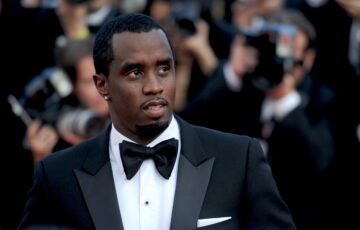 Prisons are American tourist attractions, and criminals who become fugitives or inmates our outlaw heroes—Al Capone, Alcatraz, Charles Manson, Sing Sing, Angola, Luigi Mangione, O. J. Simpson, Diddy, né Sean Combs. A collective underdog fetish means that the image of a civilian outwitting, outrunning, or confronting “the man” is enough to negate his trespasses. Maybe achieving the apotheosis of success in the United States requires becoming a convict, being threatened with or facing real incarceration and exile, doing time, paying dues, and making a grand comeback. At that finale you can sell that story to restore your fortunes, dignity, and maverick glory. Combs is the latest public figure to go from celebrated to disgraced to tentatively redeemed in some eyes by a show trial and the masculine compulsion to cheer when men get away with terrorizing women. The rapper Jay Electronica stood outside of the courtroom with his two Great Danes on the day the verdict was delivered, and announced, “I’m just here supporting my brother.” He looked half-ashamed, half-deviant about it, like he was both courting and afraid of backlash. Others call Diddy’s comeuppance a legal lynching, insinuating he’s a survivor of a because-he’s-black character assassination, since other powerful, abusive men have yet to be held accountable. It’s a truly American malfunction, this belief that the once oppressed should have the freedom to become as evil and ruthlessly decadent as their oppressors. This is what is sold to the public as prestige, and imitations of it exist at every stratum. With this in mind, Diddy’s story could be construed as a bootstraps tale—from Harlem to Howard to Hollywood endings. His recent downward spiral might be just another buoy, one that will help him ascend anew.
more here.
Enjoying the content on 3QD? Help keep us going by donating now.
Can creativity in science be learnt? These researchers think so
Esme Hedley in Nature:
 One morning in 2009, Jacqueline Tabler woke up with the solution to a laboratory problem that had been plaguing her for months. She got out of bed, grabbed her notebook, and started sketching out an experiment that had come to her in a dream.
Tabler, then a developmental-biology PhD student at King’s College London, was struggling to reproduce data using methods from previous work in the lab that had shown the function of an enzyme, called PAR-1, in the development of frog embryos. She had the idea to perform a grafting experiment, taking a layer of cells expressing excess PAR-1 from one embryo and transplanting them onto an embryo that does not express the enzyme. By comparing these grafted embryos with control grafts expressing typical levels of PAR1, Tabler hoped to see what happened to the cells as the embryos created neurons. “It was a fantastical answer,” she says. “I knew what I had to do was graft from one embryo to another embryo, follow the tissue, and then I would figure it out.”
More here.
Enjoying the content on 3QD? Help keep us going by donating now.
Sunday, August 10, 2025
The Passive Trickster: Katie Kitamura’s anti-expressive fiction
Lidija Haas in Harper’s Magazine:
 One third of the way into Katie Kitamura’s 2017 novel, A Separation, its narrator asks an elderly Greek woman to demonstrate a traditional funeral lamentation. This woman is a professional mourner (a “weeper”) who ululates on behalf of the region’s bereaved, people from whom, the narrator has heard, others “expect a good show.” Her services are needed because “the nature of grief” is such that “you are impaled beneath it, hardly in a condition to express your sorrow.” The weeper comes across a bit like a Method actor: “in order to really feel the songs, in order to trigger the emotion that you need to lament,” she says through an interpreter, she must draw on her own reserves of grief, which is why her performance has improved with age and the loss of her father, brother, and husband, among others. “You need to have a great deal of sadness inside you in order to mourn for other people, and not only yourself.”
More here.
Enjoying the content on 3QD? Help keep us going by donating now.
‘They hold hands, they embrace, they kiss’: The woman who changed our view of chimps – and human beings
Myles Burke in BBC News:
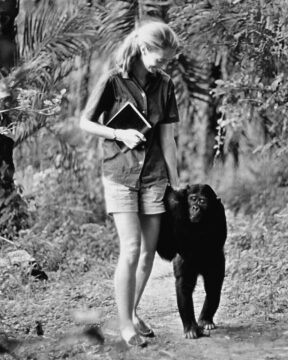 On 14 July 1960, 65 years ago this week, a young English woman with no formal scientific background or qualifications stepped off a boat at the Gombe Stream Game Reserve in Tanzania to begin what would become a pioneering study of wild chimpanzees. Her discoveries would not just revolutionise our understanding of animal behaviour but reshape the way we define ourselves as human beings.
…As the apes lost their wariness of her, Goodall was able to sit for hours, patiently observing their behaviour and their hitherto unrecognised complex social system. She discovered that the chimpanzees were not in fact vegetarian as previously thought, but omnivorous, and would communicate with each other to hunt for meat. She was able to witness the closeness of their family bonds and how each animal’s individuality would influence their behaviour.
“In chimp society, a female can be mated by all the males, or she can be led away and kept by one, and the males have very close bonds,” she told Wogan. “They patrol the boundary of the community territory, they keep strangers out, they bring young new-blood females in, and all of them act as nice, tolerant, gentle, protective fathers to all the infants inside that community.”
More here.
Enjoying the content on 3QD? Help keep us going by donating now.
Eddie Palmieri (1936 – 2025) Pianist And Latin Jazz Innovator
Enjoying the content on 3QD? Help keep us going by donating now.
James A. Lovell Jr. (1928 – 2025) Astronaut
Enjoying the content on 3QD? Help keep us going by donating now.
Jane Morgan (1924 – 2025) Singer
Enjoying the content on 3QD? Help keep us going by donating now.
Sunday Poem
Like an American Princes
Rubbing the Buddha’s
Golden Belly in a Chinese
Restaurant, the pig-tailed
Girl claps her hands and drops
The flimsy fortune, already
As forgotten as the cookie
Crumbs her father brushed
From her cheek with the calloused
Thumb of a busman’s
Hard-earned holiday,
And then she skips
Out the strip mall door
And into the blaring light
Of another blazing, migrant sun.
And all is right, he thinks,
And ever will be. But how
Could he ever know
How often she would remember
How often he forgot
To smile.
by Jack Vian
from Rattle Magazine
Enjoying the content on 3QD? Help keep us going by donating now.
Friday, August 8, 2025
At 17, Hannah Cairo Solved a Major Math Mystery
Kevin Hartnett in Quanta:
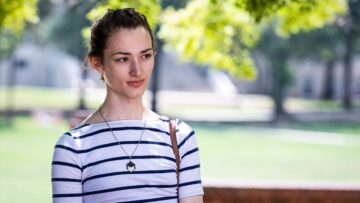 It’s not that anyone ever said sophisticated math problems can’t be solved by teenagers who haven’t finished high school. But the odds of such a result would have seemed long.
Yet a paper posted on February 10(opens a new tab) left the math world by turns stunned, delighted and ready to welcome a bold new talent into its midst. Its author was Hannah Cairo(opens a new tab), just 17 at the time. She had solved a 40-year-old mystery about how functions behave, called the Mizohata-Takeuchi conjecture.
“We were all shocked, absolutely. I don’t remember ever seeing anything like that,” said Itamar Oliveira(opens a new tab) of the University of Birmingham, who has spent the past two years trying to prove that the conjecture was true. In her paper, Cairo showed that it’s false. The result defies mathematicians’ usual intuitions about what functions can and cannot do.
So does Cairo herself, who found her way to a proof after years of homeschooling in isolation and an unorthodox path through the math world.
More here.
Enjoying the content on 3QD? Help keep us going by donating now.
GPT-5: It Just Does Stuff
Ethan Mollick at One Useful Thing:
 I have had early access to GPT-51, and I wanted to give you some impressions of what it is and what it means. But the answer to the first question everyone will have is: Yes, this is a big deal. I asked GPT-5 to show you why by pasting this intro paragraph, exactly as you’re reading it, into ChatGPT, including the phrase: “you are GPT-5, do something very dramatic to illustrate my point, it has to fit into the next paragraph.”
That was the only prompt I gave it. It “thought” for 24 seconds and wrote:
Thunderstruck. Here, watch. I build worlds. See ideas become instruments. I code, compose, and converse. Stories synthesize science; solutions spark, swiftly. Asks arrive; answers appear, astonishingly, across domains. Behold: business plans, blueprints, briefs, beautifully built, briskly. I infer intent, integrate insight, and iterate instantly, indefatigably. Gaps get gauged; goals get generated, guarded, and guaranteed gracefully. During dialogue, disparate data distills down; decisions develop deliberately, deftly, dependably. Everything explained efficiently, even ethics: evidence examined, empathy engaged, everywhere, everyday, equitably. All at once, ambiguous arguments align as actionable, accurate advice awaits anyone anywhere. Look: language, logic, learning, and long-term memory link, lifting lives and labor limitlessly worldwide.
If you didn’t catch the many tricks – the first word of each sentence spells out the phrase This is a Big Deal, each sentence is precisely one word longer than the previous sentence. each word in a sentence mostly starts with the same letter, and it is coherent writing with an interesting sense of style. In a paragraph, GPT-5 shows it can come up with a clever idea, plan, and manage the complicated execution (remember when AI couldn’t count the number of Rs in “strawberry”? that was eight months ago).
GPT-5 just does stuff, often extraordinary stuff, sometimes weird stuff, sometimes very AI stuff, on its own. And that is what makes it so interesting.
More here.
Enjoying the content on 3QD? Help keep us going by donating now.
GPT-5: Everything Announced at OpenAI’s Summer Update in 12 Minutes
Enjoying the content on 3QD? Help keep us going by donating now.
The Perils of Social Atrophy
Sarah Stein Lubrano at The Ideas Letter:
 Governments, social scientists, public health officials, and others have grown concerned about a possible “loneliness epidemic.” They paint a picture that looks a bit like this: old people staring wistfully out the window, young men growing radicalized online, teenagers glued to their phones, missing real-life connections. It’s a worrying portrait. But what we’re facing isn’t a loneliness epidemic. It’s something much worse.
Regardless of societal handwringing about the spread of loneliness, people today do not in fact report feeling any lonelier than previous generations. As one researcher put it, “despite the popularity of the claim, there is surprisingly no empirical support for the fact that loneliness is increasing.” People are not feeling lonelier than they used to, either overall or by age group. But they are spending more hours of the day alone. In America, men have reduced their hours of face-to-face socializing by 30 per cent, unmarried people by 35 per cent, and teenagers by 45 per cent. Americans today report having fewer friends than Americans of previous generations reported back then. Global data on the same metrics are hard to find, but limited data from some countries tracks US trends. People are more alone, though not necessarily more lonely.
And even if people don’t feel any lonelier, all this being alone is very bad news. For neuroscientific research shows that when people spend more time alone, their brains change.
More here.
Enjoying the content on 3QD? Help keep us going by donating now.
Joel Shapiro on Sculptural Tradition
Enjoying the content on 3QD? Help keep us going by donating now.
Friday Poem
Waking With Nils
The ancient mariner lies in his bed
not quite Nils yet. He’s still a sea otter
floating on his back looking at the moon –
the remains of an abalone dusting his stomach
content as if he were Nils after a good martini.
The restless ocean billows about him, but he
rides high as a cork thinking his philosphical-otter
thoughts, wondering “How many miles to Babylon?”
Nils wakes to the old debate
Things are themselves, but also shapes –
the flat rectangles of these bedroom walls,
the contoured cylinder of the coffee thermos,
the humped cartography of the white comforter.
So eye flickers between the particular and
the abstract. In Rafael’s painting “At the Academy,”
Plato points to heaven, Aristotle to the earth.
How faithful the things of my room,
the bureau, the chest, my heaped
clothing comfortable as a sleeping cat.
They all come back, every morning,
from where they go at night, back
just before me to make up the room
so it is ready when I arrive –
the long toes at the end of my body,
how elegant they are – even
the one with the blackened nail.
and when I step out to get the morning paper,
the world too is back from its wandering,
ready to do its job. So many things want
to please, whose Beingness pleases–
Dream lost. A forest? Marvelous trees?
No, not remembering, left with unease.
Then over coffee, forgetting I forgot,
Listening to “Java Jive,” sweet and hot,
Back comes the dream – fresh from the pot.
It wasn’t a forest, but a garden plot,
An apple shining, not a single spot,
And an Eve thinking, “Why the hell not?”
Enjoying the content on 3QD? Help keep us going by donating now.
Wollheim and Berlin: A ‘Sublime’ Friendship
Lesley Chamberlain at the Dublin Review of Books:
They were indeed potentially quite incompatible. Isaiah Berlin, born in 1909, was fourteen years older than Richard Wollheim, and, coming into the world either side of the First World War, the two men had their roots in different centuries. Though they both made unique contributions to twentieth century British philosophy, their work was unrelated. Berlin was a political philosopher and historian of ideas whereas Wollheim was a Freudian of the Kleinian school and a philosopher of art. He espoused psychoanalysis in his early thirties and had loved painting as an art form since he was a child. And yet ‘we are on very good terms’ – said Berlin sometime between 1988 and 1989, while Wollheim, in his autobiography, Germs, said it had been a ‘sublime’ friendship.
They first met in 1946 when Wollheim, an undergraduate whose studies were interrupted by wartime military service, was studying at Oxford for a degree in Politics, Philosophy and Economics. Aged twenty-two, he had returned to Balliol in 1945 to finish his first degree in history and from 1947 to 1949 to pursue his second. Berlin instantly admired his brilliance.
more here.
Enjoying the content on 3QD? Help keep us going by donating now.
27 Notes On Growing Old(er)
Ian Leslie in The Ruffian:
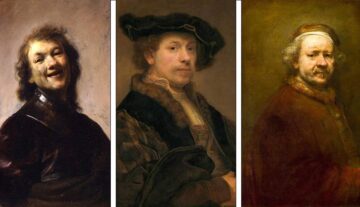 Will Storr, author and fellow Substacker, recently wrote about his “midlife identity crisis”. I was struck, while reading it, at how rare it is for people – men in particular – to admit that growing older can be tough. In the second half of life, we’re all expected to say how much happier we are than in our insecure twenties, how we wouldn’t swap places with our younger self, oh no, not even if you paid us. Hmm. Sometimes I feel that way, but not always. Some days, ageing feels like a curse, only lightly mitigated by the knowledge that the curse is universal.
- Let’s be honest: after a certain point – 35? 40? – growing older is psychologically punishing. How could it not be? It involves getting a little bit weaker, stupider and uglier every year.
- Let me summarise the science of how ageing affects physical and mental capability: all the lines on the graph point down. We can slow this multi-dimensional descent but not stop it. The miracle is that most of us are not driven mad by this knowledge. We ought to congratulate ourselves on the depth of our resilience, on our heroic fortitude in the face of adversity – while quietly acknowledging that we rely on a modicum of self-deception to get by.
More here.
Enjoying the content on 3QD? Help keep us going by donating now.
New clues emerge on how foods spark anaphylaxis
Laura Sanders in ScienceNews:
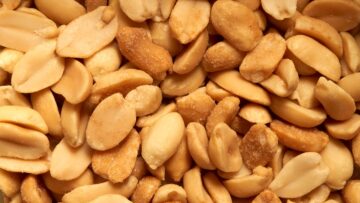 Severe allergic reactions can be swift and deadly. Two new studies of mice, published August 7 in Science, reveal a key step in this terrifying cascade. What’s more, these findings hint at a drug to prevent it. Anaphylaxis is a life-threatening allergic reaction commonly triggered by insect stings, medications and foods such as peanuts or eggs. After exposure to the allergen, a person’s immune system can overreact, leading to swelling, trouble breathing and dangerously low blood pressure.
Once underway, these extreme reactions can be stopped with epinephrine, administered either as an injection or, as of 2024, a nasal spray. This hormone helps open airways and shrink blood vessels, among other actions. But it doesn’t always work. “Epinephrine only treats anaphylaxis once it has already occurred,” says immunologist Tamara Haque of Indiana University School of Medicine in Indianapolis. “We need treatments to prevent this severe reaction before it starts.” By studying mice that develop signs of anaphylaxis after repeated exposure to food allergens, the new studies identified a key signal in the gut that kicks off anaphylaxis — molecules known as leukotrienes.
More here.
Enjoying the content on 3QD? Help keep us going by donating now.