
From The Guardian:
“The Tribute” by Jane Gardam (1980)
 John McGahern and Annie Proulx are among my favourite authors, but to dispel gloom I choose this story from Jane Gardam’s 1980 collection The Sidmouth Letters. Reading this gleeful story in my expatriate days, I recognised the cast of “diplomatic wives”, trailing inebriate husbands through the ruins of empire. Mostly dialogue, it is a deft, witty tale in which a small kindness – though not by a diplomatic wife – pays off 40 years later. I must have read it a dozen times, to see how its note is sustained and the surprise is sprung; every time it makes me smile with delight. Hilary Mantel
“The Stone Boy” by Gina Berriault (1957)
This great and underrated masterpiece is a meditation on good and evil and especially about the way that people’s expectations and assumptions about us may wear us down and eventually force us into compliance with their view. But it is a much deeper and more biblical story than that and, like any great work of art, resists reduction. Berriault, who died in 1999, is known as a San Francisco writer. A wonderful sampling of her stories is available in Women in Their Beds: New & Selected Stories. George Saunders
“The Love of a Good Woman” by Alice Munro (1998)
Among the handful of short stories closest to my heart, I’ve chosen “The Love of a Good Woman” by Canadian writer Munro, from her 1998 collection of that name. It’s about a murder – probably it’s a murder, because nothing is certain – and a love match that depends on keeping that murder secret. Like so many of Munro’s stories, this one has the scope of a novel yet never feels hurried or crowded. The sociology of a small town in rural Ontario is caught on the wing in the loose weave of her narration; the story takes in whole lifetimes, and yet its pace is also exquisitely slow, carrying us deep inside particular moments. A woman moves among the willows beside a river at night, making up her mind. Tessa Hadley
More here.
 On a Monday afternoon in December, Sarah Jones, a Tony award-winning playwright and impressionist, sits at a flimsy metal table in Los Angeles’s Grand Central Market, a cavernous food hall hawking a vast array of cuisine: grass-fed lamb, vegan ramen, tacos, acai bowls. Around her, scruffy workers in baseball caps take their lunches next to corporate types in suits. In a city where the car culture promotes a gas-guzzling form of isolation, the market offers an alternative atmosphere: it buzzes with the energy of happenstance meetings.
 Argentinian artist Mirtha Dermisache produced “a voluminous body of illegible writings.” This phrase from the editors’ brief afterward is in itself so evocative I can hardly go further, that body light and aloft, setting sail on an invisible current of the thoughts beneath words, the feelings beneath skin.
 Certainly, even as Cunard’s own work – long overlooked in favour of works about her, including a number of biographies – has recently begun to be recognized and republished, attention has still tended to focus on those of her writings with links to the more outré figures and avant-garde aesthetics of the 1920s. Of her poetry, it is the long Parallax (1925), a response to The Waste Land (and, like T. S. Eliot’s poem, published by Leonard and Virginia Woolf at the Hogarth Press), that is best known – only partly because it is her best. Meanwhile, her prose, which includes extensive political journalism and several works of memoir, remains largely out of print, and her extensive career as an anti-fascist, anti-racist, and anti-imperial writer and activist is often characterized as a series of dilettantish enthusiasms.
 Jhabvala may have written of Indians, but she wrote largely for the Western Hemisphere. “I have no fans in India,” she
 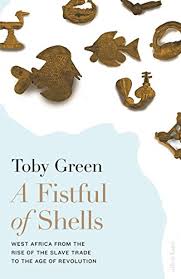 The trade in ideas, technologies, art and culture between Africa and her partners flowed both ways, a reality that was accentuated by the slavery trade – something that Green explores in great depth. Not only did African goods and commodities pulse through the arteries of the Atlantic world, cultural knowledge and intellectual capital was taken to the New World in the minds of the millions of human beings who were themselves commodified and exchanged. The Maroons, communities of escaped slaves that emerged in Jamaica, Panama and elsewhere, fought their wars using military theories they had learnt on the continent of their birth. Likewise, the rice plantations of South Carolina were cultivated using not just African labour but also African knowledge. This expertise was intentionally transplanted into American soil by British slave traders who had enslaved thousands of people from the rice-growing regions of Sierra Leone. These Africans were kidnapped to order, their minds as valuable a commodity as their bodies.
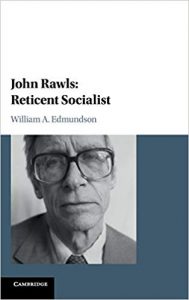 Edmundson has written an admirably concise yet powerful book. It blends a critical account of Rawls’ work with an original case for democratic socialism hewn from Rawlsian stone. In my opinion, this case has some flaws but it remains a timely contribution to the enduring quest for justice and social stability.
 Take a look at the world poverty clock, which shows in real time the fall in the number of people living in extreme poverty. Or consider two recent bestsellers –
 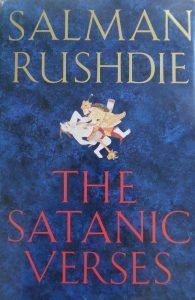 ON VALENTINE’S DAY 1989, the Supreme Leader of Iran, Ayatollah Khomeini, declared a death sentence on British Indian novelist Salman Rushdie for his book The Satanic Verses, along with any who helped its release: “I ask all Muslims to execute them wherever they find them.” The Ayatollah accused Rushdie of blasphemy, of sullying Islam and its prophet Muhammad, though many saw it as a desperate cry for popular support after a humiliating decade of war with Iraq. There followed riots, demonstrations, and book burnings across Europe and the Middle East. Death threats poured in. Viking Penguin, Rushdie’s UK publisher, was threatened with bombings. The author himself was forced into hiding under the pseudonym “Joseph Anton,” a mash-up of Joseph Conrad and Anton Chekhov and the title of Rushdie’s 2012 memoir of the controversy. The media and public still remember it as “The Rushdie Affair,” though most people born after the 1980s have never heard of it.
 Debates around the politics of Trump and other new-right leaders have led to an explosion of historical analogizing, with the experience of the 1930s looming large. According to much of this commentary, Trump—not to mention Orbán, Kaczynski, Modi, Duterte, Erdoğan—is an authoritarian figure justifiably compared to those of the fascist era. The proponents of this view span the political spectrum, from neoconservative right and liberal mainstream to anarchist insurrectionary. The typical rhetorical device they deploy is to advance and protect the identification of Trump with fascism by way of nominal disclaimers of it. Thus for Timothy Snyder, a Cold War liberal, ‘There are differences’—yet: ‘Trump has made his debt to fascism clear from the beginning. From his initial linkage of immigrants to sexual violence to his continued identification of journalists as “enemies” . . . he has given us every clue we need.’ For Snyder’s Yale colleague, Jason Stanley, ‘I’m not arguing that Trump is a fascist leader, in the sense that he’s ruling as a fascist’—but: ‘as far as his rhetorical strategy goes, it’s very fascist.’ For their fellow liberal Richard Evans, at Cambridge: ‘It’s not the same’—however: ‘Trump is a 21st-century would-be dictator who uses the unprecedented power of social media and the Internet to spread conspiracy theories’—‘worryingly reminiscent of the fascists of the 1920s and 1930s.’
 In 1995, Edward Wolff, an economist at N.Y.U., published a short book called “
 On Monday, the Jerusalem Post, a centrist Israeli newspaper, published
  “I am not a man, I am dynamite!” Friedrich Nietzsche is famous for this kind of bombast, but most of his works are unassuming in tone, and his sentences are always plain, direct and clear as a bell. Take for instance the celebrated assault on “theorists” in his first book, The Birth of Tragedy, published in 1872. Theorists, Nietzsche says, know everything there is to know about “world literature”—they can “name its periods and styles as Adam did the beasts.” But instead of “plunging into the icy torrent of existence” they merely content themselves with “running nervously up and down the river bank.”
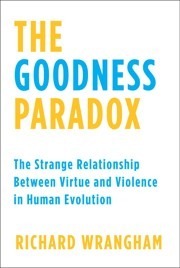 DeVore had hanging in his office an 1838 quote from Darwin’s notebook: “Origin of man now proved … He who understands baboon would do more towards metaphysics than Locke.” It’s an aphorism that calls to mind one of my favorite characterizations of anthropology—philosophizing with data—and serves as a perfect introduction to the latest work of Richard Wrangham, who has come up with some of the boldest and best new ideas about human evolution.
 String theory was originally proposed as a relatively modest attempt to explain some features of strongly-interacting particles, but before too long developed into an ambitious attempt to unite all the forces of nature into a single theory. The great thing about physics is that your theories don’t always go where you want them to, and string theory has had some twists and turns along the way. One major challenge facing the theory is the fact that there are many different ways to connect the deep principles of the theory to the specifics of a four-dimensional world; all of these may actually exist out there in the world, in the form of a cosmological multiverse. Brian Greene is an accomplished string theorist as well as one of the world’s most successful popularizers and advocates for science. We talk about string theory, its cosmological puzzles and promises, and what the future might hold.
 NOW THAT SHE IS NO LONGER