
by Bill Murray
 47-year old Teburoro Tito stood at the head of his delegation on an island way out in the Pacific Ocean. At the stroke of midnight on January 1st, 2000 the President of Kiribati handed a torch to a young man, ceremonially passing the future to a new generation.
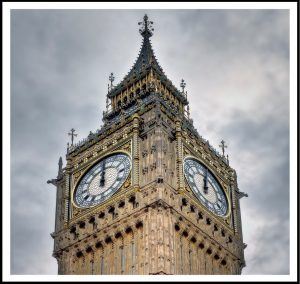
Nobody lived there. Nobody ever went out there. When the designers of the International Date Line put marker to map, they drew right through the 33 islands that wouldn’t become Kiribati for 95 more years. They were just trifling bits of land, of no concern to cartographers 9050 miles away in London.
But there the little group stood because in 1994 the I-Kiribati president “applied to have a slight loop inserted into the date line that included all its islands in one time zone…. The Greenwich Observatory sanctioned his proposal and thus it was that his little nation profited greatly from the millennial hoopla.”
Dancers in grass skirts played to the cameras and the Kiribati archipelago made its claim to be the first to welcome the new millennium. The US Navy submarine Topeka made its own claim, positioning itself 400 meters underwater straddling both the date line and the equator.
New Zealand claimed the new millennium’s first sunrise. Their Chatham Islands, 500 miles east of the rest of New Zealand, got about a forty-minute jump on the rest of the country.
The real first dawn over land was near remote Dibble Glacier in Antarctica, but it was midsummer there, and you couldn’t really call it dawn, because the sun had never even set. If anybody was there, they never mentioned it. Read more »


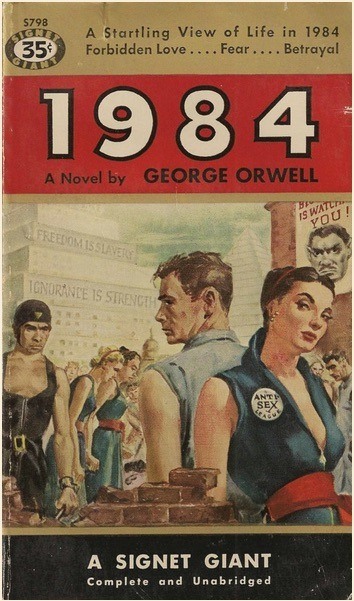
 Of all the internet’s uses, attractions and conveniences, the foremost is that it involves us immediately with an indefinite number of others. Its decisive edge over television and the printed word is just this: its participatory, social character. To the extent that it is becoming our chief means of private and public discourse, it is therefore acquiring exceptional political significance. To someone who understood nothing of the internet, much of contemporary American political life would be inscrutable. It is now our primary way of dealing with each other, our most important organ of collective speech and self-knowledge. The internet is, in this way, inherently recasting our wider notions of what to say, who to be, what to count as authoritative, and how to govern and be governed. What follows are some lines of thought sketching each of these transformations in turn.
 Robots that are self-aware have been science fiction fodder for decades, and now we may finally be getting closer. Humans are unique in being able to imagine themselves—to picture themselves in future scenarios, such as walking along the beach on a warm sunny day. Humans can also learn by revisiting past experiences and reflecting on what went right or wrong. While humans and animals acquire and adapt their self-image over their lifetime, most robots still learn using human-provided simulators and models, or by laborious, time-consuming trial and error. Robots have not learned simulate themselves the way humans do.
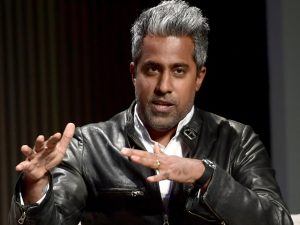 Richard Feloni: What does Davos stand for in your view? Do you have any particular thoughts on this year’s, specifically?
 The winner of Australia’s richest literary prize did not attend the ceremony.
 In the digital age, reputations made over decades can be lost in minutes. Richard Dawkins first achieved renown as a pioneering evolutionary biologist (through his 1976 bestseller, The Selfish Gene) and, later, as a polemical foe of religion (through 2006’s The God Delusion). Yet he is now increasingly defined by his incendiary tweets, which have been plausibly denounced as Islamophobic.
 Michael Jordan,
  Even Che Guevara, the poster boy for the Cuban Revolution, was forced to admit that endlessly trudging the Sierra Maestra mountains had its downsides. “There are periods of boredom in the life of the guerrilla fighter,” he warns future revolutionaries in his classic handbook, Guerrilla Warfare. The best way to combat the dangers of ennui, he helpfully suggests, is reading. Many of the rebels were college educated—Che was a doctor, Fidel a lawyer, others fine art majors—and visitors to the rebels’ jungle camps were often struck by their literary leanings. Even the most macho fighters, it seems, would be seen hunched over books.
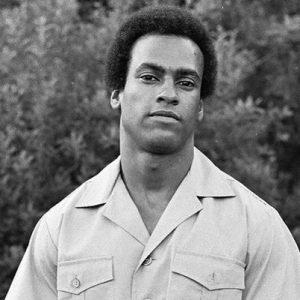 On August 15, 1970, Huey P. Newton, the co-founder of the Black Panther Party, gave a speech in New York City where he outlined the Party’s position on two emerging movements at the time, the women’s liberation movement and the gay liberation movement. Newton’s remarks were strikingly unusual since most conservative, moderate, and radical black organizations remained silent on the issues addressed by these movements. The speech appears below.